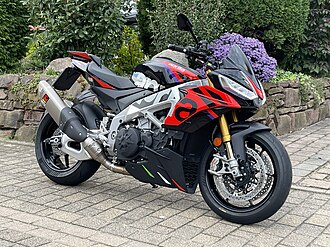
Aprilia Tuono: The Ultimate Italian Naked Motorcycle – History, Performance, Design and Technical Specifications
The Aprilia Tuono is one of the most exciting and recognisable motorcycle families in the world of high-performance naked bikes. Combining the engineering expertise of an Italian manufacturer with technology developed through international motorcycle racing, the Tuono has established a reputation for outstanding performance, aggressive styling and exceptional handling. Since its introduction in the early 2000s, the model has evolved from a powerful naked version of Aprilia’s flagship superbike into a diverse family of motorcycles that includes high-performance V4 machines, middleweight parallel-twin models and more accessible entry-level versions.
What makes the Aprilia Tuono particularly special is its philosophy. Rather than developing a completely separate motorcycle with a conventional naked-bike design, Aprilia took the performance and engineering foundations of its sport motorcycles and adapted them for a more upright riding position. The result was a motorcycle that combined superbike performance with the practicality and versatility of a road-oriented naked machine. This concept became one of the defining characteristics of the Tuono and helped establish the modern high-performance naked motorcycle category.
Over the years, the Tuono has gained increasingly sophisticated engines, electronic rider aids, advanced suspension systems and improved aerodynamic features. The arrival of the V4 engine transformed the model into one of the most powerful motorcycles in its class, while the introduction of the Tuono 660 created a lighter and more accessible alternative for riders who wanted sporty performance without the extreme power of the larger V4. More recently, the family has expanded further with the Tuono 457 and Tuono 125, bringing the characteristic Aprilia naked-bike styling to additional engine categories.
Today, the Aprilia Tuono represents much more than a single motorcycle. It is a complete family of machines designed around the same principles: Italian styling, sporting performance, advanced technology and an engaging riding experience. Whether considering a used Tuono 1000 R, a powerful Tuono V4 Factory or a modern Tuono 660, there is a great deal to discover about this distinctive motorcycle range.
The History and Development of the Aprilia Tuono
The Beginning: Aprilia Tuono 1000
The history of the Aprilia Tuono began in the early 2000s, when Aprilia recognised the potential of creating a naked motorcycle based on the engineering foundations of its RSV Mille superbike. At the time, the naked motorcycle market was developing rapidly, with riders increasingly interested in machines that offered high performance without the aggressive riding position and extensive bodywork of traditional sport motorcycles.
Aprilia approached this idea differently from many competitors. Instead of developing a completely new engine and chassis, the company adapted its existing high-performance V-twin platform, retaining much of the mechanical character and sporting ability of the RSV Mille while introducing a more upright riding position and minimalist bodywork.
The original Tuono 1000 appeared in 2002 and immediately attracted attention because of its unusual combination of practicality and superbike-derived performance. Its large 998 cc V-twin engine provided substantial torque and acceleration, while its wide handlebars made it more comfortable and manageable for everyday road riding.
The motorcycle demonstrated that a naked bike did not have to sacrifice performance to provide a more relaxed riding position. Its aggressive appearance, distinctive exhaust note and powerful engine helped establish the Tuono as an important model in the emerging supernaked category.
The Tuono 1000 R and Racing Versions
The subsequent Tuono 1000 R developed the original concept further, retaining the 998 cc V-twin engine while benefiting from improvements to equipment, styling and chassis components. Aprilia also introduced special versions and higher-specification variants aimed at enthusiasts who wanted more exclusive components and a more focused riding experience.
The Tuono Racing versions were particularly interesting because they emphasised the model’s sporting origins. Lightweight components, upgraded suspension and improved braking equipment helped create motorcycles that were closer to dedicated performance machines than conventional naked bikes.
These early Tuono models established the basic identity that would remain important throughout the motorcycle’s development: a powerful engine derived from a superbike, a more upright riding position and a chassis designed to provide exceptional road performance.
The Arrival of the Tuono V4
A major turning point came in 2011 with the introduction of the Tuono V4 R. Aprilia replaced the original V-twin engine with a completely different powerplant based on the RSV4 superbike.
The new 65-degree V4 engine transformed the motorcycle’s character. It offered higher-revving performance, a distinctive exhaust note and a level of power that placed the Tuono among the most extreme naked motorcycles available.
The V4 generation also introduced increasingly sophisticated electronic controls, including the Aprilia Performance Ride Control system. This technology helped riders manage the motorcycle’s substantial performance through electronic traction control, wheelie control and other assistance systems.
Subsequent updates improved engine output, braking equipment, suspension and electronic management. The introduction of the Tuono V4 1100 in 2015 represented another significant development, increasing engine displacement and delivering even stronger performance.
The Expansion of the Tuono Family
Aprilia eventually expanded the Tuono range beyond the traditional large-capacity V4 platform. The Tuono 660 introduced a middleweight alternative based on the manufacturer’s modern parallel-twin engine.
This motorcycle retained the essential Tuono design philosophy while offering a more manageable combination of weight, power and dimensions. It was intended for riders who wanted an engaging sporting motorcycle without the extreme performance of a superbike-derived V4.
The range subsequently expanded to include the Tuono 660 Factory, which introduced more sophisticated suspension and additional equipment, as well as the smaller Tuono 125 and the newer Tuono 457.
This broader model family means that the name Tuono now represents several different types of motorcycles rather than one specific engine configuration. Nevertheless, all share an emphasis on sporty handling, distinctive Italian styling and a strong connection with Aprilia’s racing heritage. <Cite refs={[“turn843244search1″,”turn843244search0″,”turn843244search5”]}/>
Aprilia Tuono Engine Options and Performance
One of the most interesting aspects of the Aprilia Tuono family is the variety of engines used throughout its history. The original motorcycles relied on large-capacity V-twin powerplants, while the modern range includes both V4 and parallel-twin configurations. Each engine provides a different riding experience, allowing the Tuono name to appeal to a wider range of motorcyclists.
The Original 998 cc V-Twin Engine
The early Tuono 1000 models used a liquid-cooled, four-stroke, 60-degree V-twin engine with a displacement of approximately 998 cc. This powerplant was derived from Aprilia’s RSV Mille superbike and became one of the defining elements of the original motorcycle.
Its most important characteristic was the substantial torque available throughout the usable rev range. Unlike smaller engines that require frequent gear changes and high engine speeds to deliver their performance, the large V-twin provided strong acceleration without constantly demanding maximum revolutions.
The engine gave the early Tuono a muscular personality that suited its naked-bike configuration. Acceleration was particularly impressive, and the distinctive exhaust sound helped create an experience that was very different from that of conventional four-cylinder motorcycles.
Depending on the version and market, the early Tuono 1000 models delivered approximately 125–140 horsepower. Special editions and later developments varied in output and equipment, so individual specifications should always be checked against the exact model year.
The 65-Degree V4 Engine
The introduction of the Tuono V4 marked a completely new chapter in the model’s history. Instead of the original V-twin configuration, Aprilia adopted a compact 65-degree V4 engine developed from its RSV4 superbike platform.
The V4 architecture combines four cylinders in a relatively compact arrangement, allowing the engine to provide high power output while maintaining a distinctive mechanical character. Its firing characteristics and exhaust note contribute significantly to the identity of the Tuono V4.
The early Tuono V4 R produced approximately 167 horsepower, with subsequent versions receiving improvements that increased output to around 170 horsepower. The later 1100 models developed the concept further, with the 2015 generation producing approximately 175 horsepower.
The engine’s high-revving nature makes it particularly suitable for riders who enjoy aggressive acceleration and sporting road performance. At the same time, its torque delivery allows the motorcycle to remain flexible enough for ordinary road use.
The latest generation of the Tuono V4 takes this development further. The 2025-generation 1,099 cc engine produces approximately 180 horsepower at 11,800 rpm and 121 Nm of torque at 9,650 rpm. This places the modern Tuono firmly in the extreme performance category, even when compared with other high-end naked motorcycles. <Cite refs={[“turn843244search5″,”turn843244search13″,”turn843244search15”]}/>
The 659 cc Parallel-Twin Engine of the Tuono 660
The Tuono 660 offers a different approach to performance. Instead of using a large V4 engine, it employs a 659 cc liquid-cooled parallel-twin powerplant developed as part of Aprilia’s modern middleweight platform.
The engine provides a combination of responsive acceleration, manageable weight and accessible performance. Its configuration makes the motorcycle less extreme than the V4 versions while retaining the sporting character expected from the Tuono name.
The original Tuono 660 produced approximately 95 horsepower, while the Factory version received further performance and equipment developments. The newer 2025-generation Tuono 660 Factory produces up to 105 horsepower in its latest specification.
The parallel-twin engine offers a useful balance between everyday usability and sporting performance. It is particularly attractive to riders who want a lightweight naked motorcycle for winding roads, commuting and occasional track sessions without the considerable power of a litre-class V4.
The Tuono 457 and Tuono 125
The smaller members of the family extend the Tuono concept into more accessible engine categories.
The Tuono 457 uses a 457 cc parallel-twin engine producing approximately 47.6 horsepower. Its performance is designed around the requirements of the A2 motorcycle licence category in European markets, making it an interesting option for riders progressing from smaller motorcycles.
The Tuono 125 uses a 124.2 cc single-cylinder engine producing approximately 15 horsepower. It is aimed primarily at younger and less experienced riders who want sporty styling and a motorcycle inspired by Aprilia’s larger naked models.
These smaller machines do not offer the performance of the V4, but they retain the visual identity and sporting philosophy of the wider Tuono family. <Cite refs={[“turn843244search12″,”turn843244search4″,”turn843244search5”]}/>
Ride-by-Wire Technology and Electronic Rider Aids
Electronic Throttle Control
Electronic throttle control is one of the most important technological features of modern Aprilia motorcycles. Rather than relying exclusively on a mechanical cable to connect the throttle grip with the engine’s throttle bodies, the system uses electronic signals to communicate the rider’s requested acceleration to the engine management system.
This allows the motorcycle to regulate throttle response more precisely and adapt engine behaviour to different riding conditions. It also provides the foundation for selectable riding modes and more sophisticated electronic assistance.
The advantages become particularly noticeable on high-performance motorcycles such as the Tuono V4. With approximately 180 horsepower available in the latest version, controlling the delivery of engine power is just as important as producing it.
Aprilia Performance Ride Control
The Aprilia Performance Ride Control system, commonly known as APRC, is a collection of electronic rider assistance technologies developed to improve control and performance.
Depending on the generation and specification, the system can include several important functions:
- Traction control: Helps reduce rear-wheel spin during acceleration.
- Wheelie control: Manages excessive front-wheel lift under acceleration.
- Launch control: Assists with controlled starts during performance riding.
- Engine brake management: Helps regulate engine braking during deceleration.
- Quick shifting: Allows gear changes without conventional clutch operation in supported conditions.
- Cruise control: Maintains a selected cruising speed on equipped models.
- Pit limiter: Helps regulate speed in designated pit-lane environments.
The exact features differ between Tuono generations, so it is important not to assume that every model has the same electronic package.
Six-Axis Inertial Measurement Unit
More advanced Tuono models use a six-axis inertial measurement unit, commonly referred to as an IMU. This component monitors the motorcycle’s movement and orientation, providing information that allows the electronic systems to respond more intelligently.
By measuring acceleration and rotational movement, the system can help determine whether the motorcycle is upright, leaning into a corner, accelerating or braking. This information can be used by traction control, wheelie control and cornering ABS systems.
The result is a more sophisticated level of electronic assistance that can improve safety and consistency during demanding riding conditions.
Riding Modes
Modern Tuono motorcycles provide selectable riding modes that change the response of the engine and electronic systems.
Depending on the model, modes can include configurations designed for road riding, sporty performance and track use. The rider can select a suitable setting according to personal preferences and road conditions.
These modes do not change the motorcycle’s fundamental mechanical capabilities, but they can significantly influence how those capabilities are delivered. For a motorcycle with the performance of the Tuono V4, this adaptability is particularly valuable.
Design and Styling: Italian Aggression
The Aprilia Tuono has always been recognisable because of its aggressive styling and unmistakable naked-bike proportions. Although its appearance has evolved considerably since the early 2000s, the model has retained a visual identity closely connected with Aprilia’s racing motorcycles.
The original Tuono 1000 featured a relatively minimalist front section, exposed mechanical components and a muscular fuel tank. Its design reflected the early supernaked concept, in which the manufacturer removed unnecessary bodywork from a superbike platform while retaining its essential sporting proportions.
The V4 generation introduced sharper lines, more compact bodywork and a closer visual relationship with the RSV4. The modern motorcycles feature angular headlights, sculpted side panels and aerodynamic elements that help manage airflow at high speeds.
The latest Tuono V4 also incorporates aerodynamic winglets into its design. These components are not merely decorative; they are intended to contribute to aerodynamic stability and front-end behaviour during high-speed riding.
The smaller Tuono 660, 457 and 125 models use their own design proportions but maintain the same general styling philosophy. Their compact bodywork, sporty lighting arrangements and aggressive front sections make them immediately recognisable as members of the Tuono family.
The combination of Italian design and visible engineering details gives the motorcycle a distinctive appearance that separates it from more understated naked bikes.
Chassis and Frame Construction
One of the reasons the Aprilia Tuono has earned such a strong reputation for handling is its close relationship with the manufacturer’s superbike platforms.
Aluminium Twin-Spar Frame
The high-performance V4 models use an aluminium twin-spar frame designed to provide structural rigidity and precise handling. The architecture is closely related to the RSV4, allowing the Tuono to benefit from engineering developed for competitive motorcycle racing.
The frame is designed to balance rigidity with controlled flexibility, an important characteristic for a motorcycle that combines high engine output with relatively aggressive steering geometry.
The modern Tuono V4 has a wheelbase of approximately 1,450 mm, although dimensions vary according to model generation. This relatively compact layout contributes to its responsiveness when changing direction.
Swingarm and Weight Distribution
The rear swingarm is another important component of the Tuono’s chassis design. On the V4 platform, Aprilia uses an aluminium swingarm developed around the requirements of high-performance riding.
Its design contributes to rear-wheel control during acceleration and helps maintain stability when the motorcycle is subjected to strong forces during cornering.
Weight distribution also plays a major role in the overall riding experience. Aprilia has worked to maintain a balance between front-end feedback and rear-wheel traction, allowing the Tuono to remain composed during both aggressive acceleration and hard braking.
The result is a motorcycle that feels closely connected to its sporting origins while retaining the more upright ergonomics of a naked bike.
Suspension System: Precision on the Road and Track
The suspension equipment varies considerably throughout the Tuono range, with higher-specification Factory versions receiving particularly advanced components.
Front Suspension
The latest Tuono V4 uses a 43 mm upside-down telescopic fork with adjustable damping and spring preload, depending on the version. The standard motorcycle uses Sachs suspension equipment, while the Factory version receives premium Öhlins components.
The fork is designed to provide precise front-wheel control during braking and cornering. Its adjustment possibilities allow the suspension to be adapted to rider weight, road conditions and riding preferences.
The front suspension is particularly important on the Tuono because its powerful engine can generate substantial acceleration forces. Good suspension control helps maintain tyre contact and predictable steering behaviour.
Rear Suspension
At the rear, the motorcycle uses an aluminium swingarm connected to a single shock absorber. The latest standard Tuono V4 uses a fully adjustable Sachs shock, while the Factory version receives a higher-specification Öhlins unit.
The Factory suspension package is designed to provide more precise control during demanding riding conditions. Depending on the generation, electronic suspension adjustment may also be available, allowing riders to modify settings through the motorcycle’s electronic control system.
The Tuono 660 Factory similarly offers a more sophisticated suspension package than the standard 660, reinforcing its position as the premium version of the middleweight model.
Braking System and Safety
A high-performance motorcycle needs a braking system capable of controlling its acceleration and speed, and the Aprilia Tuono has consistently been equipped with substantial braking components.
The latest Tuono V4 uses dual 330 mm front brake discs combined with Brembo radial-mounted calipers. These components provide strong braking performance and allow the rider to control deceleration with precision.
At the rear, a 220 mm disc provides additional braking assistance. The complete braking system is supported by electronic controls, including cornering ABS on appropriately equipped versions.
Cornering ABS uses information from the inertial measurement unit to adapt braking assistance when the motorcycle is leaning. This is particularly useful because braking while cornering requires careful management of available tyre grip.
The Tuono’s braking equipment is designed for both road and track use, although the motorcycle’s extreme performance means that riders must understand its capabilities and limitations.
Brake fluid, pads, discs and hydraulic lines should be inspected regularly. On used examples, a complete brake-system inspection is especially important because the motorcycle may have experienced intensive road or track use.
The Aprilia Tuono V4: The Flagship of the Range
The Tuono V4 is the model most closely associated with the high-performance identity of the Tuono family. Its combination of a superbike-derived V4 engine, aluminium chassis, sophisticated electronics and upright handlebars creates an unusual balance between extreme performance and everyday usability.
Tuono V4 Standard Version
The standard Tuono V4 is designed to provide exceptional sporting performance while retaining a degree of comfort and practicality for road riding.
Its 1,099 cc V4 engine produces approximately 180 horsepower in the latest generation, providing acceleration that places it among the most powerful naked motorcycles available.
The motorcycle features an advanced electronic package, aerodynamic bodywork, a modern TFT dashboard and sophisticated suspension and braking equipment.
Compared with the Factory version, the standard model has a more road-oriented equipment configuration. It is intended for riders who want superbike-level performance but expect to use their motorcycle regularly on public roads.
Tuono V4 Factory
The Factory version represents the more exclusive and performance-focused interpretation of the Tuono V4.
It receives premium components, including Öhlins suspension equipment and additional carbon-fibre details, depending on the generation. Some Factory versions also feature advanced semi-active electronic suspension systems that allow the damping characteristics to adapt to riding conditions.
The Factory model is particularly attractive to experienced riders who want a motorcycle with high-end components and greater adjustment possibilities.
Although the differences between standard and Factory versions depend on the production year, the Factory has traditionally represented the most sophisticated Tuono configuration.
Aprilia’s own product information describes the Factory as the more exclusive, demanding-rider-oriented version, with equipment closely related to its RSV4 superbike. <Cite refs={[“turn843244search3″,”turn843244search16″,”turn843244search5”]}/>
Aprilia Tuono 660: A More Accessible Sporting Motorcycle
The Tuono 660 represents an important expansion of the model family. It takes the styling and sporting philosophy of the V4 and applies them to a lighter middleweight motorcycle.
Its 659 cc parallel-twin engine provides enough power for enjoyable road riding while remaining more manageable than the large V4 powerplant.
The motorcycle also benefits from modern electronic features, including ride-by-wire throttle control, selectable riding modes and advanced rider assistance systems, depending on the version.
The Tuono 660 Factory takes the concept further with upgraded suspension, additional electronic equipment and increased engine performance in the latest specification.
One of its biggest advantages is its combination of weight and performance. It is considerably less extreme than the Tuono V4 while still providing a genuinely sporting experience.
For riders who spend most of their time on public roads, the 660 can be a more practical option. It is also attractive to experienced riders who enjoy lightweight motorcycles and prefer agility over maximum engine output.
Aprilia Tuono 457 and Tuono 125: Entry into the Tuono Family
The introduction of the Tuono 457 and Tuono 125 demonstrates how Aprilia has developed the Tuono name into a broader motorcycle family.
The Tuono 457 uses a modern 457 cc parallel-twin engine producing approximately 47.6 horsepower. Its performance is suitable for the European A2 licence category, and its styling closely follows the larger Tuono models.
The Tuono 125 is designed for riders entering the motorcycle world. Its 124.2 cc single-cylinder engine produces approximately 15 horsepower, while its aggressive styling gives it the appearance of a larger naked motorcycle.
These models are not direct substitutes for the V4 or 660 versions. Their purpose is to make the Tuono concept available to riders who are not yet ready for the performance of a large-capacity motorcycle.
They also help establish a progression within the Aprilia range, allowing riders to begin with a smaller motorcycle and potentially move towards more powerful models as their experience develops. <Cite refs={[“turn843244search12″,”turn843244search5”]}/>
Riding Experience: What Makes the Aprilia Tuono Special?
The riding experience is arguably the most important reason why the Aprilia Tuono has developed such a loyal following.
The upright handlebars create a more natural riding position than a traditional supersport motorcycle, allowing the rider to maintain good visibility and control in everyday conditions. At the same time, the engine and chassis retain much of the performance character associated with Aprilia’s superbikes.
The V4 models are particularly impressive when accelerating out of corners. Their engines provide strong power delivery, while the chassis allows the motorcycle to remain stable and predictable when ridden enthusiastically.
The exhaust note is another distinctive part of the experience. The V4 engine produces a characteristic sound that differs considerably from conventional inline-four and twin-cylinder naked motorcycles.
The Tuono 660 offers a different experience, emphasising agility and accessibility rather than overwhelming power. Its lighter feel can make it particularly enjoyable on narrow roads and technical routes.
The smaller Tuono 457 and 125 are designed around approachable performance, making them suitable for developing riding skills and gaining experience.
Regardless of engine size, the common theme is that the Tuono is designed to make ordinary road riding feel more sporting and engaging.
Comfort and Everyday Practicality
Although the Aprilia Tuono is primarily a sporting motorcycle, its naked-bike configuration offers several practical advantages over a fully faired superbike.
The higher handlebars create a more upright riding position, reducing the forward lean associated with dedicated sport motorcycles. This can make ordinary commuting and slower-speed riding more comfortable.
The seating position varies between generations and engine categories, but most Tuono models are designed to provide a compromise between sporting control and road comfort.
The standard V4 is particularly capable on ordinary roads, although its engine performance and relatively firm suspension can make it feel demanding during slow urban journeys.
Wind protection is naturally limited compared with a fully faired motorcycle. At motorway speeds, the rider is exposed to considerable wind pressure, although the front bodywork and small windscreen provide some protection.
The Tuono 660 offers a more accessible balance for everyday use, while the smaller models can be particularly convenient for urban commuting.
Luggage capacity is limited on most versions, so riders planning longer journeys may need to consider optional luggage systems and accessories.
Fuel Consumption and Riding Range
Fuel consumption depends heavily on the engine configuration, riding style and road conditions.
The large-capacity Tuono V4 is designed primarily around performance rather than maximum fuel efficiency. Its 1,099 cc engine can deliver substantial power, but aggressive acceleration and high engine speeds naturally increase fuel consumption.
The latest Tuono V4 has an 18-litre fuel tank. This provides reasonable capacity for a high-performance naked motorcycle, although the actual riding range will vary considerably according to how the motorcycle is used.
The Tuono 660 generally offers a more economical approach because of its smaller parallel-twin engine and lower overall performance. The 457 and 125 models are designed for more modest fuel requirements.
For anyone considering a Tuono as a daily motorcycle, it is important to consider not only fuel consumption but also insurance, tyre costs, servicing and replacement parts.
A high-performance motorcycle can be relatively economical during relaxed riding, but its running costs are often influenced more by its tyres, brakes and maintenance requirements than by fuel alone.
Reliability and Maintenance: What Owners Should Know
The Aprilia Tuono is a sophisticated motorcycle, particularly in its V4 configurations. As a result, proper servicing and careful maintenance are important factors in achieving reliable long-term ownership.
Engine Servicing
The engine oil and filter must be replaced according to the manufacturer’s service schedule. The cooling system should also be inspected regularly, including the radiator, coolant hoses, connections and fluid condition.
Valve clearance inspections are another important part of scheduled maintenance. High-performance engines operate under considerable mechanical and thermal loads, so following the correct servicing intervals is essential.
Spark plugs, air filters and fuel-system components should also be checked according to the service documentation.
For older V-twin and V4 models, it is particularly important to verify the maintenance history rather than assuming that a motorcycle is in good condition simply because it has covered relatively few kilometres.
Electronic Systems
Modern Tuono motorcycles use sophisticated electronics, including ride-by-wire throttle control, traction control, ABS and inertial measurement systems.
These technologies provide important performance and safety advantages, but they also increase the complexity of the motorcycle.
Warning lights, sensor faults and inconsistent electronic behaviour should be investigated by a workshop familiar with Aprilia motorcycles.
Battery condition and the charging system should also be checked. Electrical problems can sometimes produce symptoms that appear to be related to the engine or electronic rider aids.
Suspension and Braking Maintenance
High-performance suspension components require periodic inspection and servicing. Fork seals, shock absorbers, bearings and suspension linkages should be checked regularly.
Öhlins components fitted to Factory versions deserve particular attention because maintaining their performance may require specialist servicing.
Brake pads, discs, fluid and hydraulic lines should also be inspected. Motorcycles that have been used on track may require more frequent attention than machines used exclusively for ordinary road riding.
Is the Aprilia Tuono Reliable?
Reliability depends on the exact generation, maintenance history and way the motorcycle has been used. It would be inaccurate to describe the entire Tuono family as either universally reliable or inherently problematic because the range includes several different engines and electronic systems.
A well-maintained motorcycle with documented servicing is generally a much safer purchase than a neglected example with an incomplete history.
Prospective buyers should also investigate parts availability and local workshop experience, particularly when considering older V-twin or early V4 models.
Buying a Used Aprilia Tuono
Buying a used Aprilia Tuono can be an excellent way to experience Italian high-performance motorcycling without paying the price of a new machine. However, the range includes several generations, and choosing the correct version is important.
The first step is deciding which engine configuration best suits your needs. The original Tuono 1000 provides traditional V-twin character, the V4 offers superbike-level performance, and the 660 provides a lighter and more manageable alternative.
Once a suitable generation has been selected, the motorcycle’s maintenance history should become the main priority.
Check the engine for oil leaks, unusual mechanical noises and signs of overheating. Inspect the cooling system and verify that the motorcycle starts and runs correctly from cold.
Test the gearbox and clutch, ensuring that all gears engage properly and that the clutch does not slip under acceleration.
The electronic systems should be checked carefully. Select the available riding modes, verify that the dashboard operates correctly and ensure that there are no unexplained warning lights.
The chassis should be inspected for accident damage, particularly around the frame, swingarm, steering head and suspension mounting points.
For Factory versions, check the condition of the premium suspension components and confirm whether any specialist servicing has been carried out.
Finally, consider the motorcycle’s intended use. A Tuono that has spent much of its life on track may have different wear characteristics from one used mainly for weekend road riding.
A professional pre-purchase inspection is particularly worthwhile when buying an expensive V4 model.
Advantages and Disadvantages of the Aprilia Tuono
Main Advantages
The Aprilia Tuono’s greatest advantage is its combination of superbike-derived performance and naked-bike ergonomics. The V4 versions deliver extraordinary power while providing a more upright riding position than traditional sport motorcycles.
Its engines are another major attraction. The original V-twin provides strong torque and mechanical character, while the modern V4 delivers impressive acceleration and a distinctive sound. The 660 offers a lighter and more accessible alternative.
The chassis and suspension are also major strengths. Aprilia’s racing experience is reflected in the motorcycle’s handling, braking performance and overall dynamics.
The electronic rider aids provide additional versatility and help manage the motorcycle’s considerable performance. Modern models benefit from sophisticated traction control, wheelie control, cornering ABS and selectable riding modes.
Italian styling is another important advantage. The Tuono has a distinctive appearance that separates it from many more conventional naked motorcycles.
Main Disadvantages
The biggest disadvantage of the high-performance V4 versions is their running cost. Fuel consumption, tyres, insurance and servicing can all be expensive compared with smaller naked motorcycles.
The engine performance may also be excessive for inexperienced riders. A motorcycle capable of producing 180 horsepower requires a high level of skill and respect.
Wind protection is another limitation, especially during longer motorway journeys. The upright riding position improves comfort compared with a superbike, but it does not eliminate wind pressure.
The premium components fitted to Factory models can also make maintenance more expensive. Specialist suspension servicing and electronic diagnostics may be required.
Finally, the high-performance versions are not especially light or forgiving when manoeuvring at low speeds. Their weight and power require confidence and experience.
Aprilia Tuono Compared with Its Main Competitors
The Aprilia Tuono competes in several different motorcycle categories depending on the version being considered.
Aprilia Tuono V4 vs Ducati Streetfighter V4
The Ducati Streetfighter V4 is one of the most direct competitors to the Tuono V4. Both motorcycles are based on superbike engineering and combine extreme engine performance with upright naked-bike ergonomics.
The Aprilia uses a 65-degree V4 engine, while the Ducati employs its own V4 configuration. Both offer sophisticated electronics, high-performance braking systems and premium suspension equipment on their top versions.
The Tuono has traditionally placed particular emphasis on combining road usability with track-capable handling, while the Ducati offers its own distinctive interpretation of the extreme naked-bike concept.
Aprilia Tuono V4 vs KTM 1390 Super Duke R
The KTM 1390 Super Duke R offers another approach to high-performance naked motorcycling through its large-capacity V-twin engine.
Compared with the Tuono V4, the KTM has a more torque-oriented engine character and a different approach to chassis and engine design.
Both motorcycles offer substantial performance and sophisticated electronics, but the Aprilia’s V4 architecture gives it a distinctive personality.
Aprilia Tuono 660 vs Yamaha MT-07
The Yamaha MT-07 is a popular middleweight naked motorcycle with a parallel-twin engine and an emphasis on everyday usability.
The Tuono 660 takes a more overtly sporting approach, with a chassis and styling influenced by Aprilia’s larger performance motorcycles.
The Yamaha is generally positioned as a more accessible everyday naked bike, while the Aprilia appeals to riders seeking a more focused sporting experience and more sophisticated equipment.
Aprilia Tuono 660 vs Triumph Street Triple
The Triumph Street Triple is another important competitor in the middleweight naked category. Its three-cylinder engine offers a distinctive balance between torque and high-revving performance.
The Tuono 660 uses a parallel-twin engine and a different chassis philosophy, but both motorcycles are designed for riders who value handling and sporting performance.
The choice depends largely on personal preference, engine character, equipment and intended use.
Is the Aprilia Tuono Suitable for Beginners?
The answer depends entirely on which Tuono model is being considered.
The Tuono 125 is designed for newer riders and provides an accessible way to experience Aprilia’s sporty styling and road-bike characteristics. The Tuono 457 is another suitable option for eligible A2 licence holders, offering significantly more performance while remaining within the applicable power restrictions.
The Tuono 660 can be appropriate for riders with some experience, particularly those who want a lightweight and sporty middleweight motorcycle. Its power output is considerably more manageable than that of the V4, although it still deserves respect.
The Tuono V4 is a completely different proposition. Its substantial power, high performance and advanced electronics make it more appropriate for experienced motorcyclists who have already developed strong riding skills.
It is important to remember that electronic assistance does not replace experience. Traction control, cornering ABS and riding modes can help manage certain situations, but they cannot compensate for inappropriate speed, poor judgement or a lack of basic motorcycle control.
Licensing restrictions should also be checked carefully, especially in European countries where engine power and power-to-weight ratios determine which motorcycle can be ridden under particular licence categories.
The Future of the Aprilia Tuono Family
The Aprilia Tuono family has developed considerably since the introduction of the original 1000 model. What began as a high-performance naked derivative of the RSV Mille has become a complete range covering several engine capacities and rider experience levels.
The modern V4 remains the flagship of the family, demonstrating how far Aprilia’s superbike-derived technology has progressed. Its advanced electronics, aerodynamic development and increasingly powerful engine reflect the manufacturer’s continuing investment in performance engineering.
The Tuono 660 offers a different direction, emphasising accessible sporting performance and reduced weight. Meanwhile, the 457 and 125 extend the model identity to riders who are beginning their motorcycling journey.
Future developments are likely to continue focusing on electronic assistance, emissions compliance, improved efficiency and aerodynamic refinement. As motorcycle technology advances, the Tuono name is likely to remain closely associated with the combination of performance and everyday sporting usability.
Final Verdict: Is the Aprilia Tuono Worth Buying?
The Aprilia Tuono is one of the most interesting and distinctive motorcycle families in the modern naked-bike market. Its history demonstrates how a superbike platform can be transformed into a more versatile road motorcycle without losing the performance characteristics that make sporting machines exciting.
The original Tuono 1000 established the concept through its powerful V-twin engine and upright riding position. The arrival of the Tuono V4 raised performance to a completely different level, introducing superbike-derived technology and sophisticated electronic controls. The subsequent Tuono 660, 457 and 125 expanded the family and made its design philosophy accessible to a much wider range of riders.
For experienced motorcyclists, the Tuono V4 offers an exceptional combination of power, handling and technological sophistication. Its 180-horsepower engine, advanced APRC package and superbike-derived chassis make it an extremely capable road and occasional track motorcycle.
The Tuono 660 is arguably the more versatile option for many everyday riders. It provides engaging performance, modern electronics and a lighter overall package without the extreme power of the V4.
The smaller models are attractive alternatives for younger riders and those who need a motorcycle compatible with restricted licence categories.
Naturally, the right choice depends on experience, budget and intended use. Running costs, maintenance history and parts availability should all be considered before purchasing a used example.
Ultimately, the Aprilia Tuono is much more than a naked version of a sport motorcycle. It represents Aprilia’s philosophy of combining racing technology with practical road riding, and its evolution over more than two decades has made it one of the most recognisable names in the high-performance naked motorcycle category.
Aprilia Tuono V4 1100 (2025) – Technical Specifications
The following table summarises the technical specifications of the latest-generation Aprilia Tuono V4 1100. These figures refer to the standard V4 model, not the Factory version or earlier Tuono generations.
| Technical specification | Aprilia Tuono V4 1100 |
|---|---|
| Manufacturer | Aprilia |
| Model | Tuono V4 |
| Model year | 2025 |
| Category | Hypernaked / Sport motorcycle |
| Engine type | 65-degree V4, four-stroke |
| Engine displacement | 1,099 cc |
| Number of cylinders | 4 |
| Bore x stroke | 81 x 53.32 mm |
| Valve configuration | DOHC, 4 valves per cylinder |
| Total valves | 16 |
| Cooling system | Liquid-cooled |
| Compression ratio | 13.6:1 |
| Fuel system | Electronic fuel injection |
| Throttle system | Ride-by-wire |
| Maximum power | 180 hp |
| Maximum power output | 132.4 kW |
| Maximum power rpm | 11,800 rpm |
| Maximum torque | 121 Nm |
| Maximum torque rpm | 9,650 rpm |
| Transmission | 6-speed manual |
| Clutch | Wet multi-plate with slipper system |
| Quick shifter | Aprilia Quick Shift |
| Final drive | Chain |
| Frame | Aluminium twin-spar |
| Front suspension | 43 mm Sachs upside-down fork |
| Front suspension travel | 117 mm |
| Rear suspension | Sachs adjustable monoshock |
| Rear suspension travel | 130 mm |
| Front brakes | Dual 330 mm discs |
| Front brake calipers | Brembo radial-mounted |
| Rear brake | 220 mm disc |
| ABS | Cornering ABS |
| Traction control | Aprilia APRC |
| Wheelie control | Yes |
| Riding modes | 6 configurations, depending on electronic settings |
| Front tyre | 120/70 ZR17 |
| Rear tyre | 200/55 ZR17 |
| Front wheel | 17 inches |
| Rear wheel | 17 inches |
| Seat height | 836 mm |
| Fuel tank capacity | 18 litres |
| Wet weight | Approximately 211 kg |
| Instrumentation | 5-inch TFT display |
| Lighting | Full LED |
| Maximum speed | Approximately 270 km/h, depending on conditions |
Specifications are based on Aprilia’s published technical information. Equipment and figures may vary by market and version. The Tuono V4 Factory has different suspension equipment and other specification differences.
