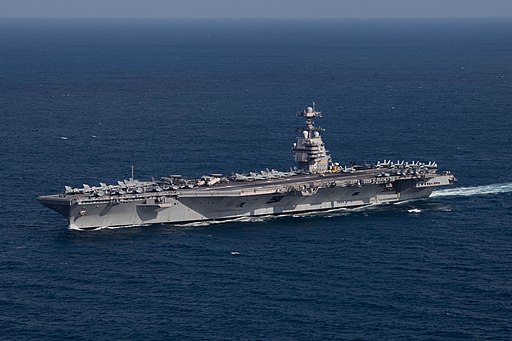
USS Gerald R. Ford (CVN-78)
The USS Gerald R. Ford (CVN-78) represents a groundbreaking leap in naval technology and design, heralding the next generation of U.S. aircraft carriers. As the lead ship of its class, the Ford is not only a symbol of American military prowess but also a testament to decades of innovation, engineering excellence, and forward-thinking strategy. With state-of-the-art systems, improved operational efficiencies, and enhanced combat capabilities, this supercarrier is poised to redefine modern naval warfare.
Historical Background and Development
Origins and the Need for a New Carrier
The conception of the USS Gerald R. Ford was born out of the recognition that the aging Nimitz-class carriers, though formidable in their time, required a transformative upgrade to meet the demands of 21st-century warfare. Rapid technological advancements, emerging threats, and evolving strategic priorities drove the U.S. Navy to envision a carrier that would be more efficient, more lethal, and more adaptable. The Ford-class was designed to provide enhanced sortie rates, reduced operating costs, and improved survivability, ensuring that the U.S. maintains a decisive edge on the global stage.
Construction and Commissioning
Construction of the USS Gerald R. Ford began in the early 2000s, with intense research and development efforts aimed at integrating innovative technologies into a robust and reliable platform. The keel was laid amid great anticipation, and over the subsequent years, thousands of skilled engineers and shipbuilders worked tirelessly to bring this vision to life. After extensive sea trials and rigorous testing, the Ford was commissioned into service, marking a new era in naval engineering and operational capability. The vessel’s entry into active duty has since been celebrated as a milestone in American naval history.
Design and Engineering Features
Hull and Propulsion
Nuclear Propulsion and Efficiency
At the core of USS Gerald R. Ford’s power is an advanced nuclear propulsion system that grants the carrier unprecedented endurance and operational range. This propulsion system enables the Ford to operate continuously for over 20 years without refueling, drastically reducing logistical burdens and ensuring rapid deployment capabilities. The integration of nuclear power not only provides immense energy but also contributes to the overall efficiency and reduced emissions, setting a new standard for environmentally conscious naval engineering.
Flight Deck and Aircraft Launch Systems
Electromagnetic Aircraft Launch System (EMALS) and Advanced Arresting Gear (AAG)
One of the most revolutionary features of the Ford-class is its state-of-the-art flight deck. Unlike traditional steam catapult systems, the USS Gerald R. Ford utilizes the Electromagnetic Aircraft Launch System (EMALS), which offers smoother acceleration, reduced stress on aircraft, and a higher sortie rate. Complementing EMALS is the Advanced Arresting Gear (AAG), designed to safely recover a wider variety of aircraft while enhancing the safety and durability of the deck operations. These systems together not only improve operational tempo but also reduce maintenance costs and extend the service life of both the carrier and its embarked air wing.
Advanced Systems and Technology
Radar, Sensors, and Automation
The USS Gerald R. Ford is equipped with next-generation radar and sensor suites that provide unparalleled situational awareness. Modernized sensors, including advanced air surveillance radars and electronic warfare systems, allow for real-time tracking of potential threats and swift response to evolving scenarios. Additionally, a significant emphasis has been placed on automation throughout the vessel. The incorporation of automated systems in damage control, navigation, and maintenance tasks minimizes crew workload and enhances overall efficiency. These technological advancements allow the Ford to operate seamlessly as a command and control hub in a multi-domain battle environment.
Operational Capabilities and Strategic Importance
Role in Modern Naval Warfare
The Ford is designed to project power and deter potential adversaries through its formidable offensive and defensive capabilities. Its enhanced missile systems, superior radar coverage, and increased aircraft capacity empower the vessel to execute a range of missions—from strategic strikes and maritime security operations to humanitarian assistance and disaster relief. The carrier’s ability to rapidly launch and recover aircraft in various weather conditions makes it an indispensable asset in both peacetime operations and high-intensity conflicts.
Integration with Joint Force Operations
In today’s complex military landscape, interoperability and joint force integration are critical. The USS Gerald R. Ford is engineered to work seamlessly with air, land, and sea forces. Its advanced communications and data-sharing systems facilitate coordinated operations with allies and other branches of the U.S. military. This multi-domain integration ensures that the Ford can act as a mobile command center, orchestrating joint operations and maximizing the collective strength of the combined forces.
Challenges and Future Outlook
Technological Hurdles and Overcoming Them
While the Ford represents a significant technological leap, its development was not without challenges. Integrating cutting-edge systems such as EMALS and AAG required overcoming unprecedented engineering obstacles. Early issues with software integration, system reliability, and maintenance logistics highlighted the complexity of marrying traditional naval architecture with modern technology. However, through rigorous testing, iterative design improvements, and close collaboration with industry experts, these challenges were systematically addressed, setting the stage for further advancements in carrier design.
Future Upgrades and Legacy
Looking ahead, the USS Gerald R. Ford is expected to undergo continuous upgrades to maintain its technological edge. Planned enhancements include further automation, improved energy efficiency, and expanded cyber-defense capabilities. The legacy of the Ford-class will likely influence future carrier designs, as lessons learned from this program pave the way for even more sophisticated and capable vessels. The Ford’s transformative design not only secures its place in naval history but also serves as a blueprint for the future of maritime warfare.
Conclusion
The USS Gerald R. Ford (CVN-78) stands as a pinnacle of modern naval engineering and strategic innovation. Its blend of advanced nuclear propulsion, revolutionary aircraft launch systems, and state-of-the-art radar and sensor technologies marks a profound evolution from previous generations of aircraft carriers. As the lead ship of its class, the Ford embodies the future of naval warfare—capable, adaptable, and relentlessly forward-thinking. With its continuous upgrades and integration into joint operations, the USS Gerald R. Ford is set to remain a vital cornerstone of U.S. maritime power for decades to come, inspiring future innovations in naval design and operational strategy.
_underway_in_the_Atlantic_Ocean_on_9_October_2022_(221009-N-TL968-1248).JPG)