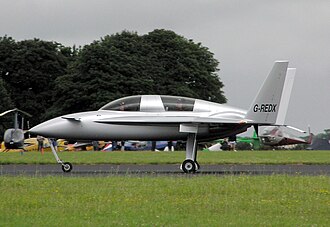
The Berkut 360 occupies a fascinating niche in the world of experimental aviation. While it has never been produced in the vast numbers associated with factory-built general aviation airplanes, it has earned a loyal following among pilots, builders, and aircraft designers who appreciate innovative engineering and exceptional aerodynamic efficiency. Combining composite construction, a sleek canard layout, retractable landing gear, and impressive cruise performance, the Berkut 360 represents the evolution of ideas that began with some of the most influential experimental aircraft of the late twentieth century.
Unlike conventional airplanes with their horizontal stabilizers mounted behind the wing, the Berkut 360 embraces the canard configuration, placing a small lifting surface ahead of the main wing. This arrangement gives the aircraft its unmistakable profile while offering several aerodynamic advantages, including reduced drag, stall resistance, and improved efficiency when properly designed. The Berkut 360 was conceived for builders who wanted more than a simple recreational airplane. It was intended to be a fast cross-country machine capable of covering long distances economically while maintaining the excitement and individuality that define the experimental aircraft community.
The aircraft also illustrates the remarkable creativity that flourished within amateur-built aviation during the final decades of the twentieth century. As composite materials became increasingly accessible and computer-aided aerodynamic analysis matured, designers were no longer constrained by the manufacturing limitations that had shaped conventional aluminum aircraft for decades. Smooth curves, laminar-flow airfoils, carefully sculpted engine installations, and lightweight composite structures became practical for individual builders. The Berkut 360 emerged directly from this environment, blending proven concepts with new refinements that elevated performance beyond many of its contemporaries.
Although it remains relatively rare, the Berkut 360 has become one of the most respected examples of what can be achieved when engineering innovation, aerodynamic understanding, and skilled craftsmanship come together. Every completed aircraft reflects hundreds or even thousands of hours of dedication from its builder, making each example both an engineering accomplishment and a personal statement.
The Rise of High-Performance Experimental Aviation
To understand the Berkut 360, it is helpful to appreciate the broader context in which it was developed. Experimental aviation experienced tremendous growth during the 1970s, 1980s, and 1990s. Improvements in fiberglass, carbon fiber, epoxy resins, and lightweight engines allowed independent designers to challenge many assumptions that had dominated aircraft design for generations.
Traditional production aircraft emphasized ease of certification, manufacturing efficiency, and conservative engineering. Experimental designers, by contrast, enjoyed far greater freedom to explore unconventional layouts, advanced aerodynamics, and novel construction techniques. While safety remained paramount, innovation could proceed much more rapidly because aircraft were built individually rather than certified for mass production.
Builders increasingly sought airplanes capable of combining high cruise speeds with relatively modest fuel consumption. Rather than competing with military aircraft or business jets, these designs aimed to outperform conventional piston-powered touring airplanes while remaining affordable to own and operate.
The Berkut 360 entered this landscape as an aircraft that embraced modern aerodynamic thinking while remaining practical for experienced amateur builders.
The Design Philosophy Behind the Berkut 360
The central philosophy of the Berkut 360 revolves around efficiency. Every major component of the aircraft contributes toward minimizing drag, maximizing lift, and optimizing structural weight.
Instead of relying upon sheer engine power to achieve impressive performance, the aircraft uses careful aerodynamic refinement to reduce the energy required for sustained high-speed flight. This philosophy reflects one of aviation’s oldest engineering truths: the cleanest airplane often proves faster than the most powerful one.
Composite construction makes these refinements possible. Smooth, uninterrupted surfaces reduce parasitic drag, while carefully shaped fairings minimize airflow disturbances around landing gear, engine installations, and control surfaces.
The canard arrangement also plays an important role in the overall design. Rather than carrying a tailplane that typically produces downward force during cruise, the forward lifting surface contributes positive lift, allowing the main wing to operate more efficiently.
This integrated approach demonstrates how individual design choices reinforce one another to create an aircraft greater than the sum of its parts.
Evolution from Earlier Canard Aircraft
The Berkut 360 did not emerge in isolation. It belongs to a family of canard aircraft whose roots extend back many decades.
The pioneering work of Burt Rutan dramatically influenced experimental aviation by demonstrating that canard aircraft could achieve outstanding efficiency, safety, and performance. Aircraft such as the Rutan Long-EZ showed that composite structures and unconventional layouts could outperform many traditional light airplanes.
The Berkut 360 builds upon these concepts while introducing significant refinements. Designers sought increased cabin comfort, greater structural strength, higher cruise performance, improved systems integration, and enhanced aesthetics.
The result is an aircraft that feels distinctly modern while acknowledging its aerodynamic heritage.
Composite Construction
Perhaps the defining technological feature of the Berkut 360 is its composite airframe.
Unlike conventional aluminum aircraft assembled from thousands of riveted metal panels, the Berkut employs fiberglass, carbon fiber, foam cores, and epoxy resins to create strong yet lightweight structures.
Composite construction offers numerous advantages.
Smooth external surfaces improve aerodynamic efficiency by reducing skin friction and eliminating many protruding fasteners.
Complex curves become relatively easy to manufacture compared with sheet-metal construction.
Corrosion resistance increases significantly, an important consideration for aircraft expected to remain in service for decades.
Structural stiffness also improves, contributing to precise control response and long-term durability.
For amateur builders, composites require different skills than metalworking, emphasizing careful layups, sanding, finishing, and quality control throughout construction.
Aerodynamic Characteristics
The Berkut 360 is immediately recognizable because of its canard layout.
The small forward wing generates lift before the main wing. Properly designed canard aircraft possess an important safety characteristic: the canard stalls first, naturally lowering the nose before the main wing reaches a fully stalled condition.
This behavior greatly reduces the likelihood of deep stalls and spins under normal operating conditions.
The main wing employs laminar-flow airfoils intended to reduce drag throughout much of the cruise envelope.
Winglets further improve aerodynamic efficiency by reducing wingtip vortices and induced drag while contributing directional stability.
Retractable landing gear minimizes drag during cruise, allowing the aircraft to achieve speeds that surprise pilots accustomed to fixed-gear general aviation airplanes.
Every contour—from the engine cowling to the canopy—reflects careful attention to airflow management.
Cabin Design
Although performance receives much attention, the Berkut 360 was also intended as a practical traveling aircraft.
The cockpit accommodates two occupants seated side by side, facilitating communication during long flights and improving overall comfort compared with tandem arrangements.
Large canopy glazing provides excellent visibility in nearly every direction.
Ergonomics receive considerable attention because builders often customize instrument layouts, seating, avionics, and interior finishes according to personal preferences.
Modern examples frequently incorporate digital flight displays, GPS navigation, integrated autopilots, engine monitoring systems, and advanced communication equipment far exceeding the capabilities available when the aircraft was originally conceived.
Luggage compartments permit genuine cross-country travel, making the aircraft suitable for weekend trips and longer adventures.
Powerplant Options
One hallmark of experimental aviation is flexibility regarding engine selection.
The Berkut 360 has flown with several different piston-engine installations depending upon builder preferences, availability, and desired performance.
Many examples utilize six-cylinder horizontally opposed aircraft engines capable of delivering excellent cruise performance while maintaining proven reliability.
Some builders emphasize economy and simplicity, while others pursue maximum speed through higher-powered engine installations.
The streamlined engine cowling contributes significantly to overall efficiency, carefully directing cooling airflow while minimizing aerodynamic penalties.
Constant-speed propellers are commonly installed, allowing efficient operation across a wide range of flight conditions.
Flight Characteristics
Pilots transitioning into the Berkut 360 frequently remark upon its responsiveness and efficiency.
Acceleration is brisk, particularly with more powerful engine configurations.
Control harmony reflects careful balancing of aerodynamic forces, allowing precise maneuvering without excessive pilot effort.
Cruise flight is where the aircraft truly excels.
The combination of clean aerodynamics, retractable landing gear, and composite construction allows cruise speeds that rival or exceed many certified aircraft equipped with substantially larger engines.
Fuel efficiency remains impressive because relatively little power is required to maintain high cruising velocities.
Landing requires familiarity with canard aircraft techniques, particularly regarding approach speed management. Once mastered, however, the aircraft rewards disciplined flying with predictable handling.
Building the Aircraft
Constructing a Berkut 360 represents a significant undertaking.
Unlike purchasing a factory-built airplane, completing a homebuilt aircraft requires extensive planning, patience, and craftsmanship.
Builders typically spend several years assembling the airframe, installing systems, fitting the engine, wiring avionics, and completing countless finishing tasks.
Composite construction demands meticulous attention to detail.
Every fiberglass or carbon-fiber layup must achieve correct resin content, fiber orientation, and curing conditions.
Control systems require careful rigging.
Landing gear geometry must be precisely established.
Engine installations demand accurate alignment and vibration management.
The reward for this effort is an aircraft uniquely tailored to its owner’s preferences.
Operational Uses
Although primarily intended for personal transportation and recreation, the Berkut 360 proves remarkably versatile.
Cross-country travel represents its strongest application.
High cruise speed allows efficient journeys covering hundreds of kilometers in relatively short periods.
Business travel also becomes practical where flexible scheduling outweighs commercial airline convenience.
Some owners participate in fly-ins, aviation gatherings, and experimental aircraft exhibitions, where the Berkut invariably attracts attention because of its distinctive appearance.
Flight instruction specific to canard aircraft occasionally utilizes experienced owners willing to mentor pilots transitioning into similar configurations.
The aircraft also serves as an educational platform, demonstrating advanced composite construction and aerodynamic concepts.
Maintenance Considerations
Composite aircraft differ from traditional aluminum airplanes in several respects.
Routine inspections focus upon structural integrity, bonding quality, surface condition, and control-system operation rather than corrosion alone.
Composite repairs require specialized materials and techniques but can often restore structural strength remarkably well when performed correctly.
Engine maintenance generally follows established procedures associated with the chosen powerplant.
Retractable landing gear introduces additional inspection requirements involving actuators, locks, hinges, and alignment.
Modern avionics simplify troubleshooting while improving reliability compared with earlier analog systems.
Because each aircraft is individually built, maintenance documentation varies considerably among owners.
Advantages of the Canard Configuration
The Berkut 360 illustrates many advantages associated with properly executed canard aircraft.
Positive lift from both lifting surfaces improves aerodynamic efficiency.
Excellent forward visibility enhances situational awareness.
Natural stall resistance contributes to safety.
The absence of a large conventional tail reduces certain drag components.
Cabin placement near the aircraft’s center of gravity minimizes pitch changes associated with passenger loading.
Engine placement behind occupants reduces cockpit noise compared with many tractor configurations.
These benefits help explain why canard aircraft continue attracting designers despite representing only a small portion of the overall aviation fleet.
Limitations and Challenges
Every aircraft configuration involves compromise.
Canard airplanes generally require careful weight-and-balance management to preserve intended handling qualities.
Landing techniques differ from those used in conventional tail-aft airplanes, requiring transition training.
Cooling arrangements for rear-mounted engines demand careful engineering.
Construction quality becomes especially important because composite aircraft depend heavily upon proper manufacturing techniques.
The limited production numbers of the Berkut 360 also mean that factory support, standardized parts availability, and builder communities are naturally smaller than those surrounding mass-produced aircraft.
Nevertheless, experienced owners generally view these challenges as reasonable trade-offs for the aircraft’s distinctive capabilities.
The Berkut 360 Within Experimental Aviation
The Berkut 360 occupies an important position within the history of homebuilt aviation.
It demonstrates that amateur-built aircraft need not sacrifice sophistication in pursuit of affordability.
Instead, the aircraft combines advanced aerodynamics, composite engineering, retractable landing gear, efficient propulsion, and impressive cross-country capability within a package assembled largely by individual builders.
It also reflects the remarkable exchange of ideas that characterizes experimental aviation.
Design innovations spread rapidly through builder communities, inspiring continuous refinement rather than remaining confined within large corporations.
Each completed Berkut therefore represents both an individual achievement and part of a broader tradition of engineering experimentation.
Legacy
The Berkut 360 may never achieve the production numbers of mainstream general aviation aircraft, yet its influence extends well beyond the number of examples flying today.
It embodies an era when composite construction transformed private aircraft design.
It demonstrates the enduring appeal of canard aerodynamics.
It proves that carefully optimized efficiency can rival raw engine power.
Most importantly, it reminds us that aviation innovation often flourishes outside major manufacturers. Individual designers, skilled builders, and passionate pilots continue pushing technological boundaries through creativity, persistence, and craftsmanship.
For aviation enthusiasts, the Berkut 360 remains a compelling reminder that performance, elegance, and engineering sophistication are not exclusive to factory-built airplanes. Every completed aircraft stands as a tribute to the vision of its designers and the dedication of its builder—a sleek, efficient machine capable of delivering exceptional flying experiences while showcasing some of the most advanced concepts ever embraced by the experimental aviation community.
Technical Specifications
| Parameter | Specification* |
|---|---|
| Aircraft | Berkut 360 |
| Role | High-performance experimental/homebuilt aircraft |
| Category | Two-seat composite canard monoplane |
| Country of origin | United States |
| Construction | Composite (fiberglass/carbon-fiber with foam-core structure) |
| Crew | 1 |
| Passenger capacity | 1 |
| Seating | Side-by-side |
| Landing gear | Retractable tricycle |
| Wing configuration | Canard with swept main wing and winglets |
| Powerplant | Typically 1 × six-cylinder horizontally opposed piston engine (builder-selected, commonly in the 180–220 hp class) |
| Propeller | Constant-speed propeller (varies by builder) |
| Length | Approximately 5.8 m (19 ft) |
| Wingspan | Approximately 8.5 m (28 ft) |
| Height | Approximately 2.0 m (6.5 ft) |
| Empty weight | Approximately 700–800 kg (builder dependent) |
| Maximum takeoff weight | Approximately 1,150–1,250 kg (builder dependent) |
| Cruise speed | Approximately 300–340 km/h (185–210 mph), depending on engine and configuration |
| Maximum speed | Approximately 350 km/h (217 mph), depending on configuration |
| Stall speed | Approximately 100–110 km/h (62–68 mph) |
| Range | Approximately 1,500–2,000 km, depending on fuel capacity and power setting |
| Service ceiling | Approximately 5,500–6,500 m (18,000–21,000 ft) |
| Primary missions | Personal transportation, cross-country touring, recreational flying, experimental aviation |
