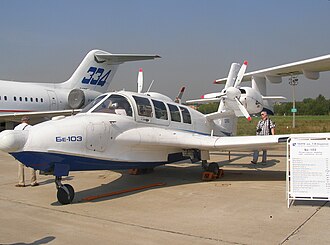
The Beriev Be-103 represents one of the most fascinating chapters in the long history of amphibious aviation. Unlike the large military flying boats that made the name of the Beriev Design Bureau famous during the Cold War, the Be-103 was conceived for an entirely different mission. It was designed not to patrol oceans or hunt submarines, but to provide a practical, economical, and versatile aircraft capable of connecting remote communities, supporting private operators, conducting environmental surveys, carrying tourists, and performing search-and-rescue missions. In many respects, the Be-103 reflects a changing world in which flexibility and civilian utility became just as important as military capability.
Introduced during the difficult economic transition that followed the dissolution of the Soviet Union, the Be-103 demonstrated that Russian aerospace engineers could still produce innovative aircraft despite severe financial constraints. Rather than relying on massive military procurement programs, Beriev sought to enter the growing international market for general aviation amphibians, where aircraft capable of operating from both conventional runways and open water remained relatively uncommon.
Although production numbers never reached the levels originally anticipated, the Be-103 gained international attention for its unusual appearance, advanced hydrodynamic design, excellent water-handling characteristics, and certification in multiple countries. It became one of the very few Russian civil aircraft of the post-Soviet era to receive certification from aviation authorities outside Russia, illustrating its engineering quality and export ambitions.
The Be-103 also occupies a special position within Beriev’s long tradition of amphibious aircraft development. It inherited decades of accumulated experience from legendary designs such as the Beriev MBR-2, Beriev Be-6, and Beriev Be-12, while introducing modern composite materials, contemporary avionics, efficient piston engines, and aerodynamic refinements suited to civilian operations. Rather than replacing those historic aircraft, it represented the evolution of Beriev’s philosophy into a new era where versatility, economy, and accessibility became the defining priorities.
The Historical Background Behind the Be-103
The collapse of the Soviet Union fundamentally altered the aviation industry throughout the former Soviet republics. Military budgets shrank dramatically, and many aircraft manufacturers suddenly found themselves competing in international commercial markets for the first time. Design bureaus that had previously relied almost exclusively on government contracts were forced to diversify their portfolios.
For the Beriev Aircraft Company, this challenge also presented an opportunity. The organization had spent decades mastering the science of amphibious aviation, accumulating unparalleled expertise in flying boats capable of operating from both land and water. While military demand declined, there remained a global niche for light amphibious aircraft serving private owners, regional airlines, government agencies, and emergency services.
Around the world, many regions lacked extensive airport infrastructure but possessed thousands of lakes, rivers, reservoirs, and coastal waterways. Countries such as Canada, the United States, Indonesia, China, Brazil, and parts of Northern Europe had long traditions of floatplane and amphibious operations. Beriev believed there was room for a modern Russian aircraft that combined proven hydrodynamic performance with contemporary engineering standards.
The resulting concept emphasized simplicity, safety, operational flexibility, and affordability. Instead of building another large transport flying boat, Beriev focused on creating an aircraft that could appeal to small commercial operators and private customers while maintaining the ruggedness associated with the company’s earlier products.
Development of a New Generation Amphibian
Development work on the Be-103 began during the early 1990s, an exceptionally difficult period for Russian industry. Funding shortages slowed progress, forcing engineers to maximize efficiency and reuse proven technologies whenever practical.
Unlike many earlier Beriev aircraft designed primarily for military applications, the Be-103 was conceived from the outset as a civil aircraft. Every aspect of the design reflected commercial priorities, including low operating costs, straightforward maintenance procedures, comfortable passenger accommodation, and compliance with international certification standards.
Engineers also recognized that many prospective customers would be relatively inexperienced in amphibious aviation. Consequently, the aircraft needed forgiving handling characteristics both in flight and on water. Extensive computational modeling and hydrodynamic testing were undertaken to ensure stable behavior during takeoff, landing, taxiing, and docking.
The prototype performed its maiden flight in the late 1990s, confirming the validity of the design. Test pilots praised its predictable handling and excellent water performance, encouraging Beriev to pursue certification in both Russia and overseas markets.
An Unmistakable Appearance
Perhaps the first thing observers notice about the Be-103 is its highly distinctive profile. Unlike conventional landplanes or classic flying boats, the aircraft appears almost futuristic despite being powered by piston engines.
Its low-mounted wing immediately distinguishes it from earlier Beriev amphibians, which generally featured high-wing configurations. This arrangement contributes to aerodynamic efficiency while also creating a sleek, modern appearance.
The twin engines are mounted in tractor configuration ahead of the wing, providing straightforward maintenance access and balanced thrust. The engines sit high enough to minimize water spray during amphibious operations while remaining easily accessible on the ground.
The fuselage incorporates a carefully sculpted boat hull that blends smoothly into the aerodynamic contours of the aircraft. Rather than appearing like a boat with wings attached, the Be-103 achieves a remarkably integrated design in which aerodynamic and hydrodynamic requirements complement each other.
Retractable landing gear allows transitions between water and land operations without compromising hull integrity or significantly increasing drag.
Large windows provide excellent external visibility, an important consideration for sightseeing, search operations, photography, and recreational flying.
Hydrodynamic Engineering
Designing an amphibious aircraft requires engineers to satisfy two very different sets of physical requirements. In the air, minimizing drag is essential for efficiency and performance. On water, however, stability, buoyancy, spray control, and planing characteristics become equally important.
The Be-103 demonstrates Beriev’s decades of experience in solving this engineering puzzle.
Its hull incorporates a carefully designed step that allows the aircraft to transition efficiently from displacement mode to planing during takeoff. Once sufficient speed is reached, hydrodynamic drag decreases dramatically, enabling the aircraft to become airborne with relatively modest engine power.
Spray rails along the hull direct water away from the propellers and wings, protecting the engines while maintaining visibility for the pilots.
Wingtip floats provide lateral stability while taxiing on water. Unlike removable floats used on conventional seaplanes, these are integrated seamlessly into the overall design, contributing to both aesthetics and operational reliability.
Extensive testing demonstrated that the aircraft could safely operate from lakes, rivers, reservoirs, sheltered coastal waters, and many inland waterways under suitable weather conditions.
Aerodynamic Characteristics
While hydrodynamics dominate operations on water, the Be-103 also displays excellent aerodynamic qualities.
Its wing employs a modern airfoil optimized for relatively low cruising speeds while maintaining efficient lift generation. This design contributes to short takeoff distances, gentle stall behavior, and economical cruise performance.
The aircraft’s twin-tail arrangement enhances directional stability while reducing interference with the propeller slipstreams. Control surfaces remain responsive throughout the flight envelope, providing confident handling for both experienced pilots and those transitioning from conventional light aircraft.
One notable characteristic frequently praised during evaluations is the aircraft’s benign low-speed behavior. Amphibious aircraft often operate from confined waterways where steep turns or abrupt maneuvers may become necessary. The Be-103 responds predictably, inspiring confidence during demanding operations.
Its relatively light control forces also reduce pilot fatigue during extended flights.
Powerplant and Performance
The Be-103 is powered by two piston engines mounted in conventional tractor configuration. Various prototypes and production aircraft have used different engine installations depending on certification requirements and customer preferences, although Textron Lycoming piston engines became the standard choice for internationally certified examples.
The decision to use piston engines rather than turboprops reflected economic considerations. Most intended customers prioritized low acquisition and operating costs over maximum speed or payload.
Twin-engine configuration provides an additional measure of safety during operations over remote wilderness and open water. Should one engine fail, the aircraft retains sufficient performance for continued controlled flight under appropriate operating conditions.
Cruise performance emphasizes fuel economy rather than outright speed, allowing operators to cover regional routes economically while maintaining reasonable endurance.
The combination of moderate speed, efficient fuel consumption, and amphibious capability creates an attractive balance for many specialized missions.
Cabin Layout and Passenger Experience
Unlike military flying boats with cramped operational interiors, the Be-103 was designed with passenger comfort in mind.
The cabin accommodates five occupants, including the pilot. Seats are arranged to maximize available space while preserving excellent visibility through generously sized windows.
Noise levels remain relatively modest for a piston-powered aircraft thanks to careful insulation and thoughtful engine placement.
Entry into the cabin is straightforward whether the aircraft is parked on land or moored at a dock. The spacious glazing creates an open atmosphere, making the aircraft particularly appealing for sightseeing flights over lakes, coastlines, mountains, and wilderness areas.
Luggage capacity is adequate for regional travel, allowing passengers to transport camping equipment, scientific instruments, photographic gear, or business supplies.
Civilian Applications
The greatest strength of the Be-103 lies in its versatility.
Regional transportation represents one of its most obvious applications. Numerous communities around the world remain isolated by geography yet possess suitable waterways for amphibious operations. Rather than constructing expensive airports, operators can simply utilize existing lakes or rivers.
Tourism offers another significant opportunity. Scenic regions featuring islands, fjords, mountain lakes, or tropical coastlines provide ideal environments for amphibious sightseeing flights.
Environmental monitoring also benefits from amphibious capability. Scientists studying wetlands, wildlife populations, fisheries, glaciers, or coastal ecosystems can reach remote research locations inaccessible by road.
Government agencies may employ the aircraft for border patrol, fisheries enforcement, pollution monitoring, or infrastructure inspection.
Search-and-rescue organizations appreciate its ability to land near survivors, particularly on inland lakes where helicopters may possess limited endurance.
Medical evacuation missions become feasible in remote communities lacking conventional airports.
Even private recreational owners find the aircraft attractive because it offers access to destinations unreachable by ordinary landplanes.
International Certification and Export Efforts
One of the Be-103’s most impressive achievements involved obtaining international certification.
Receiving certification outside Russia required compliance with demanding airworthiness standards, extensive documentation, rigorous flight testing, and careful engineering validation.
The aircraft ultimately received certification from aviation authorities in several countries, including the United States, making it one of the relatively few Russian civil aircraft to accomplish this milestone.
Certification significantly enhanced export prospects, particularly in North America and Asia where amphibious aviation enjoys longstanding popularity.
China expressed considerable interest in the aircraft, viewing it as suitable for regional transportation and tourism in areas with extensive waterways.
Although large export contracts did not fully materialize as originally envisioned, the certification process itself demonstrated the quality and maturity of the Be-103’s engineering.
Challenges in Commercial Success
Despite its technical strengths, the Be-103 entered service during an exceptionally competitive period.
Established manufacturers already dominated many segments of the general aviation market, while economic uncertainty limited investment in specialized amphibious aircraft.
Production costs also proved challenging. Amphibians require more complex structures than comparable landplanes due to the need for watertight hulls, retractable landing gear, corrosion protection, and reinforced structures.
Potential operators often hesitated because amphibious aviation demands specialized pilot training, maintenance procedures, and infrastructure such as docks and launching facilities.
Furthermore, the market for five-seat amphibious aircraft remained relatively small compared to conventional business aircraft.
These commercial realities limited production numbers despite widespread admiration for the aircraft’s design.
A Modern Expression of Beriev Philosophy
The Be-103 embodies principles that have characterized Beriev aircraft for nearly a century.
Rather than pursuing extreme performance, the design emphasizes operational flexibility.
Instead of maximizing payload, it prioritizes accessibility.
Instead of depending upon sophisticated infrastructure, it enables independent operation from natural waterways.
This philosophy reflects the unique advantages of amphibious aviation. While helicopters can land almost anywhere, they consume considerably more fuel and require intensive maintenance. Conventional airplanes operate economically but remain dependent upon runways. Amphibious aircraft occupy a valuable middle ground, combining efficiency with remarkable geographical freedom.
The Be-103 demonstrates that this concept remains relevant even in the twenty-first century.
Legacy and Future Prospects
Although production remained limited, the Be-103 continues to attract attention among aviation enthusiasts, engineers, and operators interested in specialized aircraft.
Its significance extends beyond production numbers.
It proved that Russian aerospace engineers retained world-class expertise in amphibious aircraft design despite the enormous economic difficulties of the post-Soviet era.
It also reinforced Beriev’s reputation as one of the world’s foremost authorities on flying boats and amphibians.
Future amphibious aircraft may incorporate composite materials, hybrid-electric propulsion, advanced avionics, and autonomous flight systems, but many of the hydrodynamic principles demonstrated by the Be-103 will remain applicable.
The aircraft therefore serves as an important bridge between the classic flying boats of the twentieth century and the emerging amphibious aircraft of the future.
For aviation historians, the Be-103 illustrates how traditional engineering knowledge can evolve to meet changing commercial realities. For pilots, it represents a uniquely capable aircraft equally comfortable on runways and waterways. For Beriev, it symbolizes the continuation of a remarkable design heritage stretching from the earliest Soviet flying boats to the sophisticated amphibians of the modern era.
Its elegant lines, carefully engineered hull, and impressive versatility ensure that the Be-103 occupies a respected place within the global history of amphibious aviation.
Technical Specifications
| Parameter | Specification |
|---|---|
| Aircraft | Beriev Be-103 |
| Role | Light amphibious utility aircraft |
| Manufacturer | Beriev Aircraft Company |
| Country of origin | Russia |
| First flight | 1997 |
| Certification | Russian certification; U.S. FAA type certification (later suspended with production changes) |
| Crew | 1 pilot |
| Passenger capacity | 4 passengers |
| Overall length | 10.56 m (34 ft 8 in) |
| Wingspan | 12.72 m (41 ft 9 in) |
| Height | 3.77 m (12 ft 4 in) |
| Wing area | Approximately 25 m² |
| Empty weight | Approximately 1,560 kg |
| Maximum takeoff weight | Approximately 2,270 kg |
| Powerplant | 2 × Textron Lycoming IO-360 ES4 piston engines |
| Engine power | 210 hp each |
| Propellers | Three-bladed constant-speed propellers |
| Maximum cruise speed | Approximately 240 km/h (149 mph) |
| Maximum speed | Approximately 250 km/h (155 mph) |
| Stall speed | Approximately 115 km/h |
| Range | Approximately 845 km |
| Service ceiling | Approximately 5,500 m (18,000 ft) |
| Rate of climb | Approximately 6 m/s |
| Landing gear | Retractable tricycle amphibious landing gear |
| Water operation | Lakes, rivers, reservoirs, sheltered coastal waters |
| Primary missions | Passenger transport, tourism, search and rescue, environmental monitoring, aerial survey, private ownership, regional utility operations |
