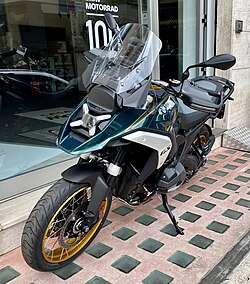
Few motorcycles have had as much influence on the adventure touring segment as the BMW R 1300 GS. For more than four decades, BMW’s GS family has shaped expectations of what a large dual-purpose motorcycle should be. Comfortable enough to cross continents, capable enough to tackle gravel roads, technologically advanced, and exceptionally reliable, the GS has become the reference point against which nearly every adventure motorcycle is measured.
The arrival of the BMW R 1300 GS marked far more than a routine model update. It represented the most comprehensive redesign of BMW’s flagship adventure bike since the introduction of the R 1200 GS in 2004. While its predecessor, the immensely successful R 1250 GS, was already regarded as one of the finest all-round motorcycles available, BMW’s engineers chose not to simply refine the existing formula. Instead, they redesigned almost every major component, including the frame, engine, electronics, suspension, bodywork, and rider ergonomics.
At first glance, some enthusiasts questioned the more angular styling and compact proportions of the new model. Others wondered whether BMW had sacrificed the traditional GS character in pursuit of innovation. However, once riders began putting serious miles on the motorcycle, a different picture emerged. The R 1300 GS is not merely a replacement for the R 1250 GS—it is an entirely new interpretation of the adventure motorcycle concept.
The new boxer engine delivers stronger performance, the chassis feels noticeably lighter and more agile, the electronics represent one of the most advanced packages currently available on any production motorcycle, and the overall riding experience is more refined than ever before.
This article explores the BMW R 1300 GS in detail, covering its history, engineering, design philosophy, engine technology, suspension, electronics, touring capabilities, off-road performance, ownership costs, maintenance, strengths, weaknesses, and its position among today’s increasingly competitive adventure motorcycles.
The Evolution of the GS Legend
From the R 80 G/S to the R 1300 GS
To understand the significance of the R 1300 GS, it is necessary to appreciate the remarkable heritage behind the GS name.
The story began in 1980 with the BMW R 80 G/S, a motorcycle that effectively created the modern adventure category. At a time when motorcycles were largely divided between road bikes and off-road machines, BMW combined both worlds into one versatile package.
The concept proved revolutionary.
Over the following decades the GS family evolved steadily through models such as the R 100 GS, R 1100 GS, R 1150 GS, R 1200 GS and finally the R 1250 GS.
Each generation improved power, comfort, electronics and reliability while retaining the signature horizontally opposed boxer engine and shaft drive.
The R 1250 GS became the best-selling large-capacity motorcycle in Europe for several consecutive years, making the task of replacing it particularly challenging.
BMW therefore approached the R 1300 GS not as a facelift but as a complete reinvention.
Exterior Design: Smaller, Sharper and More Purposeful
Perhaps the most controversial aspect of the R 1300 GS is its appearance.
The previous model emphasized bulk and visual presence. The new motorcycle is significantly more compact.
BMW abandoned many of the rounded surfaces in favor of sharper lines and a cleaner overall profile.
The redesigned LED headlight immediately attracts attention. Unlike previous asymmetrical designs, the new lighting unit creates a distinctive modern identity while incorporating advanced adaptive lighting technology.
The fuel tank is slimmer between the knees, improving rider control when standing during off-road riding.
Body panels fit more tightly around the mechanical components, making the motorcycle appear considerably lighter than its predecessor.
Although opinions regarding styling remain divided, few riders dispute that the motorcycle now looks more athletic and modern.
A Completely New Boxer Engine
More Power Without Losing Character
At the heart of the R 1300 GS lies BMW’s latest evolution of its iconic boxer twin.
Although displacement has increased only modestly compared to the R 1250 GS, nearly every internal component has been redesigned.
The engine now produces approximately 145 horsepower and 149 Nm of torque, making it the most powerful production boxer engine BMW has ever built.
Despite this increase in performance, the familiar boxer character remains intact.
Strong low-end torque continues to define the riding experience.
Instead of requiring constant gear changes, the motorcycle effortlessly accelerates from low engine speeds.
This relaxed power delivery remains one of the defining characteristics of the GS family.
ShiftCam Technology Continues
BMW retained its innovative ShiftCam variable valve timing system.
This technology optimizes valve timing depending on engine load and rpm.
At lower speeds the engine delivers smoother response, better fuel economy and increased torque.
At higher rpm the system switches cam profiles to maximize airflow and performance.
The result is an unusually broad power band.
Whether navigating city traffic, climbing mountain roads or overtaking on highways, the engine always feels responsive.
A Completely Redesigned Chassis
The engine is only part of the transformation.
BMW also introduced an entirely new steel sheet-metal main frame combined with an aluminum rear subframe.
Compared with the previous tubular frame, the new construction improves rigidity while reducing overall weight.
The motorcycle feels noticeably more agile during direction changes.
Slow-speed maneuvering is easier despite the motorcycle remaining physically large.
The lower center of gravity, a long-standing advantage of boxer engines, continues to contribute to excellent balance.
Suspension Technology
EVO Telelever Front Suspension
BMW has refined its famous Telelever front suspension once again.
The EVO Telelever system separates braking forces from suspension movement, reducing front-end dive during hard braking.
Many riders initially require some adaptation because the sensation differs from conventional telescopic forks.
However, once familiar with the system, most appreciate its remarkable stability.
Long-distance comfort also benefits significantly.
EVO Paralever Rear Suspension
At the rear BMW employs its updated EVO Paralever system.
Combined with the shaft drive, this design minimizes unwanted suspension movement during acceleration.
The motorcycle remains composed even when fully loaded with luggage and passenger.
Dynamic Suspension Adjustment
Higher-specification models feature electronically adjustable suspension.
Sensors constantly monitor riding conditions and adjust damping in real time.
Whether riding solo, carrying luggage or traveling with a passenger, the suspension continuously adapts to optimize comfort and handling.
Few competitors currently offer such sophisticated automatic suspension management.
Electronics: One of the Most Advanced Packages on the Market
Modern motorcycles increasingly rely on electronic assistance.
The BMW R 1300 GS stands among the industry leaders.
Its electronics package includes:
- Multiple riding modes
- Lean-sensitive traction control
- Cornering ABS
- Hill Start Control
- Engine Brake Control
- Cruise Control
- Adaptive Cruise Control (optional)
- Forward Collision Warning
- Blind Spot Monitoring
- Tire Pressure Monitoring
- Keyless Ride
- Smartphone connectivity
- Full-color TFT display
These systems work seamlessly together without feeling intrusive.
Experienced riders can disable or customize many functions according to personal preference.
Touring Comfort
Long-distance travel remains the GS’s primary mission.
BMW paid considerable attention to ergonomics.
The redesigned seat improves support during extended rides.
Handlebars are positioned naturally for both seated and standing riding.
Wind protection has improved despite the motorcycle’s more compact appearance.
Optional comfort seats, heated grips, heated seats and electrically adjustable windshields further enhance touring capability.
Luggage systems integrate neatly into the motorcycle’s design.
Factory aluminum panniers offer excellent durability for international travel.
Off-Road Capability
Although many GS motorcycles spend most of their lives on asphalt, BMW has ensured the R 1300 GS remains genuinely capable off road.
The slimmer fuel tank improves standing ergonomics.
Ground clearance remains generous.
Electronic Enduro riding modes optimize traction control and ABS for loose surfaces.
The boxer engine’s low center of gravity inspires confidence when negotiating technical terrain.
While lighter adventure motorcycles remain preferable for aggressive off-road riding, the R 1300 GS performs remarkably well considering its size.
Riding Experience
The greatest strength of the BMW R 1300 GS lies in its versatility.
Few motorcycles transition so naturally between different environments.
Urban commuting feels surprisingly manageable.
Twisting mountain roads reveal unexpectedly agile handling.
Motorways disappear effortlessly beneath its comfortable ergonomics.
Gravel roads become enjoyable rather than intimidating.
The motorcycle adapts to almost every situation without demanding compromises.
This extraordinary versatility explains why so many riders consider the GS the ultimate “one motorcycle does everything” machine.
Reliability
BMW boxer engines have earned an excellent reputation over decades.
The R 1300 GS continues this tradition.
The shaft drive eliminates routine chain maintenance.
The boxer engine’s simple cylinder access facilitates valve inspections.
Electronic complexity has increased substantially, making dealer diagnostics more important than in previous generations.
Nevertheless, early ownership reports indicate strong reliability.
As always, regular maintenance remains essential.
Maintenance Costs
Premium engineering inevitably brings premium servicing costs.
Routine maintenance includes:
- Engine oil changes
- Final drive oil replacement
- Brake fluid replacement
- Valve clearance inspections
- Air filter replacement
- Spark plugs
Fortunately, shaft drive reduces long-term maintenance compared to chain-driven competitors.
Fuel consumption remains impressive considering performance levels.
Insurance costs vary depending on country and rider profile but generally reflect the motorcycle’s premium status.
Competitors
The adventure motorcycle segment has never been stronger.
The BMW R 1300 GS competes directly with:
- KTM 1290 Super Adventure S
- Ducati Multistrada V4
- Honda CRF1100L Africa Twin
- Triumph Tiger 1200
- Harley-Davidson Pan America 1250
- Moto Guzzi Stelvio
Each competitor offers unique strengths.
However, few match the BMW’s balance between touring comfort, technology, road handling and off-road ability.
Strengths
The R 1300 GS excels through its incredibly flexible boxer engine, superb ergonomics, advanced electronics, comfortable suspension, excellent touring capability, impressive fuel economy, premium build quality and class-leading versatility. It remains one of the easiest large motorcycles to ride despite its impressive capabilities.
Weaknesses
Its purchase price is high, optional equipment can become very expensive, electronic complexity increases long-term repair costs outside warranty, and its size can still intimidate newer riders. Some long-time GS enthusiasts also prefer the styling of earlier generations.
Who Should Buy the BMW R 1300 GS?
The BMW R 1300 GS is ideal for riders seeking one motorcycle capable of almost everything. It suits long-distance tourers, commuters, adventure travelers, weekend explorers and experienced riders who value technology and comfort.
It is especially appealing to those who regularly travel across multiple countries, carry luggage, ride with passengers or frequently switch between highways, mountain roads and gravel tracks.
For riders who want maximum off-road capability with minimum weight, smaller adventure motorcycles may still be preferable. Likewise, riders interested primarily in sporty road riding may find dedicated sport-touring machines more suitable.
However, for those looking for perhaps the most versatile premium motorcycle currently available, the R 1300 GS stands at the very top of the segment.
Final Verdict
The BMW R 1300 GS is much more than an update to the hugely successful R 1250 GS. It is a comprehensive redesign that modernizes every aspect of the motorcycle while preserving the qualities that have made the GS family legendary for more than forty years.
The new boxer engine is stronger yet smoother, the chassis is lighter and more agile, the suspension is more sophisticated, and the electronics package is among the most advanced in the industry. Despite the increased technology, the motorcycle remains approachable and remarkably easy to ride, whether crossing continents, commuting through traffic or exploring remote gravel roads.
It is undeniably an expensive motorcycle, particularly when equipped with BMW’s extensive range of options, but it delivers an equally premium ownership experience. Few machines can match its combination of comfort, capability, reliability and versatility.
For many riders, the BMW R 1300 GS is not simply another adventure motorcycle—it is the benchmark by which all others continue to be judged.
BMW R 1300 GS Technical Specifications
| Parameter | Specification |
|---|---|
| Model | BMW R 1300 GS |
| Manufacturer | BMW Motorrad |
| Motorcycle Type | Adventure Touring |
| Production Start | 2023 |
| Engine | Air/Liquid-cooled Boxer Twin |
| Displacement | 1,300 cc |
| Bore × Stroke | 106.5 × 73 mm |
| Maximum Power | 145 hp (107 kW) @ 7,750 rpm |
| Maximum Torque | 149 Nm @ 6,500 rpm |
| Valve System | DOHC, BMW ShiftCam Variable Valve Timing |
| Fuel System | Electronic Fuel Injection |
| Transmission | 6-speed Manual |
| Final Drive | Shaft Drive |
| Frame | Steel Sheet-Metal Main Frame with Aluminum Rear Frame |
| Front Suspension | EVO Telelever |
| Rear Suspension | EVO Paralever |
| Front Brake | Twin 310 mm Discs, Radial Calipers |
| Rear Brake | Single 285 mm Disc |
| ABS | BMW Motorrad ABS Pro (Cornering ABS) |
| Front Wheel | 19-inch |
| Rear Wheel | 17-inch |
| Seat Height | Approx. 850–870 mm (depending on configuration) |
| Fuel Tank Capacity | 19 liters |
| Wet Weight | Approx. 237 kg |
| Top Speed | Over 220 km/h |
| Average Fuel Consumption | Approx. 4.8–5.3 L/100 km |
| Standard Equipment | TFT Display, Riding Modes, Cruise Control, LED Lighting, Keyless Ride, Traction Control |
| Optional Equipment | Adaptive Cruise Control, Radar Safety Systems, Electronic Suspension, Heated Seats, Aluminum Luggage, Navigation Preparation |
