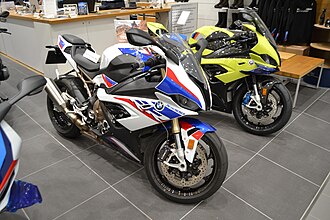
When the BMW S1000RR first arrived on the superbike scene, it changed the perception of BMW Motorrad forever. For decades, the German manufacturer had earned worldwide recognition for producing reliable touring motorcycles, adventure machines, and iconic boxer-powered models. Although BMW had participated in motorcycle racing and produced capable sport motorcycles, it had never seriously challenged the dominant Japanese and Italian manufacturers in the highly competitive liter-class superbike category. That changed dramatically with the arrival of the S1000RR.
Rather than entering the segment cautiously, BMW developed an entirely new motorcycle from the ground up with a single objective: to compete at the highest level of international superbike racing while remaining practical enough for everyday riders. The result was a machine that combined astonishing performance with cutting-edge electronics, refined engineering, premium build quality, and surprising usability.
The BMW S1000RR quickly became one of the fastest production motorcycles ever built. It attracted professional racers, track-day enthusiasts, experienced road riders, and technology lovers alike. Over multiple generations, BMW continued refining the motorcycle by reducing weight, increasing power, improving aerodynamics, and introducing advanced electronic rider aids that transformed the riding experience.
Today, the BMW S1000RR represents much more than a high-performance motorcycle. It is a technological showcase that demonstrates what modern engineering can achieve when performance, precision, and innovation are pursued without compromise. Whether carving through mountain roads, setting lap records on racing circuits, or simply showcasing its aggressive design in a garage, the S1000RR remains one of the defining superbikes of the modern era.
The Origins of the BMW S1000RR
Before the S1000RR, BMW Motorrad was primarily associated with touring comfort, long-distance reliability, and adventure riding. Models equipped with boxer engines and shaft drives dominated the company’s reputation, while competitors such as Honda, Yamaha, Suzuki, Kawasaki, Ducati, and Aprilia fought fiercely in the superbike market.
BMW recognized that participating seriously in international racing required an entirely new motorcycle platform. Rather than adapting an existing design, engineers created a completely fresh inline-four engine, lightweight aluminum chassis, sophisticated electronics package, and aerodynamic bodywork specifically intended for competition.
The motorcycle debuted in 2009 as a homologation model for the Superbike World Championship. Expectations were high, but few anticipated how competitive the motorcycle would become.
The first-generation S1000RR immediately impressed journalists with its combination of enormous horsepower, outstanding stability, surprisingly manageable handling, and class-leading electronic rider aids. It proved that BMW could compete directly with established superbike manufacturers while bringing new engineering ideas to the segment.
Every subsequent generation has refined this philosophy rather than abandoning it. Improvements have focused on making the motorcycle lighter, faster, more aerodynamic, easier to ride, and increasingly sophisticated without sacrificing reliability.
Design Philosophy: Form Follows Function
The BMW S1000RR is unmistakably a motorcycle designed around performance rather than nostalgia.
Every surface, panel, opening, and contour serves a purpose. The bodywork channels airflow efficiently around the rider while directing cooling air toward the engine and radiators. Sharp lines communicate aggression without becoming visually excessive.
Earlier generations became famous for their asymmetrical headlights, a controversial design decision that made the motorcycle instantly recognizable. While later versions adopted symmetrical LED lighting for improved aerodynamics and modern styling, the S1000RR retained its distinctive identity through angular fairings, muscular proportions, and purposeful stance.
The compact tail section emphasizes the motorcycle’s racing heritage, while the sculpted fuel tank allows riders to support themselves comfortably during aggressive braking and cornering.
Attention to detail extends throughout the motorcycle. High-quality paint finishes, precisely machined aluminum components, beautifully cast engine covers, and premium switchgear reinforce BMW’s reputation for engineering excellence.
Unlike motorcycles designed primarily for visual appeal, the S1000RR’s aesthetics emerge naturally from engineering requirements. It looks fast because it is built to be fast.
The Heart of the Beast: Inline-Four Power
At the center of the BMW S1000RR lies one of the finest inline-four motorcycle engines ever produced.
Displacing 999 cc, this liquid-cooled engine represents decades of racing knowledge translated into a production motorcycle.
Modern versions produce approximately 210 horsepower while maintaining excellent reliability and everyday usability. This remarkable power output places the motorcycle among the world’s fastest production superbikes.
One of the engine’s defining technologies is BMW’s ShiftCam variable valve timing system. Unlike conventional engines that optimize valve timing for either low-speed torque or high-RPM power, ShiftCam allows the engine to deliver impressive performance throughout the rev range.
At lower engine speeds, the motorcycle produces smooth, controllable torque suitable for city riding and relaxed cruising. As engine speed increases, valve timing changes seamlessly, allowing explosive acceleration toward the redline.
Throttle response remains exceptionally precise thanks to advanced electronic engine management and ride-by-wire technology.
Acceleration is breathtaking. The motorcycle reaches highway speeds almost instantly and continues pulling relentlessly well beyond legal speed limits in most countries.
Despite its incredible performance, the engine remains remarkably refined. Vibration levels are well controlled, fueling is smooth, and the gearbox operates with impressive precision.
ShiftCam Technology Explained
BMW’s ShiftCam system deserves special attention because it represents one of the motorcycle’s most significant engineering achievements.
Traditional high-performance engines face a compromise between low-speed flexibility and maximum power. Aggressive camshaft profiles produce exceptional high-RPM performance but often reduce low-speed rideability.
ShiftCam solves this challenge by using two different camshaft profiles that engage depending on engine operating conditions.
During everyday riding, the engine utilizes cam profiles optimized for smooth torque delivery and improved fuel efficiency.
When the rider demands maximum performance, the system transitions almost imperceptibly to more aggressive cam profiles that dramatically increase airflow into the combustion chambers.
The result is an engine that feels tractable during urban riding while delivering race-bike performance at high RPM.
This technology contributes significantly to the S1000RR’s versatility.
Chassis Development
Power alone cannot create a world-class superbike.
BMW invested enormous engineering effort into developing a chassis capable of fully exploiting the engine’s extraordinary performance.
The aluminum bridge frame uses the engine as a stressed structural member, reducing weight while increasing rigidity.
This design provides exceptional stability during high-speed riding while preserving the agility necessary for rapid direction changes.
Wheelbase, steering geometry, and mass centralization have all been carefully optimized to improve handling.
The motorcycle feels remarkably light once moving, allowing riders to position it accurately through corners.
Modern generations introduced the Flex Frame concept, which intentionally allows carefully controlled chassis flex. This improves front-end feedback and gives riders greater confidence when approaching the limits of tire grip.
Rather than simply maximizing rigidity, BMW engineered the frame to communicate available traction more effectively.
Suspension Technology
The BMW S1000RR features premium suspension components designed for racing while remaining adaptable for everyday roads.
The fully adjustable upside-down front forks provide outstanding damping control during braking, cornering, and acceleration.
The rear monoshock offers extensive adjustment possibilities, allowing riders to tailor the motorcycle to personal preferences or specific track conditions.
Many versions are equipped with Dynamic Damping Control (DDC), BMW’s electronically adjustable suspension system.
Sensors continuously monitor riding conditions, throttle position, braking forces, lean angle, acceleration, and road surface characteristics.
The suspension automatically adjusts damping in real time, providing comfort during normal riding while immediately increasing firmness during aggressive cornering or hard braking.
The rider experiences a motorcycle that remains composed under virtually every condition.
Aerodynamics: More Than Appearance
As motorcycle performance increased beyond 200 horsepower, aerodynamics became increasingly important.
The latest BMW S1000RR incorporates extensive aerodynamic research derived directly from racing.
Winglets mounted on the fairings generate measurable downforce at high speed.
This additional downforce improves front-wheel stability during hard acceleration while reducing unwanted wheelies.
Improved airflow management also enhances cooling efficiency and reduces rider fatigue by directing wind around the helmet and upper body.
The motorcycle slices cleanly through the air while maintaining remarkable stability even at extremely high speeds.
Aerodynamics are no longer cosmetic additions—they have become essential performance tools.
Braking Performance
A motorcycle capable of extreme acceleration requires equally impressive stopping power.
The BMW S1000RR employs dual large-diameter front brake discs paired with high-performance radial-mounted calipers.
Braking force is immense yet highly controllable.
Initial bite is strong without feeling abrupt, allowing precise modulation during aggressive riding.
Rear braking complements the front system, providing additional stability during corner entry.
Cornering ABS represents one of the motorcycle’s most valuable safety features.
Unlike conventional ABS systems, it considers lean angle when regulating braking pressure.
This allows riders to brake confidently even while cornering without dramatically increasing the risk of losing traction.
Professional riders appreciate the system’s subtle intervention, while less experienced riders benefit from increased safety margins.
Electronics That Transform Performance
Perhaps no aspect of the BMW S1000RR has influenced the superbike industry more than its electronics package.
BMW recognized early that advanced electronic rider aids could improve both safety and performance.
Modern versions include a comprehensive suite of sophisticated systems working together seamlessly.
Riding Modes
Multiple riding modes alter throttle response, traction control sensitivity, engine braking, ABS calibration, suspension characteristics, and wheelie control.
Rain mode prioritizes safety and smooth power delivery.
Road mode balances comfort with performance.
Dynamic mode sharpens responses for spirited riding.
Race and Race Pro modes unlock the motorcycle’s full potential while allowing experienced riders extensive customization.
Dynamic Traction Control
Using information from wheel-speed sensors, lean-angle sensors, throttle position, and acceleration measurements, Dynamic Traction Control continuously calculates available grip.
Power delivery is adjusted before excessive wheelspin develops.
Unlike early traction control systems that felt intrusive, BMW’s implementation operates smoothly enough that many riders hardly notice its intervention.
Wheelie Control
Managing over 200 horsepower is no simple task.
Wheelie control monitors front-wheel lift and adjusts power output to maximize acceleration while maintaining stability.
Rather than abruptly cutting power, the system carefully balances front-wheel lift for optimal performance.
Launch Control
Track riders benefit from Launch Control, which optimizes engine speed and traction during standing starts.
This system allows remarkably consistent acceleration while minimizing rider error.
Pit Lane Limiter
Although primarily intended for racing environments, the pit lane limiter demonstrates BMW’s commitment to track performance.
The rider can activate a preset speed limit when entering pit lanes, preventing accidental speeding.
TFT Instrumentation
The full-color TFT display transforms the rider’s interaction with the motorcycle.
Unlike traditional analog gauges, the display adapts according to riding mode.
Street-oriented layouts emphasize speed, navigation, fuel level, and everyday information.
Track layouts prioritize lap timing, lean angle, engine speed, brake pressure indicators, and performance data.
Brightness automatically adjusts according to ambient lighting, ensuring excellent visibility during both daytime and nighttime riding.
Bluetooth connectivity enables smartphone integration for calls, music, and navigation.
The interface remains intuitive despite the enormous amount of available information.
Riding Experience on Public Roads
Many superbikes excel only on racing circuits, but the BMW S1000RR surprises riders with its everyday usability.
Although the riding position is undeniably sporty, careful ergonomic design reduces unnecessary discomfort.
The seat provides adequate support, while the fuel tank shape allows riders to brace themselves efficiently during braking.
Throttle response in Road mode is smooth enough for urban environments.
The engine willingly cruises at moderate speeds without constant gear changes.
Quickshifter technology allows clutchless upshifts and downshifts that feel almost effortless.
Traffic congestion remains manageable thanks to predictable fueling and excellent clutch control.
Fuel economy is respectable considering the available performance.
Owners who ride responsibly often achieve surprisingly reasonable consumption figures during highway touring.
Performance on the Racetrack
The racetrack remains the environment where the BMW S1000RR truly reveals its capabilities.
Acceleration out of corners feels relentless.
The engine delivers enormous power while sophisticated electronics maximize available traction.
Steering remains neutral and confidence inspiring.
The chassis communicates tire grip clearly, encouraging riders to explore higher lean angles.
Braking zones become opportunities rather than intimidating obstacles thanks to exceptional braking performance and chassis stability.
Professional racers appreciate the motorcycle’s consistency over long sessions.
Amateur track-day enthusiasts benefit from electronics that reduce mistakes while accelerating skill development.
The S1000RR rewards precision rather than brute force.
Comfort and Practicality
Despite its racing credentials, the BMW S1000RR offers surprising practicality.
LED lighting provides excellent nighttime visibility.
Cruise control is available on certain versions, making highway travel more comfortable.
Heated grips improve cold-weather usability.
Electronic suspension automatically adapts to changing road conditions.
Service intervals remain competitive within the superbike category.
BMW’s global dealer network provides comprehensive maintenance support in many countries.
These practical considerations make the motorcycle more than simply a weekend toy.
Reliability and Ownership
Modern BMW S1000RR models have established a reputation for impressive reliability when properly maintained.
Routine servicing includes oil changes, valve inspections, brake maintenance, coolant replacement, and chain care.
The engine has demonstrated excellent durability under both road and track conditions.
Premium components contribute to long-term ownership satisfaction.
Build quality remains consistently high, and corrosion resistance is excellent.
Although maintenance costs exceed those of entry-level motorcycles, owners generally consider them appropriate given the motorcycle’s advanced engineering and premium positioning.
Strong resale values further enhance long-term ownership.
Competition
The liter-class superbike category includes some of motorcycling’s most impressive machines.
Competitors include the Honda CBR1000RR-R Fireblade, Yamaha YZF-R1, Kawasaki Ninja ZX-10R, Suzuki GSX-R1000R, Ducati Panigale V4, Aprilia RSV4, and MV Agusta F4 or Superveloce derivatives.
Each motorcycle possesses unique strengths.
Some emphasize raw horsepower.
Others prioritize lightweight handling or V4 engine character.
The BMW S1000RR distinguishes itself through its remarkable balance.
Few competitors combine such exceptional performance with advanced electronics, refined engineering, reliability, and everyday usability.
Rather than dominating only one category, the BMW consistently performs at an extraordinarily high level across nearly every measurable aspect.
Why Riders Love the BMW S1000RR
The popularity of the BMW S1000RR extends beyond performance statistics.
Owners frequently describe the motorcycle as confidence inspiring despite its enormous capabilities.
The electronics allow riders to explore their limits gradually.
The engine delivers intoxicating acceleration without becoming intimidating.
Handling remains predictable.
Build quality reinforces confidence.
Long-term reliability encourages regular use rather than occasional admiration.
Many riders also appreciate the prestige associated with owning BMW’s flagship superbike.
The motorcycle represents engineering excellence without unnecessary extravagance.
The Future of the S1000RR
As emissions regulations become increasingly demanding and motorcycle technology continues evolving, the BMW S1000RR will undoubtedly continue adapting.
Future developments may include even more sophisticated electronics, improved aerodynamics, lighter materials, enhanced connectivity, and greater efficiency.
Regardless of technological changes, the motorcycle’s core identity is likely to remain unchanged.
The S1000RR has always pursued one objective above all others: delivering extraordinary performance while remaining accessible enough for skilled enthusiasts to enjoy.
That philosophy has defined every generation and will almost certainly continue shaping its future.
Conclusion
The BMW S1000RR stands among the most influential superbikes ever produced. It transformed BMW Motorrad from a company primarily associated with touring motorcycles into a respected leader in high-performance sport motorcycles. Through relentless engineering, innovative technology, and continuous refinement, the S1000RR has earned a place alongside the greatest superbikes in history.
Its extraordinary inline-four engine, lightweight chassis, sophisticated electronics, race-derived aerodynamics, premium construction, and surprisingly approachable riding manners create a motorcycle that excels on public roads and racing circuits alike. Few motorcycles offer such a complete combination of speed, precision, intelligence, and everyday usability.
Whether admired for its engineering brilliance, ridden aggressively during track days, or enjoyed on scenic weekend rides, the BMW S1000RR continues to demonstrate what is possible when innovation and performance are pursued without compromise. It is more than a superbike—it is a benchmark that has influenced an entire generation of high-performance motorcycles and remains one of the finest examples of modern motorcycle engineering.
BMW S1000RR Technical Specifications
| Parameter | Specification |
|---|---|
| Manufacturer | BMW Motorrad |
| Model | BMW S1000RR |
| Motorcycle Category | Superbike |
| Engine Type | Liquid-cooled Inline Four-Cylinder |
| Displacement | 999 cc |
| Bore × Stroke | 80 mm × 49.7 mm |
| Compression Ratio | 13.3:1 |
| Maximum Power | 210 hp (154 kW) @ 13,750 rpm |
| Maximum Torque | 113 Nm @ 11,000 rpm |
| Valve System | DOHC, 16 Valves with BMW ShiftCam |
| Fuel System | Electronic Fuel Injection |
| Cooling System | Liquid-cooled |
| Transmission | 6-speed Manual |
| Final Drive | Chain |
| Clutch | Multi-plate Wet Clutch with Slipper Function |
| Frame | Aluminum Bridge Frame (Flex Frame) |
| Front Suspension | 45 mm Upside-Down Fully Adjustable Fork |
| Rear Suspension | Fully Adjustable Monoshock |
| Electronic Suspension | Dynamic Damping Control (optional/model dependent) |
| Front Brakes | Dual 320 mm Floating Discs with Radial Calipers |
| Rear Brake | Single 220 mm Disc |
| ABS | BMW Motorrad ABS Pro (Cornering ABS) |
| Front Tire | 120/70 ZR17 |
| Rear Tire | 190/55 ZR17 |
| Wheelbase | 1,457 mm |
| Seat Height | 824 mm |
| Fuel Tank Capacity | 16.5 liters |
| Wet Weight | Approximately 197 kg |
| Riding Modes | Rain, Road, Dynamic, Race, Race Pro |
| Traction Control | Dynamic Traction Control (DTC) |
| Quickshifter | Standard (Shift Assistant Pro) |
| Instrumentation | 6.5-inch Full-Color TFT Display |
| Lighting | Full LED |
| Top Speed | Over 300 km/h |
| Average Fuel Consumption | Approximately 6.2–6.8 L/100 km |
| Emissions Standard | Euro 5 / Euro 5+ (latest models) |
.jpg)