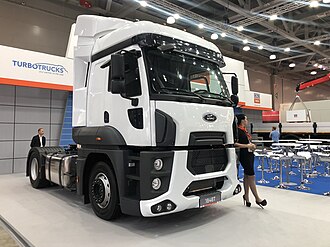
The history of commercial trucking is filled with vehicles that became famous because of their strength, reliability, and ability to perform difficult work in demanding environments. Among these trucks, the Ford Cargo holds a special place. Unlike many truck models designed primarily for a single market, the Ford Cargo became a truly international vehicle, serving businesses and industries across Europe, South America, Australia, Asia, and other regions. It was created with a clear purpose: to provide a versatile medium-duty truck that combined excellent maneuverability, driver comfort, strong payload capability, and economical operation.
Introduced during the early 1980s, the Ford Cargo represented a significant change in Ford’s approach to commercial trucks. Traditional heavy trucks often prioritized maximum durability but paid less attention to driver ergonomics and everyday usability. The Cargo introduced a more modern cab design with improved visibility, easier access, and a more comfortable working environment. At the same time, it maintained the rugged mechanical qualities required by professional operators who depended on their trucks for daily income.
The Ford Cargo was not developed as a glamorous vehicle. It was created as a working machine. It hauled freight through cities, transported construction materials, delivered goods between towns, supported agricultural operations, and served specialized industries requiring dependable medium-duty transportation. Its practical design and global adaptability allowed it to remain in production for decades, with updated versions still carrying the Cargo name in several markets.
One of the most important aspects of the Ford Cargo story is its ability to adapt. Over the years, it has existed in many forms, from small distribution trucks to heavier vocational models. It has been used as a rigid truck, tractor unit, emergency vehicle, refuse truck, fire engine, recovery vehicle, and countless other specialized platforms.
This article explores the complete history of the Ford Cargo, including its development, design philosophy, engineering features, engines, transmissions, applications, driving experience, maintenance requirements, global importance, and long-term legacy. A detailed technical specification table is included at the end.
The Origins of the Ford Cargo
A New Direction for Ford Commercial Vehicles
Before the arrival of the Ford Cargo, Ford’s commercial truck lineup consisted of various regional models developed according to local market requirements. In Europe, Ford produced trucks such as the Ford D-Series, while other markets relied on different platforms and configurations.
By the late 1970s, the trucking industry was changing rapidly. Companies demanded vehicles that were not only strong and reliable but also more comfortable and efficient. Urban delivery operations were becoming increasingly important, and drivers were spending longer hours behind the wheel. Improved visibility, easier cab access, and better ergonomics were becoming essential features rather than optional luxuries.
Ford recognized that the future of medium-duty trucking required a new approach. Engineers began developing a truck that could serve multiple markets while offering a modern cab design and competitive operating costs.
The result was the Ford Cargo, introduced in 1981.
The Introduction of the Ford Cargo in 1981
The first-generation Ford Cargo was launched in Europe as a replacement for the aging D-Series. Developed with input from Ford’s European truck operations, the Cargo was designed specifically for distribution and vocational work.
The truck immediately stood out because of its forward-control cab design.
Unlike conventional trucks with long noses extending ahead of the driver, the Cargo placed the cab directly over the front axle. This layout provided several advantages:
- Improved visibility in urban environments
- Greater cargo capacity within a shorter overall length
- Easier maneuverability
- Better use of available chassis space
- Easier access to the engine
The design was especially suitable for delivery trucks operating in crowded cities where tight streets and frequent stops were common.
Exterior Design and Styling
A Revolutionary Cab Appearance
The Ford Cargo introduced styling that was very different from many commercial trucks of its era.
The cab featured large curved windows that provided excellent visibility. The windshield design created a wide field of view, helping drivers judge distances more accurately when navigating busy streets.
The front grille was integrated into a clean, modern cab structure. Large headlights were positioned for good illumination while remaining easy to replace during routine maintenance.
The overall appearance was functional but distinctive. The Cargo looked more like a purpose-built professional machine rather than a modified passenger vehicle.
Practical Features
The exterior design included several features focused on everyday operation:
- Wide-opening doors for easy entry and exit
- Strong mirrors for improved rear visibility
- Accessible maintenance panels
- Durable bumpers for commercial use
- Multiple wheelbase options
- Flexible chassis mounting points
Every part of the truck was designed around productivity.
Cab Design and Driver Comfort
A Truck Designed Around the Driver
One of the Ford Cargo’s greatest achievements was its focus on driver comfort.
During the 1980s, many commercial trucks still treated the driver primarily as an operator rather than someone spending thousands of hours inside the vehicle. Ford took a different approach.
The Cargo cab was designed to reduce fatigue through:
- Better seating position
- Improved visibility
- More logical controls
- Lower noise levels
- Easier entry and exit
The forward-control layout allowed the driver to sit higher, creating a commanding view of the road.
Interior Layout
The dashboard was designed for simplicity and durability.
Large instruments allowed drivers to monitor vehicle operation quickly. Switches and controls were positioned within easy reach, reducing distraction.
Depending on configuration and market, features could include:
- Adjustable seats
- Heating systems
- Air conditioning
- Radio systems
- Storage compartments
- Sleeper accommodations
While modern trucks provide much more luxury, the Ford Cargo represented a significant improvement in driver-focused design during its introduction.
Engineering Philosophy
The Ford Cargo was built around a straightforward philosophy: create a dependable truck that could perform many different jobs.
The engineering priorities included:
- Strong chassis construction
- Reliable diesel engines
- Easy maintenance
- Flexible body configurations
- Low operating costs
- Long service life
Rather than focusing on extreme specialization, Ford created a platform that could be adapted by businesses of all sizes.
Chassis and Frame Construction
Built for Commercial Abuse
The foundation of any successful truck is its chassis, and the Ford Cargo was engineered accordingly.
The truck used a heavy-duty ladder frame designed to withstand constant loading, unloading, and operation on challenging roads.
The frame supported numerous body types, including:
- Box bodies
- Flatbeds
- Dump bodies
- Tankers
- Refrigerated units
- Crane installations
- Fire equipment
- Recovery systems
This flexibility made the Cargo valuable across many industries.
Wheelbase Options
Different wheelbase configurations allowed customers to choose vehicles optimized for specific tasks.
Short-wheelbase models provided excellent maneuverability for city delivery.
Long-wheelbase versions offered greater cargo capacity for regional transportation.
Heavy-duty versions supported specialized vocational applications.
Engine Options
Diesel Power for Professional Work
The Ford Cargo was primarily powered by diesel engines because commercial operators demanded efficiency, torque, and durability.
Engine availability varied depending on market and production year, but several major engine families became associated with the model.
Ford Diesel Engines
Early Cargo trucks often used Ford-designed diesel engines developed for commercial applications.
These engines emphasized:
- Reliability
- Simple maintenance
- Strong torque output
- Long operating life
They were well suited to delivery and regional hauling.
Cummins Diesel Engines
Many later Cargo models offered Cummins engines.
Cummins powerplants were highly respected worldwide because of their:
- Durability
- Fuel efficiency
- Excellent aftermarket support
- Strong performance under heavy loads
Their use helped expand the Cargo’s popularity among professional operators.
Caterpillar and Other Engines
Certain markets offered additional engine choices, including engines from manufacturers specializing in commercial diesel technology.
This flexibility allowed Ford to adapt the Cargo to different regional requirements.
Transmission Systems
The Ford Cargo was available with several transmission options depending on application.
Manual transmissions were common during early production years because professional drivers valued direct control and mechanical simplicity.
Typical features included:
- Multiple forward gears
- Heavy-duty construction
- Strong torque handling
- Easy serviceability
Later versions introduced more advanced transmissions, including automated and automatic options in some markets.
Modern operators benefit from improved efficiency, reduced driver fatigue, and optimized gear selection.
Suspension and Handling
A commercial truck must provide both strength and predictable handling.
The Ford Cargo used suspension systems designed for durability under heavy loads.
Front Suspension
The front suspension was engineered to provide:
- Steering stability
- Load support
- Reduced component wear
Rear Suspension
Rear suspension systems varied depending on model and application.
Heavy-duty leaf springs were commonly used because of their simplicity and ability to handle substantial weight.
Air suspension became available in certain configurations where improved ride quality or cargo protection was important.
Performance Characteristics
The Ford Cargo was never designed to be a high-speed highway truck. Instead, it was engineered for productivity.
Its strengths included:
Maneuverability
The cab-over design allowed a shorter overall length, making the truck easier to operate in cities and industrial areas.
Payload Capability
Strong chassis construction enabled operators to transport significant loads.
Reliability
Simple mechanical systems contributed to long service life and predictable maintenance.
Versatility
Few trucks could be adapted to as many different roles.
Global Applications of the Ford Cargo
One of the most remarkable aspects of the Ford Cargo is its international success.
Europe
In European markets, the Cargo became popular for:
- Urban delivery
- Regional freight
- Construction
- Municipal services
Its compact dimensions made it ideal for crowded cities.
South America
The Cargo became especially important in Brazil and other South American markets.
Local production allowed Ford to adapt the truck to regional conditions, including:
- Rough roads
- Heavy agricultural use
- Long-distance transportation
Australia
Australian operators used Cargo trucks for various commercial purposes, appreciating their durability and adaptability.
Other International Markets
The truck has also been sold or produced in various forms across Africa, Asia, and other regions where reliable commercial transportation is essential.
Specialized Versions
The Ford Cargo platform supported many specialized applications.
Fire Trucks
Emergency services valued the Cargo because of its reliability and ability to carry heavy equipment.
Construction Trucks
Dump bodies, cranes, and concrete-related equipment were commonly installed.
Recovery Vehicles
The strong chassis made the Cargo suitable for towing and recovery operations.
Distribution Trucks
Businesses used Cargo models for transporting goods between warehouses and customers.
Agricultural Transport
Farmers and agricultural companies relied on Cargo trucks for moving products and equipment.
Maintenance and Reliability
A major reason for the Cargo’s success has been its straightforward maintenance requirements.
Routine servicing typically includes:
- Engine oil replacement
- Fuel filter changes
- Brake inspections
- Cooling system checks
- Transmission servicing
- Suspension lubrication
- Tire maintenance
The truck’s conventional mechanical design allowed many repairs to be performed by local workshops.
This was especially valuable in regions where specialized dealer support was limited.
The Ford Cargo in Modern Times
Although the original European Ford Cargo was eventually replaced by newer Ford truck developments in some markets, the Cargo name continues in several regions.
Modern versions have incorporated:
- More efficient engines
- Improved emissions technology
- Electronic systems
- Better driver comfort
- Enhanced safety equipment
However, the fundamental mission remains unchanged: provide a dependable medium-duty truck capable of performing a wide variety of professional tasks.
Strengths and Weaknesses of the Ford Cargo
Major Strengths
The Ford Cargo’s most important advantages include:
- Excellent maneuverability
- Flexible chassis design
- Reliable diesel engines
- Strong commercial reputation
- Comfortable cab compared with older competitors
- Wide range of applications
- Long service life
Potential Limitations
Like any commercial vehicle, the Cargo has limitations.
Depending on configuration and age, some models may lack the refinement, fuel efficiency, and advanced technology found in newer trucks.
Older examples may require careful maintenance due to their age and accumulated mileage.
Nevertheless, many operators continue using Cargo trucks because their practical advantages outweigh these disadvantages.
The Legacy of the Ford Cargo
The Ford Cargo is one of the most significant medium-duty trucks in Ford’s history. It represented a new generation of commercial vehicle thinking by combining traditional truck durability with improved driver comfort and modern design.
Its success came from understanding what professional operators truly needed. Businesses did not require unnecessary complexity; they needed dependable equipment that could work every day, carry heavy loads, survive difficult conditions, and remain affordable to operate.
For more than forty years, the Ford Cargo has fulfilled that mission across multiple continents. It has delivered goods to cities, supported construction projects, protected communities through emergency services, and helped businesses grow.
The truck’s greatest achievement is not a single performance record or technological breakthrough. Instead, its achievement lies in millions of hours of reliable service performed quietly around the world.
The Ford Cargo remains a symbol of practical engineering—a truck created not for attention, but for work. Its combination of durability, adaptability, and global usefulness ensures that it remains one of the most respected medium-duty commercial vehicles ever produced.
Technical Specifications
| Parameter | Specification |
|---|---|
| Manufacturer | Ford Motor Company |
| Model | Ford Cargo |
| Production introduction | 1981 |
| Vehicle type | Medium-duty commercial truck |
| Cab design | Forward-control cab-over-engine design |
| Construction | Heavy-duty ladder frame chassis |
| Drive configuration | 4×2, 6×2, 6×4 and other configurations depending on market |
| Primary markets | Europe, South America, Australia, Africa, Asia, other global regions |
| Engine types | Diesel engines from Ford and other suppliers depending on market |
| Common engine suppliers | Ford, Cummins, Caterpillar, and regional suppliers |
| Fuel type | Diesel |
| Transmission options | Manual, automated manual, and automatic transmissions depending on generation |
| Suspension | Heavy-duty leaf spring; air suspension available on selected models |
| Brake system | Air brakes on medium and heavy configurations |
| Cab styles | Day cab and sleeper cab variants |
| GVWR range | Approximately 10,000 kg to over 30,000 kg depending on configuration |
| Axle configurations | Single and tandem rear axle options |
| Wheelbase options | Multiple configurations for vocational and distribution applications |
| Typical applications | Delivery, construction, fire service, recovery, utility, agriculture, regional freight |
| Body compatibility | Flatbed, box body, dump body, tanker, crane, emergency equipment, specialized bodies |
| Key strengths | Reliability, versatility, maneuverability, durability, global adaptability |
| Legacy | One of Ford’s most successful international medium-duty truck platforms |
