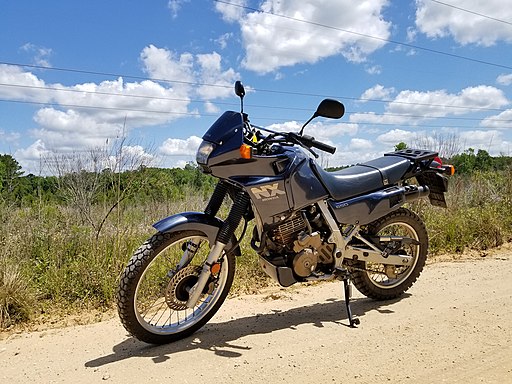
Honda NX650 Dominator
The Honda NX650 Dominator is a late-1980s to early-2000s dual-sport motorcycle that earned a reputation for straightforward engineering, torque-rich single-cylinder performance, and a chassis tuned for mixed road and light off-road use. Designed for riders who want a reliable, easy-to-maintain machine capable of long distances and rough secondary roads, the Dominator blends a torquey air-cooled engine with long-travel suspension and conservative ergonomics. This article presents a comprehensive technical overview, practical performance notes, and useful specification detail for enthusiasts, restorers, and prospective buyers.
Design philosophy and intended use
Purpose and strengths
The Dominator was conceived as a middleweight dual-sport that could comfortably handle long road transits while remaining capable on gravel tracks and fire roads. Its strengths are mechanical simplicity, a broad low-to-mid torque band, predictable handling at speed, and durable components easy to service in remote conditions.
Limitations and realistic expectations
The NX650 is not a modern high-revving sport or a pure competition enduro. Above highway speeds the large single becomes breathless, and its long-travel dual-sport chassis favors comfort and stability over precision cornering. Expect excellent low-end tractability and durability rather than peak horsepower or modern electronics.
Engine and powertrain
Engine architecture
- Type: Single-cylinder, four-stroke, SOHC, 4-valve head.
- Displacement: Approximately 644 cc.
- Cooling: Air-cooled with finned cylinder head and barrel.
- Lubrication: Wet sump with conventional oil pump and accessible oil filter.
The big single delivers a characterful, tractable powerband optimized for usable torque rather than peak rpm output. The SOHC four-valve head gives improved breathing against older two-valve designs while retaining mechanical simplicity.
Internal dimensions and combustion
- Bore × stroke: 100.0 mm × 82.0 mm (typical factory dimensions for this family of engines).
- Compression ratio: Low-to-moderate to favour reliability and tolerance for varied fuel quality.
The long-stroke layout helps produce strong midrange torque ideal for off-road traction and loaded touring.
Induction, fueling and ignition
- Carburetion: Single downdraft/side-draft Keihin or similar 40 mm-class carburetor with pilot and main circuits for crisp throttle response.
- Ignition: Electronic CDI ignition for reliable spark and minimal maintenance.
- Starting: Electric starter backed by a conventional 12 V battery; some markets also equipped with kickstart provisions historically, but most NX650s use electric start.
Carburetor jetting and pilot screw settings are straightforward to tune for altitude and aftermarket airbox or exhaust modifications.
Transmission and final drive
- Gearbox: 5-speed manual transmission calibrated for a broad spread of ratios — low enough for technical trail work and tall enough for steady cruising.
- Clutch: Wet multi-plate, cable-actuated for ease of service and predictable engagement.
- Final drive: Chain drive with standard dual-sport sprocket choices; common stock gearing delivers good low-speed pulling power.
Routine drivechain maintenance (cleaning, lubrication, tensioning) is essential for longevity in dusty or wet conditions.
Performance and fuel systems
Power and torque characteristics
- Power: Moderate peak power in the low-to-mid RPM range; tuned for torque and real-world tractability rather than headline horsepower.
- Torque: Strong and usable across 2500–6000 rpm, giving confident roll-on acceleration and low-speed control.
The result is a motorcycle that excels in loaded touring and technical dirt sections where usable torque matters more than peak numbers.
Fuel capacity and consumption
- Typical fuel tank capacity: ~15–16 litres (approximately 4.0–4.2 US gallons).
- Fuel economy: Efficient for its class; combined riding often yields good range well-suited to medium-distance touring.
The relatively modest tank size balances weight and ergonomics while delivering practical range on mixed riding.
Chassis, geometry and ergonomics
Frame and structural layout
- Frame: Steel single or double cradle frame designed for strength and predictable flex characteristics.
- Subframe: Robust enough for luggage racks and occasional passenger duty when fitted with correct springs.
The chassis prioritizes longevity and reparability over lightweight complexity.
Geometry and rider position
- Wheelbase: Medium-length wheelbase that balances high-speed stability with trail agility.
- Steering geometry: Rake and trail tuned for confidence on loose surfaces while remaining composed on pavement.
- Seat height: Tall enough to allow generous suspension travel and ground clearance, with a narrow tank area for easy leg movement when standing.
Rider ergonomics favor an upright stance with easy weight transfer for off-road riding; comfortable for long days in the saddle and for standing on the pegs through rough sections.
Suspension
Front suspension
- Fork type: Long-travel telescopic fork with substantial damping to control rebound and compression through mixed terrain.
- Travel: Generous travel (commonly in the 200–225 mm range on comparable models) to absorb big bumps and washboard roads.
- Adjustability: Basic preload adjustment on many variants; aftermarket options available for more refined valving.
The tall fork and long travel provide strong front-wheel control and rider confidence over obstacles.
Rear suspension
- Rear linkage: Pro-Link style single shock with progressive leverage.
- Travel: Long travel comparable to the front but slightly less in numerical terms to balance ride and traction.
- Adjustability: Spring preload adjustment and, on some units, damping adjustment for rider weight and luggage.
Progressive linkage enables both small bump sensitivity and resistance to bottoming on heavy impacts.
Wheels, tires and brakes
Wheel and tire configuration
- Typical wheel sizes: 21-inch front and 17-inch rear, wire-spoked rims for durability and the ability to run tubed tires.
- Tire types: Dual-sport tread patterns optimized for a mixture of road stability and off-road grip.
This wheel/tire arrangement gives the tall front wheel needed for obstacle rollover and a larger rear contact patch for traction and braking.
Braking system
- Front brake: Single hydraulic disc with multi-piston caliper and a rotor size in the mid-200 mm range for competent stopping power.
- Rear brake: Single disc, smaller rotor with single-piston caliper; reliable and easily serviced.
Brakes are effective and service-friendly; modulation is straightforward for dirt and pavement.
Electrical system and instruments
Basic electrical architecture
- Charging: Alternator/stator sized to run lighting and ignition with room for auxiliary accessories.
- Battery: Conventional 12 V battery supporting electric start and lighting.
- Simplified wiring: Minimal electronics improve field-repairability and lower failure points.
Instrumentation and lighting
- Instrument cluster: Analog speedometer with odometer, simple tachometer on some models, and indicator lamps for neutral, turn signals, and high beam.
- Lighting: Halogen headlight and basic taillight/indicator package tuned for durability and low electrical draw.
The stripped-back electrical suite keeps weight and complexity low while remaining functional for everyday use.
Dimensions, weights and capacities
Physical dimensions
- Length and width: Compact dual-sport footprint suitable for lane-splitting and trail manoeuvring.
- Seat height: Tall seat consistent with long-travel suspension and off-road posture.
- Ground clearance: High enough to clear common trail obstacles without raising the center of gravity excessively.
Mass and load considerations
- Dry/wet curb weight: Middleweight class; substantial enough to feel planted at speed yet manageable for most experienced dual-sport riders.
- Payload: Chassis and subframe accept luggage and mounts for adventure setups; suspension tuning may be required for heavy loads or two-up riding.
Maintenance, serviceability and parts
Routine service tasks
- Valve clearance checks, carburetor synchronization/jetting, oil and filter changes, and final-drive chain service are straightforward.
- Air-cooled architecture eliminates coolant-system tasks and simplifies roadside troubleshooting.
The NX650 is friendly for owners who prefer to perform their own maintenance.
Parts availability and aftermarket
- Strong OEM parts availability in many markets, with a wide aftermarket community offering protective parts, luggage solutions, suspension upgrades, and performance exhausts.
- Common upgrades include improved seat foam, suspension revalving, skid plates, and luggage racks.
The platform’s popularity ensures that upgrades and replacement parts are well-supported.
Common modifications and tuning
Suspension and handling upgrades
- Revalve and respring forks and shock to match rider weight and luggage.
- Wider-footpeg aftermarket options and more ergonomic handlebars for long-distance comfort.
Powertrain tuning
- Carburetor rejetting for altitude or aftermarket air filters and exhausts for modest power delivery changes.
- Sprocket changes to tailor acceleration vs. top speed for off-road or highway-focused riding.
Practical ownership tips
- Keep a small toolkit and spare levers, cables, and a puncture repair kit for remote travel.
- Regularly clean and lube the chain after wet or dusty rides.
- Check valve clearances at recommended intervals — the big single’s tractable character depends on correct valve adjustment.
- Carry simple spares like a rotor pad set and electrical fuses when venturing far from service.
Specification summary
- Engine: Air-cooled single-cylinder, SOHC, 4-valve.
- Displacement: ~644 cc.
- Bore × stroke: ~100.0 mm × 82.0 mm.
- Compression ratio: Low-to-moderate for reliable torque and fuel tolerance.
- Carburetor: Single 40 mm-class Keihin or equivalent.
- Ignition: Electronic CDI.
- Starter: Electric.
- Transmission: 5-speed manual; wet multi-plate clutch.
- Final drive: Chain drive.
- Front suspension: Long-travel telescopic fork.
- Rear suspension: Pro-Link single shock with preload adjustment.
- Front wheel: 21 in, wire-spoked.
- Rear wheel: 17 in, wire-spoked.
- Front brake: Single disc with multi-piston caliper.
- Rear brake: Single disc with single-piston caliper.
- Fuel capacity: ~15–16 L.
- Seat height: Tall (dual-sport class).
- Weight: Middleweight dual-sport (wet weight varies by model year and market).
Conclusion
The Honda NX650 Dominator remains a compelling choice for riders seeking a practical, mechanically simple dual-sport platform with a torquey single-cylinder engine and long-travel chassis. Its strengths lie in durability, serviceability, and a usable power delivery that suits loaded touring and mixed-surface exploration. For owners and prospective buyers, the Dominator offers a robust base for sensible modifications and dependable performance on a wide range of adventure riding scenarios.
