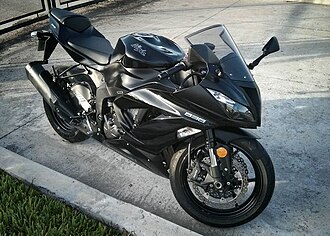
Kawasaki Ninja ZX-6R – The Ultimate Middleweight Supersport Motorcycle
Few motorcycles have earned the respect and admiration enjoyed by the Kawasaki Ninja ZX-6R. Since its introduction in the mid-1990s, the ZX-6R has become one of the defining models in the supersport category, setting benchmarks for performance, handling, and engineering. While superbikes with engines approaching or exceeding 1,000 cc often dominate headlines with astonishing horsepower figures, the ZX-6R has consistently demonstrated that the perfect balance between usable power and lightweight agility can provide an even more rewarding riding experience. It is a motorcycle designed for riders who appreciate precision, responsiveness, and the unique thrill of a high-revving inline-four engine.
Unlike entry-level sport motorcycles that focus primarily on accessibility, the Ninja ZX-6R was engineered from the beginning with performance as its highest priority. Every component, from the chassis geometry to the suspension settings and aerodynamic bodywork, was developed to maximize speed, cornering stability, and rider confidence. Yet despite its racing DNA, the ZX-6R has also become a popular road motorcycle because it offers remarkable versatility. Riders can commute during the week, enjoy mountain roads on weekends, and participate in track days without making major modifications.
Over the years, Kawasaki has continuously refined the ZX-6R. Every generation introduced improvements in engine technology, electronics, suspension, braking systems, and rider ergonomics. Although the philosophy behind the motorcycle has remained remarkably consistent, modern versions are significantly faster, safer, and more sophisticated than the originals. Even so, older generations continue to attract enthusiasts because they offer thrilling performance at affordable prices, making the ZX-6R one of the most desirable used supersport motorcycles available today.
This guide explores every aspect of the Kawasaki Ninja ZX-6R, beginning with its history, development, engineering philosophy, design, engine characteristics, and riding experience. Whether you are considering purchasing a used example or simply want to understand why this motorcycle has achieved legendary status, the ZX-6R offers a fascinating story that spans more than three decades of continuous evolution.
The History of the Kawasaki Ninja ZX-6R
The history of the Kawasaki Ninja ZX-6R began during the intense competition among Japanese motorcycle manufacturers in the 1990s. At that time, Honda, Yamaha, Suzuki, and Kawasaki all competed fiercely to dominate the middleweight supersport market. Riders demanded motorcycles capable of delivering genuine racetrack performance while remaining practical enough for public roads. Kawasaki responded by developing a motorcycle that would combine lightweight construction, aggressive styling, a powerful inline-four engine, and advanced chassis technology into a highly competitive package.
The first ZX-6R quickly gained recognition because it successfully balanced outright performance with everyday usability. Rather than creating an uncompromising racing motorcycle, Kawasaki developed a machine capable of delivering exhilarating acceleration and precise handling while remaining manageable during normal road riding. This philosophy proved highly successful and established the ZX-6R as one of the leading motorcycles in its class.
Throughout the late 1990s and early 2000s, Kawasaki introduced several major updates. Engine displacement increased, fuel injection replaced carburetors, braking systems improved dramatically, and chassis rigidity was refined. Each new generation became more capable on both road and track, reflecting technological progress while preserving the responsive character that defined the model.
The arrival of advanced electronics during the 2010s marked another important milestone. Modern ZX-6R models feature sophisticated traction control systems, selectable riding modes, ABS, quick shifters, and advanced engine management. These technologies improve both safety and performance without reducing the engaging nature that enthusiasts expect from a supersport motorcycle.
Design Philosophy – Built for Performance
The visual design of the Kawasaki Ninja ZX-6R has always reflected its engineering priorities. Unlike motorcycles that attempt to combine multiple roles, the ZX-6R makes no attempt to disguise its sporting intentions. Its aggressive bodywork, low windscreen, compact tail section, aerodynamic fairings, and sharp front profile immediately communicate that this is a machine developed with speed in mind.
Over successive generations, Kawasaki refined the motorcycle’s aerodynamic efficiency by borrowing concepts from professional racing. Airflow around the fairing became smoother, rider protection improved, and cooling efficiency increased. Even seemingly minor styling changes often served practical engineering purposes, demonstrating Kawasaki’s commitment to integrating appearance with function.
The riding position reinforces this philosophy. Clip-on handlebars position the rider in a forward-leaning stance that reduces wind resistance while maximizing front-wheel feedback. Rear-set foot pegs encourage proper body positioning during cornering, and the sculpted fuel tank allows riders to grip the motorcycle securely with their knees under hard acceleration and braking.
Although the ergonomics are more demanding than those of sport-touring or naked motorcycles, they contribute directly to the ZX-6R’s extraordinary handling precision. Riders become an active part of the chassis, allowing rapid direction changes and excellent control at high speeds.
The Engine – A Masterpiece of High-Revving Engineering
The Inline-Four Configuration
At the heart of every Kawasaki Ninja ZX-6R lies one of the most celebrated engines in the supersport category: a liquid-cooled inline-four. Depending on the generation, displacement ranges between approximately 599 cc and 636 cc, with the latter becoming particularly significant because Kawasaki chose to increase capacity beyond the traditional 600 cc class. This decision provided stronger mid-range torque while preserving the high-revving excitement expected from a supersport motorcycle.
Unlike twin-cylinder engines that emphasize low-end torque, the ZX-6R’s inline-four thrives at high engine speeds. As the tachometer climbs, the engine transforms from smooth and controlled into an exhilarating powerplant delivering rapid acceleration accompanied by the unmistakable sound that only a naturally aspirated four-cylinder motorcycle can produce. Riders often describe the experience as addictive because the engine encourages exploration of its upper rev range while maintaining remarkable refinement.
The power delivery is exceptionally linear. Rather than producing sudden, unpredictable bursts of acceleration, the ZX-6R builds speed progressively until reaching its strongest performance near the top of the rev range. This characteristic allows skilled riders to apply throttle confidently while maintaining excellent chassis stability.
Performance Characteristics
Modern versions of the Ninja ZX-6R produce well over 120 horsepower, placing them among the fastest motorcycles in the middleweight category. However, raw numbers tell only part of the story. The motorcycle’s relatively low weight creates an impressive power-to-weight ratio that allows rapid acceleration while preserving agility. Combined with precise throttle response and close-ratio gearing, the ZX-6R delivers performance capable of satisfying experienced riders on both public roads and racing circuits.
One of the defining characteristics of the ZX-6R is its willingness to rev. Unlike larger motorcycles that generate massive torque at low engine speeds, the Kawasaki rewards riders who actively manage gear selection and engine speed. This interactive nature creates an engaging riding experience in which skill plays an important role. Every corner exit, every acceleration zone, and every gear change becomes part of a coordinated rhythm between rider and machine.
Transmission and Gearbox
The six-speed gearbox found on the Kawasaki Ninja ZX-6R has consistently earned praise for its precision and durability. Gear changes require minimal effort, allowing riders to shift rapidly during aggressive riding while maintaining excellent control. Modern versions equipped with quick shifters allow clutchless upshifts, reducing interruption to acceleration and improving lap times during track use.
The clutch system is equally impressive. Many later models incorporate assist-and-slipper clutch technology, reducing lever effort during normal riding while minimizing rear-wheel instability during aggressive downshifting. This feature becomes particularly valuable when entering corners at high speed, allowing riders to concentrate on braking and corner entry rather than worrying about excessive engine braking.
Handling – One of the ZX-6R’s Greatest Strengths
If the engine defines the personality of the Ninja ZX-6R, the chassis defines its reputation. Kawasaki engineers devoted enormous attention to achieving the ideal combination of rigidity, feedback, and responsiveness. Lightweight aluminum frames, carefully optimized steering geometry, and premium suspension components work together to produce handling characteristics that have consistently ranked among the best in the supersport category.
Steering is quick yet stable. The motorcycle changes direction with remarkable ease, allowing riders to transition confidently through complex sequences of corners. Unlike heavier motorcycles that require significant physical effort, the ZX-6R responds immediately to rider input, creating a feeling of precision that inspires confidence even during aggressive riding.
Suspension quality has improved steadily throughout the model’s history. Modern versions feature fully adjustable forks and rear shocks capable of accommodating a wide variety of riding styles. Riders can tailor suspension settings for commuting, spirited road riding, or dedicated track use, making the ZX-6R remarkably versatile despite its performance focus.
The Riding Experience
Riding a Kawasaki Ninja ZX-6R is an experience defined by precision rather than brute force. Every aspect of the motorcycle encourages active participation from the rider. The throttle demands smooth application, the gearbox rewards accurate timing, and the chassis responds instantly to body positioning. Rather than overwhelming its rider with excessive power, the ZX-6R creates excitement by allowing skilled riders to fully exploit its capabilities.
On winding roads, the motorcycle feels perfectly at home. Corner after corner, it demonstrates exceptional composure, maintaining stability during heavy braking before quickly changing direction and accelerating confidently toward the next bend. The balance between engine performance and chassis capability is one of the reasons the ZX-6R has remained competitive against newer rivals for so many years.
Even during everyday riding, the motorcycle retains its distinctive character. Although the aggressive ergonomics require some physical commitment, many owners appreciate the direct connection between rider and machine. Every journey feels purposeful, and even routine commutes become more engaging because of the motorcycle’s responsiveness and precision.
Reliability and Long-Term Durability
Despite its reputation as a high-performance supersport motorcycle, the Kawasaki Ninja ZX-6R has also earned respect for its durability. Kawasaki has long been known for building robust inline-four engines capable of covering very high mileages when maintained correctly, and the ZX-6R is no exception. Many examples have accumulated well over 80,000 or even 100,000 kilometres without requiring major engine repairs, provided they received regular servicing and were not subjected to abuse or neglect. This reliability is particularly impressive considering the engine frequently operates at high revolutions where lesser designs might suffer premature wear.
The key to the ZX-6R’s longevity lies in routine maintenance. High-performance motorcycles naturally demand more attention than commuter bikes because their engines operate under greater stress. Regular oil changes using quality fully synthetic lubricants, timely oil filter replacement, valve clearance inspections, coolant renewal, brake fluid replacement, and chain maintenance are essential. Riders who follow Kawasaki’s recommended maintenance schedule are often rewarded with years of dependable service and remarkably few unexpected mechanical failures.
Modern ZX-6R models also benefit from improved manufacturing tolerances, better electronic engine management, and higher-quality materials than earlier generations. Fuel injection systems are generally extremely reliable, electronic rider aids rarely cause problems, and the engine itself has proven capable of handling both spirited road riding and frequent track use. Nevertheless, buyers considering a used motorcycle should remember that reliability depends as much on previous ownership as on engineering quality. A neglected ZX-6R that missed regular servicing may require expensive repairs regardless of its mileage.
Common Problems to Check Before Buying a Used ZX-6R
Engine Wear and Maintenance History
Although the inline-four engine is exceptionally durable, its performance-oriented nature means maintenance history is absolutely critical. Prospective buyers should request complete service records whenever possible and verify that scheduled oil changes and valve inspections have been performed. During inspection, listen carefully for unusual mechanical noises, excessive cam chain rattles, or irregular idle quality. A healthy ZX-6R engine should start easily from cold, idle smoothly, accelerate cleanly throughout the rev range, and produce no abnormal smoke from the exhaust.
Track Use
One of the ZX-6R’s greatest strengths is its capability on racing circuits, and many owners regularly participate in track days. Track use itself is not necessarily a disadvantage because experienced enthusiasts often maintain their motorcycles exceptionally well. However, buyers should inspect carefully for evidence of repeated crashes, poorly repaired fairings, aftermarket racing components, or modifications that may compromise reliability. Scratches on engine covers, frame sliders with heavy wear, unusually worn foot pegs, or mismatched body panels can indicate previous accidents.
Suspension Components
The ZX-6R uses sophisticated suspension systems designed for aggressive riding, but suspension components naturally wear over time. Inspect the front forks for leaking seals, damaged fork tubes, or uneven damping. The rear shock absorber should provide smooth movement without excessive bouncing or fluid leakage. Suspension rebuilds are common maintenance items on older motorcycles and should not necessarily discourage a purchase, but buyers should include these costs when evaluating overall value.
Braking System
The braking system deserves careful attention because the ZX-6R is capable of very high speeds. Inspect brake discs for excessive wear, cracks, or discoloration caused by overheating. Brake pads should have sufficient material remaining, and brake fluid should appear clean rather than dark or contaminated. Modern models equipped with ABS should display no warning lights after startup. During a test ride, braking should feel powerful, progressive, and completely free from vibration or unusual noises.
Chain, Sprockets, and Transmission
A poorly maintained final drive system can reveal much about previous ownership. Excessive chain slack, rust, stiff links, or worn sprocket teeth indicate neglect. Fortunately, replacement components are readily available, but a neglected chain often suggests that other maintenance may also have been ignored. The six-speed gearbox itself is generally very reliable and should shift smoothly in every gear without hesitation or false neutrals.
Comfort and Everyday Usability
The Kawasaki Ninja ZX-6R is designed primarily as a supersport motorcycle, so comfort naturally takes second place to performance. Nevertheless, many owners use the motorcycle daily and appreciate its surprising versatility. Around town, the engine is smooth and tractable enough for normal traffic, while modern fuel injection systems eliminate the temperamental behaviour once associated with older carbureted supersport motorcycles.
Long-distance touring is certainly possible, although riders must accept compromises. The aggressive riding position places considerable weight on the wrists during slow riding, while the rear-set foot pegs create a compact seating position. After several hours, fatigue becomes noticeable, especially for taller riders. However, experienced owners often install taller windscreens, comfort seats, or adjustable rear sets to improve long-distance usability without significantly affecting the motorcycle’s sporting character.
Passenger accommodation is understandably limited. The rear seat is compact, the passenger foot pegs are positioned high, and overall comfort is acceptable only for shorter journeys. Riders planning frequent two-up touring may find sport-touring motorcycles better suited to that role.
Fuel Economy and Running Costs
Considering its performance potential, the ZX-6R delivers respectable fuel economy. Conservative road riding can often achieve fuel consumption figures that surprise riders unfamiliar with modern supersport motorcycles. However, spirited riding, track use, or extended operation at high engine speeds naturally increases fuel consumption significantly. Owners should therefore expect economy to vary depending on riding style rather than relying on fixed consumption figures.
Routine servicing costs remain reasonable for a premium performance motorcycle, although they are inevitably higher than those of smaller commuter bikes. High-quality synthetic oil, premium tires, performance brake pads, and scheduled valve inspections all contribute to ownership expenses. Tire wear deserves particular attention because the ZX-6R’s performance encourages enthusiastic riding, and aggressive use can significantly shorten tire life.
Insurance premiums vary depending on rider age, experience, and location, but supersport motorcycles generally fall into higher insurance categories than standard motorcycles. Nevertheless, many owners consider these costs acceptable given the exceptional performance the ZX-6R delivers.
Buying a Used Kawasaki Ninja ZX-6R
When purchasing a used ZX-6R, patience often leads to the best results. Numerous examples appear on the market, but their condition varies considerably. Buyers should prioritize motorcycles with documented maintenance histories, original or professionally installed components, and evidence of careful ownership rather than simply selecting the lowest-priced example available.
A comprehensive inspection should include the engine, transmission, suspension, braking system, electrical equipment, tires, wheels, frame, and bodywork. Pay particular attention to frame alignment and steering head condition because crash damage can be difficult and expensive to repair properly. Matching VIN numbers, factory paint quality, and consistent panel gaps often indicate an undamaged motorcycle.
A proper test ride remains one of the most valuable evaluation tools. The engine should deliver smooth power throughout the rev range, the clutch should engage predictably, the gearbox should shift precisely, and the motorcycle should track straight without unusual vibrations. Electronics such as traction control, ABS, riding modes, and quick shifter functions should all operate correctly where applicable.
Advantages of the Kawasaki Ninja ZX-6R
- Outstanding high-revving inline-four engine.
- Exceptional handling and chassis balance.
- Excellent braking performance.
- High-quality suspension components.
- Strong reliability when properly maintained.
- Advanced electronics on modern models.
- Competitive track performance.
- Large aftermarket parts availability.
- Strong enthusiast community.
- Excellent resale value for well-maintained examples.
Disadvantages of the Kawasaki Ninja ZX-6R
- Aggressive riding position may reduce long-distance comfort.
- Higher insurance costs than standard motorcycles.
- Maintenance requirements are greater than commuter bikes.
- Performance may overwhelm inexperienced riders.
- Limited passenger comfort.
- Track-used examples require particularly careful inspection.
Technical Specifications Summary
| Specification | Kawasaki Ninja ZX-6R (Current Generation / Typical Specification) |
|---|---|
| Production | 1995–present |
| Motorcycle Category | Middleweight Supersport |
| Engine Type | Liquid-cooled inline four-cylinder |
| Engine Displacement | 636 cc (599 cc on some earlier generations) |
| Valve Train | DOHC, 16 valves |
| Fuel System | Electronic fuel injection with digital engine management |
| Maximum Power | Approximately 124–130 hp (market dependent) |
| Maximum Torque | Approximately 69–71 Nm |
| Transmission | 6-speed manual |
| Clutch | Assist and slipper clutch |
| Final Drive | Chain |
| Frame | Pressed aluminum perimeter frame |
| Front Suspension | Fully adjustable Showa SFF-BP inverted fork |
| Rear Suspension | Uni-Trak gas-charged monoshock with full adjustability |
| Front Brakes | Dual 310 mm discs with radial-mounted four-piston calipers |
| Rear Brake | Single 220 mm disc |
| ABS | Available or standard depending on model year and market |
| Electronic Rider Aids | Traction control, selectable power modes, quick shifter (newer models), ABS |
| Seat Height | Approximately 830 mm |
| Fuel Tank Capacity | 17 litres |
| Wet Weight | Approximately 196–198 kg |
| Top Speed | Approximately 250–260 km/h (electronically and aerodynamically dependent) |
| Main Strengths | Outstanding handling, powerful inline-four engine, premium chassis, track capability, excellent reliability |
| Ideal Buyer | Experienced riders seeking a versatile supersport motorcycle for both road and occasional track use |
Who Should Buy a Kawasaki Ninja ZX-6R?
The Kawasaki Ninja ZX-6R appeals to a remarkably wide range of riders despite its uncompromising supersport design. For experienced motorcyclists who enjoy spirited riding on winding roads, the motorcycle offers one of the finest combinations of engine performance and chassis precision ever produced in the middleweight category. Riders who regularly attend track days also appreciate the ZX-6R because it requires very few modifications before becoming a highly capable circuit machine. Even in standard form, its suspension, braking system, and engine performance are sufficient to satisfy all but the most competitive racers.
The motorcycle is also an excellent choice for enthusiasts upgrading from smaller sport bikes such as the Ninja 400 or Yamaha YZF-R3. The additional performance is substantial, but the predictable nature of the inline-four engine allows skilled riders to adapt progressively. Unlike litre-class superbikes, which can overwhelm even experienced motorcyclists with enormous torque and acceleration, the ZX-6R encourages riders to develop precision, smoothness, and confidence while still delivering thrilling performance.
However, complete beginners should approach the ZX-6R with caution. Although modern electronic rider aids improve safety considerably, the motorcycle remains capable of extremely rapid acceleration and very high speeds. Riders without sufficient experience may find its performance intimidating, particularly during emergency situations or poor weather conditions. For those developing their skills, smaller Ninja models remain more appropriate learning platforms.
How the ZX-6R Compares with Its Rivals
Throughout its production history, the Ninja ZX-6R has competed directly with some of the most respected motorcycles ever built, including the Honda CBR600RR, Yamaha YZF-R6, Suzuki GSX-R600, and Triumph Daytona 675. Each competitor offers a distinct interpretation of the supersport formula, yet the Kawasaki consistently stands out because of its balanced approach.
One of the ZX-6R’s biggest advantages has always been its slightly larger engine displacement. While traditional 600 cc supersport motorcycles prioritize maximum peak power at extremely high engine speeds, Kawasaki’s 636 cc engine delivers noticeably stronger mid-range torque. This additional flexibility makes the motorcycle easier to ride on public roads because riders spend less time searching for the perfect gear. It also improves acceleration when exiting slower corners without sacrificing the thrilling top-end performance expected from an inline-four supersport engine.
Compared with modern litre-class superbikes, the ZX-6R often proves to be the more rewarding motorcycle for real-world riding. Public roads rarely allow riders to exploit the enormous performance of 1,000 cc machines safely, whereas the ZX-6R encourages enthusiastic riding while remaining more manageable. Many experienced riders argue that a middleweight supersport provides greater enjoyment because its limits are accessible without requiring racetrack speeds.
Collectability and Future Value
The Kawasaki Ninja ZX-6R has already begun establishing itself as a future classic. Early carbureted models, limited editions, and particularly well-preserved examples have become increasingly desirable among collectors who appreciate the evolution of Japanese supersport motorcycles. As emissions regulations continue reducing the availability of naturally aspirated high-revving inline-four motorcycles, interest in older ZX-6R generations is likely to increase further.
Collectors generally seek motorcycles that remain close to factory specification. Original bodywork, factory exhaust systems, standard wheels, documented service history, and complete ownership records significantly improve long-term value. While tasteful modifications may enhance riding enjoyment, originality often remains the most important factor for collectors seeking investment-quality motorcycles.
Final Verdict – Is the Kawasaki Ninja ZX-6R Worth Buying?
The Kawasaki Ninja ZX-6R has earned its legendary reputation through decades of continuous refinement rather than radical reinvention. Every generation has built upon the strengths of its predecessor while introducing meaningful improvements in performance, reliability, technology, and rider confidence. Few motorcycles have maintained such consistent excellence for such a long period while remaining true to their original purpose.
What makes the ZX-6R especially remarkable is its ability to satisfy very different types of riders. On a racing circuit it behaves like a focused competition machine, rewarding smooth technique, accurate braking, and confident throttle application. On public roads it remains surprisingly practical, offering enough comfort for everyday use while delivering excitement whenever the road becomes challenging. This versatility explains why so many owners keep their ZX-6Rs for years rather than constantly upgrading to larger motorcycles.
Reliability is another important reason for the motorcycle’s enduring popularity. When maintained correctly, the inline-four engine is capable of exceptional longevity, while the chassis and suspension continue performing at a remarkably high level even after years of enthusiastic use. Buyers who carefully inspect maintenance history and overall condition can confidently purchase a used ZX-6R knowing they are investing in one of the most respected supersport motorcycles ever produced.
Ultimately, the Kawasaki Ninja ZX-6R represents far more than impressive technical specifications or rapid acceleration figures. It embodies the philosophy that outstanding motorcycles are created through balance rather than excess. Its combination of precise handling, exhilarating engine performance, robust engineering, premium components, and timeless styling has allowed it to remain competitive for nearly three decades. Whether used as a weekend canyon carver, an occasional track-day weapon, or simply a motorcycle that reminds its owner why riding is such a rewarding passion, the Ninja ZX-6R continues to stand as one of Kawasaki’s greatest engineering achievements and one of the finest middleweight supersport motorcycles ever built.
