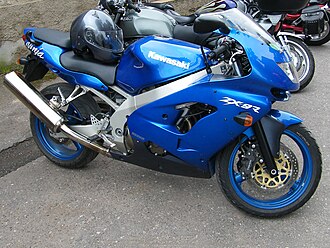
Kawasaki Ninja ZX-9R as a Used Motorcycle – The Superbike That Perfectly Balanced Speed and Usability
The Kawasaki Ninja ZX-9R occupies a fascinating place in the history of Japanese superbikes. Although it never achieved the legendary status of the ZX-7R or the overwhelming popularity of the later ZX-10R, the ZX-9R quietly established itself as one of the most complete motorcycles of its generation. Built for riders who wanted superbike performance without the uncompromising ergonomics of a pure racing replica, the ZX-9R successfully combined speed, comfort, reliability, and everyday usability. Even today, decades after production ended, it remains an appealing choice for enthusiasts searching for a powerful, charismatic, and surprisingly practical used sport motorcycle.
When Kawasaki introduced the ZX-9R during the 1990s, the superbike market was undergoing rapid evolution. Manufacturers were pushing the boundaries of engine performance, chassis rigidity, suspension technology, and aerodynamics. Riders expected motorcycles that could dominate winding roads, perform well on racetracks, and still remain comfortable enough for long-distance riding. Kawasaki answered these demands by creating a motorcycle that refused to focus exclusively on racing. Instead, it offered outstanding real-world performance combined with the refinement and comfort that many riders actually needed.
Today, the ZX-9R represents outstanding value on the used motorcycle market. It delivers impressive power, stable handling, a comfortable riding position, and the unmistakable sound of a large naturally aspirated inline-four engine. Unlike many modern superbikes equipped with sophisticated electronic rider aids, multiple riding modes, launch control, cornering ABS, and traction control, the ZX-9R offers a purely mechanical riding experience where the rider remains fully responsible for every input. For many enthusiasts, this direct connection is exactly what makes the motorcycle so enjoyable.
Buying a used ZX-9R requires understanding both its strengths and its weaknesses. While Kawasaki engineered the motorcycle to extremely high standards, time affects every mechanical machine. Age, maintenance history, previous modifications, and riding style all influence the condition of surviving examples. Fortunately, owners who purchase carefully maintained motorcycles often discover that the ZX-9R remains remarkably reliable and capable, even by modern standards.
This comprehensive guide explores every major aspect of the Kawasaki Ninja ZX-9R, including its development history, engineering, riding characteristics, maintenance requirements, reliability, common problems, ownership experience, and what buyers should inspect before purchasing a used example.
The History of the Kawasaki Ninja ZX-9R
The Kawasaki Ninja ZX-9R first appeared for the 1994 model year, entering one of the most competitive periods in motorcycle history. Japanese manufacturers were engaged in an engineering race that produced increasingly powerful and sophisticated sport motorcycles every year. Kawasaki already enjoyed success with the ZX-7R, but that motorcycle was heavily focused on racing homologation and the World Superbike Championship. Many road riders wanted something larger, faster, and more comfortable without sacrificing performance.
The answer was the ZX-9R. Kawasaki designed it around an entirely different philosophy than the ZX-7R. Rather than prioritizing racetrack regulations, engineers concentrated on creating an exceptionally fast road-going superbike that could outperform larger motorcycles while remaining practical for everyday riding. The result was a motorcycle powered by a new 899 cc liquid-cooled inline-four engine that produced impressive horsepower while maintaining excellent mid-range torque.
Throughout its production life, the ZX-9R received continuous refinement. Kawasaki reduced weight, improved frame rigidity, upgraded suspension components, modernized braking systems, revised aerodynamics, and increased engine responsiveness. By the final production years, the motorcycle had evolved into one of the best-balanced superbikes available before eventually being replaced by the revolutionary ZX-10R.
Although the ZX-10R eventually overshadowed its predecessor with more extreme performance, the ZX-9R maintained a loyal following. Many experienced riders preferred its smoother power delivery, comfortable ergonomics, and forgiving chassis. Today, these qualities continue to make it attractive as a used motorcycle because they translate into enjoyable real-world riding rather than simply impressive specification figures.
Design and Styling
The design of the Kawasaki Ninja ZX-9R reflects the styling trends of late-1990s superbikes while maintaining a timeless appearance that continues to age remarkably well. Sharp fairings, twin headlights, integrated mirrors, and muscular proportions immediately communicate the motorcycle’s sporting intentions without appearing overly aggressive by today’s standards. Unlike some motorcycles that look dated because of extreme styling experiments, the ZX-9R presents clean lines and balanced proportions that remain attractive decades later.
Aerodynamics played an important role during development. Kawasaki engineers carefully shaped the front fairing, side panels, and windscreen to reduce drag while improving rider comfort during high-speed riding. The full fairing provides effective protection from wind, making motorway travel considerably more comfortable than on naked motorcycles or smaller supersport machines.
The riding position deserves particular attention because it distinguishes the ZX-9R from many competitors. While certainly sporty, the handlebars are positioned slightly higher than those found on race-focused superbikes. The seat provides generous padding, and the relationship between the handlebars, foot pegs, and fuel tank creates a riding triangle suitable for both aggressive riding and longer journeys. Many owners regularly complete full-day rides without experiencing the wrist pain or back discomfort commonly associated with more extreme sport motorcycles.
Build quality also remains impressive. Kawasaki used high-quality paint finishes, durable switchgear, solid fasteners, and well-designed body panels that withstand years of use when properly maintained. Original examples still display excellent panel fit, proving that the motorcycle was engineered for longevity rather than short-term showroom appeal.
The Engine – A Powerful and Refined Inline-Four
899 cc Four-Cylinder Performance
At the heart of the ZX-9R lies one of Kawasaki’s finest naturally aspirated inline-four engines. The 899 cc liquid-cooled DOHC powerplant produces smooth, linear acceleration across a broad rev range while delivering approximately 140 horsepower depending on model year and market specification. Rather than concentrating all available power near the redline, the engine develops substantial mid-range torque that makes everyday riding effortless.
This flexibility gives the motorcycle outstanding real-world performance. Overtaking slower traffic rarely requires multiple downshifts, and acceleration from medium engine speeds remains immediate and satisfying. Riders can enjoy the motorcycle without constantly chasing maximum rpm, yet those who explore the upper end of the rev range are rewarded with exhilarating top-end performance and the unmistakable sound of a classic Kawasaki inline-four.
Fuel injection eventually replaced carburetors on later Kawasaki models, but the ZX-9R retained carburetion throughout production. Properly maintained carburetors provide excellent throttle response and contribute significantly to the motorcycle’s mechanical personality. Although they require periodic synchronization and cleaning, many enthusiasts appreciate the direct throttle feel unavailable on many electronically managed motorcycles.
Engine Character
The ZX-9R engine perfectly demonstrates why large naturally aspirated inline-four motorcycles remain beloved by enthusiasts. It starts smoothly, idles steadily, accelerates progressively, and builds power with remarkable refinement. There are no abrupt power spikes or unpredictable throttle responses. Instead, the motorcycle rewards smooth riding techniques while remaining forgiving enough for less experienced riders progressing toward litre-class performance.
Engine vibration remains well controlled throughout most of the operating range, making long-distance riding comfortable. The exhaust note changes from a quiet mechanical hum at lower rpm into a distinctive induction roar and high-frequency four-cylinder soundtrack as engine speed increases. This combination of refinement and excitement remains one of the ZX-9R’s defining characteristics.
Transmission and Power Delivery
Power reaches the rear wheel through a six-speed manual gearbox renowned for durability and positive shifting action. Kawasaki engineered the transmission to handle aggressive riding while maintaining smooth operation during everyday commuting. Gear ratios complement the engine’s broad torque curve, allowing riders to remain in higher gears without sacrificing acceleration.
The clutch action is progressive and predictable, making low-speed riding straightforward despite the motorcycle’s considerable performance potential. Although later Kawasaki superbikes introduced slipper clutches, the conventional clutch fitted to the ZX-9R performs reliably provided it receives regular maintenance and appropriate lubrication.
One of the motorcycle’s greatest strengths lies in its predictable power delivery. Riders quickly develop confidence because throttle response remains linear across the rev range. This predictability makes the ZX-9R particularly enjoyable on twisting roads where smooth corner exits matter more than absolute horsepower figures.
Chassis and Handling
The Kawasaki ZX-9R was designed around an aluminum twin-spar frame that successfully balances rigidity with controlled flexibility. This engineering approach gives the motorcycle excellent stability during high-speed riding while preserving enough feedback for confident cornering on ordinary roads. Unlike some extremely stiff racing motorcycles that can feel nervous on imperfect surfaces, the ZX-9R absorbs road irregularities while maintaining impressive composure.
Handling is perhaps the motorcycle’s greatest achievement. Steering is neutral, predictable, and confidence inspiring. Initial turn-in requires slightly more effort than modern lightweight superbikes, but once leaned into a corner, the ZX-9R remains exceptionally stable. Riders often describe it as a motorcycle that encourages smooth, flowing riding rather than abrupt direction changes.
The suspension provides another excellent compromise between performance and comfort. Fully adjustable front forks and a sophisticated rear shock allow experienced owners to tailor the motorcycle to individual riding preferences, passenger loads, or track-day use. When properly maintained and adjusted, the chassis continues to deliver handling quality that compares surprisingly well with significantly newer motorcycles.
Kawasaki Ninja ZX-9R as a Used Motorcycle – The Superbike That Perfectly Balanced Speed and Usability
The Kawasaki Ninja ZX-9R occupies a fascinating place in the history of Japanese superbikes. Although it never achieved the legendary status of the ZX-7R or the overwhelming popularity of the later ZX-10R, the ZX-9R quietly established itself as one of the most complete motorcycles of its generation. Built for riders who wanted superbike performance without the uncompromising ergonomics of a pure racing replica, the ZX-9R successfully combined speed, comfort, reliability, and everyday usability. Even today, decades after production ended, it remains an appealing choice for enthusiasts searching for a powerful, charismatic, and surprisingly practical used sport motorcycle.
When Kawasaki introduced the ZX-9R during the 1990s, the superbike market was undergoing rapid evolution. Manufacturers were pushing the boundaries of engine performance, chassis rigidity, suspension technology, and aerodynamics. Riders expected motorcycles that could dominate winding roads, perform well on racetracks, and still remain comfortable enough for long-distance riding. Kawasaki answered these demands by creating a motorcycle that refused to focus exclusively on racing. Instead, it offered outstanding real-world performance combined with the refinement and comfort that many riders actually needed.
Today, the ZX-9R represents outstanding value on the used motorcycle market. It delivers impressive power, stable handling, a comfortable riding position, and the unmistakable sound of a large naturally aspirated inline-four engine. Unlike many modern superbikes equipped with sophisticated electronic rider aids, multiple riding modes, launch control, cornering ABS, and traction control, the ZX-9R offers a purely mechanical riding experience where the rider remains fully responsible for every input. For many enthusiasts, this direct connection is exactly what makes the motorcycle so enjoyable.
Buying a used ZX-9R requires understanding both its strengths and its weaknesses. While Kawasaki engineered the motorcycle to extremely high standards, time affects every mechanical machine. Age, maintenance history, previous modifications, and riding style all influence the condition of surviving examples. Fortunately, owners who purchase carefully maintained motorcycles often discover that the ZX-9R remains remarkably reliable and capable, even by modern standards.
This comprehensive guide explores every major aspect of the Kawasaki Ninja ZX-9R, including its development history, engineering, riding characteristics, maintenance requirements, reliability, common problems, ownership experience, and what buyers should inspect before purchasing a used example.
The History of the Kawasaki Ninja ZX-9R
The Kawasaki Ninja ZX-9R first appeared for the 1994 model year, entering one of the most competitive periods in motorcycle history. Japanese manufacturers were engaged in an engineering race that produced increasingly powerful and sophisticated sport motorcycles every year. Kawasaki already enjoyed success with the ZX-7R, but that motorcycle was heavily focused on racing homologation and the World Superbike Championship. Many road riders wanted something larger, faster, and more comfortable without sacrificing performance.
The answer was the ZX-9R. Kawasaki designed it around an entirely different philosophy than the ZX-7R. Rather than prioritizing racetrack regulations, engineers concentrated on creating an exceptionally fast road-going superbike that could outperform larger motorcycles while remaining practical for everyday riding. The result was a motorcycle powered by a new 899 cc liquid-cooled inline-four engine that produced impressive horsepower while maintaining excellent mid-range torque.
Throughout its production life, the ZX-9R received continuous refinement. Kawasaki reduced weight, improved frame rigidity, upgraded suspension components, modernized braking systems, revised aerodynamics, and increased engine responsiveness. By the final production years, the motorcycle had evolved into one of the best-balanced superbikes available before eventually being replaced by the revolutionary ZX-10R.
Although the ZX-10R eventually overshadowed its predecessor with more extreme performance, the ZX-9R maintained a loyal following. Many experienced riders preferred its smoother power delivery, comfortable ergonomics, and forgiving chassis. Today, these qualities continue to make it attractive as a used motorcycle because they translate into enjoyable real-world riding rather than simply impressive specification figures.
Design and Styling
The design of the Kawasaki Ninja ZX-9R reflects the styling trends of late-1990s superbikes while maintaining a timeless appearance that continues to age remarkably well. Sharp fairings, twin headlights, integrated mirrors, and muscular proportions immediately communicate the motorcycle’s sporting intentions without appearing overly aggressive by today’s standards. Unlike some motorcycles that look dated because of extreme styling experiments, the ZX-9R presents clean lines and balanced proportions that remain attractive decades later.
Aerodynamics played an important role during development. Kawasaki engineers carefully shaped the front fairing, side panels, and windscreen to reduce drag while improving rider comfort during high-speed riding. The full fairing provides effective protection from wind, making motorway travel considerably more comfortable than on naked motorcycles or smaller supersport machines.
The riding position deserves particular attention because it distinguishes the ZX-9R from many competitors. While certainly sporty, the handlebars are positioned slightly higher than those found on race-focused superbikes. The seat provides generous padding, and the relationship between the handlebars, foot pegs, and fuel tank creates a riding triangle suitable for both aggressive riding and longer journeys. Many owners regularly complete full-day rides without experiencing the wrist pain or back discomfort commonly associated with more extreme sport motorcycles.
Build quality also remains impressive. Kawasaki used high-quality paint finishes, durable switchgear, solid fasteners, and well-designed body panels that withstand years of use when properly maintained. Original examples still display excellent panel fit, proving that the motorcycle was engineered for longevity rather than short-term showroom appeal.
The Engine – A Powerful and Refined Inline-Four
899 cc Four-Cylinder Performance
At the heart of the ZX-9R lies one of Kawasaki’s finest naturally aspirated inline-four engines. The 899 cc liquid-cooled DOHC powerplant produces smooth, linear acceleration across a broad rev range while delivering approximately 140 horsepower depending on model year and market specification. Rather than concentrating all available power near the redline, the engine develops substantial mid-range torque that makes everyday riding effortless.
This flexibility gives the motorcycle outstanding real-world performance. Overtaking slower traffic rarely requires multiple downshifts, and acceleration from medium engine speeds remains immediate and satisfying. Riders can enjoy the motorcycle without constantly chasing maximum rpm, yet those who explore the upper end of the rev range are rewarded with exhilarating top-end performance and the unmistakable sound of a classic Kawasaki inline-four.
Fuel injection eventually replaced carburetors on later Kawasaki models, but the ZX-9R retained carburetion throughout production. Properly maintained carburetors provide excellent throttle response and contribute significantly to the motorcycle’s mechanical personality. Although they require periodic synchronization and cleaning, many enthusiasts appreciate the direct throttle feel unavailable on many electronically managed motorcycles.
Engine Character
The ZX-9R engine perfectly demonstrates why large naturally aspirated inline-four motorcycles remain beloved by enthusiasts. It starts smoothly, idles steadily, accelerates progressively, and builds power with remarkable refinement. There are no abrupt power spikes or unpredictable throttle responses. Instead, the motorcycle rewards smooth riding techniques while remaining forgiving enough for less experienced riders progressing toward litre-class performance.
Engine vibration remains well controlled throughout most of the operating range, making long-distance riding comfortable. The exhaust note changes from a quiet mechanical hum at lower rpm into a distinctive induction roar and high-frequency four-cylinder soundtrack as engine speed increases. This combination of refinement and excitement remains one of the ZX-9R’s defining characteristics.
Transmission and Power Delivery
Power reaches the rear wheel through a six-speed manual gearbox renowned for durability and positive shifting action. Kawasaki engineered the transmission to handle aggressive riding while maintaining smooth operation during everyday commuting. Gear ratios complement the engine’s broad torque curve, allowing riders to remain in higher gears without sacrificing acceleration.
The clutch action is progressive and predictable, making low-speed riding straightforward despite the motorcycle’s considerable performance potential. Although later Kawasaki superbikes introduced slipper clutches, the conventional clutch fitted to the ZX-9R performs reliably provided it receives regular maintenance and appropriate lubrication.
One of the motorcycle’s greatest strengths lies in its predictable power delivery. Riders quickly develop confidence because throttle response remains linear across the rev range. This predictability makes the ZX-9R particularly enjoyable on twisting roads where smooth corner exits matter more than absolute horsepower figures.
Chassis and Handling
The Kawasaki ZX-9R was designed around an aluminum twin-spar frame that successfully balances rigidity with controlled flexibility. This engineering approach gives the motorcycle excellent stability during high-speed riding while preserving enough feedback for confident cornering on ordinary roads. Unlike some extremely stiff racing motorcycles that can feel nervous on imperfect surfaces, the ZX-9R absorbs road irregularities while maintaining impressive composure.
Handling is perhaps the motorcycle’s greatest achievement. Steering is neutral, predictable, and confidence inspiring. Initial turn-in requires slightly more effort than modern lightweight superbikes, but once leaned into a corner, the ZX-9R remains exceptionally stable. Riders often describe it as a motorcycle that encourages smooth, flowing riding rather than abrupt direction changes.
The suspension provides another excellent compromise between performance and comfort. Fully adjustable front forks and a sophisticated rear shock allow experienced owners to tailor the motorcycle to individual riding preferences, passenger loads, or track-day use. When properly maintained and adjusted, the chassis continues to deliver handling quality that compares surprisingly well with significantly newer motorcycles.
Technical Specifications Summary
| Specification | Kawasaki Ninja ZX-9R |
|---|---|
| Production Years | 1994–2003 |
| Motorcycle Category | Supersport / Superbike |
| Engine Type | Liquid-cooled inline four-cylinder |
| Engine Displacement | 899 cc |
| Valve System | DOHC, 16 valves |
| Fuel System | Four Keihin CVKD carburetors |
| Bore × Stroke | 75.0 mm × 50.9 mm |
| Compression Ratio | Approximately 11.4:1 |
| Maximum Power | Approximately 143 hp (market and model year dependent) |
| Maximum Torque | Approximately 100 Nm |
| Transmission | 6-speed manual |
| Final Drive | Chain |
| Frame | Aluminum twin-spar frame |
| Front Suspension | Fully adjustable upside-down telescopic fork (later models) |
| Rear Suspension | Uni-Trak fully adjustable monoshock |
| Front Brakes | Dual hydraulic discs with four-piston calipers |
| Rear Brake | Single hydraulic disc |
| Front Wheel | 17-inch alloy |
| Rear Wheel | 17-inch alloy |
| Fuel Tank Capacity | Approximately 19 litres |
| Seat Height | Approximately 810 mm |
| Dry Weight | Approximately 183–185 kg (depending on model year) |
| Top Speed | Approximately 275 km/h |
| 0–100 km/h | Approximately 3.0 seconds |
| Main Strengths | Powerful engine, balanced handling, comfortable ergonomics, reliability, excellent road manners |
| Ideal Buyer | Experienced riders seeking a classic analogue superbike with real-world usability |
Kawasaki Ninja ZX-9R Compared With Its Main Rivals
During its production life, the Kawasaki ZX-9R competed against some of the most respected superbikes ever produced. Honda’s CBR900RR FireBlade introduced a revolutionary lightweight philosophy that emphasized agility over outright engine size. Yamaha’s YZF-R1 later transformed the category by combining litre-bike performance with remarkably compact dimensions. Suzuki’s GSX-R750 continued to evolve as one of the sharpest race-inspired motorcycles available, while Kawasaki’s own ZX-7R remained the company’s homologation-focused track machine.
The ZX-9R distinguished itself by refusing to follow only one design philosophy. Rather than pursuing the lightest possible weight or the most aggressive riding position, Kawasaki developed a motorcycle that balanced multiple qualities exceptionally well. It accelerated with genuine superbike performance, handled confidently on winding roads, remained comfortable during long-distance journeys, and proved reliable enough for everyday ownership. These characteristics earned it a loyal following among riders who valued versatility as much as outright speed.
Compared with the Honda FireBlade, the ZX-9R generally offered superior comfort and stronger mid-range torque, making it particularly enjoyable during normal road riding. Against the Yamaha R1, the Kawasaki lacked some ultimate performance but rewarded riders with a friendlier nature and more forgiving chassis. Even today, many enthusiasts consider the ZX-9R one of the most balanced motorcycles of its generation because it avoids the extreme compromises found in some competitors.
Ownership Experience
Living with a Kawasaki Ninja ZX-9R is an experience that combines classic superbike excitement with surprising practicality. Unlike many modern high-performance motorcycles that rely heavily on electronic rider assistance, the ZX-9R delivers a direct mechanical connection between rider and machine. Every throttle movement, gear change, braking input, and cornering decision comes entirely from the rider, creating a level of engagement that many enthusiasts believe has become increasingly rare.
Daily riding is easier than many people expect. Although the motorcycle produces substantial power, the smooth inline-four engine, predictable throttle response, and comfortable riding position make commuting entirely possible. The clutch action is progressive, visibility is reasonable for a fully faired superbike, and the engine remains tractable even at lower engine speeds.
Weekend rides reveal the motorcycle’s greatest strengths. Fast sweeping roads allow the stable chassis to shine, while the flexible engine delivers effortless acceleration between corners. Rather than demanding constant high-rpm riding, the ZX-9R produces usable torque across much of the rev range, allowing riders to enjoy brisk progress without excessive gear changes.
Long-distance touring is another pleasant surprise. With an effective fairing, supportive seat, and relaxed ergonomics compared with many race replicas, the motorcycle comfortably covers several hundred kilometres in a day. Many owners install soft luggage, tank bags, or taller windscreens, transforming the ZX-9R into a capable sport-touring machine while preserving its sporting identity.
Collectability and Future Value
As the years pass, the Kawasaki Ninja ZX-9R has gradually become more desirable among collectors and enthusiasts of classic Japanese sport motorcycles. While it was once overshadowed by more famous models such as the FireBlade or the original Yamaha R1, appreciation for the ZX-9R has grown steadily as riders recognize its exceptional balance and historical significance.
Early, completely original motorcycles are becoming increasingly difficult to find. Many examples were modified with aftermarket exhaust systems, suspension upgrades, performance air filters, and cosmetic accessories during their active lives. Although tasteful modifications can improve riding enjoyment, collectors generally prefer motorcycles that retain factory bodywork, original paint schemes, stock exhaust systems, and complete documentation.
Well-maintained examples with documented service histories are likely to remain desirable because they represent one of the last generations of large-displacement carbureted superbikes before electronics fundamentally changed motorcycle design. As interest in analogue performance motorcycles continues to increase, the ZX-9R’s reputation is expected to strengthen further.
Final Verdict – Is the Kawasaki Ninja ZX-9R Worth Buying?
The Kawasaki Ninja ZX-9R remains one of the finest examples of a true analogue superbike. It successfully combines impressive engine performance, excellent chassis balance, long-distance comfort, and strong reliability in a package that remains highly enjoyable decades after production ended. While it may lack the electronic rider aids, lightweight construction, and extreme horsepower of modern superbikes, it offers something equally valuable: an authentic and highly engaging riding experience that places complete responsibility in the hands of the rider.
From a used-buying perspective, the ZX-9R represents excellent value. Depreciation has largely stabilized, maintenance costs remain reasonable thanks to Kawasaki’s robust engineering, and parts support continues through both original suppliers and the aftermarket. Buyers who invest time in finding a well-maintained example are rewarded with a motorcycle capable of providing many years of dependable service and genuine riding pleasure.
Prospective owners should pay particular attention to service history, carburetor condition, suspension wear, charging system performance, and evidence of accident damage. None of these areas are unusual weaknesses, but careful inspection ensures that purchase costs accurately reflect the motorcycle’s condition. Spending slightly more on a properly maintained example is almost always more economical than restoring a neglected machine.
Ultimately, the Kawasaki Ninja ZX-9R deserves far greater recognition than it sometimes receives. It represents the final era of high-performance motorcycles before electronic rider aids became standard equipment, preserving the pure mechanical character that many enthusiasts continue to seek. Fast enough to remain exciting, comfortable enough for extended journeys, reliable enough for regular use, and distinctive enough to stand apart from more common superbikes, the ZX-9R remains an outstanding choice for riders who appreciate engineering excellence and timeless Japanese motorcycle design.
