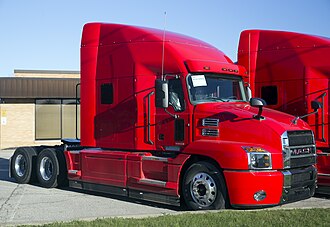
Mack Anthem – Complete Technical Deep-Dive, Engineering Breakdown, and Operational Analysis (Blog-Style Article)
The Mack Anthem represents one of the most modern interpretations of a North American Class 8 highway tractor, designed primarily for regional haul, long-distance freight operations, and high-efficiency logistics missions. Built by Mack Trucks, a brand with over a century of heavy-duty engineering heritage, the Anthem is not just a successor to older highway tractors—it is a rethinking of aerodynamic efficiency, driver ergonomics, and integrated powertrain intelligence.
In this long-form technical article, we will explore the Mack Anthem in extreme depth: its engineering philosophy, powertrain architecture, chassis configuration, aerodynamic optimization, electronic systems, safety integration, and real-world operational behavior. This is not a superficial overview—it is a structured technical breakdown intended for engineers, fleet managers, drivers, and enthusiasts who want to understand how the Anthem actually functions as a system.
Introduction to the Mack Anthem Engineering Philosophy
The Mack Anthem was designed around three core engineering pillars:
Fuel Efficiency Through Aerodynamic Intelligence
Unlike older square-shouldered trucks, the Anthem uses a fully optimized airflow body design, including a sloped hood, integrated fairings, and reduced frontal drag surfaces. This is not aesthetic styling—it is functional aerodynamics intended to reduce fuel consumption at highway speeds.
Integrated Powertrain Control
The Anthem is engineered around Mack’s proprietary MP engine series and mDRIVE automated manual transmission, which operate as a single synchronized system rather than independent components.
Driver-Centric Ergonomics
Mack prioritizes long-haul driver fatigue reduction through:
- improved sightlines
- digital instrument integration
- reduced shift workload
- enhanced cabin geometry
This combination transforms the Anthem into a systems-based transport platform, not just a mechanical truck.
Exterior Design and Aerodynamics
The Mack Anthem’s exterior is one of its most defining features. Unlike traditional flat-front heavy trucks, the Anthem uses a continuous aerodynamic flow structure from bumper to cab roof.
Hood and Frontal Geometry
The hood is short, sloped, and tightly integrated into the cab structure. This design improves:
- forward visibility in tight urban environments
- approach angles for loading docks
- airflow separation reduction
The hood also features a three-piece composite aerodynamic structure, which reduces repair costs in minor collisions and allows partial replacement rather than full assembly replacement.
Windshield and Visibility System
The windshield is a panoramic two-piece laminated glass system, optimized for:
- reduced wind resistance
- improved forward field of view
- integration with sensor-based safety systems
This is crucial because modern highway trucks rely heavily on radar and camera-based safety suites.
Side Fairings and Airflow Control
Side fairings extend along the chassis to:
- reduce turbulence under the trailer gap
- improve fuel economy at cruising speeds
- stabilize crosswind handling
These fairings are adjustable depending on axle configuration and trailer type.
Powertrain Architecture – The Heart of the Mack Anthem
The Anthem is powered by Mack’s proprietary engine family, primarily the MP7 and MP8 (and newer MP13 in updated configurations).
Engine Options and Technical Output
The Anthem typically offers the following engine configurations:
- MP7 (11L)
- MP8 (13L)
- MP13 (new generation 13L evolution in some markets)
These engines are designed with a focus on torque delivery rather than high-rev horsepower.
Typical output ranges:
- Horsepower: ~415–515 HP
- Torque: ~1,260–1,950 lb-ft (≈1700–2600 Nm depending on spec)
Why Torque Matters More Than Horsepower
In heavy-duty trucking, torque determines:
- hill-climbing capability
- load start performance
- sustained pulling power at low RPM
Horsepower mainly determines top-speed capability, which is less relevant for freight efficiency.
The Anthem is tuned for low-end torque stability, meaning it performs best under heavy loads at moderate RPM ranges.
Engine Efficiency Strategy
Mack engines in the Anthem utilize:
- high-pressure common rail fuel injection
- turbocharged air management
- exhaust gas recirculation (EGR)
- selective catalytic reduction (SCR) aftertreatment
This combination ensures compliance with emissions regulations while maintaining high thermal efficiency.
Transmission System – mDRIVE Automated Manual
One of the most important technological features in the Anthem is the Mack mDRIVE automated manual transmission (AMT).
System Architecture
The mDRIVE system eliminates the traditional manual clutch pedal. Instead:
- electronic control unit manages gear shifts
- clutch actuation is automated
- shifting logic adapts to load and terrain
Performance Characteristics
Key features include:
- up to 12–14 speed configurations depending on variant
- adaptive shift logic based on gradient detection
- torque-aware gear selection
- reduced drivetrain shock
According to manufacturer specifications, mDRIVE can shift up to 30% faster and smoother than previous systems
Fuel Economy Contribution
By optimizing shift timing, mDRIVE reduces:
- engine over-revving
- inefficient gear holding
- unnecessary fuel burn during acceleration
This system is critical for achieving the Anthem’s fleet-level fuel economy targets.
Chassis and Axle Configuration
The Mack Anthem is built on a modular Class 8 frame designed for flexibility across logistics applications.
Frame Structure
The chassis uses:
- high-strength steel ladder frame
- corrosion-resistant coatings
- optimized cross-member placement
This ensures rigidity under heavy load conditions up to 80,000+ lbs GCW (gross combined weight) in typical highway setups
Axle Configurations
Common configurations include:
- 4×2 (single drive axle)
- 6×2 (tag axle support)
- 6×4 (dual drive axle heavy haul)
Axle Manufacturers and Options
Mack integrates multiple axle suppliers:
- Mack proprietary drive axles
- Dana Spicer heavy-duty axles
- Meritor configurations
This allows fleet customization based on payload type and terrain requirements.
Suspension Systems and Ride Quality
Suspension tuning in the Anthem balances load stability and driver comfort.
Suspension Types
The Anthem supports:
- air ride suspension systems
- multi-leaf mechanical setups
- hybrid configurations for specialized applications
Operational Behavior
Air suspension systems provide:
- automatic ride height adjustment
- reduced vibration transmission
- improved tire wear distribution
Mechanical systems are preferred in extreme-duty or off-road-adjacent environments due to durability.
Cabin Design and Driver Environment
The Mack Anthem cabin is engineered as a long-duration operational workspace, not just a driving compartment.
Cabin Configurations
Available configurations include:
- Day Cab
- 44-inch sleeper
- 64-inch sleeper
- 70-inch stand-up sleeper variants
Interior Ergonomics
Inside the cab, design priorities include:
- wide driver shoulder clearance
- optimized seating posture alignment
- digital instrument cluster integration
- flat-bottom steering wheel design
Digital Instrumentation
The Anthem includes:
- 5-inch co-pilot display
- digital analog hybrid gauges
- real-time efficiency monitoring
This allows drivers to optimize:
- fuel consumption
- shifting behavior
- braking efficiency
Safety Systems and Driver Assistance
Modern Anthem models incorporate advanced active safety systems.
Mack Protect Safety Suite
The system includes:
- forward collision warning
- automatic emergency braking
- lane departure correction
- adaptive cruise control
These systems rely on radar and camera fusion technologies.
Stability and Control Systems
Additional safety technologies:
- Roll Stability Advantage (RSA)
- traction control systems
- electronic braking distribution
These systems are essential for preventing rollover in high center-of-gravity load scenarios.
Performance Characteristics in Real Operation
In real-world freight operations, the Mack Anthem is known for:
Strengths
- strong low-end torque delivery
- excellent fuel efficiency for its class
- stable highway cruising
- durable drivetrain systems
Limitations
- not optimized for extremely high horsepower tuning
- can feel slower in aggressive acceleration scenarios compared to high-HP competitors
- fuel economy drops significantly under extreme load conditions
Fuel Economy and Efficiency Strategy
The Anthem achieves efficiency through a combination of:
- aerodynamic drag reduction
- engine-downspeeding strategy
- optimized transmission shifting
- idle reduction systems
The MP engine + mDRIVE pairing is especially important because it ensures the engine operates within its most efficient RPM range.
Maintenance and Lifecycle Engineering
Mack designed the Anthem for:
- extended service intervals
- modular component replacement
- predictive maintenance integration
Key benefits include:
- reduced downtime
- lower fleet operating costs
- improved long-term reliability
Full Technical Specification Table – Mack Anthem
| Specification | Details |
|---|---|
| Vehicle Class | Class 8 Heavy Duty Highway Tractor |
| Engine Options | Mack MP7 / MP8 / MP13 |
| Horsepower Range | 415 – 515 HP |
| Torque Range | 1,260 – 1,950 lb-ft |
| Transmission | mDRIVE Automated Manual (12–14 speed variants) |
| Drive Configurations | 4×2, 6×2, 6×4 |
| Gross Combined Weight | Up to 80,000+ lbs (standard config) (Mack Trucks EMEA) |
| Cab Types | Day Cab, 44″, 64″, 70″ Sleeper |
| Suspension Types | Air ride, mechanical leaf, hybrid setups |
| Axle Suppliers | Mack, Meritor, Dana Spicer |
| Brake System | Electronic braking with stability control |
| Safety Suite | Mack Protect (radar + camera fusion systems) |
| Aerodynamics | Sloped hood, side fairings, airflow-optimized cab |
| Fuel Strategy | Downspeeding + aero + AMT integration |
| Intended Use | Regional haul, highway freight, long-distance logistics |
Conclusion
The Mack Anthem is not simply a truck—it is a coordinated engineering system designed around efficiency, torque optimization, and driver-centered operation. Its success lies not in raw horsepower figures but in how all components—engine, transmission, aerodynamics, and electronics—work together as a unified platform.
Where traditional trucks rely on brute force, the Anthem relies on precision energy management and aerodynamic intelligence. That is what makes it one of the most important modern Class 8 designs in North American trucking.
_in_Lacquer_Red,_front_right.jpg)