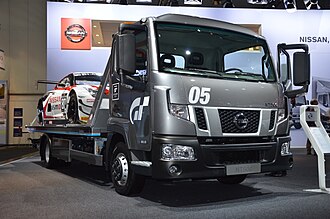
Nissan NT500 – The Complete Guide to Nissan’s Medium-Duty Commercial Truck
The Nissan NT500 represents one of Nissan’s most capable medium-duty commercial trucks, engineered to meet the demanding needs of businesses requiring a reliable, versatile, and durable vehicle for transporting goods, equipment, and specialized cargo. Positioned between light commercial trucks and heavy-duty transport vehicles, the NT500 was designed to deliver an ideal balance of payload capacity, operating efficiency, driver comfort, and long-term reliability. While passenger vehicles often receive greater public attention, commercial trucks like the NT500 quietly perform the essential work that keeps economies moving every day, supporting industries ranging from logistics and retail distribution to construction, agriculture, municipal services, and emergency response.
Developed primarily for European and international commercial markets, the Nissan NT500 combined modern engineering with practical design principles that emphasized low operating costs and dependable performance under challenging conditions. The truck became known for its robust chassis, efficient diesel engines, multiple wheelbase options, adaptable body configurations, and comfortable cab environment, making it suitable for businesses of all sizes. Whether operating as a flatbed transporter, refrigerated delivery truck, box van, refuse collection vehicle, recovery truck, crane carrier, or municipal maintenance vehicle, the NT500 demonstrated remarkable flexibility and durability throughout its service life.
This comprehensive guide explores every aspect of the Nissan NT500, including its development history, engineering philosophy, exterior design, interior comfort, engine options, transmission systems, driving characteristics, maintenance requirements, safety technologies, ownership experience, commercial applications, and overall legacy. By understanding the strengths and capabilities of the NT500, buyers, fleet managers, and automotive enthusiasts can better appreciate why this commercial vehicle continues to earn respect throughout the transportation industry.
The Development of the Nissan NT500
The Nissan NT500 was introduced as part of Nissan’s strategy to strengthen its presence in the European commercial vehicle market by offering a modern medium-duty truck capable of competing with established manufacturers. Rather than focusing solely on increasing payload capacity, Nissan sought to create a vehicle that would improve productivity through enhanced driver comfort, efficient powertrains, dependable mechanical systems, and versatile chassis configurations. Commercial fleet operators increasingly demanded trucks that could reduce downtime while maintaining profitability over hundreds of thousands of kilometers, and the NT500 was developed with these priorities firmly in mind.
The truck was built upon decades of Nissan’s commercial vehicle experience while incorporating modern diesel technology, improved safety equipment, and updated cabin ergonomics. Throughout its production, the NT500 benefited from engineering refinements intended to improve fuel efficiency, reduce emissions, simplify servicing, and increase overall durability. Its modular platform allowed numerous body builders to create highly specialized commercial vehicles tailored to individual industries and customer requirements.
Exterior Design and Functional Styling
Unlike passenger vehicles where styling often plays a dominant role, the exterior design of the Nissan NT500 is guided primarily by functionality. Every major design element serves a practical purpose intended to improve visibility, durability, accessibility, or aerodynamic efficiency. The forward-control cab layout maximizes cargo space while minimizing the truck’s overall footprint, allowing operators to transport substantial payloads without sacrificing maneuverability in urban environments.
Large windshields and expansive side windows provide excellent all-around visibility, an essential feature for delivery operations, construction sites, and city driving. Oversized mirrors further improve driver awareness by minimizing blind spots during lane changes, reversing, and docking procedures. The front bumper is engineered to withstand everyday commercial use while remaining relatively easy and economical to repair or replace following minor impacts.
Body panels are intentionally simple, reducing manufacturing complexity while facilitating straightforward maintenance. High-mounted lighting improves visibility during poor weather conditions, and durable exterior materials resist corrosion and everyday wear associated with intensive commercial operation.
Cab Design and Driver Comfort
Commercial drivers often spend entire working days behind the wheel, making cabin comfort an important factor influencing productivity, concentration, and overall job satisfaction. Nissan devoted significant attention to creating an ergonomic working environment inside the NT500. The elevated seating position provides commanding visibility over surrounding traffic while reducing strain during extended driving sessions. Adjustable seats, logically positioned controls, generous storage compartments, and wide-opening doors contribute to a practical and user-friendly workspace.
Modern dashboard layouts emphasize readability and accessibility. Large analog gauges combined with digital information displays provide drivers with essential operating data at a glance. Climate control systems, improved insulation, effective ventilation, and optional convenience features such as Bluetooth connectivity, navigation systems, and multifunction steering wheels further enhance daily usability depending on trim level and market.
The cabin is also designed with durability in mind. Hard-wearing plastics, stain-resistant upholstery, and rubber flooring withstand constant commercial use while remaining easy to clean after demanding workdays. Storage solutions accommodate paperwork, electronic devices, beverages, safety equipment, and personal belongings, helping drivers remain organized throughout busy delivery schedules.
Engine Lineup and Performance
The Nissan NT500 has been offered with several diesel engine configurations specifically engineered for commercial applications. Rather than pursuing maximum horsepower, these engines prioritize torque delivery, fuel efficiency, and long-term durability. Medium-duty trucks frequently operate under heavy loads, requiring substantial pulling power at relatively low engine speeds. Consequently, the NT500’s diesel engines deliver strong low-end torque that supports smooth acceleration even when fully loaded.
Modern common-rail direct injection technology enables precise fuel delivery, improving combustion efficiency while reducing fuel consumption and exhaust emissions. Turbocharging further enhances performance by increasing available torque without requiring excessively large engine displacement. Electronic engine management continuously monitors operating conditions, optimizing fuel injection timing and turbocharger performance to maximize efficiency under varying workloads.
Depending on market specifications, engine outputs range from moderate configurations suitable for urban distribution to higher-powered variants capable of regional freight transportation and specialized industrial applications. Regardless of output level, the engines are engineered to provide dependable service over extended operating lifespans with appropriate maintenance.
Transmission Options
To accommodate different operating environments and driver preferences, the Nissan NT500 has been equipped with multiple transmission choices. Manual gearboxes remain particularly popular among fleet operators because they provide direct driver control, mechanical simplicity, and relatively low maintenance costs. Carefully selected gear ratios allow drivers to maximize engine efficiency whether climbing steep gradients, transporting heavy cargo, or navigating congested urban traffic.
Automated manual and automatic transmissions have also become increasingly common in commercial fleets. These systems reduce driver fatigue during repetitive stop-and-go operation while maintaining competitive fuel economy through electronically optimized shifting strategies. Automatic transmissions are especially valuable in metropolitan delivery operations where drivers may perform hundreds of gear changes during a single working day.
Payload Capacity and Chassis Flexibility
One of the Nissan NT500’s greatest strengths is its exceptionally adaptable chassis platform. Available in multiple wheelbase lengths and gross vehicle weight ratings, the truck serves as a foundation for an enormous variety of commercial body styles. Flatbeds transport construction materials and machinery, while enclosed box bodies protect valuable cargo from weather conditions. Refrigerated units support food distribution and pharmaceutical logistics, whereas tipper bodies efficiently handle gravel, soil, demolition debris, and agricultural materials.
Additional applications include recovery vehicles, mobile workshops, utility maintenance trucks, refuse collection vehicles, fire service equipment, aerial work platforms, municipal road maintenance units, and specialized emergency response vehicles. This remarkable versatility allows businesses to tailor the NT500 precisely to their operational requirements without compromising structural integrity or payload performance.
Driving Dynamics
Although the Nissan NT500 is fundamentally a commercial work vehicle, its driving characteristics reflect careful engineering intended to maximize stability, predictability, and driver confidence. Steering systems provide responsive control while maintaining manageable effort during low-speed maneuvering. Tight turning circles simplify navigation through warehouses, industrial estates, loading docks, and urban streets despite the vehicle’s substantial carrying capacity.
Suspension systems are specifically calibrated for load-bearing capability. Leaf springs and heavy-duty shock absorbers effectively support cargo while maintaining consistent handling characteristics under varying payload conditions. When unloaded, the ride may feel relatively firm, but this stiffness becomes advantageous once cargo is added, allowing the suspension to perform within its intended operating range.
Braking performance receives equal attention, with hydraulic or air-assisted braking systems providing dependable stopping power under demanding commercial conditions. Anti-lock braking technology improves control during emergency braking by preventing wheel lockup on slippery surfaces.
Fuel Efficiency and Operating Costs
Commercial fleet managers evaluate vehicles based on total cost of ownership rather than purchase price alone. Fuel consumption, maintenance expenses, component longevity, service intervals, resale value, and vehicle availability all contribute significantly to long-term profitability. The Nissan NT500 performs strongly in these areas through efficient diesel engines, durable driveline components, and maintenance-friendly engineering.
Electronic engine management systems optimize combustion across diverse operating conditions, reducing unnecessary fuel consumption while maintaining sufficient performance for demanding commercial applications. Extended service intervals help minimize downtime, allowing vehicles to remain productive for longer periods between scheduled maintenance visits.
Replacement parts are generally accessible through Nissan’s commercial vehicle network as well as numerous independent aftermarket suppliers. The truck’s straightforward mechanical design enables many routine maintenance procedures to be completed efficiently, reducing labor costs for fleet operators.
Reliability and Long-Term Durability
The reputation of the Nissan NT500 rests largely upon its durability. Commercial vehicles must withstand continuous operation under challenging conditions including heavy payloads, adverse weather, rough road surfaces, and frequent stop-start driving. The NT500’s ladder-frame chassis provides exceptional structural rigidity while resisting fatigue caused by repeated loading cycles. Engine cooling systems, transmissions, differentials, suspension assemblies, and braking components are similarly engineered for prolonged commercial service.
Fleet operators frequently report high mileage accumulation with relatively few major mechanical failures provided maintenance schedules are followed consistently. Regular servicing, quality lubricants, and timely replacement of wear components contribute significantly to the truck’s impressive longevity.
Safety Technologies
Safety has become increasingly important within the commercial vehicle industry, and the Nissan NT500 incorporates numerous technologies intended to protect both drivers and other road users. Depending on model year and specification, available equipment may include anti-lock braking systems, electronic stability control, traction control, hill-start assistance, driver and passenger airbags, reinforced cab structures, seatbelt pretensioners, and improved lighting systems.
Excellent visibility remains one of the truck’s greatest passive safety features. Large windows, elevated seating positions, carefully positioned mirrors, and optional rear-view camera systems reduce the likelihood of accidents during reversing and maneuvering operations.
Commercial Applications
The versatility of the Nissan NT500 allows it to serve an extraordinary range of industries. Logistics companies utilize enclosed cargo bodies for regional distribution, while supermarkets employ refrigerated variants for temperature-controlled deliveries. Construction firms rely upon flatbeds and tippers to transport building materials and machinery. Utility providers install cranes, maintenance equipment, and service bodies to support electrical, telecommunications, and water infrastructure.
Municipal governments operate NT500 trucks as refuse collection vehicles, snowplows, street maintenance units, landscaping vehicles, and emergency response platforms. Specialized body builders further expand the truck’s capabilities through customized conversions designed for mobile workshops, rescue operations, broadcasting, healthcare, and industrial maintenance.
Maintenance Recommendations
Engine Maintenance
Routine oil and filter changes remain the foundation of reliable diesel engine operation. Using manufacturer-approved lubricants and replacing filters at recommended intervals minimizes internal wear while maintaining efficient combustion performance.
Cooling System Care
Commercial engines often operate under sustained heavy loads, making cooling system maintenance particularly important. Regular coolant replacement, radiator cleaning, hose inspection, and thermostat testing help prevent overheating and costly engine damage.
Brake System Inspection
Frequent brake inspections are essential for commercial safety. Pads, discs, drums, hydraulic lines, air systems where applicable, and parking brake mechanisms should be examined regularly to ensure dependable stopping performance.
Suspension and Tires
Heavy payloads accelerate wear on suspension components and tires. Regular alignment checks, tire pressure monitoring, shock absorber inspection, and leaf spring maintenance contribute to improved handling, reduced tire wear, and enhanced safety.
Advantages of Owning a Nissan NT500
The Nissan NT500 offers numerous advantages including dependable mechanical reliability, versatile chassis configurations, efficient diesel engines, comfortable driving ergonomics, durable construction, broad commercial adaptability, relatively low operating costs, straightforward maintenance procedures, and strong long-term durability. Fleet managers particularly appreciate the vehicle’s ability to remain productive while minimizing downtime, an essential factor in maintaining profitable commercial operations.
Potential Limitations
Although the NT500 performs exceptionally well as a commercial work vehicle, it is not without limitations. Ride comfort when unloaded may feel firm due to heavy-duty suspension tuning. Older examples naturally lack the advanced connectivity and driver assistance technologies available in today’s newest commercial vehicles. Certain specialized replacement parts may vary in availability depending on regional markets. However, these considerations rarely outweigh the truck’s considerable strengths in reliability and operational efficiency.
Buying a Used Nissan NT500
Purchasing a used Nissan NT500 can represent excellent value for businesses seeking dependable transportation at a competitive price. Buyers should carefully inspect maintenance records, engine condition, transmission operation, braking performance, suspension wear, chassis corrosion, electrical systems, and evidence of accident repairs. Because commercial vehicles often accumulate significant mileage, documented servicing is considerably more important than odometer readings alone.
A professional pre-purchase inspection can identify hidden mechanical issues and provide valuable insight into future maintenance requirements. Trucks that have received consistent preventive servicing frequently continue operating reliably for many additional years.
The Legacy of the Nissan NT500
The Nissan NT500 occupies an important place within Nissan’s commercial vehicle history by demonstrating the company’s ability to produce capable medium-duty trucks that satisfy the demanding expectations of professional fleet operators. Through practical engineering, dependable mechanical systems, efficient diesel technology, and adaptable chassis configurations, the NT500 established itself as a trusted solution for businesses requiring dependable transportation across countless industries.
Although commercial vehicles rarely receive the recognition afforded to sports cars or luxury sedans, trucks like the NT500 perform indispensable roles within modern economies. Every delivery, construction project, municipal service, infrastructure repair, and regional distribution network depends upon reliable commercial transportation. The NT500’s contribution to these essential activities underscores its lasting significance within Nissan’s commercial vehicle portfolio.
Conclusion
The Nissan NT500 successfully combines durability, versatility, efficiency, and driver-focused engineering into a medium-duty truck capable of meeting the diverse demands of modern commercial transportation. Its robust chassis, economical diesel engines, adaptable body configurations, dependable reliability, comfortable cabin, and manageable operating costs make it an attractive choice for businesses across numerous industries. Whether transporting goods across cities, supporting construction projects, maintaining public infrastructure, or serving as the basis for specialized equipment, the NT500 consistently demonstrates the qualities expected from a professional commercial vehicle.
For fleet managers seeking long-term value, business owners requiring dependable productivity, or enthusiasts interested in commercial vehicle engineering, the Nissan NT500 remains an excellent example of practical automotive design focused on reliability and real-world performance rather than unnecessary complexity. Its legacy continues through the countless businesses that rely upon dependable medium-duty trucks to keep essential services operating efficiently every day.
Technical Specifications Summary
| Specification | Details |
|---|---|
| Manufacturer | Nissan |
| Model | NT500 |
| Vehicle Class | Medium-duty commercial truck |
| Cab Layout | Cab-over-engine (Forward Control) |
| Drive Configuration | 4×2 and selected 4×4 variants (market dependent) |
| Engine Type | Turbocharged Common-Rail Diesel |
| Displacement | Approximately 3.0–4.5 liters (depending on version) |
| Power Output | Approximately 150–250 hp (market dependent) |
| Torque | Up to approximately 700 Nm (depending on engine) |
| Transmission | 6-Speed Manual or Automated Manual |
| Frame | Heavy-duty Ladder Frame |
| Front Suspension | Heavy-duty Leaf Spring |
| Rear Suspension | Leaf Spring |
| Brakes | Hydraulic or Air-Assisted Disc/Drum (model dependent) |
| Wheelbase Options | Multiple lengths available |
| Gross Vehicle Weight | Approximately 3.5–7.5 tonnes (configuration dependent) |
| Body Configurations | Flatbed, Box Van, Tipper, Refrigerated, Crane, Recovery, Chassis Cab |
| Primary Applications | Logistics, Construction, Municipal Services, Utilities, Distribution |
| Safety Features | ABS, ESC, Airbags, Traction Control, Hill Start Assist (varies by model) |
| Main Strengths | Reliability, Durability, Versatility, Fuel Efficiency, Low Operating Costs |
