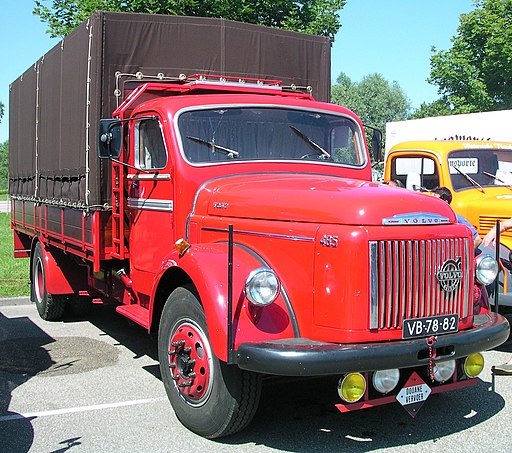
Volvo Viking
The Volvo Viking, introduced in the late 1950s, represents a significant milestone in the history of commercial trucks, showcasing Volvo’s commitment to durability, innovation, and performance. As part of Volvo’s N-series, the Viking was designed to meet the growing demands of heavy-duty transportation during a period of rapid industrial growth. Its robust construction and advanced engineering made it a popular choice among long-haul transport operators, construction companies, and various other industries requiring reliable and powerful vehicles for demanding tasks.
One of the key features of the Volvo Viking is its powerful and efficient engine options. Initially equipped with Volvo’s TD96 engine, the Viking offered impressive power and torque, essential for hauling heavy loads across long distances. The availability of different engine configurations allowed operators to choose the most suitable powertrain for their specific needs, enhancing the truck’s versatility. Additionally, the Viking’s advanced transmission system and durable drivetrain ensured smooth power delivery and excellent performance even under challenging conditions, making it a dependable workhorse in various environments.
Beyond its mechanical prowess, the Volvo Viking was also known for its driver-centric design, which prioritized comfort and safety. The cab of the Viking was designed to provide a spacious and ergonomic environment for drivers, featuring adjustable seating, intuitive controls, and improved visibility. These enhancements not only contributed to driver comfort during long hauls but also played a crucial role in reducing driver fatigue and increasing overall safety. With its combination of power, reliability, and thoughtful design, the Volvo Viking set a high standard for heavy-duty trucks and cemented Volvo’s reputation as a leader in the commercial vehicle industry.
Volvo Viking parameters
Here are the detailed parameters of the Volvo Viking:
General Specifications:
- Manufacturer: Volvo
- Model: Viking (part of the N-series)
- Type: Heavy-duty truck
- Introduction Year: Late 1950s
Engine Options:
- Engine Types: Various, including petrol and diesel options
- Common Diesel Engine: Volvo TD96
- Displacement: 9.6 liters
- Configuration: Inline 6-cylinder
- Power Output: Approximately 150-185 horsepower (112-138 kW)
- Torque: Approximately 600-700 Nm
Transmission:
- Type: Manual
- Gears: 5-speed and 10-speed options
Drivetrain:
- Drive Configuration: Rear-wheel drive (4×2) or dual-axle (6×2, 6×4) configurations
Dimensions:
- Length: Varies depending on model and configuration
- Width: Approximately 2,500 mm
- Height: Varies depending on cab and equipment
- Wheelbase: Various options typically between 3,500 mm and 4,800 mm
- Gross Vehicle Weight (GVW): Typically around 16 to 19 tonnes
Performance:
- Maximum Speed: Approximately 90 km/h (governed)
- Gradeability: Capable of handling steep inclines with heavy loads (specific angles depend on load and configuration)
- Turning Radius: Dependent on wheelbase and axle configuration
Capacity:
- Seating Capacity: Driver plus one or two passengers (depending on cab configuration)
- Cargo Capacity: Varies with configuration and usage, generally optimized for heavy loads
Suspension:
- Front Suspension: Leaf springs
- Rear Suspension: Leaf springs or optional air suspension
Brakes:
- Type: Hydraulic drum brakes, with air assistance in later models
Electrical System:
- Voltage: 24V electrical system
Cab and Design:
- Cabin Types: Standard and sleeper cab options
- Features: Adjustable seating, ergonomic controls, good visibility, heating and ventilation systems
Special Features:
- Durability: Built with a robust chassis and reinforced body for heavy-duty tasks
- Maintenance: Designed for ease of maintenance with accessible engine and mechanical components
- Safety Features: Basic safety features including improved driver visibility and robust construction
Applications:
- Long-Haul Transport: Ideal for long-distance freight transport
- Construction: Suitable for transporting construction materials and machinery
- Specialized Uses: Can be adapted for various specialized tasks with appropriate modifications
The Volvo Viking’s combination of powerful engine options, robust drivetrain configurations, and driver-centric design elements made it a versatile and reliable choice for a wide range of heavy-duty applications. Its legacy in the commercial vehicle industry underscores Volvo’s dedication to quality and performance.
