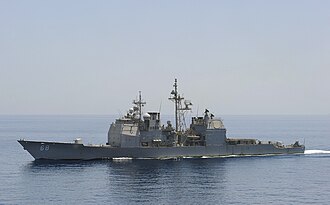
A Powerful Guardian of the Seas
The USS Anzio (CG-68) represents one of the most capable examples of late Cold War naval engineering and the continuing evolution of guided missile warfare at sea. As a Ticonderoga-class guided missile cruiser, Anzio was designed to provide advanced air defense, surface warfare capability, anti-submarine support, and command-and-control functions for United States Navy carrier strike groups and expeditionary forces. Although modern naval warfare has changed dramatically since the ship entered service, USS Anzio remains an important symbol of the Navy’s transition from traditional gun-based surface combatants toward highly networked warships centered around advanced sensors, missile systems, and integrated battle management.
Commissioned in the early 1990s, USS Anzio entered service during a period of significant transformation in global security. The Cold War had ended, the Soviet Union had collapsed, and naval strategy was shifting from preparing for a massive confrontation between superpowers toward responding to regional conflicts, maritime security challenges, and expeditionary operations. Despite these changes, the capabilities built into the Ticonderoga-class cruisers proved remarkably adaptable. Their powerful radar systems, vertical launch missile capability, and advanced command facilities allowed them to perform a wide variety of missions ranging from protecting aircraft carriers from hostile aircraft and missiles to supporting ground forces through precision strikes.
Named in honor of the Battle of Anzio during World War II, USS Anzio carries forward a long tradition of American naval vessels named after significant military engagements. The Battle of Anzio, fought in Italy in 1944, was a difficult amphibious campaign during which Allied forces established a beachhead behind German defensive lines. The operation demonstrated the importance of naval support, logistics, intelligence, and coordinated military action. By bearing the name Anzio, the cruiser connects modern naval technology with the historical legacy of joint operations and expeditionary warfare.
More than simply a warship equipped with missiles, USS Anzio functions as a highly sophisticated command and combat platform. The ship’s ability to collect information from multiple sensors, process threats rapidly, and coordinate responses with other naval and joint forces reflects the changing nature of warfare in the information age. Its importance lies not only in the weapons it carries but also in its ability to serve as a central node within a larger military network.
The Origins of the Ticonderoga-Class Cruiser Program
The development of USS Anzio began with the United States Navy’s search for a new generation of surface combatants capable of defending carrier battle groups against increasingly sophisticated aerial threats. During the Cold War, naval planners were particularly concerned about the possibility of mass attacks involving Soviet aircraft, cruise missiles, and submarines. Protecting high-value naval assets such as aircraft carriers required ships with powerful sensors, rapid reaction systems, and the ability to engage multiple threats simultaneously.
Earlier generations of guided missile cruisers relied on separate radar and missile systems that required individual operators and often had limited ability to coordinate engagements across multiple threats. The introduction of the Aegis Combat System represented a revolutionary change in naval warfare. Developed by the United States Navy, Aegis combined powerful phased-array radar technology with computerized command systems capable of detecting, tracking, prioritizing, and engaging numerous targets at once. This created a level of situational awareness and defensive capability far beyond previous naval systems.
The Ticonderoga class was initially conceived as an improved version of the Spruance-class destroyer design. Instead of creating an entirely new hull, naval architects modified the existing platform to accommodate the Aegis system and its associated equipment. This approach reduced development costs while allowing the Navy to rapidly introduce a new class of highly capable surface combatants. The resulting ships combined destroyer-like maneuverability with cruiser-level command capabilities, creating vessels capable of leading naval task forces while also providing powerful defensive and offensive firepower.
The Evolution from CG-47 to CG-68
The first Ticonderoga-class ships were originally designated as guided missile destroyers before being redesignated as cruisers because of their expanded command capabilities and strategic importance. The early members of the class introduced the Aegis system using traditional missile launchers, but later ships incorporated the revolutionary Mark 41 Vertical Launch System (VLS). USS Anzio belongs to this later group, often referred to as the VLS-equipped Ticonderoga-class cruisers.
The introduction of vertical launch technology significantly improved the combat effectiveness of the class. Earlier missile launchers required mechanical movement and limited the number of weapons that could be prepared for firing simultaneously. Vertical launch cells allowed missiles to be stored in ready-to-fire positions and launched rapidly in any direction. This dramatically improved reaction time and allowed ships to carry a much larger and more flexible missile inventory.
With its vertical launch system, USS Anzio could employ a wide range of missiles designed for different missions. These included surface-to-air missiles for fleet defense, anti-submarine rockets, land-attack cruise missiles, and anti-ship missiles. The flexibility of the system meant that the ship could be configured for different operational requirements depending on the mission environment.
Construction and Commissioning of USS Anzio
USS Anzio was constructed by the Bath Iron Works shipyard in Maine, one of the most respected naval shipbuilders in the United States. The vessel was laid down in the late 1980s during the final years of the Cold War, a period when the Navy was expanding its surface fleet and emphasizing advanced technologies capable of countering emerging threats. The ship was launched in 1990 and officially commissioned into United States Navy service in May 1992.
The timing of Anzio’s commissioning was historically significant. The ship entered active service shortly after the collapse of the Soviet Union, meaning that its original Cold War mission evolved almost immediately. Rather than serving primarily as a defense platform against a single major adversary, Anzio became part of a more flexible naval force capable of responding to regional crises, supporting international security operations, and maintaining maritime stability around the world.
At commissioning, USS Anzio joined the Atlantic Fleet and became part of the Navy’s broader network of guided missile cruisers responsible for protecting carrier strike groups and providing independent combat capability. The ship’s advanced systems made it particularly valuable in environments where air defense, long-range precision strike capability, and command coordination were required.
The cruiser was designed around a philosophy of versatility. Unlike specialized ships that perform only one mission, USS Anzio was built to fight in multiple domains simultaneously. It could defend itself and nearby ships from aircraft and missiles, engage surface vessels, support submarine warfare operations, launch attacks against land targets, and coordinate other naval forces. This multi-mission capability became one of the defining characteristics of the Ticonderoga-class.
The Name and Historical Legacy of Anzio
The name USS Anzio connects the modern cruiser to one of the most challenging amphibious operations of World War II. The Allied landing at Anzio, Italy, began in January 1944 as an attempt to bypass German defensive positions and create a strategic advantage during the Italian campaign. Although the landing achieved initial surprise, Allied forces faced intense resistance and became trapped in a prolonged battle before eventually breaking out several months later.
The operation highlighted many of the same principles that continue to define naval warfare today: intelligence gathering, combined arms coordination, logistics, maritime mobility, and the ability to project power far from home shores. These themes remain central to the mission of modern guided missile cruisers like USS Anzio. While the technology aboard the ship is vastly different from the landing craft and naval guns used during World War II, the fundamental purpose remains similar—to provide commanders with the capability to influence events far from national territory.
The Aegis Combat System: The Heart of USS Anzio
The defining feature of USS Anzio (CG-68) is the advanced Aegis Combat System, the technology that transformed the Ticonderoga-class from a conventional guided missile cruiser into one of the most sophisticated naval combat platforms of its era. Aegis was developed to solve one of the most difficult problems in naval warfare: defending a fleet against large numbers of fast-moving and highly capable threats arriving from different directions at the same time. By integrating radar detection, computer processing, command decisions, and missile guidance into a single coordinated system, Aegis gave naval commanders an unprecedented ability to understand and control the battlespace.
At the center of the Aegis system is the AN/SPY-1 phased-array radar, a powerful radar suite featuring four fixed antenna arrays mounted around the ship’s superstructure. Unlike traditional rotating radar systems that must physically turn to scan different sections of the sky, phased-array radar uses electronic beam steering to track multiple targets almost instantaneously. This allows USS Anzio to maintain continuous surveillance of surrounding airspace while simultaneously tracking numerous aircraft, missiles, and surface contacts. The radar’s ability to manage multiple threats at once remains one of the greatest advantages of the Aegis-equipped fleet.
The information gathered by the radar is processed through advanced computers that automatically evaluate potential threats and assist operators in determining the appropriate response. Rather than relying solely on human calculations during rapidly developing combat situations, Aegis provides commanders with a constantly updated picture of the operational environment. This dramatically reduces reaction times and allows the ship to coordinate defensive and offensive actions with greater precision.
Air Defense and Fleet Protection Mission
One of USS Anzio’s primary missions is protecting naval forces from aerial threats. Carrier strike groups represent some of the most powerful military formations in the world, but their effectiveness depends on maintaining freedom of movement and preventing enemy aircraft or missiles from reaching critical assets. Guided missile cruisers like Anzio provide an essential defensive shield by detecting threats at long range and engaging them before they can approach vulnerable ships.
The cruiser’s missile arsenal allows it to create multiple layers of defense. Long-range surface-to-air missiles provide the ability to engage distant aircraft and incoming missiles, while shorter-range systems offer protection against threats that penetrate the outer defensive zone. This layered approach ensures that no single defensive system must defeat every threat alone. Instead, multiple systems work together to increase the probability of successful interception.
Over time, the air defense role of Ticonderoga-class cruisers has become even more important because of the increasing sophistication of anti-ship missiles. Modern weapons can travel at high speeds, maneuver unpredictably, and approach targets at extremely low altitudes to avoid detection. The combination of advanced radar, powerful computers, and vertically launched missiles allows ships like USS Anzio to respond to these evolving challenges.
USS Anzio’s Missile Capabilities
The introduction of the Mark 41 Vertical Launch System greatly expanded the combat flexibility of USS Anzio. Located throughout the ship, these launch cells allow the cruiser to carry a mixed inventory of missiles tailored to specific missions. Unlike older launch systems that required dedicated launchers for different missile types, the vertical launch system allows different weapons to be stored and fired from common launch modules.
Standard Surface-to-Air Missiles
The primary air defense weapons carried by USS Anzio are members of the Standard Missile family. These weapons were designed to intercept hostile aircraft, cruise missiles, and other aerial threats. Their integration with the Aegis combat system allows the cruiser to detect targets using its radar, calculate engagement solutions, and guide missiles toward their targets with exceptional accuracy.
The Standard Missile system has undergone continuous improvement throughout its service life. Early versions focused primarily on aircraft interception, while later variants introduced improved guidance, greater range, and enhanced capability against advanced missile threats. This evolutionary approach allowed older ships like USS Anzio to remain relevant despite rapid technological changes in naval warfare.
Tomahawk Land-Attack Capability
Another important capability of USS Anzio is its ability to launch the Tomahawk cruise missile. Unlike defensive missiles designed to protect naval forces, Tomahawk provides a long-range offensive strike capability against targets ashore. This gives the cruiser the ability to support land campaigns without requiring aircraft to enter heavily defended areas.
The addition of precision-guided cruise missiles transformed guided missile cruisers into platforms capable of influencing events far beyond the immediate maritime environment. A ship positioned hundreds of miles offshore can launch attacks against carefully selected targets inland, providing commanders with additional options during military operations. This capability became particularly significant during conflicts where naval forces supported ground campaigns through long-range precision strikes.
Anti-Submarine Warfare Weapons
Although USS Anzio is best known for its air defense capabilities, the ship also possesses important anti-submarine warfare functions. Enemy submarines represent a serious threat to naval forces because they can attack with torpedoes or missiles while remaining difficult to detect. To counter this danger, Ticonderoga-class cruisers combine sonar systems, helicopters, and specialized weapons to locate and engage underwater threats.
The ship’s anti-submarine warfare capability is enhanced through cooperation with embarked helicopters and other naval assets. Aircraft operating from the cruiser can search large areas of ocean, deploy sensors, and attack submarines beyond the range of ship-mounted weapons. This integration between surface ships and aviation assets reflects the modern Navy’s emphasis on combined operations rather than isolated platforms fighting independently.
Naval Gun and Close-Range Defense Systems
While missiles dominate modern naval combat, USS Anzio also carries traditional gun systems for situations where missile employment may not be appropriate. The ship is equipped with a 5-inch naval gun capable of engaging surface targets, supporting amphibious operations, and providing naval gunfire support when required. Modern naval guns remain valuable because they offer a cost-effective means of engaging certain targets without expending expensive missiles.
The 5-inch gun can fire different types of ammunition depending on mission requirements. It can support surface engagements, provide limited land attack capability, and assist in defensive operations against smaller vessels. Although naval guns no longer represent the primary offensive weapon of major warships, they remain an important component of a balanced combat system.
For close-range threats, USS Anzio is also equipped with defensive systems designed to engage missiles or aircraft that approach the ship despite its long-range defenses. These systems provide the final layer of protection and operate automatically or under operator supervision depending on circumstances. The combination of long-range missiles, medium-range weapons, and close-in defenses creates a comprehensive defensive architecture.
Propulsion and Engineering Design
USS Anzio’s combat capabilities are supported by a powerful propulsion system designed to provide the speed, endurance, and reliability required for global naval operations. The ship uses a conventional gas turbine propulsion arrangement, a system favored by many modern warships because it offers excellent power-to-weight performance and rapid acceleration compared with older steam propulsion technologies.
The cruiser’s propulsion system allows it to maintain high speeds necessary for operating alongside aircraft carriers and other fast naval formations. Carrier strike groups must be able to reposition quickly across large distances, and every accompanying vessel must possess sufficient speed and endurance to maintain formation. USS Anzio’s engineering plant provides the flexibility required for both sustained operations and rapid tactical maneuvering.
Beyond propulsion, the ship’s engineering department manages a complex network of electrical generation, cooling, water production, damage control, and auxiliary systems. Modern warships are essentially floating cities containing hundreds of personnel, sophisticated electronics, weapons systems, and support facilities. Maintaining these systems continuously at sea requires highly trained sailors and carefully planned maintenance routines.
Life and Operations Aboard USS Anzio
Operating a guided missile cruiser requires a large and highly specialized crew. Sailors aboard USS Anzio are divided among numerous departments responsible for navigation, engineering, weapons, aviation support, communications, intelligence, maintenance, supply, and damage control. Every sailor contributes to the ship’s ability to perform its mission, whether maintaining mechanical equipment deep within the vessel or monitoring tactical information in the combat information center.
The heart of the ship during combat operations is the Combat Information Center (CIC), where officers and enlisted specialists monitor sensor data, evaluate threats, coordinate weapons employment, and communicate with other naval forces. CIC represents the operational nerve center of the cruiser, bringing together information from radar, sonar, communications networks, and external sources to create a complete understanding of the battlespace.
Life aboard the ship also requires constant preparation. Naval operations frequently involve long deployments away from home ports, requiring crews to maintain equipment, conduct training exercises, and remain prepared for unexpected missions. The discipline and technical expertise developed by the crew are essential because even the most advanced warship depends upon skilled personnel to operate effectively.
Operational History of USS Anzio (CG-68)
Since entering service in 1992, USS Anzio (CG-68) has served as a vital component of the United States Navy’s surface fleet, participating in a wide range of missions that reflect the changing requirements of modern naval operations. Unlike earlier generations of cruisers whose primary purpose was often centered around a single warfare area, USS Anzio was designed from the beginning as a multi-mission combatant capable of adapting to different strategic environments. Throughout its career, the ship has performed air defense, maritime security, strike support, command and control, and coalition operations, demonstrating the flexibility that made the Ticonderoga-class one of the most successful surface combatant designs in American naval history.
The early years of USS Anzio’s service coincided with a major transformation in global security. The Cold War had ended, removing the immediate threat of a large-scale naval confrontation between the United States and the Soviet Union. However, the absence of a single dominant maritime rival did not eliminate the need for advanced naval forces. Instead, the Navy shifted toward supporting regional operations, maintaining freedom of navigation, protecting international commerce, responding to crises, and supporting joint military campaigns. Ships like Anzio became increasingly valuable because their combination of sensors, missiles, and command facilities allowed them to contribute to a wide variety of missions.
As part of the United States Navy’s cruiser force, USS Anzio frequently operated with carrier strike groups, amphibious ready groups, and multinational naval formations. These deployments required the ship to integrate with aircraft carriers, destroyers, submarines, logistics vessels, and allied warships. The ability to share information and coordinate actions with other platforms became one of the defining characteristics of modern naval warfare, and USS Anzio’s Aegis combat system made it particularly suited for networked operations.
Supporting Carrier Strike Groups
One of the most important roles performed by USS Anzio has been supporting carrier strike groups. Aircraft carriers provide unmatched global power projection capability, but they also represent extremely valuable targets for potential adversaries. Protecting these ships requires a layered defensive system involving multiple escort vessels, aircraft, submarines, and intelligence networks. Guided missile cruisers like Anzio provide some of the most capable air defense capabilities available within the carrier group.
During carrier operations, USS Anzio can serve as an air defense commander ship, coordinating the detection and engagement of aerial threats across a wide area. The cruiser’s powerful radar systems allow it to monitor the surrounding environment while sharing information with other ships and aircraft. If hostile aircraft or missiles are detected, Anzio can rapidly coordinate defensive actions and engage threats using its missile systems.
This role became increasingly important as potential adversaries developed more advanced anti-ship weapons. Modern cruise missiles and ballistic missile systems are designed specifically to challenge naval formations by threatening ships from long distances. The ability of Aegis cruisers to detect, track, and respond to these threats provides a critical advantage for U.S. naval forces operating in contested environments.
Deployments and Global Operations
Throughout its career, USS Anzio has conducted deployments across some of the world’s most strategically important maritime regions. Like many U.S. Navy surface combatants, the cruiser has operated in the Mediterranean Sea, Atlantic Ocean, Persian Gulf, and other areas where American naval presence supports diplomatic and military objectives. These deployments serve multiple purposes, including deterring aggression, protecting maritime routes, strengthening alliances, and demonstrating the ability to respond rapidly to international crises.
Mediterranean operations have been particularly significant for many Ticonderoga-class cruisers because the region connects Europe, Africa, and the Middle East and remains an important area for international security. Ships operating there frequently participate in exercises with NATO allies, conduct maritime security patrols, and support broader alliance objectives. USS Anzio’s advanced command and communication capabilities make it well suited for multinational operations where coordination among different naval forces is essential.
Operations in the Middle East have also highlighted the importance of guided missile cruisers. The region contains major energy transportation routes and has experienced repeated periods of political instability and conflict. Naval forces operating there often require the ability to protect commercial shipping, support coalition operations, and provide defensive capabilities against missile threats. USS Anzio’s combination of air defense and precision strike capability provides commanders with valuable flexibility in these situations.
Participation in Naval Exercises
Large-scale naval exercises represent another important aspect of USS Anzio’s operational history. These exercises allow American and allied forces to practice complex scenarios involving air defense, anti-submarine warfare, surface combat, communications, logistics, and amphibious operations. Although these events occur during peacetime, they serve an essential purpose by ensuring that crews, ships, and allied partners remain prepared for potential crises.
During exercises, USS Anzio practices the procedures required to operate within large naval formations. This includes coordinating with aircraft carriers, destroyers, submarines, maritime patrol aircraft, and allied vessels. The ship’s Aegis system is particularly valuable during these events because it allows participating forces to test integrated air defense concepts and improve coordination between different platforms.
Exercises also provide opportunities for crew training. A modern warship depends upon highly specialized personnel who must maintain proficiency in technical systems, emergency procedures, navigation, weapons operation, and damage control. Regular training ensures that sailors can respond effectively during real-world situations where decisions may need to be made quickly under challenging conditions.
The Role of USS Anzio in Modern Naval Strategy
The strategic importance of USS Anzio reflects the changing nature of maritime warfare in the twenty-first century. Naval conflicts are no longer defined solely by battles between surface ships. Modern warfare increasingly involves information networks, long-range missiles, cyber capabilities, satellites, unmanned systems, and precision-guided weapons. In this environment, the value of a warship depends not only on its weapons but also on its ability to gather information, communicate effectively, and operate as part of a larger network.
USS Anzio embodies this approach. Its Aegis system allows it to function as both a combat platform and an information hub. The ship can receive data from other naval units, aircraft, and command centers, then use that information to make rapid tactical decisions. This networked capability increases the effectiveness of the entire force because individual ships no longer operate independently; instead, they contribute to a shared understanding of the battlespace.
This concept has become especially important as naval planners prepare for potential conflicts involving advanced missile systems. Future opponents may attempt to challenge U.S. naval superiority through large numbers of long-range missiles, submarines, cyber attacks, and other asymmetric methods. The ability to detect threats early and coordinate defensive responses will be essential, making advanced combat systems like Aegis increasingly valuable.
Modernization and Capability Improvements
Although USS Anzio was designed during the Cold War, the ship has benefited from numerous modernization programs intended to maintain its effectiveness in changing operational environments. Warships are designed with long service lives, but technology evolves much faster than the physical platforms themselves. Without regular upgrades, even advanced ships can become outdated as new threats and technologies emerge.
Modernization efforts across the Ticonderoga class have included improvements to radar systems, computer networks, communications equipment, missile capabilities, electronic warfare systems, and command software. These upgrades allow older ships to remain connected with newer naval platforms and continue performing important missions alongside more recently constructed vessels.
One of the greatest strengths of the Aegis concept has always been its ability to evolve. Rather than replacing an entire ship every time technology changes, software updates and hardware improvements can significantly enhance capability over time. This approach has allowed the Navy to preserve the value of its existing cruiser fleet while adapting to new strategic challenges.
The Importance of Cruisers in the U.S. Navy
For decades, Ticonderoga-class cruisers have occupied a unique position within the Navy because they combine powerful weapons with extensive command capabilities. While destroyers have increasingly taken on many of the same missions, cruisers continue to provide important advantages through their larger command spaces, extensive missile capacity, and ability to serve as flagship platforms.
USS Anzio represents this tradition of multi-role naval power. The ship is not limited to a single mission or environment. It can protect aircraft carriers, support amphibious operations, conduct independent patrols, coordinate allied forces, and contribute to precision strike campaigns. This versatility has allowed Ticonderoga-class cruisers to remain relevant despite dramatic changes in technology and strategy.
The Human Element: The Sailors of USS Anzio
Behind every advanced naval system are the sailors who operate and maintain it. USS Anzio’s effectiveness depends upon hundreds of men and women working together across dozens of specialties. Engineers keep the ship moving, technicians maintain complex electronic systems, weapons specialists ensure missile readiness, and operations personnel monitor the tactical environment. Every department contributes to the ship’s ability to accomplish its mission.
Life aboard a guided missile cruiser requires discipline, teamwork, and adaptability. Sailors spend long periods away from home, operating in challenging environments while maintaining equipment that must function perfectly when needed. The professionalism of the crew is ultimately what transforms USS Anzio from a collection of advanced technologies into an effective fighting ship.
The legacy of USS Anzio is therefore not only defined by its weapons systems or deployments but also by the generations of sailors who have served aboard her. Their expertise, dedication, and commitment have ensured that the cruiser remains a valuable asset within the United States Navy.
The Legacy of USS Anzio (CG-68)
The legacy of USS Anzio (CG-68) is closely connected to the broader history of the Ticonderoga-class guided missile cruiser and the transformation of naval warfare during the late twentieth and early twenty-first centuries. When these ships were introduced, they represented a revolutionary shift away from traditional naval combat concepts toward an era dominated by sensors, information networks, and precision-guided weapons. Rather than relying primarily on large-caliber naval guns or direct visual engagement, ships like Anzio demonstrated that controlling information and managing complex missile engagements could be just as important as physical firepower.
Throughout its service life, USS Anzio has embodied the Navy’s emphasis on flexibility and technological adaptability. The ship was conceived during the Cold War as a defensive shield against Soviet aircraft and missiles, but it entered service after the strategic environment had already changed. Instead of becoming obsolete, its advanced design allowed it to transition into a new era of naval operations. The same systems originally intended to counter a major peer competitor proved valuable in regional conflicts, maritime security missions, coalition operations, and expeditionary warfare.
The continued relevance of USS Anzio demonstrates an important lesson in military ship design: the most successful platforms are those that can evolve. Naval vessels often remain in service for several decades, meaning designers must anticipate technological change and uncertain future threats. The Ticonderoga-class succeeded because its core architecture was built around integration, allowing weapons, sensors, and computer systems to be upgraded over time. This philosophy helped ships like Anzio remain capable long after their original commissioning.
USS Anzio and the Evolution of Guided Missile Cruisers
The development of guided missile cruisers represented a fundamental change in the purpose of surface combatants. Earlier cruisers were often designed around large guns and traditional naval engagements, but advances in aviation and missile technology transformed the battlefield. Aircraft could attack from hundreds of miles away, and cruise missiles created new challenges that required faster detection and response capabilities.
The Ticonderoga-class answered this challenge by combining the Aegis combat system with a powerful missile battery and advanced sensors. USS Anzio was not simply a ship carrying missiles; it was a command platform capable of coordinating defensive actions across an entire naval formation. The ability to detect threats, share information, assign targets, and direct engagements made the ship far more valuable than a traditional weapons platform operating alone.
This approach influenced the design of future naval vessels around the world. Many modern destroyers and frigates incorporate similar concepts, including multifunction radar systems, vertical launch missile cells, and integrated combat management systems. The influence of the Ticonderoga-class can be seen in later American designs and in allied naval programs that adopted similar principles of networked warfare.
A Comparison with Modern Destroyers
As naval technology advanced, newer classes of destroyers began assuming many roles traditionally performed by cruisers. The United States Navy’s Arleigh Burke-class destroyers, for example, also use the Aegis combat system and possess significant missile capabilities. These ships provide many of the same functions as Ticonderoga-class cruisers, including air defense, strike operations, and anti-submarine warfare support.
However, USS Anzio and other Ticonderoga-class cruisers were designed with larger command capabilities and additional space for fleet coordination functions. Their role as command ships gives them unique value during complex operations involving multiple naval and allied forces. While modern destroyers may equal or exceed cruisers in certain combat areas, the Ticonderoga-class remains historically important because it established many of the concepts that define contemporary surface warfare.
The difference also highlights how naval priorities have changed. Modern navies increasingly value networking, data sharing, and distributed operations. A warship’s effectiveness is no longer determined only by the number of weapons it carries but also by how effectively it can connect with other forces. USS Anzio represents this transition from individual ship combat toward integrated naval warfare.
The Strategic Importance of Aegis Cruisers in the Missile Age
The continued importance of ships like USS Anzio is closely tied to the growing threat posed by advanced missiles. Modern anti-ship and ballistic missile systems have increased the difficulty of protecting naval forces. Potential adversaries continue to develop weapons designed to challenge surface fleets through speed, range, maneuverability, and electronic countermeasures.
In this environment, the ability to detect and respond to threats quickly is essential. Aegis cruisers provide commanders with a powerful defensive capability because they combine advanced radar, computer processing, and missile systems into one integrated package. The ship can evaluate hundreds of contacts, determine which represent genuine threats, and coordinate defensive actions in seconds.
This capability extends beyond protecting the cruiser itself. USS Anzio’s greatest value comes from its ability to protect other ships, especially high-value platforms such as aircraft carriers and amphibious assault ships. A carrier strike group represents a major national investment, and defending it requires multiple layers of protection. Guided missile cruisers provide one of the most capable layers within this defensive network.
The Future of USS Anzio and the Cruiser Concept
Like all naval vessels, USS Anzio exists within a changing technological environment. The future of surface warfare will likely include increased use of unmanned systems, artificial intelligence, advanced sensors, hypersonic weapons, and distributed maritime operations. These developments will influence how traditional surface combatants are employed and may change the balance between large command ships and smaller networked platforms.
Nevertheless, the fundamental capabilities represented by USS Anzio remain valuable. A ship that can detect threats, coordinate information, launch precision weapons, and support joint operations continues to provide significant military utility. Even as future warships adopt new technologies, the basic principles demonstrated by Aegis cruisers—situational awareness, integration, and rapid response—will remain central to naval warfare.
The broader lesson from USS Anzio’s career is that technology alone does not determine military effectiveness. The ship’s value comes from the combination of advanced systems, trained personnel, operational experience, and integration with larger naval forces. A modern warship is not merely a collection of weapons; it is a sophisticated organization capable of making decisions and executing missions in some of the most demanding environments on Earth.
Conclusion: A Lasting Symbol of Naval Innovation
USS Anzio (CG-68) stands as an important example of American naval innovation and adaptability. From its origins as part of the revolutionary Ticonderoga-class program to its decades of service as a guided missile cruiser, the ship has demonstrated the importance of combining advanced technology with operational flexibility. Its Aegis combat system, missile capabilities, command facilities, and multi-mission design have allowed it to perform a wide variety of roles in support of United States naval objectives around the world.
The cruiser’s importance extends beyond individual deployments or specific missions. USS Anzio represents a generation of warships that changed how navies think about combat at sea. It helped establish the modern concept of networked naval warfare, where information, sensors, and communication are as important as weapons themselves. Its ability to protect fleets, support allied operations, and respond to emerging threats reflects the continuing importance of versatile surface combatants.
Although naval warfare continues to evolve, the principles behind USS Anzio remain highly relevant. The need for maritime forces capable of detecting threats, protecting valuable assets, and projecting power across the globe has not disappeared. The ship’s long career serves as a reminder that successful military platforms are those designed not only for the conflicts of their own era but also for the uncertain challenges of the future.
Technical Specifications of USS Anzio (CG-68)
| Specification | Details |
|---|---|
| Ship Name | USS Anzio |
| Hull Number | CG-68 |
| Class | Ticonderoga-class guided missile cruiser |
| Builder | Bath Iron Works, Maine, United States |
| Commissioned | May 1992 |
| Displacement | Approximately 9,600 tons full load |
| Length | 567 feet (approximately 173 meters) |
| Beam | 55 feet (approximately 16.8 meters) |
| Draft | Approximately 33 feet (10 meters) |
| Propulsion System | Four General Electric LM2500 gas turbine engines |
| Propulsion Arrangement | CODOG-style gas turbine propulsion with twin shafts |
| Maximum Speed | Over 30 knots |
| Range | Approximately 6,000 nautical miles at economical speed |
| Crew | Approximately 350–400 officers and enlisted personnel |
| Primary Combat System | Aegis Combat System |
| Main Radar | AN/SPY-1 phased-array radar system |
| Vertical Launch System | Mark 41 Vertical Launch System |
| Air Defense Missiles | Standard Missile family (including SM-2 and later variants) |
| Land Attack Capability | Tomahawk cruise missiles |
| Anti-Submarine Weapons | ASROC anti-submarine missiles and onboard sonar systems |
| Main Gun | One 5-inch/54 caliber naval gun |
| Close-In Defense | Close-in weapon systems and defensive electronic systems |
| Aviation Facilities | Helicopter support facilities for embarked naval helicopters |
| Primary Missions | Air defense, surface warfare, anti-submarine warfare, precision strike, command and control |
| Operational Role | Escort and command platform for carrier strike groups and naval task forces |
| Legacy | One of the most capable guided missile cruisers of the U.S. Navy’s modern era |
_transits_the_Gulf_of_Aden.jpg)