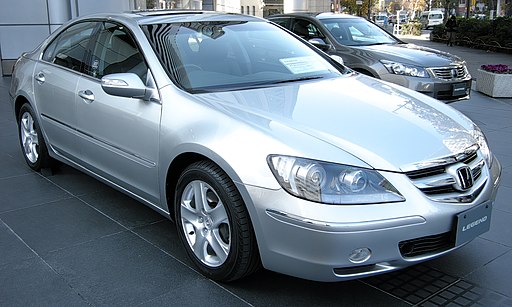
Honda Legend as a Used Car: A Luxury Sedan Worth Considering
The Honda Legend is one of the most interesting examples of Japanese luxury engineering, yet it remains a relatively unknown choice among used car buyers. While many people immediately think of German executive sedans such as the BMW 5 Series, Mercedes-Benz E-Class, or Audi A6 when searching for a premium vehicle, the Honda Legend represents a different philosophy. Instead of focusing primarily on brand prestige, Honda created a luxury sedan based on advanced technology, excellent build quality, comfort, and long-term dependability. For buyers looking for a refined used car with strong reliability credentials, the Legend deserves serious attention.
Produced in several generations from the mid-1980s until 2012, the Honda Legend served as Honda’s flagship passenger car and was designed to compete with established premium manufacturers. In some markets, especially North America, the model was sold under the Acura brand, where it became known as the Acura Legend and later the Acura RL. In Europe and Japan, however, it retained the Honda Legend name. Throughout its history, the model represented Honda’s ambition to prove that Japanese manufacturers could build luxury vehicles capable of challenging the traditional leaders of the segment.
As a used car, the Honda Legend offers a unique combination of features. It provides smooth performance from powerful V6 engines, advanced safety technology, a high-quality interior, and impressive comfort. At the same time, it avoids some of the reliability concerns associated with older luxury vehicles from premium European brands. However, buying one requires careful consideration because the Legend is a sophisticated vehicle with complex systems that can become expensive if neglected. A well-maintained example can be an outstanding purchase, while a poorly maintained car can quickly become a financial burden.
The History and Development of the Honda Legend
The Honda Legend first appeared in 1985 as part of Honda’s strategy to enter the executive car market. At the time, Honda was already known worldwide for efficient and reliable vehicles, but the company wanted to demonstrate its engineering capabilities in a more premium segment. The Legend was developed partly in cooperation with British manufacturer Rover, which resulted in shared technology and design influences during the early years.
Over time, the Legend evolved into a fully independent Honda flagship. Each generation introduced new technologies and improvements, including advanced engines, sophisticated suspension systems, improved safety equipment, and increasingly luxurious interiors. Unlike many competitors that relied on rear-wheel-drive platforms, Honda traditionally used front-wheel-drive layouts, allowing the company to create spacious cabins while maintaining efficient packaging.
The fourth generation Honda Legend, introduced in 2004, is particularly significant for used-car buyers. It represented the peak of Honda’s technological ambition during that period and introduced the company’s advanced Super Handling All-Wheel Drive system, known as SH-AWD. This system provided excellent traction and improved handling by actively distributing power between the wheels depending on driving conditions.
Although the Legend never achieved the sales numbers of its German competitors, it developed a reputation among enthusiasts and owners as a sophisticated, reliable, and unusually capable luxury sedan. Today, this lack of popularity creates an opportunity for used buyers because prices are often much lower than comparable premium vehicles.
Exterior Design and Build Quality
The Honda Legend’s exterior design reflects a more understated approach to luxury. Instead of aggressive styling or attention-seeking features, the car uses elegant proportions, clean lines, and a mature appearance. This makes it appealing to buyers who prefer a discreet premium vehicle rather than something designed to attract attention.
The fourth-generation Legend, for example, has a balanced and aerodynamic body shape. The long hood, wide stance, and carefully designed details give it a premium appearance without copying European competitors. The design has aged relatively well because it avoids excessive styling trends that quickly become outdated.
Build quality is one of the strongest aspects of the Honda Legend. The cabin materials, body structure, and mechanical components reflect Honda’s attention to durability. Many owners report that their vehicles continue to feel solid even after many years and high mileage. Doors close with a reassuring weight, interior components are generally durable, and the car provides the feeling of a well-engineered machine.
Nevertheless, age must always be considered. A luxury vehicle contains many electronic systems and comfort features that may require repairs after many years. Buyers should inspect the body carefully for corrosion, accident repairs, damaged paint, and signs of poor maintenance. A complete service history is especially valuable when purchasing an older Legend.
Interior Comfort and Luxury Features
The interior of the Honda Legend is where the car demonstrates its flagship status. Honda focused on creating a quiet, comfortable, and technologically advanced environment rather than simply adding decorative luxury elements. The cabin provides excellent ergonomics, supportive seats, and a high level of refinement.
The materials used throughout the interior are generally of high quality. Leather upholstery, wood-effect trim, automatic climate control, premium audio systems, and electrically adjustable seats were common features depending on market and specification. Compared with many mainstream Honda models, the Legend feels significantly more luxurious and isolated from the outside world.
Passenger comfort is another major advantage. The front seats provide excellent support during long journeys, while rear passengers benefit from generous legroom. The sedan body style creates a calm and comfortable atmosphere, making the Legend particularly suitable for motorway driving and extended trips.
Sound insulation is also impressive. Honda designed the Legend to compete with premium European sedans, and reducing road noise was a priority. At cruising speeds, the cabin remains quiet, allowing passengers to enjoy conversations or the premium audio system without disturbance.
Driving Experience: Luxury Combined with Technology
The Honda Legend offers a driving experience that is different from many traditional luxury sedans. Rather than emphasizing rear-wheel-drive handling characteristics, Honda focused on stability, confidence, and all-weather capability. The result is a vehicle that feels secure and predictable in almost every situation.
The most notable feature in later generations is the SH-AWD system. Unlike a simple all-wheel-drive system that only reacts when traction is lost, SH-AWD actively manages torque distribution between the front and rear axles and can send additional power to individual rear wheels during cornering. This improves stability and creates a surprisingly engaging driving experience.
The suspension is tuned for comfort but remains controlled. The Legend absorbs road imperfections effectively while maintaining confidence during faster driving. Steering is precise, although it does not provide the same rear-wheel-drive feel as some competitors. For most owners, however, the combination of comfort and stability is exactly what makes the car attractive.
Engine Options and Performance
The 3.5-Litre V6 Engine
The most common Honda Legend models are equipped with a 3.5-litre V6 petrol engine. This engine represents Honda’s traditional approach: smooth operation, strong performance, and long-term reliability. Unlike some turbocharged luxury engines, the naturally aspirated V6 has a simpler design and predictable power delivery.
With approximately 295 horsepower in later versions, the engine provides enough performance for effortless acceleration. The Legend is not designed as a sports sedan, but it has more than enough power for everyday driving, highway cruising, and overtaking.
Fuel consumption is naturally higher than smaller Honda models because of the engine size and vehicle weight. Buyers should expect luxury-car running costs, particularly in urban driving. However, many owners consider the fuel consumption acceptable because of the comfort, reliability, and performance offered.
Transmission
Most fourth-generation Honda Legend models use a five-speed automatic transmission. The gearbox is designed for smoothness rather than sporty shifts, matching the vehicle’s luxury character. When properly maintained, it is generally reliable, but neglected transmission fluid changes can lead to problems.
During a test drive, buyers should check that gear changes are smooth and that there are no unusual noises or delays. A properly maintained automatic transmission should operate almost unnoticed.
Common Problems When Buying a Used Honda Legend
The Honda Legend has a strong reliability reputation, but potential buyers should remember that it is a complex luxury vehicle. Many problems are not caused by poor engineering but simply by age, mileage, and the cost of maintaining advanced systems.
Electrical Systems
Because the Legend contains many electronic features, electrical issues are among the most important things to check. Problems may include malfunctioning sensors, navigation systems, seat controls, parking sensors, or audio equipment. These issues are usually not catastrophic, but repairs can be expensive if specialist knowledge is required.
Suspension Components
The suspension system provides excellent comfort, but components such as bushes, shock absorbers, and control arms eventually wear. Symptoms include unusual noises, reduced comfort, or unstable handling. A professional inspection is recommended before purchase.
Automatic Transmission Maintenance
The automatic gearbox is generally durable, but regular servicing is essential. Buyers should look for evidence of correct fluid changes and avoid cars with uncertain maintenance histories.
SH-AWD System
The advanced all-wheel-drive system is one of the Legend’s greatest strengths, but it also adds complexity. The system should operate smoothly without warning lights or unusual noises. Proper servicing is important to maintain reliability.
Honda Legend Running Costs
Although the Honda Legend is usually cheaper to buy than comparable German luxury sedans, ownership costs are still higher than those of ordinary family cars. The large V6 engine, premium tires, advanced electronics, and sophisticated drivetrain all require appropriate maintenance.
The advantage is that Honda reliability often reduces unexpected failures. Routine servicing, quality oil, and preventative maintenance can help keep the car running for many years. Owners who maintain their vehicles properly often report excellent long-term durability.
Insurance costs vary depending on location, engine size, and driver profile. Because the Legend is relatively rare, some parts may take longer to source compared with more common vehicles, but specialist Honda knowledge remains available in many regions.
What to Check Before Buying a Used Honda Legend
A thorough inspection is essential when purchasing any used luxury vehicle. The first priority should be maintenance history. A car with detailed service records is usually a much safer purchase than a cheaper example with unknown history.
During inspection, check the engine operation, transmission performance, suspension condition, electrical equipment, air conditioning, and interior features. The vehicle should start easily, run smoothly, and show no warning lights on the dashboard.
A test drive should include city streets, highways, and uneven roads. Listen for suspension noises, check braking performance, and confirm that the all-wheel-drive system operates correctly where applicable.
Advantages of the Honda Legend as a Used Car
- Excellent build quality and reliability.
- Powerful and smooth V6 engine.
- Very comfortable long-distance cruiser.
- Advanced SH-AWD technology on later models.
- High equipment levels compared with many rivals.
- Usually cheaper to purchase than equivalent German luxury cars.
- Rare and distinctive choice for enthusiasts.
Disadvantages of the Honda Legend as a Used Car
- Higher fuel consumption than smaller vehicles.
- Complex technology can be expensive to repair.
- Limited availability in some markets.
- Less brand recognition compared with German luxury brands.
- Some replacement parts may require specialist sourcing.
Honda Legend Technical Specifications
| Specification | Honda Legend (Fourth Generation) |
|---|---|
| Production Years | 2004–2012 |
| Body Type | Luxury four-door sedan |
| Engine | 3.5-litre V6 petrol |
| Engine Configuration | Naturally aspirated V6 |
| Power Output | Approximately 295 hp |
| Torque | Approximately 350 Nm |
| Transmission | 5-speed automatic |
| Drive System | SH-AWD all-wheel drive |
| Seating Capacity | 5 passengers |
| Length | Approximately 4.98 metres |
| Width | Approximately 1.85 metres |
| Wheelbase | Approximately 2.80 metres |
| Fuel Type | Petrol |
| Suspension | Independent suspension system |
| Main Strength | Reliability, comfort, and advanced engineering |
Final Verdict: Should You Buy a Used Honda Legend?
The Honda Legend is a fascinating alternative in the used luxury car market. It does not have the same image or popularity as German executive sedans, but it offers something many buyers value more: dependable engineering combined with genuine luxury and advanced technology.
For someone searching for an affordable premium vehicle that stands apart from the crowd, the Legend is an excellent candidate. It provides comfort, performance, and refinement while benefiting from Honda’s reputation for durability. The key is choosing the right example. Maintenance history, overall condition, and careful inspection are more important than mileage alone.
A well-maintained Honda Legend can deliver years of enjoyable ownership and represents one of the best-value options among used luxury sedans. It is a vehicle created with ambition, built with quality, and appreciated most by owners who understand that true luxury is not only about a famous badge but also about engineering excellence.
