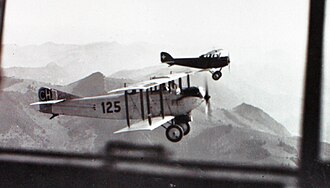
Caudron C.59: The French Biplane That Trained a Generation of Military Pilots
The Caudron C.59 and Its Place in Aviation History
The Caudron C.59 was a French two-seat biplane developed in the early 1920s to meet the growing demand for reliable military pilot training aircraft in the years following the First World War. Designed during a period when aviation was rapidly evolving from a wartime necessity into a permanent component of national defence, the C.59 became an important part of France’s efforts to maintain and improve its military flying capabilities. Its conventional biplane configuration, wooden airframe, fabric covering, open tandem cockpits, and water-cooled Hispano-Suiza engine reflected the practical engineering principles of the era. Rather than attempting to establish speed records or introduce revolutionary aerodynamic innovations, Caudron concentrated on producing a robust and manageable aircraft that could withstand repeated training flights and help student pilots develop the skills required for more advanced machines. The prototype made its first flight in August 1921, and the aircraft subsequently entered French military service in 1922, establishing a career that extended well into the 1930s.
What makes the Caudron C.59 particularly interesting is the scale of its production and its international reach. Approximately 1,800 examples were manufactured, with more than 1,000 delivered to the French military according to commonly cited historical accounts. Additional aircraft served French naval aviation, civilian flying schools, and foreign air forces in Europe, South America, and Asia. Countries including Finland, Turkey, Bulgaria, Argentina, Brazil, Portugal, Romania, Spain, and China acquired or operated examples of the type, demonstrating that the C.59 was not simply a domestic French training machine. Its long service life reflected the importance of dependable intermediate trainers during a period when military aviation organizations were expanding their training programmes, establishing permanent air units, and seeking economical ways to prepare pilots for increasingly sophisticated aircraft. Although the C.59 did not achieve the international fame of some later military aircraft, its combination of straightforward construction, useful flying characteristics, and broad adoption makes it a valuable subject for understanding interwar aviation.
Historical Background: French Aviation After the First World War
The Need for a New Generation of Training Aircraft
The end of the First World War in November 1918 brought enormous changes to military aviation. During the conflict, aircraft had developed from relatively fragile reconnaissance machines into specialized platforms for fighter combat, ground attack, observation, and bombing. Thousands of pilots had received wartime training, and aircraft manufacturers had developed extensive experience in building engines, airframes, instruments, and supporting equipment. However, the end of hostilities also created a difficult transition. Military budgets were reduced, many aircraft became surplus to requirements, and aviation authorities had to determine how best to preserve the knowledge gained during the war while adapting their organizations to peacetime conditions. The aircraft that had served wartime needs were not necessarily appropriate for systematic postwar training, particularly when older machines had been designed around urgent combat requirements rather than the safety, consistency, and repeatability desired in a long-term instructional programme.
Pilot training was becoming an increasingly specialized process. A student had to learn takeoff and landing techniques, directional control, coordinated turns, altitude management, navigation, and the ability to recognize and recover from developing flight problems. More advanced instruction introduced formation flying, instrument interpretation, tactical manoeuvres, and preparation for particular aircraft categories. These skills could not all be taught efficiently in a single type of aircraft, so military aviation organizations increasingly adopted structured training systems in which beginners progressed from elementary machines to more capable trainers and eventually to operational aircraft. The Caudron C.59 was intended for an intermediate stage of this process, giving students an opportunity to develop their abilities in a relatively substantial biplane before moving on to more demanding machines. Its success therefore depended not on exceptional speed or combat capability, but on its usefulness as a teaching platform that could be operated repeatedly by military flying schools.
The Caudron Company and Its Aviation Heritage
The Caudron company had established itself as an important French aircraft manufacturer before the First World War. Founded by brothers René and Gaston Caudron, the enterprise became involved in aircraft construction, flight training, and military aviation as powered flight developed from an experimental activity into a recognized industrial and military discipline. The company produced a wide variety of aircraft, including trainers, reconnaissance machines, and other designs adapted to changing customer requirements. During the war, its aircraft contributed to France’s growing aviation industry, while the experience accumulated through manufacturing and operating these machines helped inform the company’s postwar development. Like other manufacturers that survived the transition from wartime production, Caudron needed to create aircraft that met peacetime requirements and could be sold to military and civilian customers in a more competitive market.
The C.59 was developed by Paul Deville with assistance from René Talpin, combining established construction methods with a configuration suited to military flight instruction. The design did not attempt to abandon the biplane layout that had proven useful throughout the First World War. Instead, it refined a familiar arrangement into a dedicated training aircraft that could be manufactured in quantity and maintained by organizations with limited budgets. This approach made practical sense during the early 1920s, when the aviation industry was still recovering from wartime disruption and governments had to balance military modernization against other national priorities. The C.59’s later success illustrates how manufacturers could achieve lasting influence through reliable, purpose-built aircraft rather than relying exclusively on technologically ambitious designs or high-performance machines.
Design and Development of the Caudron C.59
A Conventional Two-Seat Biplane
The Caudron C.59 was a single-engine, two-seat biplane built around a traditional wooden structure covered with fabric. Its upper wing was slightly longer than the lower wing, while the lower wing incorporated a small amount of dihedral, the upward angle that can contribute to lateral stability. The two wings were connected by interplane struts and bracing wires, creating a rigid structure capable of supporting the aerodynamic loads encountered during ordinary flight and training manoeuvres. Ailerons were fitted to the upper wing only, providing the pilot with lateral control. The aircraft’s dimensions were modest by later standards, with a length of approximately 7.8 metres, a wingspan of about 10.24 metres, and a height of around 2.9 metres in commonly published specifications. Its total wing area of approximately 26 square metres gave it the lifting surface needed to support the aircraft, its two occupants, fuel, and operating equipment.
The choice of a biplane configuration was closely related to the materials and manufacturing practices available at the time. Wooden spars and ribs could be produced using established woodworking techniques, while fabric coverings reduced weight and allowed relatively straightforward maintenance. The combination of two wings and a network of struts created a strong structure without requiring the large, heavy spars that would have been necessary for a comparable monoplane built using contemporary materials. There were aerodynamic disadvantages, including the additional drag generated by the two wing surfaces and their supporting structure, but these disadvantages were acceptable in a trainer whose principal purpose was to provide stable and predictable flying characteristics rather than maximum speed. The C.59’s appearance was therefore representative of interwar training aircraft, which often retained the basic structural principles of First World War machines even as engines, instruments, and training methods gradually improved.
Tandem Cockpits and Dual Controls
One of the most important features of the Caudron C.59 was its tandem cockpit arrangement, with the student and instructor seated one behind the other. The pupil occupied the forward open cockpit beneath the central section of the upper wing, while the instructor sat immediately behind, beneath a cut-out in the wing’s trailing edge. This arrangement allowed both occupants to look ahead and to the sides while keeping the fuselage relatively narrow and aerodynamically simple. Dual controls were standard, allowing the instructor to demonstrate manoeuvres, correct mistakes, and intervene when necessary. The arrangement was particularly suitable for intermediate instruction because the student could carry out increasingly complex manoeuvres while the instructor retained the ability to monitor the flight and provide immediate assistance. The aircraft’s configuration made it a practical classroom in the air, where lessons could be taught through direct experience rather than relying exclusively on ground instruction.
Open cockpits were common on aircraft of the period and offered a relatively uncomplicated way to accommodate pilots and controls without the weight or construction complexity of a fully enclosed cabin. They also gave instructors and students a strong physical awareness of the surrounding environment, although this came at the cost of exposure to wind, cold, rain, and engine noise. The absence of modern communication equipment meant that instruction often relied on a combination of pre-flight briefing, hand signals, direct observation, and the instructor’s ability to communicate through the available arrangements. Despite these limitations, the tandem layout provided an effective foundation for teaching military pilots. By placing the student in the forward position and the instructor behind, Caudron produced an aircraft that was straightforward to understand and operate while retaining the essential features required for supervised flight training.
Construction Materials and Structural Durability
The C.59’s wooden airframe and fabric covering reflected the established engineering practices of the early interwar period. Wood remained an attractive aircraft-building material because it was comparatively light, could be shaped into useful structural forms, and could be worked by skilled craftsmen without the specialized industrial equipment required for some metal construction methods. Fabric covering reduced the weight of the wings and fuselage surfaces, while allowing access to the underlying framework for inspection and repair. However, this construction method required regular maintenance, as moisture, ultraviolet exposure, vibration, and ordinary wear could degrade the fabric or affect wooden components. Military flying schools had to monitor the condition of their aircraft closely, particularly when machines were used repeatedly by students who were still learning to judge their height, speed, and alignment during takeoff and landing.
Historical accounts of the C.59 emphasize the strength of its construction and the favorable results of official testing. For a training aircraft, structural durability was not simply a matter of surviving routine flight; it also influenced operating costs, availability, and the confidence instructors could place in the machine. Training aircraft were exposed to frequent landings, repeated handling, and the occasional rough treatment inevitable in the education of inexperienced pilots. A design that was relatively easy to inspect and repair could remain useful for many years, even if it did not incorporate the newest aerodynamic or structural technologies. The C.59’s long career suggests that its overall design was practical for the operational conditions in which it was employed, although individual aircraft would naturally have differed in condition, maintenance history, and the modifications they received during service.
Engine and Flight Performance
The Hispano-Suiza 8A Engine
The standard Caudron C.59 was powered by a Hispano-Suiza 8A-series water-cooled V-8 engine, with many published specifications identifying an output of approximately 180 horsepower, or 134 kilowatts. Hispano-Suiza engines were well known in early twentieth-century aviation and had been used in several important French military aircraft during the First World War. Their continued use in the postwar period reflected the existing technical knowledge, manufacturing capacity, and maintenance experience associated with these powerplants. In the C.59, the engine provided the performance required for intermediate training without the expense and complexity of a much more powerful installation. The engine drove a two-bladed wooden propeller, while a Lamblin radiator mounted beneath the forward fuselage provided cooling for the liquid-cooled powerplant. This radiator placement was a distinctive feature of the aircraft’s overall arrangement and formed part of the cooling system required for sustained operation.
A water-cooled engine offered advantages in temperature management and engine design, although it also required additional components such as a radiator, coolant passages, and associated plumbing. These systems added maintenance tasks that instructors and ground crews had to understand, but they were familiar features of the French aviation industry by the early 1920s. The engine’s output gave the C.59 adequate power for training manoeuvres and routine military flying, while the aircraft’s biplane wings supported relatively low-speed operation. The combination of a conventional airframe and a recognized engine design helped make the C.59 suitable for large-scale use. Its role did not demand the exceptional power-to-weight ratio needed by a fighter or the endurance required of a long-range reconnaissance aircraft; instead, it needed enough performance to teach pilots essential skills reliably and economically.
Speed, Endurance, and Handling Characteristics
The Caudron C.59’s maximum speed is commonly listed at approximately 170 kilometres per hour, or about 106 miles per hour, although some historical references report a figure closer to 180 kilometres per hour. Its endurance is generally given as around three and a half hours, while its practical range is often listed at approximately 500 kilometres. These figures should be treated as representative published values rather than guaranteed performance under all operating conditions. Aircraft performance depends on the specific engine installation, aircraft weight, weather, altitude, maintenance condition, and measurement standards used by the source. Nevertheless, the available specifications provide a useful picture of the C.59 as a relatively modest-performance aircraft suited to local and regional training flights rather than long-distance transport or high-speed military missions.
For a trainer, the relationship between speed and handling was more important than maximum velocity alone. Students needed an aircraft that could perform turns, climbs, descents, and approach manoeuvres without requiring the extreme control precision or power management associated with more demanding aircraft. A biplane with a substantial wing area could support flight at relatively low speeds, giving instructors opportunities to teach the principles of lift, drag, coordinated control, and landing technique. At the same time, the aircraft’s structure and flight characteristics still required disciplined handling, because even a forgiving trainer could become dangerous if operated outside its limits. The C.59 was intended to bridge the gap between elementary training and more advanced aircraft, providing students with the experience needed to transition toward military machines with greater speed, different handling characteristics, or specialized equipment.
Weight and Useful Load
Commonly cited specifications give the C.59 an empty weight of approximately 700 kilograms and a maximum takeoff weight of around 988 kilograms. This left a difference of roughly 288 kilograms for the crew, fuel, oil, and other operational loads, although the precise usable allowance depended on the configuration and the way weights were recorded. Some historical references list different empty and loaded weights for particular versions, reflecting variations in engine installations, construction details, and national operating practices. The figures most often associated with the standard 180-horsepower configuration nevertheless show that the C.59 was a relatively light aircraft for its size, with a useful balance between structural strength and payload capacity. Its wing area of approximately 26 square metres helped support this weight while preserving the low-speed characteristics desirable in a training machine.
Weight management was especially important in early aircraft because engines provided limited power and the available materials imposed constraints on structural efficiency. Fuel carried for a long training sortie reduced the margin available for other loads, while the addition of equipment or modifications could affect performance and handling. Instructors therefore needed to understand how aircraft loading influenced takeoff distance, climb rate, and control response. The C.59’s relatively straightforward design made it a useful platform for teaching these practical lessons, helping students understand that aircraft performance depended on the interaction of weight, engine power, and aerodynamic forces rather than on any single specification. These lessons remained relevant as pilots progressed to faster and more complex aircraft throughout their careers.
Operational Service in the French Air Force
A Standard Trainer for Military Flying Schools
The Caudron C.59 entered French military service in 1922 after extensive official testing demonstrated that it offered a useful combination of structural durability, favorable flying characteristics, and dependable engine performance. It was selected for the French military’s Et.2 category, which covered two-seat transitional training aircraft intended to prepare pilots for more advanced flying duties. Between 1922 and 1924, seven procurement contracts resulted in the delivery of more than 1,000 examples to the French Army’s aviation service, with smaller batches also supplied to French naval aviation. The scale of these orders demonstrates that the C.59 was not merely an experimental aircraft or a short-lived solution adopted to fill a temporary gap. It became an established component of the country’s pilot-training infrastructure, serving at a time when France was reorganizing its aviation forces and seeking to preserve the capabilities developed during the previous decade.
Military flying schools depended on aircraft that could withstand frequent use while allowing instructors to supervise students at different stages of development. The C.59 fulfilled this role by providing two cockpits, dual controls, and flight characteristics suitable for the transition between elementary flying and more demanding military instruction. Students could learn to manage the aircraft’s engine, maintain directional control, coordinate turns, and develop the judgment needed for safe landings. Instructors, meanwhile, could observe how pupils responded to changing flight conditions and intervene when their decisions threatened the safety of the sortie. This kind of structured instruction was particularly important as military aviation moved beyond the pioneering period, when many pilots learned through informal experience, and toward more standardized training systems intended to produce consistent results across larger groups of personnel.
A Long Career in French Military Aviation
One of the clearest indications of the Caudron C.59’s usefulness was the length of its French service career. The type remained in military use for approximately fifteen years, and a small number of examples were still listed with the French Air Force on 1 January 1936. This longevity was significant because the interwar period brought considerable changes in aircraft design, including improvements in engine performance, metal construction, aerodynamic refinement, cockpit instrumentation, and the development of more advanced training methods. An aircraft introduced in 1922 could not be expected to remain technically competitive with every new generation of machines, but it could continue to provide value when assigned to a role that did not require the latest technology. For a trainer, operational availability and predictable behaviour could be more important than speed or advanced construction, especially when budgets were limited and flying schools needed to maintain a steady programme of instruction.
The C.59’s extended service should not be interpreted as evidence that the aircraft remained unchanged throughout its career. Individual machines could receive maintenance, repairs, and equipment adjustments, while the standards expected of student pilots and the aircraft they would eventually fly continued to evolve. Nevertheless, the design’s continued presence in French aviation indicates that it met an enduring institutional need. Its role also illustrates an important principle of military procurement: an aircraft’s success is measured not only by its performance in the air but also by the number of years it can remain useful, the ease with which personnel can maintain it, and the cost of operating it within a wider training system. The C.59’s record in French service was built on these practical qualities rather than on any claim that it represented the ultimate achievement in aircraft engineering.
International Operators and the Global Reach of the C.59
Finland: Three Aircraft and a Surviving Example
Finland was among the countries that acquired the Caudron C.59 during the early development of its national air force. The Finnish Air Force purchased three examples from France in 1923, when the country’s aviation establishment was still developing its training capabilities and building up a small inventory of military aircraft. The machines initially carried the designations 2E3, 2E4, and 2E5, with later registration changes identifying them as CA-48, CA-49, and CA-50. Their use provided Finnish pilots with access to a two-seat training aircraft suitable for more advanced instruction. At least one Finnish example was reportedly equipped with floats at some point, illustrating how aircraft operating units could investigate adaptations for different landing environments, although the C.59 was fundamentally a land-based biplane.
The Finnish aircraft had relatively short individual careers compared with the type’s overall service history. Two of the three were lost before 1929, while the remaining machine, CA-50, was withdrawn from service in 1931. The surviving aircraft is particularly important because the Finnish Aviation Museums organization identifies it as probably the only surviving example of the Caudron C.59 in the world. It is preserved at the Päijänne-Tavastia Aviation Museum in Finland, displayed without its wings. Its survival provides a tangible connection to the early years of Finnish military aviation and offers historians an opportunity to study the physical construction of a type that was once produced in considerable numbers. The difference between the C.59’s substantial historical production total and the apparent survival of only one airframe also illustrates how quickly wooden and fabric-covered aircraft can disappear once their operational usefulness has ended. Source: Finnish Aviation Museums.
Turkey: Training and Continued Use Beyond Military Service
Turkey was another important operator of the Caudron C.59, acquiring examples as its aviation training system developed during the 1920s. Historical accounts describe deliveries beginning in the middle of the decade, with Turkish aircraft assigned to flying schools including those at Gaziemir and Eskişehir. The C.59 offered a relatively straightforward means of training pilots who would eventually progress to other military aircraft, helping the developing Turkish aviation establishment build experience and maintain a supply of trained personnel. The aircraft’s open tandem cockpits and dual controls made it suitable for supervised instruction, while its conventional construction allowed ground crews to work with systems that were familiar to many contemporary aircraft technicians.
Turkish C.59s continued to be used through the 1930s, although they were gradually replaced by more modern trainers, including the German Gotha Go 145. Some surviving aircraft were subsequently transferred to the Turkish Aeronautical Association for activities such as glider towing and parachute training. These later uses are especially revealing because they show that an aircraft did not necessarily become worthless once it had been superseded in its original military role. An older trainer could still be useful for tasks that did not require high speed or the performance of a modern military aircraft. Such adaptations were common in an era when aviation organizations were attempting to stretch limited resources and make use of available equipment for as long as it remained serviceable. The Turkish experience therefore reflects the wider history of the C.59 as a practical, adaptable aircraft whose useful life could extend beyond its first intended purpose.
Bulgaria, Spain, Portugal, and Other Countries
The Caudron C.59 was also exported to several other countries, reflecting the demand for established training aircraft during the interwar years. Bulgaria, Portugal, Romania, Spain, Argentina, Brazil, Venezuela, and China are among the countries associated with the type in historical operator lists, while Manchuria also appears in some published accounts. The exact number of aircraft acquired by each country and their individual service histories varied, and surviving records are not equally complete for every operator. Nevertheless, the geographic spread of the C.59 demonstrates that the aircraft’s usefulness was recognized beyond France. Military aviation was developing at different speeds across the world, and countries with comparatively small air forces often benefited from purchasing aircraft that had already undergone official testing and entered established production.
For countries building or reorganizing their aviation services, an imported trainer offered more than a ready-made airframe. It provided a platform around which flying schools could develop instructional practices, train maintenance personnel, and establish routines for inspection and repair. A widely produced aircraft could also benefit from the experience accumulated by other operators, even when spare parts and technical documentation had to be adapted to local conditions. The C.59’s exports therefore reflected both the practical requirements of pilot training and the commercial relationships that connected European aircraft manufacturers with emerging aviation organizations around the world. Its international career illustrates how aircraft developed for a single national customer could become part of a much broader network of military aviation during the 1920s and 1930s.
The Caudron C.59 and the Spanish Civil War
An Older Aircraft in a Changing Aviation Environment
The Spanish Civil War, which began in 1936, took place during a period when military aviation was changing rapidly. Aircraft that had been considered useful during the 1920s were increasingly being replaced by faster monoplanes, more powerful engines, improved armament, and more sophisticated military systems. Against this background, the Caudron C.59 was already an older design, having been developed approximately fifteen years before the conflict began. Some historical summaries associate the type with aviation in Spain during the civil war, but claims about its precise combat use should be approached carefully because surviving sources do not always distinguish clearly between training, secondary duties, and direct operational employment. The aircraft’s primary identity remained that of a trainer, and its presence in a country during wartime would not by itself demonstrate that it participated in frontline combat.
The distinction is important when writing about historical aircraft because military service was not always limited to a single clearly defined role. An older trainer might be used for elementary instruction, liaison, communications, or other secondary tasks if it remained airworthy and suitable for the mission. However, the C.59’s relatively low speed, open cockpit, and modest performance would have made it unsuitable for many of the demanding combat roles undertaken by newer aircraft during the Spanish Civil War. Its significance in this context lies primarily in illustrating the rapid ageing of interwar aircraft technology and the different expectations placed on military machines as the 1930s progressed. By the outbreak of the conflict, aviation had advanced sufficiently that an aircraft designed for pilot development in 1921 belonged to a substantially different generation from the fighters and bombers entering service in the late 1930s.
Why Training Aircraft Remained Valuable
Although the most visible developments in aviation often involved fighters and bombers, training aircraft remained essential to every expanding air force. More advanced operational machines required pilots who already understood the fundamentals of flying, and the increasing complexity of aircraft made structured instruction even more important. A reliable trainer could continue to perform this foundational function even as the military environment around it changed. In this respect, the C.59 represented a category of aircraft whose importance was sometimes greater than its technical sophistication suggested. It was not designed to dominate an air battle, but to prepare the people who might eventually fly more advanced aircraft, and that contribution formed part of the broader infrastructure supporting military aviation.
The development of pilot training also depended on institutional continuity. Flying schools needed instructors, mechanics, spare parts, suitable airfields, and an established programme through which students could gain experience. Aircraft such as the C.59 helped make that process repeatable by providing a standardized platform for lessons and assessment. Even when an older type was withdrawn from military service, the experience gained by the pilots and instructors who had used it remained part of the accumulated knowledge of an aviation organization. The C.59’s long history is therefore best understood not through isolated claims about dramatic events, but through its role in the everyday work of developing pilots, maintaining aircraft, and building the organizational foundations of air power.
Variants and Related Aircraft
Caudron C.59: The Standard Training Version
The standard Caudron C.59 was a two-seat biplane powered by a Hispano-Suiza V-8 engine and intended primarily for intermediate pilot training. Its principal features included the wooden airframe, fabric covering, tandem open cockpits, dual controls, fixed landing gear, and conventional biplane wings. This configuration was the foundation of the type’s success and remained associated with the majority of published C.59 specifications. Differences in engine output and weight figures appear across historical references, so it is important to identify the precise version being described when comparing individual aircraft or national service records. The standard model nevertheless provides a representative picture of the C.59’s purpose and construction.
Caudron C.59/2: An Alternative Engine Installation
A variant identified as the C.59/2 was fitted with a Lorraine 7Ma Mizar radial engine rated at approximately 230 horsepower in commonly cited accounts. This engine installation represented an alternative approach to propulsion, replacing the standard Hispano-Suiza water-cooled V-8 with a radial powerplant. Radial engines arranged their cylinders around a central crankcase and were widely used in interwar aviation, offering a different combination of cooling arrangements, maintenance considerations, and airframe integration. The change in engine type illustrates the way aircraft manufacturers experimented with alternative powerplants as engines developed and customers sought different performance characteristics. It should not be assumed that every C.59 received this engine, because the standard Hispano-Suiza-powered aircraft remained the principal version associated with the type.
Caudron C.77: A Related Single-Seat Trainer
The Caudron C.77 was a related design intended as a single-seat basic trainer for a 1923 French military competition. Unlike the two-seat C.59, the C.77 was aimed at a different stage of pilot development and represented a variation on the company’s approach to training aircraft. Its existence illustrates the diversity of instructional requirements facing military aviation organizations in the early 1920s. Basic training, intermediate instruction, and preparation for operational flying did not necessarily require identical aircraft, and manufacturers explored several configurations in response to those differing needs. The C.77 should therefore be treated as a related design rather than simply another name for the standard C.59.
Caudron C.320: Re-Engined Aircraft from the Early 1930s
The Caudron C.320 designation is associated with older C.59 airframes that were re-engined around 1932 with a Renault 9A nine-cylinder radial engine rated at approximately 250 horsepower. Some aircraft were later returned to their original Hispano-Suiza engine configuration, according to published historical summaries. These modifications demonstrate how manufacturers and operators could extend the usefulness of existing airframes by installing different engines rather than replacing the entire aircraft. Re-engining could improve performance or make use of available powerplants, although the actual results depended on the new engine’s weight, dimensions, cooling requirements, and compatibility with the original structure. The C.320 thus forms part of the wider story of interwar aircraft development, when practical improvements to existing designs often played an important role alongside entirely new aircraft programmes.
Comparison with Other Interwar Training Aircraft
The C.59’s Position in the Training Aircraft Market
The Caudron C.59 belonged to a broad family of interwar training biplanes that included aircraft from manufacturers such as Morane-Saulnier, Hanriot, and other European companies. These machines frequently shared certain characteristics: wooden or mixed-material structures, fabric-covered wings, fixed landing gear, open cockpits, and engines selected for dependable operation rather than exceptional power. Although they differed in dimensions, handling, construction, and performance, their common purpose was to provide the foundation for a systematic training system. Military aviation organizations had learned during the First World War that pilot skill could be as important as the technical qualities of the aircraft itself, and the development of dependable trainers was a practical response to that lesson.
The C.59’s advantage was not that it introduced an entirely new configuration, but that it combined established features into a design that could be produced in large numbers and retained in service for many years. Its adoption by the French military and export to numerous countries demonstrate that the design met a recognizable need in the market for training aircraft. Other trainers could offer different strengths, and the most suitable choice for a particular air force depended on its budget, technical infrastructure, pilot-training requirements, and access to spare parts. The C.59 nevertheless stands as a representative example of the practical aircraft that supported the expansion of military aviation between the two world wars.
From Wooden Biplanes to Modern Training Systems
By the late 1930s, aviation was moving toward increasingly capable aircraft with more powerful engines, improved aerodynamic efficiency, and a growing use of metal structures. Training systems were changing alongside these technical developments, as pilots needed to prepare for aircraft that could fly faster, operate at higher altitudes, and demand more precise control. The C.59’s eventual replacement was therefore part of a broader generational shift rather than a simple rejection of a once-successful aircraft. Its design had served a particular historical period, and its value diminished as the demands placed on military pilots changed.
The transition from the C.59 to newer trainers also demonstrates that aviation progress depended on more than improvements in aircraft performance. Training programmes evolved, operational procedures became more formalized, and the relationship between basic instruction and advanced flying changed as military aircraft became more specialized. An older biplane could still teach fundamental skills, but it could not reproduce every aspect of flying a modern operational machine. The C.59’s career provides a useful example of how a successful design could remain relevant for years before being overtaken by a new generation of technology and training requirements.
Preservation and Historical Significance
The Surviving Caudron C.59 in Finland
The surviving Finnish Caudron C.59, registered CA-50 and previously designated 2E5, is an especially valuable reminder of the aircraft’s history. The Finnish Aviation Museums organization identifies it as probably the only surviving example of the type, and the aircraft is displayed at the Päijänne-Tavastia Aviation Museum without its wings. Its survival is notable because the C.59 was manufactured in large numbers, yet most examples were eventually lost through accidents, dismantling, disposal, or the ordinary disappearance of obsolete aircraft. Wooden airframes and fabric coverings were particularly vulnerable to deterioration when not maintained, and retired military aircraft were rarely preserved systematically during the early twentieth century.
The surviving airframe offers a direct connection to the technical and operational world of the 1920s. Its structure, cockpit arrangement, and other physical features help illustrate the construction methods used by French aircraft manufacturers during the period, while its Finnish identity links it to the development of aviation in northern Europe. Museum preservation also helps place the C.59 in context alongside other historical aircraft, allowing visitors to understand that military aviation depended on a wide range of machines rather than only the famous fighters and bombers that dominate popular accounts of the world wars. A trainer such as the C.59 may appear less dramatic than a combat aircraft, but it played a meaningful part in the preparation of military pilots and the expansion of national air services.
Why the C.59 Deserves Recognition
The historical importance of the Caudron C.59 lies in the combination of its longevity, production scale, international use, and contribution to military training. It did not revolutionize aerodynamics, establish an extraordinary speed record, or become famous through a single decisive combat episode. Instead, it succeeded in a role that required dependable performance over many years and across different organizations. The aircraft’s long French service career, exports to multiple countries, and continued presence in secondary roles demonstrate that practical usefulness could be as important as technical novelty in determining an aircraft’s place in history.
The C.59 also provides a useful perspective on the interwar period as a whole. The years between 1918 and 1939 are often described through the rapid development of fighters, bombers, and long-distance record aircraft, but the growth of aviation depended equally on trainers, maintenance systems, flying schools, and the steady preparation of new pilots. Without such infrastructure, the introduction of more advanced operational aircraft would have been far less effective. The Caudron C.59 represents this less spectacular but essential dimension of aviation history, showing how a conventional biplane could help sustain the development of military flying across more than a decade.
Technical Specifications of the Caudron C.59
The following table summarizes commonly published specifications for the standard Hispano-Suiza-powered Caudron C.59. Figures vary slightly between historical references, especially for maximum speed, engine designation, and certain dimensions, so the table should be treated as a representative reference rather than a guarantee that every production aircraft had identical characteristics.
| Specification | Caudron C.59 |
|---|---|
| Country of origin | France |
| Manufacturer | Caudron |
| Designers | Paul Deville and René Talpin |
| Aircraft type | Two-seat intermediate military trainer |
| First flight | August 1921 |
| Introduction into service | 1922 |
| Production period | 1922–1924 |
| Total production | Approximately 1,800 |
| Crew | 2 (student and instructor) |
| Construction | Wooden airframe with fabric covering |
| Configuration | Single-engine, two-seat biplane |
| Engine | 1 × Hispano-Suiza 8A-series V-8 piston engine |
| Engine power | Approximately 180 hp (134 kW) |
| Propeller | Two-bladed wooden propeller |
| Cooling system | Liquid-cooled, with Lamblin radiator |
| Length | 7.80 m (25 ft 7 in) |
| Wingspan | 10.24 m (33 ft 7 in) |
| Height | 2.90 m (9 ft 6 in) |
| Wing area | 26 m² (280 sq ft) |
| Empty weight | Approximately 700 kg (1,543 lb) |
| Maximum takeoff weight | Approximately 988 kg (2,178 lb) |
| Maximum speed | Approximately 170–180 km/h (106–112 mph) |
| Endurance | Approximately 3 hours 30 minutes |
| Practical range | Approximately 500 km (311 miles), as reported in some sources |
| Landing gear | Fixed landing gear with cross-axle arrangement |
| Cockpit arrangement | Open tandem cockpits |
| Flight controls | Dual controls for instruction |
| Primary operator | French military aviation |
| Other operators | Finland, Turkey, Bulgaria, Spain, Portugal, Romania, Argentina, Brazil, China, Venezuela, and others |
| Related variants | C.59/2, C.77, C.320 |
Conclusion: The Lasting Legacy of the Caudron C.59
The Caudron C.59 was a practical and successful French training aircraft that helped support the development of military aviation during the interwar years. First flown in August 1921 and introduced into service in 1922, it combined a conventional wooden-and-fabric biplane structure with two open cockpits, dual controls, and a Hispano-Suiza V-8 engine. These features gave it the qualities required for intermediate flight instruction, allowing student pilots to develop their skills under the supervision of experienced instructors. Its large-scale adoption by the French military, together with a production total commonly estimated at approximately 1,800 aircraft, demonstrates that it met a significant operational need at a time when air forces were rebuilding and professionalizing their training systems after the First World War.
The C.59’s international career adds another dimension to its importance. Aircraft were exported to countries across Europe, South America, and Asia, helping support the expansion of military flying schools in different national contexts. Its service in France extended for approximately fifteen years, and examples in some other countries remained useful into the 1930s or beyond in secondary roles. Although newer aircraft eventually replaced the C.59 as training methods and technology developed, its long career illustrates the value of a well-designed aircraft that could be manufactured, maintained, and operated without unnecessary complexity.
The surviving Finnish example provides a final connection between the aircraft’s history and the present day. Once one of many C.59s serving military aviation, it now represents a rare physical record of the aircraft’s construction and operational era. The type deserves recognition not because it was the fastest or most technologically advanced aircraft of its time, but because it performed a fundamental task reliably: preparing pilots for the responsibilities of flight. In the broader story of aviation, the Caudron C.59 reminds us that the development of air power depended not only on famous combat aircraft, but also on the training machines that helped create the people who flew them.
