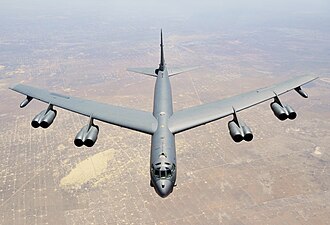
Boeing B-52 Stratofortress – The Legendary Bomber That Defined Strategic Aviation
The Boeing B-52 Stratofortress is one of the most recognizable and enduring aircraft in aviation history. Since its first flight in the early 1950s, the aircraft has represented American long-range air power and has remained a central part of strategic military planning for more than seven decades. Few aircraft have achieved such a combination of longevity, adaptability, and operational importance. Designed during the early Cold War as a nuclear bomber, the B-52 has evolved into a highly capable multi-role aircraft that continues to perform missions in the modern era.
The B-52 was created during a period when military aviation was undergoing a dramatic transformation. The piston-powered bombers of the Second World War were being replaced by jet aircraft capable of flying faster, higher, and farther. Boeing, drawing on experience gained from aircraft such as the B-29 Superfortress and B-47 Stratojet, developed a bomber that combined the lessons of previous generations with entirely new technologies.
Unlike many aircraft designed for a specific historical moment, the B-52 proved remarkably adaptable. While its original mission was the delivery of nuclear weapons during the Cold War, the aircraft later became a platform for conventional bombing, maritime patrol support, precision strike operations, electronic warfare, and missile deployment. Through repeated modernization programs, the B-52 has remained relevant despite the arrival of newer aircraft.
The aircraft’s distinctive appearance, with its enormous swept wings, eight engines, and long fuselage, has made it an icon of aerospace engineering. It is not the fastest bomber ever built, nor the newest, but its combination of range, payload capacity, reliability, and upgrade potential has allowed it to serve longer than almost any other combat aircraft.
This article explores the complete history of the Boeing B-52 Stratofortress, from its origins and revolutionary design to its Cold War missions, combat experience, modernization programs, and continuing role in twenty-first-century aviation.
The Origins of the Boeing B-52 Stratofortress
Creating a New Strategic Bomber for the Nuclear Age
The development of the Boeing B-52 began shortly after the Second World War, when American military planners recognized that future conflicts would require aircraft with unprecedented range and capability. The introduction of nuclear weapons had fundamentally changed strategic warfare. Bombers were no longer simply weapons for attacking military targets; they became instruments of national deterrence capable of influencing global politics.
The Boeing B-29 Superfortress had demonstrated the importance of long-range bombing during World War II, but by the late 1940s it was becoming clear that piston-powered aircraft would eventually be unable to survive against increasingly advanced air defenses. The arrival of jet fighters, improved radar systems, and surface-to-air missile technology created a demand for faster and more capable bombers.
Boeing’s experience with the B-47 Stratojet provided an important foundation. The B-47 had introduced swept wings and jet propulsion into strategic aviation, proving that large aircraft could successfully operate at high speeds. However, the B-47 lacked the range and payload needed for future intercontinental missions.
The United States Air Force began seeking a bomber capable of carrying nuclear weapons over extremely long distances without relying on overseas bases. Boeing responded with a series of design studies that eventually led to the Model 464, which became the foundation of the B-52.
Early concepts changed significantly during development. Engineers initially considered turboprop propulsion, but advances in jet technology led Boeing to adopt a pure jet design. The final aircraft combined long-range capability, heavy payload capacity, and swept-wing aerodynamic efficiency.
The Development of the B-52 Design
From Prototype to Production Aircraft
The first prototype, designated the XB-52, made its first flight on 15 April 1952. The aircraft immediately demonstrated impressive performance and confirmed that Boeing had created a new generation of strategic bomber.
The design represented a major departure from earlier bombers. Instead of relying on defensive weapons and large crews, the B-52 emphasized speed, altitude, range, and advanced systems. It was designed to penetrate enemy defenses carrying nuclear weapons and return safely.
The aircraft featured a large swept wing with eight jet engines mounted in four twin-engine pods beneath the wings. This arrangement provided the necessary thrust while reducing aerodynamic drag. The enormous wings allowed the aircraft to carry large amounts of fuel, giving it the range required for intercontinental missions.
The fuselage was designed around a pressurized crew compartment and a large internal weapons bay. Unlike smaller aircraft, the B-52 had enough internal volume to carry significant weapons loads while maintaining long endurance.
After successful testing, the Air Force ordered production versions. The first operational aircraft entered service in 1955, beginning one of the longest and most successful careers in military aviation history.
The Engineering Innovations of the B-52 Stratofortress
A Giant Aircraft Designed for Global Missions
The Boeing B-52 was a remarkable engineering achievement because it combined enormous size with high aerodynamic efficiency. At more than 48 meters in length and with a wingspan exceeding 56 meters, it was one of the largest aircraft ever built for combat service.
The aircraft’s swept wings were among its most important features. Inspired by the aerodynamic lessons learned from the B-47, the wings allowed the B-52 to cruise efficiently at high speeds while carrying enormous fuel loads.
The wings were designed with flexibility in mind. Unlike many aircraft with rigid structures, the B-52’s wings were engineered to bend significantly during flight. This flexibility reduced structural stress and allowed the aircraft to handle turbulence and changing aerodynamic forces.
The large fuel capacity was essential because the B-52 was designed for global missions. During the Cold War, aircraft could be required to fly thousands of kilometers before reaching potential targets, making endurance one of the aircraft’s defining characteristics.
The aircraft’s internal systems were also designed for reliability. Because strategic bombers needed to remain available at all times, engineers focused on creating a platform capable of operating continuously under demanding conditions.
The Eight-Engine Powerplant System
Pratt & Whitney J57 Turbojet Engines
The early versions of the Boeing B-52 were powered by eight Pratt & Whitney J57 turbojet engines. These engines were among the most advanced powerplants of their era and provided the thrust necessary for the aircraft’s long-range strategic mission.
The engines were mounted beneath the wings in four pairs, creating the distinctive appearance that remains associated with the B-52 today. This arrangement simplified maintenance access while allowing efficient airflow around the aircraft.
Each engine produced thousands of pounds of thrust, giving the aircraft enough power to carry heavy weapons loads and large quantities of fuel. The combination of eight engines and a highly efficient wing design allowed the B-52 to travel enormous distances.
Later versions received improved engines and systems, increasing reliability and reducing operating costs. Engine upgrades have remained an important part of keeping the aircraft competitive throughout its long service life.
Entering Service With Strategic Air Command
The Beginning of a New Era in Air Power
The Boeing B-52 entered service with the United States Air Force Strategic Air Command during the height of the Cold War. It quickly became the backbone of America’s strategic bomber force and played a central role in nuclear deterrence.
The aircraft replaced earlier bombers such as the B-36 Peacemaker and B-47 Stratojet. Compared with those aircraft, the B-52 offered a combination of range, payload, and operational flexibility that made it ideal for the changing strategic environment.
Strategic Air Command developed procedures that allowed B-52 units to maintain constant readiness. Crews trained for long-range missions, nuclear weapons delivery, and emergency response scenarios.
The presence of B-52 bombers served as a powerful message during the Cold War. The aircraft represented the ability of the United States to respond to threats with overwhelming strategic force.
The Early B-52 Variants
B-52A and B-52B
The earliest production versions established the basic design of the aircraft. The B-52A introduced the production configuration, while the B-52B became the first operational version used by the Air Force.
These early aircraft were primarily focused on nuclear bombing missions. They introduced the systems and procedures that would later be refined in more advanced versions.
B-52C and B-52D
The B-52C and B-52D incorporated improvements in range, avionics, and weapons capability. The B-52D became one of the most famous variants because of its extensive combat service during the Vietnam War.
These aircraft demonstrated the flexibility of the B-52 design and proved that the bomber could perform both strategic nuclear missions and conventional bombing operations.
The B-52 Stratofortress and the Nuclear Deterrence Mission
The Foundation of Cold War Strategic Power
The primary purpose of the Boeing B-52 Stratofortress during its early decades was nuclear deterrence. During the Cold War, the aircraft represented one of the most important elements of America’s strategic response capability. The concept behind the B-52 was based on maintaining a powerful fleet of long-range bombers capable of delivering nuclear weapons anywhere in the world if necessary.
The aircraft’s enormous range allowed it to operate from bases in the United States while still reaching distant targets. This capability was particularly important before the widespread development of intercontinental ballistic missiles, when strategic bombers were among the few systems capable of delivering nuclear weapons across continents.
Strategic Air Command developed a highly organized system around the B-52. Crews maintained constant readiness, aircraft were regularly placed on alert, and training missions simulated the complex requirements of nuclear operations. The goal was not simply to use the aircraft in war but to prevent war by demonstrating the ability to respond to any attack.
The B-52’s role in nuclear deterrence gave it enormous political importance. The aircraft became a visible symbol of American military capability, and its presence influenced strategic decisions throughout the Cold War period.
Operation Chrome Dome and Continuous Airborne Alert
The Era of Constant Readiness
One of the most famous missions involving the B-52 was Operation Chrome Dome, a Strategic Air Command program that placed nuclear-armed bombers on continuous airborne alert during the Cold War. Beginning in 1960, B-52 aircraft regularly flew long-duration missions near strategic locations while carrying nuclear weapons.
The purpose of these flights was to ensure that some aircraft would always be available to respond even if enemy forces attacked American bases. The program demonstrated the endurance of the B-52 and the ability of its crews to perform extremely demanding missions.
These flights required careful planning and extensive coordination. Aircraft could remain airborne for many hours, supported by aerial refueling tankers that extended their operational range. Crews had to manage fatigue, navigation, communication, and emergency procedures during long missions.
Although Operation Chrome Dome ended in 1968, it represented a defining period in B-52 history. It showed the aircraft’s ability to serve as a continuously available strategic asset and demonstrated the importance of long-range aviation during nuclear competition.
Aerial Refueling and Global Reach
Extending the Range of the Stratofortress
A key feature of the Boeing B-52’s strategic capability was its ability to receive fuel in flight. Aerial refueling transformed the aircraft from a long-range bomber into a truly global platform capable of operating far from its home bases.
During Cold War operations, B-52 missions often involved flights lasting many hours. Tanker aircraft allowed the bombers to remain airborne longer, reach distant areas, and maintain flexibility during changing strategic situations.
The development of reliable aerial refueling procedures was one of the most important achievements of the Strategic Air Command era. The experience gained through B-52 operations influenced the design and operation of later tanker aircraft and global air mobility systems.
Even today, aerial refueling remains one of the reasons the B-52 continues to be useful. The ability to remain airborne for extended periods gives the aircraft significant operational flexibility.
The B-52 During the Vietnam War
From Nuclear Deterrence to Conventional Bombing
The Vietnam War marked a major change in the operational history of the Boeing B-52. Although originally designed as a nuclear bomber, the aircraft was adapted for large-scale conventional bombing missions. This demonstrated the flexibility of the design and proved that a strategic bomber could perform roles beyond nuclear deterrence.
The B-52’s involvement in Vietnam began with Operation Arc Light in 1965. Aircraft conducted long-range bombing missions against enemy positions, supply routes, and military infrastructure. The missions involved large formations of bombers delivering massive quantities of conventional explosives.
The B-52 was particularly effective because of its enormous payload capacity. It could carry far more weapons than most tactical aircraft, allowing it to strike large areas quickly.
The aircraft operated from bases in Guam, Thailand, and other locations. Missions often required long flights over the Pacific Ocean before reaching targets in Southeast Asia.
Vietnam revealed both the strengths and limitations of the B-52. Its ability to deliver large amounts of ordnance was highly valuable, but the aircraft also faced increasingly sophisticated air defenses.
Operation Linebacker II
One of the most famous B-52 operations occurred during Operation Linebacker II in December 1972. This campaign involved intensive bombing missions against targets in North Vietnam, particularly around Hanoi and Haiphong.
The operation demonstrated the continued importance of strategic bombers in modern conflicts. Large numbers of B-52 aircraft were used to deliver conventional weapons against heavily defended targets.
The missions also highlighted the risks faced by bomber crews. Advanced surface-to-air missiles created significant threats, and several aircraft were lost during the campaign.
Despite these losses, the operation demonstrated the aircraft’s ability to operate in difficult combat environments and contributed to the B-52’s reputation as a powerful and resilient bomber.
The B-52 as a Conventional Strike Aircraft
Adapting Beyond the Nuclear Mission
After Vietnam, the Boeing B-52 continued evolving from a specialized nuclear bomber into a multi-role combat aircraft. Improvements in weapons technology allowed it to perform increasingly precise conventional missions.
Modern B-52 aircraft can carry a wide range of conventional weapons, including precision-guided bombs, cruise missiles, and advanced standoff weapons. These capabilities allow the aircraft to attack targets from outside heavily defended areas.
The aircraft’s large weapons capacity remains one of its greatest advantages. Unlike smaller combat aircraft, the B-52 can carry enormous amounts of weapons while operating over long distances.
Its endurance also makes it valuable for missions requiring extended presence over an area. The aircraft can remain available for surveillance, strike coordination, and rapid response operations.
Reconnaissance and Special Mission Capabilities
Beyond Bombing Operations
Although the B-52 was designed as a bomber, the platform has supported several specialized missions throughout its history. Its large size and powerful electrical systems made it suitable for carrying additional equipment and performing unique roles.
The aircraft has been used for testing advanced weapons, evaluating new technologies, and supporting research programs. These activities helped extend the usefulness of the B-52 beyond its original mission.
Some variants and modified aircraft have contributed to electronic warfare research and advanced weapons testing. The flexibility of the airframe allowed engineers to adapt the aircraft to changing military requirements.
The Development of Modern B-52 Variants
The B-52H: The Longest-Serving Version
The B-52H became the final production variant and remains the primary version in service today. First flown in 1961, the B-52H incorporated improved engines, stronger structures, and enhanced weapons capability.
The aircraft replaced earlier versions and became the foundation of future modernization efforts. Its improved Pratt & Whitney TF33 engines provided greater efficiency and reliability compared with earlier powerplants.
The B-52H was designed to carry both nuclear and conventional weapons. Over time, upgrades transformed it into a highly advanced weapons platform capable of using modern precision-guided systems.
Although the aircraft is more than sixty years old, continuous improvements have allowed it to remain a valuable part of American air power.
Avionics and Weapons Modernization
Keeping an Old Airframe Technologically Relevant
The remarkable longevity of the Boeing B-52 is largely due to its ability to receive upgrades. Instead of replacing the aircraft entirely, engineers repeatedly modernized its systems to match changing requirements.
Modernization programs have included improved navigation systems, communication equipment, electronic warfare systems, and weapons integration. These upgrades have transformed the B-52 from a Cold War bomber into a modern precision strike platform.
The aircraft’s internal design provides enough space for new equipment, while its large wings allow it to carry increasingly advanced weapons.
This approach has proven highly effective because the basic airframe remains strong and adaptable. Rather than designing a completely new aircraft, the United States has repeatedly extended the operational life of the B-52 through technology improvements.
The Role of the B-52 in Modern Conflicts
The Boeing B-52 has participated in numerous military operations after the Cold War. Its missions have included precision strikes, support for coalition operations, and long-range demonstrations of military capability.
During operations in the Middle East and other regions, the aircraft has provided commanders with a powerful long-range strike option. Its ability to carry large weapons loads and remain airborne for extended periods continues to provide significant advantages.
The B-52 has also served as a visible demonstration of American global reach. Long-distance deployments show the ability to project air power across continents.
The Boeing B-52 Compared With Other Strategic Bombers
B-52 Stratofortress Versus B-47 Stratojet
The Boeing B-52 Stratofortress was the successor to the Boeing B-47 Stratojet, but the two aircraft represented different stages in the evolution of strategic aviation. The B-47 was a revolutionary aircraft that introduced swept wings and jet propulsion into the bomber world, while the B-52 refined those concepts into a true intercontinental strategic platform.
The B-47 was designed primarily for high-altitude penetration missions during the early Cold War. It was smaller, had six engines, and depended heavily on speed and altitude for survival. The B-52 was larger, carried a greater weapons load, had much longer range, and was designed to operate globally with aerial refueling support.
The transition from the B-47 to the B-52 represented a shift from regional strategic bombing to worldwide power projection. The B-52 could carry more weapons, remain airborne longer, and operate from bases thousands of kilometers away from potential targets.
The B-47 played a critical role in developing the technology and operational methods that made the B-52 possible. Many aerodynamic lessons, structural concepts, and strategic ideas from the earlier aircraft directly influenced the Stratofortress.
B-52 Stratofortress Versus Convair B-36 Peacemaker
The B-52 also replaced the Convair B-36 Peacemaker, an enormous aircraft that represented the final generation of piston-powered strategic bombers. The B-36 had impressive range and payload capacity, but its propeller engines limited its speed and ability to survive against modern defenses.
The B-52 solved many of these problems through jet propulsion and improved aerodynamics. Its eight engines allowed much higher speeds, while its swept wings provided better performance at altitude.
Although the B-36 was an impressive engineering achievement, the B-52 better matched the requirements of the nuclear age. It represented the future of strategic aviation.
B-52 Stratofortress Versus B-1 Lancer
The Boeing B-52 and Rockwell B-1 Lancer represent two different approaches to strategic bombing. The B-1 was designed during the Cold War to provide high-speed penetration capability, using variable-sweep wings and advanced performance.
The B-1 was faster and incorporated newer technology, but the B-52 offered greater flexibility, lower operating costs, and enormous upgrade potential. Rather than being replaced completely, the B-52 continued serving alongside newer aircraft.
The continued usefulness of the B-52 demonstrated that a well-designed airframe can remain effective when combined with modern avionics and weapons.
The B-52’s Role in Modern Warfare
A Strategic Aircraft Adapted for New Missions
One of the greatest strengths of the Boeing B-52 has been its ability to adapt. While the aircraft was created during the nuclear age, it has successfully transitioned into a modern conventional strike platform.
Modern B-52 aircraft can launch precision-guided weapons from long distances, allowing them to strike targets without entering heavily defended areas. This capability has made the aircraft valuable in conflicts where accuracy and endurance are more important than speed.
The bomber’s large size allows it to carry weapons that smaller aircraft cannot accommodate. This gives commanders a powerful option for missions requiring significant firepower.
The aircraft’s long endurance also allows it to remain available for extended periods, supporting ground forces and responding quickly to changing battlefield conditions.
Modernization Programs That Extended the B-52’s Life
Continuous Improvement Instead of Replacement
The Boeing B-52’s extraordinary longevity is largely the result of continuous modernization. Rather than replacing the aircraft when new technology appeared, engineers repeatedly upgraded its systems while preserving its proven airframe.
Modernization has included improved avionics, digital communications, navigation systems, defensive electronics, and weapons integration. These changes have transformed the B-52 from a 1950s bomber into a modern network-enabled aircraft.
The ability to integrate new weapons has been especially important. Modern cruise missiles and precision-guided bombs have greatly expanded the aircraft’s capabilities.
The B-52 demonstrates an important principle in military aviation: a reliable airframe can remain valuable for decades if it receives regular technological improvements.
The Future B-52J Upgrade Program
A New Era for the Stratofortress
The United States Air Force plans to continue operating the B-52 for many decades through additional modernization. One of the most significant planned improvements is the B-52J upgrade program.
The program includes replacing the aircraft’s aging Pratt & Whitney TF33 engines with new Rolls-Royce F130 engines. These modern turbofans are expected to improve fuel efficiency, reliability, and maintenance performance.
The engine replacement represents one of the largest technical changes in the aircraft’s history. Although the basic airframe design remains recognizable, the upgraded systems will allow the B-52 to operate effectively in future environments.
Additional improvements include updated radar systems, improved communications, and integration of new generations of weapons.
The B-52 and Cruise Missile Technology
Expanding the Strike Capability
Cruise missiles became an important part of the B-52’s mission because they allowed the aircraft to attack targets from greater distances. Instead of relying only on gravity bombs, the aircraft could launch guided weapons while remaining outside many enemy defense systems.
The introduction of cruise missiles transformed the B-52 into a long-range missile carrier. This greatly increased its effectiveness and reduced the risks associated with penetrating defended airspace.
Modern versions of the aircraft continue to receive new missile capabilities, ensuring that the B-52 remains relevant in changing strategic environments.
The Cultural and Historical Importance of the B-52
An Aircraft Recognized Around the World
The Boeing B-52 has become more than a military aircraft; it has become an icon of aviation history. Its distinctive shape and long service history have made it one of the most recognizable bombers ever built.
The aircraft has appeared in documentaries, films, museums, and historical discussions about the Cold War. For many people, the B-52 represents the technological competition and strategic tension that defined much of the twentieth century.
Within the United States Air Force, the aircraft has become a symbol of reliability and endurance. Generations of pilots, engineers, and maintenance personnel have contributed to keeping the fleet operational.
Preserved B-52 Aircraft and Museums
Several Boeing B-52 aircraft have been preserved at museums and military facilities around the world. These examples allow visitors to experience the scale and complexity of one of the largest combat aircraft ever produced.
Preserved aircraft demonstrate the engineering challenges involved in creating a machine capable of carrying enormous fuel loads, powerful engines, and advanced weapons systems.
Museum examples also provide educational value by showing how aircraft technology developed during the Cold War and how strategic aviation influenced global history.
Technical Specifications of the Boeing B-52 Stratofortress
| Specification | Boeing B-52H Stratofortress |
|---|---|
| Manufacturer | Boeing Aircraft Company |
| Aircraft Type | Long-range strategic bomber |
| First Flight | 15 April 1952 |
| Introduction Into Service | 1955 |
| Primary Operator | United States Air Force |
| Production Period | 1952–1962 |
| Total Production | 744 aircraft |
| Crew | Five personnel in modern configuration |
| Length | 48.5 metres |
| Wingspan | 56.4 metres |
| Height | 12.4 metres |
| Wing Area | 371.6 square metres |
| Empty Weight | Approximately 83,250 kg |
| Maximum Takeoff Weight | Approximately 219,600 kg |
| Engines | 8 × Pratt & Whitney TF33 turbofan engines (current B-52H) |
| Future Engines | 8 × Rolls-Royce F130 engines planned for B-52J upgrade |
| Maximum Speed | Approximately 1,000 km/h |
| Cruising Speed | Approximately 840 km/h |
| Range | Approximately 14,000 km without aerial refueling |
| Service Ceiling | Approximately 15,000 metres |
| Weapons Capacity | Up to approximately 31,500 kg of weapons |
| Armament | Conventional bombs, nuclear weapons, cruise missiles, precision-guided weapons |
| Major Variants | B-52A through B-52H, with B-52H remaining operational |
Conclusion – The Bomber That Refused to Become Obsolete
The Boeing B-52 Stratofortress is one of the greatest achievements in aerospace history. Designed in the early years of the Cold War, it has survived technological revolutions, changing military strategies, and the arrival of newer aircraft because of its unmatched combination of range, payload, reliability, and adaptability.
The aircraft began its career as a nuclear deterrence platform but successfully transformed into a modern precision strike aircraft. Through decades of upgrades, the B-52 has remained capable of performing missions that were unimaginable when the first aircraft entered service.
Its influence extends beyond military operations. The B-52 represents the engineering philosophy that a strong design, supported by continuous innovation, can remain valuable long after its original technology becomes outdated.
More than seventy years after its first flight, the Stratofortress continues to symbolize long-range air power. Few aircraft have achieved such a remarkable combination of historical importance, operational success, and technological endurance.
The Boeing B-52 is not simply an old bomber. It is a living example of aerospace engineering excellence and one of the most enduring symbols of strategic aviation ever created.
