Boeing B-47 Stratojet – The Jet Bomber That Created the Modern Age of Strategic Aviation
The Boeing B-47 Stratojet was one of the most influential aircraft in the history of military aviation. Developed immediately after the Second World War, it transformed the concept of strategic bombing by introducing swept wings, jet propulsion, and high-altitude performance into a large operational bomber. Although it was eventually replaced by the larger and more famous Boeing B-52 Stratofortress, the B-47 was the aircraft that established the foundation for America’s modern strategic bomber force during the early Cold War.
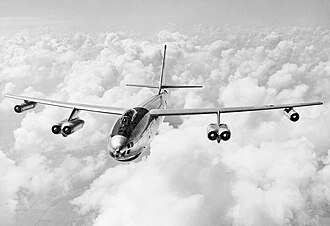
At a time when many military aircraft were still powered by piston engines and designed around lessons learned during World War II, the Boeing B-47 represented a radical leap forward. It combined advanced aerodynamic research, powerful jet engines, and a lightweight structural design inspired by captured German wartime research. The result was an aircraft that looked unlike any bomber that had existed before it, with long swept wings, six jet engines mounted beneath the wings, and a streamlined fuselage designed for high-speed flight at extreme altitudes.
The B-47 was not simply a faster version of previous bombers. It changed the entire philosophy of strategic aviation. Traditional bombers relied heavily on defensive weapons and formations for protection, but the B-47 depended on speed, altitude, and advanced flight performance to survive. It was designed to penetrate enemy airspace at high altitude and deliver nuclear weapons during the tense years of the Cold War.
Beyond its military role, the Boeing B-47 influenced the development of many future aircraft. Its swept-wing design, aerodynamic principles, and structural concepts directly contributed to later Boeing aircraft, including the B-52 bomber and early jet airliners. The aircraft became a symbol of the transition from the piston-engine era to the jet age.
This article explores the complete history of the Boeing B-47 Stratojet, including its development, groundbreaking engineering, operational service, specialized variants, and lasting importance in aviation history.
The Origins of the Boeing B-47 Stratojet
The Need for a New Generation of Strategic Bomber
The origins of the Boeing B-47 can be traced to the final years of the Second World War, when military planners began looking beyond the limitations of existing bomber technology. Aircraft such as the Boeing B-29 Superfortress had represented the peak of piston-powered bomber design, but advances in jet propulsion suggested that the future of aviation would be dramatically different.
During World War II, Germany had pioneered jet aircraft technology, producing aircraft such as the Messerschmitt Me 262 fighter. After the war, Allied engineers studied German aerodynamic research and recognized that jet engines combined with advanced wing designs could produce aircraft with revolutionary performance.
The United States Army Air Forces began investigating the possibility of a jet-powered strategic bomber capable of flying faster and higher than existing piston aircraft. Such an aircraft would provide greater survivability against enemy fighters and eventually allow nuclear weapons to be delivered over long distances.
Boeing, already experienced in large bomber development through projects such as the B-17 Flying Fortress, B-29 Superfortress, and B-50 Superfortress, became one of the companies leading the search for the next generation of strategic aircraft.
The project that became the B-47 began as an experimental design study known as the Boeing Model 450. Engineers initially explored several configurations before discovering that swept wings offered major advantages for high-speed flight.
The Revolutionary Swept-Wing Design
Applying Aerodynamic Research to a New Bomber
The most important innovation of the Boeing B-47 was its swept-wing design. Before the B-47, most large aircraft used straight wings because they were easier to design and provided predictable handling characteristics. However, straight wings created significant aerodynamic problems as aircraft approached the speed of sound.
As aircraft speeds increased, shock waves formed along the wings, creating enormous drag and reducing performance. Engineers discovered that sweeping the wings backward delayed these effects and allowed aircraft to achieve much higher speeds.
Boeing engineers studied aerodynamic research from Germany and combined it with their own wind tunnel testing. The result was a bomber with wings swept backward approximately 35 degrees, giving it a dramatically different appearance from previous aircraft.
The B-47’s wings were extremely thin and flexible compared with earlier bomber designs. They were optimized for high-altitude, high-speed flight rather than low-speed maneuverability. This approach represented a complete change in bomber philosophy.
The success of the B-47’s swept-wing design influenced nearly every major jet aircraft that followed. Commercial airliners, military aircraft, and even later strategic bombers adopted similar aerodynamic principles.
Development and First Flight of the B-47
The first prototype of the Boeing B-47, designated the XB-47, made its first flight on 17 December 1947. The aircraft immediately demonstrated that it represented a new era of aviation. Test pilots reported exceptional performance compared with existing piston-powered bombers.
The aircraft’s unusual appearance reflected its advanced design. Its wings were mounted high on the fuselage, with six engines arranged in pods beneath the wings. This configuration reduced drag and improved engine efficiency.
Early testing revealed both impressive advantages and new challenges. The aircraft was much faster than previous bombers, but pilots needed new training because its handling characteristics differed significantly from traditional aircraft.
The B-47 also introduced new structural concepts. Instead of relying on a heavy and strong airframe designed for slower aircraft, Boeing engineers focused on creating a lightweight structure optimized for high-speed flight. This approach improved performance but required careful engineering.
After successful testing, the United States Air Force ordered production aircraft. The first operational B-47s entered service in 1951, marking the beginning of a new era in strategic aviation.
Engineering Features of the Boeing B-47 Stratojet
A Completely New Approach to Bomber Construction
The Boeing B-47 was designed around speed and altitude rather than heavy defensive armament. Unlike earlier bombers that carried numerous machine guns to fight enemy aircraft, the B-47 relied primarily on its ability to avoid interception.
The fuselage was long and narrow, reducing aerodynamic drag and allowing efficient high-speed flight. The aircraft featured a pressurized crew compartment that allowed operations at high altitude without requiring specialized pressure suits.
The wings were among the most advanced features of the aircraft. Their thin profile reduced drag, while the swept design improved high-speed performance. However, this created challenges at low speeds, requiring sophisticated flight techniques.
The aircraft also featured bicycle-style landing gear. Instead of traditional main landing gear positioned under the wings, the B-47 used a central fuselage arrangement with smaller support wheels under the wings. This design reduced weight and allowed the thin wings to remain structurally efficient.
The lightweight structure was both an advantage and a challenge. The aircraft achieved remarkable performance, but crews had to carefully monitor fatigue and structural stress throughout its service life.
The Powerplant: Six General Electric J47 Turbojet Engines
Entering the Jet Age
The Boeing B-47 was powered by six General Electric J47 turbojet engines, one of the most important early jet engines developed in the United States. These engines provided the thrust necessary to transform the bomber from a traditional propeller-driven aircraft into a true high-speed strategic weapon.
Each J47 engine produced approximately 5,200 pounds of thrust. While this may seem modest compared with modern jet engines, the combined power of six engines allowed the B-47 to reach speeds previously impossible for large bombers.
The engines were mounted beneath the wings in pods. This arrangement improved maintenance access and reduced aerodynamic interference compared with placing engines directly within the fuselage.
Later versions of the aircraft received improved J47 engines with better reliability and performance. These upgrades helped extend the operational life of the B-47 during the demanding years of the Cold War.
Performance Advantages Over Piston-Powered Bombers
Compared with aircraft such as the Boeing B-50 Superfortress, the B-47 represented a dramatic improvement in performance. Its jet engines and swept-wing design allowed it to fly significantly faster and operate at higher altitudes.
The B-47 could exceed 950 kilometers per hour, approaching the speed of sound under certain conditions. This gave it a major advantage over piston-powered interceptors that had been designed to counter older bombers.
The aircraft also had an operational ceiling of more than 12,000 meters, allowing it to conduct missions at altitudes difficult for many enemy aircraft to reach.
These characteristics made the B-47 a highly effective strategic weapon during the early Cold War. It represented a new generation of aircraft designed around speed, altitude, and nuclear deterrence.
The B-47 and the Beginning of the Cold War Era
The Boeing B-47 entered service during one of the most tense periods of modern history. The Cold War created a demand for aircraft capable of delivering nuclear weapons quickly and reliably.
The United States Air Force established the Strategic Air Command as the organization responsible for maintaining nuclear bomber forces. The B-47 became one of SAC’s most important aircraft and formed the backbone of American strategic aviation during the 1950s.
The aircraft’s presence changed military planning. Because it could travel faster and higher than previous bombers, it reduced the effectiveness of traditional air defense systems and created a new challenge for potential adversaries.
The Cockpit and Crew Systems of the Boeing B-47 Stratojet
A New Generation of Bomber Operations
The Boeing B-47 Stratojet introduced not only a new style of aircraft design but also a completely different approach to bomber operations. Because the aircraft was much faster and more advanced than previous bombers, its crews required new training methods and procedures. The traditional bomber philosophy of large crews operating numerous defensive guns was replaced by a smaller team focused on navigation, weapons delivery, electronic systems, and high-speed flight.
The standard B-47 crew consisted of three members: the pilot, co-pilot, and navigator-bombardier. This was a significant reduction compared with World War II bombers such as the B-17 Flying Fortress and B-29 Superfortress, which required larger crews to operate defensive systems and manually manage many aircraft functions.
The pilot and co-pilot sat in a tandem arrangement in the forward cockpit. The cockpit design reflected the aircraft’s high-performance nature, with a large collection of instruments and controls required for operating a fast jet bomber. Unlike earlier aircraft, the B-47 required pilots to understand advanced aerodynamic behavior, especially during takeoff, landing, and high-speed flight.
The navigator-bombardier occupied the nose section of the aircraft. This crew member managed navigation equipment, radar systems, and bombing calculations. During strategic missions, accurate navigation was critical because nuclear weapons delivery depended on reaching the correct location at the correct time.
The aircraft’s small crew size demonstrated the influence of technology on military aviation. Improved electronics and automation reduced the need for large numbers of crew members while increasing the complexity of the systems they operated.
Flight Characteristics and Pilot Training
Learning to Fly the First Modern Jet Bomber
The Boeing B-47 offered exceptional performance, but its advanced design created unique handling challenges. Pilots transitioning from piston-powered aircraft had to adapt to a machine that behaved very differently from earlier bombers.
The swept wings provided excellent high-speed performance but created difficult low-speed characteristics. During takeoff and landing, pilots had to carefully manage speed and altitude because the aircraft could lose lift rapidly if handled incorrectly.
One of the most important innovations was the use of a technique called the “rocket-assisted takeoff.” Because the fully loaded aircraft was extremely heavy, early versions could use additional rocket boosters mounted beneath the wings to provide extra thrust during takeoff from shorter runways.
Landing the B-47 also required special techniques. The bicycle landing gear arrangement meant pilots needed to maintain precise control during touchdown. The aircraft’s long fuselage and swept wings required careful coordination between both pilots.
Despite these challenges, thousands of pilots successfully operated the B-47. The aircraft helped establish training methods that would later be applied to other high-performance jet aircraft.
The Boeing B-47 and Strategic Air Command
The Backbone of America’s Early Jet Nuclear Force
The Boeing B-47 became one of the most important aircraft in the history of the United States Strategic Air Command (SAC). During the 1950s, it formed the core of America’s strategic bomber capability and represented the country’s transition from piston-powered bombers to jet-powered nuclear deterrence.
Strategic Air Command developed a new operational philosophy around the B-47. Instead of relying only on aircraft stationed at a limited number of bases, SAC created a worldwide network of bomber locations, training programs, and alert systems designed to ensure rapid response capability.
B-47 units were stationed throughout the United States and overseas locations. Bases in Europe provided closer access to potential targets, while American bases allowed aircraft to conduct long-range missions across oceans.
The aircraft participated in continuous training operations designed to maintain readiness. Crews practiced navigation flights, simulated bombing missions, and long-range operations that prepared them for possible nuclear conflicts.
Although the B-47 never dropped a weapon in combat, its existence served as a powerful deterrent. The possibility that large numbers of high-speed jet bombers could deliver nuclear weapons influenced military planning throughout the Cold War.
The Nuclear Mission of the Boeing B-47
Carrying America’s Strategic Weapons
The primary mission of the B-47 was nuclear strike capability. The aircraft was designed to carry nuclear weapons internally in a large bomb bay located beneath the fuselage.
During the early Cold War, nuclear weapons were relatively large and heavy compared with later designs. The B-47 was specifically engineered to carry these weapons over long distances while maintaining high speed and altitude.
The aircraft could carry different combinations of nuclear weapons depending on mission requirements. As nuclear technology improved, the B-47 received modifications that allowed it to carry newer and more effective weapons.
Strategic bombing missions required careful planning. Crews had to navigate accurately, manage fuel consumption, avoid detection, and execute simulated attack procedures. These exercises helped SAC develop the operational methods that defined Cold War nuclear strategy.
High-Altitude Penetration and Defensive Philosophy
Unlike earlier bombers that relied heavily on defensive guns, the B-47 was designed around penetration tactics. Its primary protection came from speed, altitude, and advanced flight performance.
The aircraft’s swept wings and powerful jet engines allowed it to approach targets faster than previous bombers. At high altitude, it could avoid many existing air defense systems of the early 1950s.
However, the development of improved radar systems, surface-to-air missiles, and faster interceptor aircraft gradually reduced the effectiveness of high-altitude penetration alone. This led to new strategies involving lower-altitude flight and electronic countermeasures.
The B-47 therefore evolved throughout its career. It received improvements that allowed it to operate in changing threat environments and remain effective during the rapidly changing Cold War.
Reconnaissance Versions of the B-47 Stratojet
The RB-47 Intelligence Aircraft
One of the most important roles performed by the B-47 family was strategic reconnaissance. The RB-47 variants transformed the bomber into an intelligence-gathering platform capable of collecting information about potential adversaries.
The RB-47 carried specialized cameras, electronic sensors, and communication equipment. These aircraft performed some of the most demanding missions of the Cold War, often operating near hostile airspace.
Reconnaissance flights provided valuable information about military installations, air defenses, and technological developments. Before the widespread use of satellites and advanced unmanned systems, aircraft like the RB-47 were essential intelligence tools.
The missions were dangerous. Some reconnaissance flights brought aircraft close to hostile territory, where they risked interception. Despite these risks, RB-47 crews collected important information that influenced strategic decisions.
The RB-47 and Electronic Intelligence
Some RB-47 aircraft specialized in electronic intelligence gathering. These aircraft monitored radar signals, communications systems, and other electronic activity.
Electronic intelligence became increasingly important during the Cold War because understanding an opponent’s technology was essential for developing effective strategies.
The experience gained from RB-47 operations contributed to the development of later reconnaissance aircraft and electronic warfare systems.
The Boeing B-47 as an Experimental Aircraft Platform
Because of its advanced design, the B-47 became a valuable platform for testing new technologies. Several aircraft were modified for research purposes, including studies of flight performance, electronic systems, and propulsion improvements.
The aircraft’s speed and altitude capabilities made it suitable for experiments that would have been impossible with older aircraft. Engineers used B-47 test aircraft to evaluate technologies that later influenced future military and civilian aviation.
These experiments helped expand knowledge of high-speed flight and contributed to the development of aircraft systems used in later decades.
Operational Challenges of the B-47
Maintenance, Fatigue, and Reliability Issues
Although revolutionary, the Boeing B-47 was not without problems. Its advanced design pushed engineering boundaries, creating challenges for maintenance crews and operators.
The aircraft’s thin swept wings were highly efficient but required careful monitoring for structural fatigue. Repeated high-speed operations placed significant stress on the airframe.
The six-engine configuration also created demanding maintenance requirements. Jet engines of the 1950s were less reliable than modern designs, and maintaining a fleet of high-performance aircraft required extensive technical support.
Despite these difficulties, the B-47 achieved a strong operational record. Improvements throughout its service life increased reliability and extended its usefulness.
Famous B-47 Missions and Cold War Incidents
The Boeing B-47 participated in numerous high-profile missions during its service career. These operations demonstrated the aircraft’s range, endurance, and strategic importance.
Long-range flights tested the ability of the aircraft and crews to operate globally. Some missions involved reconnaissance near areas of strategic interest, providing valuable intelligence during periods of international tension.
Several B-47 aircraft were involved in Cold War incidents, including encounters with foreign aircraft and emergency situations. These events highlighted both the risks faced by bomber crews and the importance of strategic aviation during the era.
The aircraft’s operational history reflected the uncertainty of the nuclear age, when maintaining readiness was considered essential to national security.
The Boeing B-47 Compared With Other Strategic Bombers
B-47 Stratojet Versus Boeing B-50 Superfortress
The Boeing B-47 Stratojet represented a dramatic change from the Boeing B-50 Superfortress, even though the two aircraft served similar strategic purposes during the early Cold War. The B-50 was the final development of the piston-engine bomber era, while the B-47 was one of the first true jet-powered strategic bombers. Their comparison clearly demonstrates how quickly aviation technology advanced after the Second World War.
The B-50 relied on four massive Pratt & Whitney R-4360 radial engines and achieved impressive performance for a propeller-driven aircraft. However, it remained limited by the aerodynamic constraints of piston-powered flight. The B-47, with its six General Electric J47 turbojet engines and swept wings, could fly significantly faster and higher, giving it a major advantage in avoiding enemy defenses.
The two aircraft also reflected different philosophies of survival. The B-50 depended on defensive guns, heavy construction, and traditional bomber tactics inherited from World War II. The B-47 abandoned that approach and instead relied on speed, altitude, and advanced aerodynamics. This concept became the foundation of future strategic bomber development.
Although the B-50 remained useful during the early years of the Cold War, the B-47 quickly became the more capable strategic platform. It represented the future of air power, while the B-50 marked the end of the piston bomber generation.
B-47 Stratojet Versus Boeing B-52 Stratofortress
The Boeing B-47 was the direct predecessor of the Boeing B-52 Stratofortress, and many design ideas developed for the B-47 influenced the later aircraft. The B-52 adopted swept wings, jet propulsion, and high-altitude strategic bombing concepts that were proven during B-47 operations.
However, the B-52 was designed with greater range, payload capacity, and endurance. While the B-47 was optimized for speed and altitude, the B-52 was created as a larger intercontinental bomber capable of carrying heavier weapons over much greater distances.
The B-47 served as a transitional aircraft between World War II bombers and modern strategic aircraft. The B-52 represented the mature form of that concept and eventually became one of the longest-serving military aircraft in history.
Without the engineering experience gained from the B-47 program, the development of the B-52 would have been far more difficult. The earlier aircraft served as a flying laboratory for technologies that would define strategic aviation for decades.
The Influence of the Boeing B-47 on Modern Aviation
Changing Aircraft Design Forever
The Boeing B-47 had an influence far beyond its military mission. Its aerodynamic design introduced concepts that became standard throughout aviation. Swept wings, high-speed aerodynamic research, and lightweight structural techniques became essential features of later aircraft.
Commercial aviation benefited greatly from the lessons learned through the B-47 program. The transition from piston-powered airliners to jet airliners was made possible partly because engineers gained experience with large swept-wing jet aircraft.
The Boeing 707, one of the most successful commercial aircraft ever produced, benefited directly from research and technology developed during the B-47 era. The knowledge gained from designing, testing, and operating the Stratojet helped Boeing become a leader in the emerging jet transportation industry.
The aircraft therefore played a role not only in military history but also in shaping the future of global passenger travel.
The B-47 and Cold War Deterrence
A Symbol of Strategic Readiness
During the 1950s, the Boeing B-47 became one of the most visible symbols of American nuclear capability. Its ability to carry nuclear weapons across long distances contributed significantly to the strategy of deterrence.
The concept behind deterrence was based on convincing potential enemies that any attack would result in a powerful response. The B-47’s speed, range, and ability to operate from multiple locations made it a valuable part of this strategy.
Strategic Air Command maintained thousands of personnel dedicated to keeping B-47 units prepared. Crews trained continuously, practicing navigation, weapons procedures, emergency responses, and long-range missions.
The aircraft’s presence influenced international military planning. Both allies and potential adversaries recognized that the United States possessed a powerful new generation of strategic aircraft.
Accidents and Safety Improvements
The Challenges of Early Jet Aviation
The Boeing B-47 was a revolutionary aircraft, but early jet aviation involved significant risks. Many accidents occurred during the aircraft’s service life as pilots and engineers learned how to operate advanced swept-wing designs.
The aircraft’s high-speed capabilities required new flying techniques. Some accidents resulted from difficulties during takeoff and landing, especially when pilots underestimated the effects of swept wings at lower speeds.
These incidents led to improvements in pilot training, aircraft procedures, and engineering modifications. Lessons learned from B-47 operations contributed to safer operation of later jet aircraft.
Despite these challenges, thousands of B-47 crew members successfully operated the aircraft for many years. Their experience helped establish the safety standards used throughout modern jet aviation.
Specialized B-47 Variants
B-47E Stratojet
The B-47E became the most widely produced and important operational version of the aircraft. It incorporated numerous improvements, including upgraded engines, stronger structures, improved defensive systems, and increased mission capability.
Many B-47Es served with Strategic Air Command during the height of the Cold War. They formed the core of America’s jet bomber force before being replaced by the B-52.
RB-47 Reconnaissance Aircraft
The RB-47 variants transformed the bomber into a sophisticated reconnaissance platform. These aircraft carried cameras, electronic sensors, and intelligence equipment to monitor potential adversaries.
RB-47 crews conducted some of the most dangerous missions of the Cold War. Their flights collected valuable information about military activity and technological developments around the world.
The intelligence gathered by these aircraft helped shape defense decisions and contributed to understanding the capabilities of rival nations.
EB-47 Electronic Warfare Aircraft
The EB-47 variant specialized in electronic warfare. These aircraft carried equipment designed to interfere with enemy radar and communications systems.
Electronic warfare became increasingly important as military technology advanced. The EB-47 demonstrated how traditional aircraft could be adapted for new strategic roles beyond their original missions.
B-47B and Experimental Variants
Several early B-47 variants were produced for testing and operational development. These aircraft helped engineers improve performance, reliability, and mission capability.
Experimental versions investigated new engines, weapons systems, and flight technologies. Many lessons from these programs influenced later aircraft development.
The Retirement of the Boeing B-47 Stratojet
The Arrival of a New Generation
By the early 1960s, the Boeing B-47 began to leave frontline service. The development of newer aircraft, especially the B-52 Stratofortress, reduced the need for the Stratojet.
The B-52 offered greater range, larger payload capacity, and improved ability to operate in changing strategic environments. It became the primary heavy bomber of the United States Air Force.
Although the B-47 was gradually retired from bombing missions, some reconnaissance and specialized aircraft continued operating for several years.
The final B-47 aircraft left active service in 1966. Its retirement marked the end of an important chapter in aviation history.
Preserved Boeing B-47 Aircraft Today
Several Boeing B-47 Stratojets have survived and are displayed in museums across the United States. These aircraft serve as reminders of the technological revolution that occurred during the early Cold War.
Preserved examples allow visitors to appreciate the enormous size and advanced design of the aircraft. The thin swept wings, six-engine arrangement, and streamlined fuselage demonstrate the dramatic difference between the B-47 and earlier bombers.
Restoring and maintaining these aircraft is difficult because many original parts are no longer produced. Museums and preservation organizations rely on historical documentation and specialized expertise to keep these aircraft available for future generations.
Technical Specifications of the Boeing B-47 Stratojet
| Specification | Boeing B-47 Stratojet |
|---|---|
| Manufacturer | Boeing Aircraft Company |
| Aircraft Type | Six-engine strategic jet bomber |
| First Flight | 17 December 1947 |
| Introduction Into Service | 1951 |
| Primary Operator | United States Air Force Strategic Air Command |
| Production Period | 1947–1956 |
| Total Production | Approximately 2,032 aircraft |
| Crew | 3 personnel |
| Length | 32.62 metres |
| Wingspan | 35.36 metres |
| Height | 8.5 metres |
| Wing Area | 132 square metres |
| Empty Weight | Approximately 35,000 kg |
| Maximum Takeoff Weight | Approximately 105,000 kg |
| Engines | 6 × General Electric J47 turbojet engines |
| Engine Thrust | Approximately 5,200 pounds thrust each |
| Total Thrust | Approximately 31,200 pounds |
| Maximum Speed | Approximately 977 km/h |
| Cruising Speed | Approximately 900 km/h |
| Range | Approximately 6,400 km |
| Service Ceiling | Approximately 12,300 metres |
| Bomb Load | Approximately 11,000 kg depending on configuration |
| Defensive Armament | Tail-mounted cannon system on later versions |
| Major Variants | B-47B, B-47E, RB-47 reconnaissance, EB-47 electronic warfare |
Conclusion – The Aircraft That Introduced the Jet Bomber Age
The Boeing B-47 Stratojet was one of the most important aircraft of the twentieth century. It transformed strategic aviation by proving that large bombers could successfully operate at jet speeds and high altitudes. Its swept-wing design, innovative structure, and powerful engines changed the direction of aircraft development worldwide.
Although it was eventually replaced by the Boeing B-52, the B-47 established the technological foundation for modern strategic aviation. It helped create the systems, tactics, and engineering knowledge required for the nuclear age.
The aircraft also influenced commercial aviation, contributing to the development of the jet airliners that would connect the world in the decades that followed.
Today, the Boeing B-47 Stratojet remains a symbol of innovation and transformation. It represents the moment when aviation moved beyond the limits of piston engines and entered the era of high-speed jet flight.
