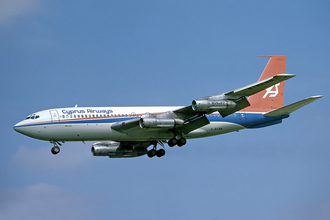
Boeing 720 – The Forgotten Jetliner That Helped Shape Modern Air Travel
The Boeing 720 occupies a unique place in aviation history. Although it was produced in far smaller numbers than the famous Boeing 707, the aircraft played an important role during the early years of the commercial jet age. Designed as a shorter-range derivative of the 707, the Boeing 720 provided airlines with a faster and more efficient aircraft for medium-distance routes where the larger 707 was not always the ideal choice.
When the Boeing 720 entered service in the late 1950s, commercial aviation was experiencing one of the greatest transformations in its history. The introduction of jet aircraft changed the way people traveled, reducing flight times dramatically and making international and domestic air travel faster, smoother, and more accessible. Aircraft such as the Boeing 707 became symbols of this new era, but airlines also needed smaller jetliners that could operate efficiently on routes with lower passenger demand.
The Boeing 720 answered that requirement. It combined the advanced technology of the 707 family with modifications that allowed better performance from shorter runways and improved efficiency on shorter routes. The aircraft featured a lighter structure, a shorter fuselage, improved aerodynamics, and engines optimized for its mission.
Although overshadowed by more famous Boeing aircraft, the 720 was a successful design that introduced thousands of passengers around the world to jet travel. It also became an important stepping stone in Boeing’s development of future commercial aircraft.
This article explores the complete story of the Boeing 720, including its origins, engineering development, passenger service, variants, operational history, and the legacy it left behind in the evolution of commercial aviation.
The Origins of the Boeing 720
The Need for a Smaller Jetliner
The development of the Boeing 720 began with the rapid growth of commercial aviation during the 1950s. Airlines were eager to adopt jet technology because jet aircraft offered major advantages over piston-powered airliners. They could fly higher, faster, and smoother, reducing travel times and increasing passenger comfort.
The Boeing 707 was one of the aircraft that introduced the jet age to commercial aviation. Based on Boeing’s Model 367-80 prototype, the 707 offered excellent range and capacity, making it ideal for major international routes. However, many airlines also operated shorter domestic and regional routes where the larger aircraft was not always economically practical.
American Airlines identified a requirement for a smaller jet aircraft that could operate efficiently from shorter runways and serve medium-range routes. Instead of developing an entirely new aircraft, Boeing decided to create a modified version of the 707 that would preserve much of the existing technology while reducing size and operating costs.
This approach allowed Boeing to produce a new aircraft more quickly and at a lower development cost. The result was initially known as the Boeing 707-020, but it was later renamed the Boeing 720 to distinguish it from the larger 707 family.
Development of the Boeing 720
A Modified Boeing 707 Design
The Boeing 720 was not a completely new aircraft but rather an advanced derivative of the Boeing 707. Engineers focused on improving performance rather than simply reducing size. The goal was to create an aircraft that could operate efficiently on shorter routes while maintaining the speed and reliability of the jet age.
The fuselage of the Boeing 720 was shortened compared with the 707, reducing passenger capacity and structural weight. This allowed the aircraft to operate with lower fuel consumption while still providing the advantages of jet propulsion.
The wings were also modified. Engineers reduced the wing span slightly and introduced aerodynamic improvements that enhanced performance at lower weights. These changes helped the aircraft operate from airports with shorter runways, expanding its usefulness for domestic routes.
The structure was redesigned to reduce weight. By using lighter materials and modifying internal components, Boeing created an aircraft that retained the strength of the 707 while improving efficiency.
The aircraft also featured improved high-lift devices and aerodynamic refinements. These changes allowed the Boeing 720 to achieve strong takeoff and landing performance, which was particularly valuable for airlines serving smaller airports.
The First Flight and Certification
Testing the New Short-Range Jet
The prototype Boeing 720 made its first flight on 23 November 1959. Flight testing focused on evaluating the aircraft’s performance, handling characteristics, fuel efficiency, and suitability for airline operations.
The aircraft demonstrated that it could provide jet performance while operating economically on routes that did not require the larger capacity of the Boeing 707. Test flights confirmed that the design changes had successfully created a lighter and more agile aircraft.
The Boeing 720 received certification in 1960, allowing airlines to begin commercial operations. American Airlines became the launch customer and introduced the aircraft into service on domestic routes.
The introduction of the 720 gave airlines a flexible alternative during a period when passenger demand was rapidly increasing but was not evenly distributed across all routes.
The Engineering Design of the Boeing 720
A Lightweight and Efficient Jet Aircraft
The Boeing 720 represented an important stage in the evolution of early commercial jet design. Engineers took the proven foundation of the 707 and refined it into a lighter aircraft optimized for a different operational role.
The aircraft retained the basic swept-wing configuration of the 707. Swept wings were essential for efficient high-speed flight because they reduced aerodynamic drag at jet speeds.
The four-engine layout provided reliability and performance. Having four engines was considered important during the early jet era because engine reliability had not yet reached the levels seen in later decades. Four engines also allowed aircraft to operate safely over long distances and across areas where emergency landing options were limited.
The Boeing 720 used a conventional aluminum airframe structure, which was common among aircraft of its generation. The design emphasized durability and ease of maintenance, allowing airlines to operate the aircraft intensively.
The aircraft’s relatively small size compared with the 707 made it easier to handle at airports with limited infrastructure. This helped airlines introduce jet service to a wider range of destinations.
Powerplant and Performance
Pratt & Whitney JT3C Engines
The original Boeing 720 was powered by four Pratt & Whitney JT3C turbojet engines. These engines were derived from military technology and were among the most important early jet engines used in commercial aviation.
The JT3C provided the thrust needed for high-speed passenger operations while maintaining acceptable reliability. Although early turbojets were less fuel-efficient and noisier than modern turbofan engines, they represented a major improvement over piston engines.
The engines allowed the Boeing 720 to cruise at speeds similar to larger jetliners while maintaining the operational flexibility required by airlines.
Later versions of the aircraft, particularly the Boeing 720B, received improved Pratt & Whitney JT3D turbofan engines. These engines offered better fuel economy, increased thrust, and reduced noise compared with the original turbojets.
The Boeing 720B Improvement Program
A More Efficient Second Generation
The Boeing 720B represented an important improvement over the original aircraft. The introduction of JT3D turbofan engines significantly enhanced performance and operating economics.
Turbofan technology represented the next step in commercial aviation development. Unlike pure turbojets, turbofans used additional airflow around the engine core to produce more efficient thrust.
The improved engines gave the 720B better range, lower fuel consumption, and improved takeoff performance. These advantages made the aircraft more attractive to airlines operating in an increasingly competitive market.
Many original Boeing 720 aircraft were later converted or upgraded to similar standards, extending their operational usefulness.
Entering Commercial Airline Service
The Beginning of a New Chapter in Air Travel
When the Boeing 720 entered airline service in 1960, it became part of a rapidly changing aviation industry. Passengers were beginning to expect faster and more comfortable travel, and airlines were replacing older piston-powered aircraft with modern jets.
American Airlines introduced the aircraft on domestic routes where its combination of speed and capacity was especially useful. Other airlines soon recognized the advantages of the design and placed their own orders.
The aircraft was operated by airlines in North America, Europe, Asia, the Middle East, and Latin America. Its ability to serve medium-range routes made it valuable for carriers that needed jet performance without the capacity of larger aircraft.
Although the Boeing 720 was produced for only a relatively short period, it played a significant role in expanding the reach of the commercial jet age.
The Boeing 720’s Place in Aviation History
The Boeing 720 may not have achieved the fame of the Boeing 707, 747, or later Boeing aircraft, but it filled an important role in aviation development. It demonstrated that jet technology could be adapted to different market requirements rather than being limited to long-distance international travel.
The aircraft helped airlines transition from piston-powered fleets to all-jet operations. It also provided Boeing with valuable experience in improving commercial aircraft efficiency and adapting designs for different customer needs.
The lessons learned from the Boeing 720 influenced future Boeing aircraft and contributed to the company’s reputation as one of the world’s leading commercial aircraft manufacturers.
The Boeing 720 Passenger Experience
Bringing Jet Travel to More Routes
The Boeing 720 arrived during a period when airlines were rapidly changing the way people traveled. Before the introduction of commercial jets, passengers were accustomed to piston-powered aircraft that flew at lower altitudes and significantly slower speeds. The arrival of aircraft like the Boeing 720 transformed the passenger experience by reducing travel times and providing smoother flights at higher cruising altitudes.
Although smaller than the Boeing 707, the Boeing 720 still offered passengers the advantages associated with the new jet age. The aircraft featured a pressurized cabin, large windows, modern seating arrangements, and a quieter experience compared with older propeller-driven aircraft. For many travelers, flying aboard a Boeing 720 represented a first introduction to high-speed commercial aviation.
Airlines used the aircraft on routes where passenger demand did not justify the larger capacity of wide-body aircraft or larger early jetliners. This allowed more cities to receive jet service and helped accelerate the transition away from piston-powered fleets.
The aircraft’s smaller size also provided airlines with operational flexibility. It could serve secondary airports while maintaining the speed and reliability expected from a modern jet aircraft.
Airline Operations Around the World
A Global Short-to-Medium Range Jetliner
The Boeing 720 attracted customers from airlines across North America, Europe, Asia, the Middle East, and Latin America. Its combination of range, speed, and capacity made it suitable for a wide variety of operating environments.
In the United States, the aircraft was used primarily for domestic routes connecting major cities. Airlines valued its ability to provide jet service without requiring the passenger volumes needed for larger aircraft.
International carriers also found the Boeing 720 useful for regional international routes. It could connect neighboring countries and serve markets where a larger aircraft would have operated inefficiently.
Airlines appreciated the aircraft’s commonality with the Boeing 707 family. Pilots, maintenance personnel, and ground crews could use existing knowledge and infrastructure, reducing the complexity of introducing a new aircraft type.
The Boeing 720 became especially popular among airlines expanding their jet fleets during the 1960s. It represented a practical way to enter the jet era without purchasing the largest and most expensive aircraft available.
The Boeing 720 Cabin and Interior Design
Early Jet Comfort and Passenger Expectations
The interior of the Boeing 720 reflected the changing expectations of airline passengers during the early jet age. Compared with previous aircraft, the cabin provided a more modern environment designed around speed, comfort, and efficiency.
The aircraft typically featured seating arranged in rows with a central aisle. Airlines could configure the cabin according to their own requirements, including all-economy layouts or combinations of first-class and economy seating.
The pressurized cabin allowed passengers to travel comfortably at higher altitudes, where weather conditions were generally smoother. This contributed to the perception that jet aircraft offered a superior travel experience.
Large windows provided passengers with improved visibility, while improved environmental systems maintained comfortable temperatures and cabin pressure throughout the flight.
Although modern aircraft offer far more advanced interiors, the Boeing 720 represented a significant improvement compared with the aircraft it replaced.
Performance Advantages of the Boeing 720
Speed, Efficiency, and Operational Flexibility
One of the greatest advantages of the Boeing 720 was its performance. The aircraft could cruise at speeds approaching those of larger jetliners while operating with a smaller passenger capacity.
Its lighter structure allowed it to accelerate quickly and operate efficiently on routes where a larger aircraft would have carried unnecessary weight.
The aircraft’s ability to operate from shorter runways was another important advantage. Many airports during the 1960s lacked the infrastructure required for the largest jet aircraft, but the Boeing 720 could serve these locations effectively.
The four-engine configuration also provided confidence for airlines and passengers. During the early decades of jet aviation, four engines were considered an important safety feature because engine reliability had not yet reached modern standards.
The Boeing 720 demonstrated that jet aircraft could be adapted for different operational needs rather than being limited to long-haul international services.
The Boeing 720 in the Service of Different Airlines
American Airlines and Early Adoption
American Airlines was the launch customer for the Boeing 720 and played a major role in introducing the aircraft to commercial service. The airline used the aircraft on domestic routes where its smaller size provided economic advantages.
The success of the aircraft with American Airlines encouraged other carriers to evaluate the design. Its ability to provide reliable jet operations made it attractive during a period when airlines were modernizing their fleets.
European Airline Operations
Several European airlines operated Boeing 720 aircraft during the 1960s and 1970s. The aircraft was particularly useful for regional international routes connecting European capitals and major cities.
European carriers valued its ability to operate frequent services between destinations while maintaining the advantages of jet speed.
Middle Eastern and Asian Operators
Airlines in the Middle East and Asia also operated Boeing 720 aircraft. In regions with rapidly growing aviation markets, the aircraft provided an efficient way to introduce jet service.
Its range allowed airlines to connect major cities while avoiding the operating costs associated with larger aircraft.
Cargo Conversions and Secondary Uses
Extending the Life of the Aircraft
As newer aircraft entered service, many Boeing 720 passenger aircraft were replaced by more advanced designs. However, the strength of the airframe allowed many examples to continue operating in secondary roles.
Some aircraft were converted for cargo operations, allowing operators to use the existing airframes for freight transportation. These conversions extended the useful life of aircraft that were no longer competitive in passenger service.
Cargo operators valued the aircraft’s reliability and relatively simple systems. Although it lacked the capacity of purpose-built cargo aircraft, the Boeing 720 remained useful for specialized missions.
Military and Government Applications
The Boeing 720 Beyond Airline Service
The Boeing 720 was also adapted for military and government roles. Its jet performance, reliability, and ability to carry specialized equipment made it suitable for missions beyond passenger transport.
Some aircraft were modified for research, testing, and communications roles. These missions demonstrated the flexibility of the basic design.
The United States military operated related aircraft based on the 707 and 720 family, using them for transport, testing, and specialized operations.
The aircraft’s long service life in government roles showed that the Boeing 720 was more than just an airline passenger aircraft.
The Boeing 720 and Flight Testing
A Platform for Aviation Research
Because of its performance and available space, the Boeing 720 became useful as a research platform. One of the most famous examples was a modified aircraft used by NASA and other organizations to study advanced technologies.
Research aircraft based on the Boeing 720 contributed to the development of new aviation systems, including advanced control technologies and safety improvements.
The aircraft’s stable handling characteristics made it suitable for experimental work that required a reliable and predictable platform.
Challenges Facing the Boeing 720
Changing Aviation Technology
Despite its success, the Boeing 720 eventually faced challenges from newer aircraft designs. Advances in aviation technology during the 1970s introduced more efficient twin-engine aircraft and larger wide-body jets.
The introduction of aircraft such as the Boeing 737 provided airlines with newer technology, lower operating costs, and better fuel efficiency for many routes previously served by the Boeing 720.
The oil crises of the 1970s also affected the aircraft’s popularity. Rising fuel prices made the older generation of four-engine turbojet aircraft increasingly expensive to operate.
Although the Boeing 720 remained reliable, airlines gradually replaced it with newer and more economical aircraft.
The Importance of the Boeing 720 in Boeing’s History
The Boeing 720 played an important role in Boeing’s development as a commercial aircraft manufacturer. It demonstrated the company’s ability to adapt existing technology to meet changing airline requirements.
The lessons learned from the aircraft influenced later Boeing designs. Engineers gained valuable experience in improving efficiency, reducing weight, and creating aircraft suited for different market segments.
Although the aircraft did not achieve the same fame as the 707 or 747, it contributed to Boeing’s reputation during one of the most important periods in aviation history.
The Decline of the Boeing 720
The Arrival of a New Generation of Aircraft
By the late 1970s, the aviation industry had changed significantly from the era in which the Boeing 720 was introduced. The aircraft had successfully served airlines for nearly two decades, but newer technologies began to offer clear advantages. Improvements in engine efficiency, aircraft design, and operating economics created a new generation of airliners that gradually replaced early jetliners.
One of the greatest challenges facing the Boeing 720 was the development of fuel-efficient turbofan aircraft. The original generation of commercial jets relied on turbojet engines that provided excellent performance but consumed large amounts of fuel. As fuel prices increased during the 1970s, airlines began searching for aircraft that could reduce operating costs.
Twin-engine aircraft such as the Boeing 737 and later versions of the Douglas DC-9 offered airlines better efficiency for short and medium-range routes. These aircraft also benefited from improved reliability, allowing airlines to operate safely with fewer engines.
The Boeing 720’s four-engine configuration became increasingly expensive to maintain compared with newer aircraft. Although the aircraft remained dependable, economic factors eventually made replacement unavoidable.
The Final Years of Passenger Service
Moving From Mainline Airlines to Secondary Operators
As major airlines introduced newer aircraft into their fleets, many Boeing 720s were transferred to smaller airlines or secondary markets. These operators valued the aircraft because it was proven, available at relatively low cost, and supported by existing maintenance knowledge.
The aircraft continued operating passenger flights in several regions around the world well into the 1980s. Some airlines used the Boeing 720 because it provided jet capability without the financial commitment required for purchasing newer aircraft.
However, as aviation regulations became stricter and fuel efficiency became increasingly important, operating older four-engine aircraft became less attractive. Gradually, most Boeing 720s disappeared from scheduled passenger service.
The Boeing 720 in Specialized Roles
Research, Testing, and Government Operations
Although passenger operations declined, the Boeing 720 continued to serve in specialized roles. Its strong airframe and reliable systems made it valuable for organizations requiring a large and stable aircraft platform.
One of the most famous examples was a modified Boeing 720 used for aviation research. The aircraft was equipped with experimental systems and used to study technologies designed to improve flight safety and aircraft control.
Research aircraft based on the Boeing 720 contributed to advances in areas such as flight control systems, emergency procedures, and aircraft handling characteristics.
Government agencies and private organizations also operated Boeing 720 aircraft for specialized missions, including testing, communications, and equipment evaluation.
The Boeing 720 as a Firefighting Aircraft
A Unique Second Career
One of the more unusual uses of the Boeing 720 was as an aerial firefighting aircraft. Several examples were modified to carry large quantities of fire retardant and support wildfire suppression operations.
The aircraft’s large fuel capacity and strong structure made it suitable for conversion. Although originally designed for passenger transportation, its size and performance allowed it to carry specialized equipment.
These converted aircraft demonstrated the flexibility of early jetliners and showed that the usefulness of an aircraft does not necessarily end when it leaves airline service.
Comparing the Boeing 720 With Other Aircraft
Boeing 720 Versus Boeing 707
The Boeing 720 and Boeing 707 were closely related but served different markets. The 707 was designed primarily for long-range routes and larger passenger capacity, while the 720 was optimized for shorter routes and improved airport flexibility.
The Boeing 707 had a longer fuselage, greater range, and larger passenger capacity. It became one of the defining aircraft of international air travel. The Boeing 720, however, offered better economics on routes where the larger aircraft was unnecessary.
Both aircraft shared many technologies, including swept wings and four-engine layouts, but they represented different solutions to airline requirements.
Boeing 720 Versus Douglas DC-8
The Douglas DC-8 was one of the Boeing 720’s major competitors during the early jet era. Like Boeing’s aircraft, the DC-8 introduced airlines to high-speed jet transportation.
The DC-8 offered strong performance and was available in several versions with different capacities and ranges. Competition between the two aircraft helped accelerate improvements in commercial aviation.
Ultimately, later generations of aircraft from both manufacturers replaced these early jets as airlines demanded better fuel efficiency and lower operating costs.
Boeing 720 Versus Boeing 737
The Boeing 737 represented a different approach to commercial aviation. Unlike the four-engine Boeing 720, the 737 used two engines and was designed specifically for short and medium-range routes.
The 737 offered lower operating costs, improved efficiency, and the ability to serve many of the routes previously handled by aircraft like the Boeing 720.
The success of the 737 family eventually made it one of the most important aircraft in commercial aviation history.
Preserved Boeing 720 Aircraft
Remembering an Important Jetliner
Although relatively few Boeing 720 aircraft survive today, preserved examples can still be found in museums and aviation collections. These aircraft provide a valuable connection to the early years of commercial jet travel.
Preserved Boeing 720s allow visitors to understand the scale and design philosophy of first-generation jetliners. They demonstrate how aviation changed during the transition from propeller aircraft to high-speed jet transportation.
Each surviving aircraft represents thousands of flights, millions of passenger journeys, and the work of countless pilots, engineers, mechanics, and airline employees.
The Legacy of the Boeing 720
An Underrated Aircraft With a Significant Impact
The Boeing 720 does not receive the same recognition as some other historic aircraft, but its contribution to aviation history is significant. It helped expand the availability of jet travel and allowed airlines to introduce modern aircraft service to more destinations.
The aircraft demonstrated that a successful design could be adapted to meet different operational needs. Instead of creating an entirely new aircraft, Boeing modified an existing platform and produced a practical solution for airlines.
The experience gained through the Boeing 720 program helped Boeing refine its commercial aircraft development process. Lessons learned from early jetliners influenced later aircraft designs, including some of the company’s most successful models.
The Boeing 720 also represented an important period of transition. It belonged to the first generation of commercial jets that changed aviation forever, making air travel faster and more accessible.
Technical Specifications of the Boeing 720
| Specification | Boeing 720 / 720B |
|---|---|
| Manufacturer | Boeing Commercial Airplanes |
| Aircraft Type | Short-to-medium range narrow-body jet airliner |
| First Flight | 23 November 1959 |
| Introduction Into Service | 1960 |
| Launch Customer | American Airlines |
| Production Period | 1958–1967 |
| Total Production | 154 aircraft |
| Crew | Three cockpit crew members plus cabin crew |
| Passenger Capacity | Approximately 140 passengers depending on configuration |
| Length | 41.7 metres |
| Wingspan | 39.9 metres |
| Height | 12.6 metres |
| Wing Area | 226 square metres |
| Empty Weight | Approximately 44,700 kg |
| Maximum Takeoff Weight | Approximately 106,600 kg |
| Engines (720) | 4 × Pratt & Whitney JT3C turbojet engines |
| Engines (720B) | 4 × Pratt & Whitney JT3D turbofan engines |
| Maximum Speed | Approximately 1,000 km/h |
| Cruising Speed | Approximately 850 km/h |
| Range | Approximately 6,800 km depending on configuration |
| Service Ceiling | Approximately 12,000 metres |
| Powerplant Development | Derived from early Boeing 707 technology |
| Main Roles | Passenger transport, cargo conversion, research, special missions |
Conclusion – The Jetliner That Helped Build the Modern Aviation Era
The Boeing 720 was not the largest, fastest, or most famous aircraft of the early jet age, but it was an important part of aviation’s transformation. It provided airlines with a practical way to expand jet service beyond the busiest international routes and helped millions of passengers experience high-speed air travel.
Its design demonstrated the value of adapting proven technology to new requirements. By modifying the Boeing 707 platform, Boeing created an aircraft that was efficient, reliable, and well suited to the needs of many airlines during a period of rapid growth.
Although newer aircraft eventually replaced it, the Boeing 720 remains an important chapter in commercial aviation history. It represents the optimism and technological progress of the early jet era, when aircraft design was rapidly changing the way people connected around the world.
The Boeing 720 may have been overshadowed by more famous aircraft, but its contribution should not be forgotten. It was one of the aircraft that helped turn the promise of the jet age into everyday reality.
