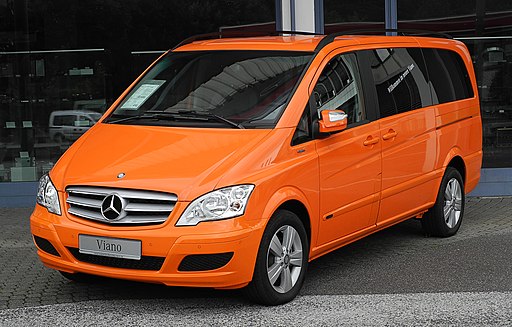
Mercedes-Benz Viano as a Used Car: A Complete Guide for Buyers
The Mercedes-Benz Viano is one of those used vehicles that can make much more sense in real life than it does on paper. Built as the passenger-oriented counterpart to the Vito, the Viano combines the dimensions and practicality of a medium-sized van with a more comfortable interior, additional equipment and a distinctly more passenger-focused character. Produced as part of the W639 generation from 2003 to 2014, it was offered with several diesel and petrol engines, different body lengths, multiple seating arrangements and, in selected versions, four-wheel drive. Today, the Viano appeals to families who need genuine space, owners looking for a comfortable long-distance people carrier and buyers interested in camper conversions such as the Marco Polo. However, its premium image can be misleading when shopping for a twenty-year-old example: a cheap Viano can become an expensive vehicle very quickly if it has suffered years of heavy use or inadequate maintenance. The best used examples are therefore those with a documented history, sound bodywork and evidence that their previous owners treated them as passenger vehicles rather than simply as inexpensive transport.
Mercedes-Benz Viano: Model History
The Viano was introduced with the W639 generation in 2003 and remained in production until 2014. It was closely related mechanically to the Vito, but Mercedes-Benz positioned it as a more luxurious passenger vehicle. The model was available in several body lengths and could accommodate different numbers of passengers, with six-, seven- and eight-seat arrangements available depending on specification. Unlike the front-wheel-drive Vito predecessor based on the earlier W638, the W639 platform adopted rear-wheel drive, while 4MATIC all-wheel drive was available on selected versions. The combination of a relatively upright body, rear-wheel drive and a long wheelbase gave the Viano a very different character from an ordinary family MPV.
The model received a substantial facelift for the 2010 model year, bringing revised styling, updated engines and equipment. Among the most important changes was the introduction of the OM651 2.1-litre diesel in versions such as the 163-hp Viano CDI 2.2. The facelifted 163-hp model produces 360 Nm of torque and was available with a six-speed manual transmission or a five-speed automatic, depending on configuration. Official figures for one representative long-wheelbase version quote a length of 5,008 mm, a 3,200-mm wheelbase and a 730-litre luggage capacity with the relevant seating arrangement.
Why Buy a Used Mercedes-Benz Viano?
Space Is the Viano’s Biggest Advantage
The main reason to buy a Viano is simple: space. Unlike a conventional estate car or large hatchback, the Viano gives passengers a genuinely spacious cabin with substantial headroom and a high seating position. The rear passengers are not treated as an afterthought, and the vehicle can be configured with individual seats rather than a conventional rear bench. This makes it particularly attractive for families with several children, businesses transporting clients, airport-transfer operators and people who regularly travel long distances with several passengers. The sliding side doors are another practical advantage because they make access much easier in narrow parking spaces, while the large rear opening makes loading luggage considerably simpler than in most passenger cars.
The Viano is also unusually versatile because its passenger seats can be rearranged or removed depending on the specification. A seven-seat layout can provide generous passenger accommodation while retaining luggage space, whereas removing or repositioning seats can create a large area for bicycles, camping equipment, furniture or other bulky objects. The exact arrangement varies between individual vehicles, so buyers should inspect the actual seating configuration rather than relying solely on the model name in an advertisement.
A Comfortable Long-Distance Vehicle
The Viano’s tall body and commercial-vehicle origins do not mean that it is unpleasant to drive. In fact, one of its strengths is its ability to cover long distances while carrying several people. The elevated driving position gives the driver a clear view of surrounding traffic, while the diesel engines provide useful torque for motorway driving and hills. Contemporary reviews have highlighted the comfortable ride, good forward visibility and well-weighted steering, although road and engine noise can be more noticeable than in a conventional luxury passenger car.
The Viano is particularly attractive to buyers who regularly travel with six or seven people. In a conventional SUV, filling every seat can leave very little luggage space, whereas the Viano was designed around the idea that several occupants and their belongings should coexist. That makes it an interesting used alternative to large SUVs, especially for families whose priority is passenger and luggage capacity rather than off-road ability.
Choosing an Engine
2.1/2.2 CDI Diesel
The four-cylinder CDI diesel is the engine most buyers are likely to encounter. Depending on production year and specification, the W639 was offered with different outputs and engine generations. Earlier vehicles used the OM646 family, while the facelift introduced the OM651. The latter appears in the Viano CDI 2.2 with 163 hp and 360 Nm, a combination that provides reasonable performance for a vehicle weighing around two tonnes. ADAC lists 0–100 km/h in 12.1 seconds and a maximum speed of 188 km/h for one long-wheelbase manual version, with a quoted combined fuel consumption of around 8.7 l/100 km in that specification.
For most used-car buyers, a four-cylinder diesel offers a sensible compromise between performance and running costs. It is powerful enough for normal passenger use while avoiding some of the additional expense associated with the larger V6. However, the OM651 should not be treated as maintenance-free simply because it is a relatively efficient diesel. Reports of timing-chain and tensioner wear exist, and the chain’s location on the transmission side of the engine makes access more involved if replacement is required.
3.0 CDI V6
The 3.0 CDI V6 is a different proposition. With outputs in the region of 204 to 224 hp depending on year, it gives the Viano substantially more effortless performance and is particularly appealing to drivers who regularly carry a full passenger load. The engine’s additional torque makes motorway acceleration and towing less demanding, and its smoothness suits the Viano’s passenger-car mission.
The downside is complexity and potential repair expense. The OM642 V6 is associated with issues including intake swirl-flap/actuator problems and oil-cooler seal leaks, so a specialist inspection is particularly important. A V6 Viano can be an excellent long-distance vehicle when properly maintained, but buyers should have a substantially larger repair reserve than they would for a basic four-cylinder example.
Petrol Engines
Petrol V6 models are less common on the used market, but the Viano was offered with engines including the 3.2 and later 3.5-litre V6. They can deliver smooth and strong performance, but fuel consumption is inevitably higher than with the diesel versions. The 3.2-litre V6, for example, is reported at around 218 hp, while the later 3.5-litre engine could produce approximately 258 hp.
A petrol Viano can make sense for someone covering relatively low annual mileage who values smoothness and wants to avoid some diesel-specific systems. Nevertheless, fuel costs can become substantial because the Viano is a large, heavy vehicle. For most buyers seeking a practical daily driver, the diesel versions are considerably more common and generally better suited to the vehicle’s intended use.
Common Problems When Buying a Used Viano
Rust and Bodywork
Corrosion should be one of the first things inspected on an older Viano. The vehicle’s age means that even apparently attractive examples can have deterioration underneath the exterior trim or around the underside. Inspect the sills, wheel arches, door edges, floor, suspension mounting areas and seams carefully. The underside should ideally be examined on a lift rather than from ground level because serious corrosion can be difficult to spot during an ordinary walk-around.
The condition of the sliding doors is also important. They are large, heavy components that have often been used thousands of times, particularly on vehicles that transported passengers professionally. Check whether they open and close smoothly, whether the rollers make unusual noises and whether the door locks reliably. Also inspect the rear hatch, seals and interior floor for evidence of water ingress.
Diesel Injection and Engine Problems
On older CDI engines, injector sealing problems can cause combustion gases to escape around an injector and create black carbon deposits. Signs can include a characteristic smell, hissing noises and visible contamination around the injector area. If the problem is ignored for a long time, the injector can become difficult to remove, increasing repair complexity.
A used Viano should therefore be inspected both mechanically and electronically. A diagnostic scan can identify stored fault codes that may not trigger an obvious warning light during a short test drive. On a diesel, pay attention to cold starting, idle quality, exhaust smoke, turbocharger behaviour and acceleration. A vehicle that hesitates under load or enters limp mode deserves further investigation before purchase.
Suspension, Brakes and Steering
The Viano’s size and weight put considerable demands on its suspension and braking systems. Wear in suspension joints and bushes is a recognised source of inspection failures, while tyres and tyre condition are also among the more common areas requiring attention in MOT data. During a test drive, listen for knocks over uneven surfaces and check that the vehicle tracks straight under braking. Uneven tyre wear can indicate worn suspension or alignment problems rather than simply old tyres.
The brakes should be inspected carefully because replacement costs can be higher than on an ordinary compact car. Check the discs and pads for excessive wear and make sure there is no vibration through the steering wheel when braking from higher speeds. Parking brakes and associated mechanisms should also be tested rather than assumed to work correctly.
Automatic Gearbox or Manual?
A manual Viano can appeal to buyers who prefer a conventional gearbox, while the automatic is arguably well suited to a large passenger van that spends time in urban traffic. Many W639 Vianos used the five-speed automatic transmission, and the condition of the individual gearbox matters more than the transmission type itself.
On an automatic, test the vehicle from cold and when fully warmed up. Gear changes should be smooth and predictable, with no significant delay when selecting Drive or Reverse. Check the service history for evidence of transmission maintenance. A gearbox that shifts well during a short test drive is encouraging, but documented maintenance provides much greater reassurance.
Interior and Equipment
The Viano’s interior can be one of its strongest attractions, but equipment varies dramatically between examples. Higher-specification vehicles can have leather upholstery, individual captain’s chairs, automatic climate control, navigation, parking sensors and other comfort features, while simpler examples can feel much closer to a commercial van.
Every electrical feature should be tested before buying. Check the air conditioning, heating, windows, central locking, seat adjustments, interior lighting, infotainment system and parking sensors. Pay particular attention to the condition of the seats and carpets because passenger versions may have been used intensively by taxi, shuttle or chauffeur operators. Heavy wear is not necessarily a reason to reject a vehicle, but it should be reflected in the price and considered alongside the service history.
Fuel Economy and Running Costs
Fuel consumption depends heavily on engine, body length, transmission, drivetrain and driving style. As an example, the facelifted 163-hp 2.2 CDI is listed at approximately 7.2–7.4 l/100 km combined with a manual transmission in one catalogue specification, while the automatic version is listed at around 8.0–8.2 l/100 km. Real-world consumption can be higher, particularly with a full passenger load, short journeys, winter driving or frequent urban use.
Running costs are not limited to fuel. Large tyres, brakes, suspension components and diesel emissions equipment can all cost more than equivalent components on an ordinary family car. A Viano should therefore be maintained according to its actual age and mileage rather than simply driven until something breaks. Preventive servicing can be especially valuable on a vehicle that is already carrying a significant amount of mechanical and electrical equipment.
What to Check Before Buying a Viano
A proper inspection should begin with the vehicle’s history. Ask for service invoices, inspection records and evidence of major maintenance, then compare them with the odometer and the physical condition of the vehicle. A Viano that has covered 300,000 kilometres on motorways with consistent servicing can potentially be a more convincing purchase than a much lower-mileage vehicle that has spent its life on short urban journeys and received little maintenance.
The inspection should cover the body and underside, engine, turbocharger, injectors, cooling system, gearbox, suspension, steering, brakes, electrical equipment and air conditioning. On diesel models, diagnostic equipment should be used to check stored faults and relevant engine parameters. Buyers should also establish whether the vehicle has been used as a taxi, airport shuttle, company passenger carrier or family vehicle, because the type of previous use can tell you a great deal about likely wear.
Is the Mercedes-Benz Viano a Good Used Car?
The Mercedes-Benz Viano remains an appealing used vehicle for anyone who needs substantially more passenger space than a conventional car can provide. Its combination of individual seating, sliding doors, generous luggage capacity and strong diesel engines makes it particularly useful for large families, professional passenger transport and long-distance travel. The availability of different body lengths and, in selected configurations, 4MATIC all-wheel drive adds further flexibility.
Its main disadvantage is that age and complexity can make a neglected example expensive to own. Corrosion, suspension wear, injector problems, diesel emissions equipment, timing-chain issues on certain engines and V6-specific repairs all deserve attention. The Viano’s Mercedes-Benz badge should therefore not be interpreted as a guarantee of inexpensive or trouble-free ownership.
The best buying strategy is to concentrate on condition and history. A mechanically healthy Viano with documented servicing, solid bodywork and a well-maintained interior can still be an exceptionally practical used vehicle. Conversely, an apparently cheap example with uncertain history can quickly consume the money saved at purchase. For buyers who genuinely need a spacious, comfortable people carrier and are prepared to maintain it properly, the Viano can remain a highly capable choice on the used market.
Mercedes-Benz Viano Technical Specifications
The table below uses representative W639 specifications because equipment, engines, body lengths and seating configurations varied considerably throughout the model’s 2003–2014 production run. The 2.2 CDI figures correspond to a facelifted 163-hp version, while the other figures illustrate the range available rather than describing every Viano.
| Specification | Mercedes-Benz Viano W639 2.2 CDI |
|---|---|
| Production generation | W639 |
| Production period | 2003–2014 |
| Representative engine | 2.1/2.2-litre 4-cylinder turbo diesel |
| Engine code, facelift example | OM651 |
| Displacement | 2,143 cc |
| Maximum power | 163 hp (120 kW) |
| Maximum torque | 360 Nm |
| Fuel system | Common-rail direct injection |
| Turbocharger | Yes |
| Particulate filter | Yes, on cited Euro 5 version |
| Drive | Rear-wheel drive |
| Transmission | 6-speed manual / 5-speed automatic, depending on version |
| Representative length | 5,008 mm |
| Width | 1,901 mm |
| Height | 1,875 mm |
| Wheelbase | 3,200 mm |
| Representative kerb weight | 2,055 kg |
| Gross vehicle weight | 2,800 kg |
| Fuel tank | 75 litres |
| Representative luggage capacity | 730 litres |
| Seating | Typically 6–8, configuration-dependent |
| 0–100 km/h | 12.1 seconds, representative manual version |
| Maximum speed | 188 km/h |
| Combined consumption | Approx. 8.7 l/100 km, cited long-wheelbase version |
| Braked towing capacity | Up to 2,500 kg in cited configuration |
Specifications vary by engine, body length, equipment and model year; the figures above are representative rather than universal.
