Is the Nissan Murano a Good Used Car?
The Nissan Murano is an appealing option for buyers searching for a used SUV that combines a comfortable interior, distinctive styling, strong engine performance, and the practicality needed for everyday family life. Unlike some SUVs that emphasize rugged off-road capability or maximum passenger capacity, the Murano has traditionally focused on comfort, smooth driving, and a more refined experience on paved roads. Its relatively spacious cabin, supportive seating, generous equipment in higher trim levels, and powerful V6 engine have helped distinguish it from more basic crossovers. For drivers who want an SUV that feels relaxed on long journeys while remaining practical for shopping, commuting, and family trips, a well-maintained used Murano can offer considerable value.
One of the most important attractions of the Nissan Murano is its combination of a naturally aspirated V6 engine and a continuously variable transmission in models sold through the 2024 model year. The 3.5-liter V6 provides smooth, readily available power, making the vehicle feel capable when merging onto highways, overtaking slower traffic, or carrying several passengers. The cabin is generally designed around comfort rather than aggressive sportiness, and many versions offer features such as leather upholstery, heated seats, a panoramic sunroof, a premium audio system, navigation, and advanced driver-assistance technology. However, equipment varies substantially by model year and trim, so buyers should verify what is actually fitted to each vehicle rather than assuming that every Murano has the same specification.
The biggest consideration when buying a used Nissan Murano is the condition of the transmission, followed by the vehicle’s maintenance history, age, mileage, and general mechanical condition. Many older Muranos use Nissan’s Xtronic continuously variable transmission, commonly known as a CVT, and transmission-related problems can be expensive to diagnose and repair. The V6 engine itself can provide long service when properly maintained, but a sound engine does not compensate for a failing transmission, neglected suspension, corrosion, or poorly repaired accident damage. The smartest purchase is therefore not necessarily the newest or cheapest Murano available, but the example that has been properly maintained, passes a thorough inspection, and offers a realistic balance between purchase price and future ownership costs.
For buyers who need a comfortable five-seat SUV and do not require a third row, the Murano deserves serious consideration. It is particularly suitable for drivers who spend a lot of time on highways, appreciate a quiet and spacious cabin, and prefer strong petrol-engine performance over the economy-focused character of a smaller crossover. On the other hand, buyers who prioritize minimum fuel consumption, inexpensive maintenance, serious off-road capability, or the ability to carry seven passengers may find other vehicles more appropriate. Understanding the strengths and weaknesses of each generation is essential because a well-preserved later model can offer a very different ownership experience from an inexpensive first-generation example that has spent two decades on the road.
A Brief History of the Nissan Murano
The First Generation: Nissan Murano Z50, 2003–2007
The first-generation Nissan Murano introduced the model as a distinctive crossover SUV with styling that differed from the boxier sport-utility vehicles common at the time. Its flowing bodywork, relatively car-like driving behavior, and V6 powertrain gave it an identity of its own, appealing to buyers who wanted the higher seating position and practical benefits of an SUV without sacrificing the comfort of a passenger car. In the United States, the first generation was sold primarily for the 2003–2007 model years. Its 3.5-liter V6 provided strong performance for the period, while the available front-wheel-drive and all-wheel-drive configurations allowed buyers to choose according to their climate and driving needs. The interior offered useful passenger space and a comfortable driving position, helping the Murano establish itself as a more comfort-oriented alternative to traditional off-road-focused SUVs.
Today, the first-generation Murano is primarily a budget purchase, and its age should be the main consideration. A vehicle from this period may have accumulated substantial mileage, experienced several ownership changes, or received repairs of varying quality. The CVT transmission deserves particular scrutiny because problems can be financially significant, and suspension wear, wheel-bearing noise, engine-mount deterioration, fluid leaks, and electrical faults are all worth investigating. Corrosion may also be important in regions where winter road salt is common. A low purchase price can be tempting, but buyers should compare the vehicle’s condition with the likely cost of repairs before deciding whether it is genuinely good value. A clean, well-documented example may still be usable, but a neglected early Murano is rarely the best choice for someone who cannot afford unexpected mechanical expenses.
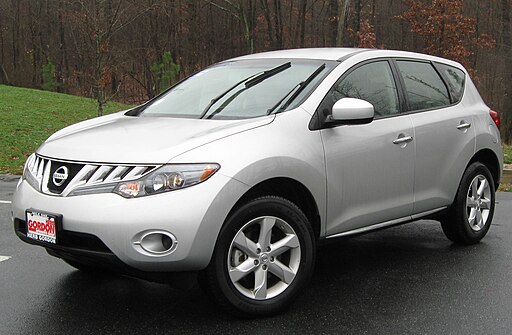
The Second Generation: Nissan Murano Z51, 2009–2014
The second-generation Murano arrived for the 2009 model year with revised exterior styling, a more sophisticated interior, and improvements intended to make the vehicle more comfortable and refined. Its overall character remained similar to that of the original, retaining the 3.5-liter V6 and CVT combination in many markets while adding more equipment and a more modern cabin. Depending on the trim and country, buyers could find leather seats, upgraded audio systems, navigation, a panoramic glass roof, and other comfort features. The second generation also included a convertible variant in certain markets, known as the Murano CrossCabriolet in the United States, although the conventional five-door SUV is the more common choice in the used market.
The Z51 can be an interesting compromise for buyers who want an older SUV at a relatively accessible price but prefer a more modern cabin than the first generation provides. However, the vehicle’s age means that servicing, corrosion, transmission condition, and the state of the suspension should be examined carefully. Some 2009 vehicles were affected by safety recall campaigns, including an ABS-related issue, so recall status should always be verified using the vehicle identification number rather than assumed from the model year alone. Later examples may benefit from improvements made during the generation’s production run, but no particular year should be considered automatically reliable without checking the individual car. A 2012–2014 model with clear maintenance records and a healthy transmission can be a more sensible purchase than a cheaper example with an uncertain history.
The Third Generation: Nissan Murano Z52, 2015–2024
The third-generation Murano brought a more dramatic design, a modernized cabin, and an increased emphasis on comfort, technology, and premium styling. Its sharply sculpted exterior, distinctive front grille, narrow headlights, and floating-roof appearance made it stand out from many conventional midsize crossovers. Under the hood, U.S.-market versions retained the familiar 3.5-liter V6 producing approximately 260 horsepower and 240 lb-ft of torque, paired with an Xtronic CVT. Front-wheel drive was standard on many versions, with all-wheel drive available depending on trim and model year. The result was a crossover designed primarily for smooth road driving, comfortable highway cruising, and everyday family use rather than demanding off-road conditions.
The Z52 is often the most attractive generation for buyers who want modern styling and a comfortable interior without purchasing a brand-new SUV. Later examples can include smartphone integration, advanced driver-assistance systems, heated and ventilated front seats, a premium sound system, and other equipment depending on specification. The 2019 model year brought a refresh with revised styling and updates to safety and technology features, while later vehicles continued to refine the same basic formula. However, the 2015 launch year deserves particular attention because of its recall history, and buyers should not assume that every later example is free from transmission or electrical concerns. For many used-car shoppers, a carefully maintained 2019–2024 Murano is worth investigating, but a complete service history and a satisfactory independent inspection are more important than the model year alone.
The Fourth Generation: Nissan Murano from 2025
The redesigned fourth-generation Murano represents a significant change for the model. Introduced for the 2025 model year in the United States, it replaced the familiar V6 and CVT powertrain with a turbocharged 2.0-liter four-cylinder engine featuring variable-compression technology and a nine-speed automatic transmission. Its design and technology also moved further toward the premium end of the midsize crossover segment. This distinction matters when researching a used Murano because the 2025 model is mechanically different from the 2003–2024 versions discussed in most traditional used-car guides. <Cite refs={[“turn919633search3″,”turn919633search24”]}/>
For buyers focused on affordability, the earlier three generations are likely to provide a broader range of used prices and more established long-term ownership histories. The 2025 model may appeal to someone who wants the newest design and updated equipment, but it should be assessed separately rather than treated as simply a newer version of the older V6-powered Murano. Its turbocharged engine, conventional nine-speed automatic transmission, electronic systems, and different vehicle architecture mean that its maintenance requirements and reliability record need to be evaluated on their own merits. As with any recently redesigned vehicle, long-term durability data will take time to develop, making warranty coverage, recall status, and the condition of the individual example particularly important.
Engine and Performance: The 3.5-Liter V6
Power, Smoothness, and Everyday Driving
The 3.5-liter V6 is one of the Murano’s strongest selling points in the used market. In U.S.-market third-generation models through 2024, the engine produces approximately 260 horsepower and 240 lb-ft of torque, giving the crossover enough performance for highway merging, overtaking, and carrying passengers without feeling excessively strained. The engine is naturally aspirated, meaning it does not use a turbocharger to generate its power, and its smooth delivery suits the Murano’s comfort-focused character. During ordinary driving, the vehicle can accelerate confidently while maintaining a relaxed cabin environment, making it suitable for longer trips and everyday family duties. The V6 also provides a different driving experience from the smaller turbocharged engines increasingly used in modern compact SUVs.
A strong engine does not automatically make the Murano economical, however. Its displacement, vehicle weight, and SUV body shape mean that fuel consumption is generally higher than that of many smaller crossovers, particularly in city traffic. The V6 is best appreciated for its smoothness and available power rather than for maximum fuel efficiency. Buyers should check for regular oil changes, a stable operating temperature, unusual engine noises, coolant loss, and signs of oil leakage. A cold start can be especially informative because it allows the engine to be heard before its normal operating temperature masks some noises. If the engine idles smoothly, accelerates consistently, and has a credible maintenance history, it can be a strong component of the Murano’s overall ownership proposition.
Engine Reliability and Maintenance
The VQ-series 3.5-liter V6 has been used in numerous Nissan and Infiniti vehicles, and it can provide long service when maintained properly. Nevertheless, an engine’s reputation should never be treated as a guarantee about an individual used vehicle. Oil changes, cooling-system maintenance, suitable replacement fluids, and prompt repairs all influence its lifespan. Over time, hoses, seals, engine mounts, sensors, and other components can deteriorate, while neglected cooling-system problems may lead to serious engine damage. Buyers should also look for evidence of overheating, unexplained coolant loss, abnormal exhaust smoke, rough idle, and unusual vibration. A vehicle that has been regularly serviced is generally a better candidate than one with a missing maintenance history, regardless of its odometer reading.
When inspecting the engine, look for fresh oil residue around accessible components and check whether the coolant appears to be at the correct level and in appropriate condition. A clean engine compartment is not necessarily evidence of good maintenance, because an engine can be cleaned shortly before a sale, so the mechanic should also check for active leaks after the road test. Ask the seller for invoices showing regular servicing and any significant repairs. If there is evidence of overheating, persistent misfiring, or a warning light that the seller cannot explain, have the cause diagnosed before proceeding. The cost of a professional inspection is modest compared with the expense of buying a vehicle that requires major engine work shortly after purchase.
Is the Murano Powerful Enough for Highway Driving?
For most everyday situations, the Murano’s V6 provides more than adequate performance. Its power delivery suits drivers who regularly travel on highways, carry passengers, or need to accelerate confidently when joining faster traffic. Unlike some smaller SUVs that can feel underpowered when fully loaded, the Murano generally has enough engine capacity to maintain a relaxed pace without requiring constant hard acceleration. The CVT keeps the engine operating within an appropriate range, although its behavior differs from a conventional automatic transmission because engine speed may remain relatively steady during acceleration rather than rising and falling through distinct gear changes.
The Murano is not designed as a sports SUV, and its handling reflects that priority. It offers a comfortable, composed driving experience, but its size and weight mean that it will not feel as agile as a smaller crossover or a performance-oriented vehicle. Drivers should also account for tire condition, suspension wear, and alignment because these factors strongly influence stability and steering response. If highway travel is a major part of the vehicle’s intended use, test it at appropriate speeds on a safe road and listen for wheel-bearing hum, tire noise, vibration, or unusual drivetrain sounds. A healthy Murano should feel predictable and comfortable rather than noisy, unsettled, or reluctant to accelerate.
Advantages and Disadvantages of Buying a Used Nissan Murano
The Main Advantages
The Nissan Murano offers several advantages that make it attractive in the used SUV market. Its strongest qualities include a smooth V6 engine, a comfortable cabin, distinctive styling, and useful passenger and luggage space. The road-oriented suspension and relaxed driving character make it particularly suitable for commuting, family trips, and longer highway journeys. Depending on the generation and trim, the Murano can also provide premium features such as leather upholstery, heated seats, a panoramic roof, advanced infotainment, and driver-assistance systems without requiring the purchase price of a comparable luxury-brand SUV. For drivers who value comfort and performance more than maximum fuel economy, a well-maintained Murano can be an appealing choice.
Another advantage is the wide range of used vehicles available across several generations. Buyers with limited budgets can investigate older first- and second-generation examples, while those who want more modern technology and safety equipment can focus on the third generation. The V6 engine provides useful power for highway driving, and available all-wheel drive can be helpful in regions with snowy winters or slippery roads. The Murano’s five-seat layout is also practical for couples and small families who do not need a third row. When the vehicle has a documented maintenance history and a healthy transmission, it can offer a satisfying combination of comfort, practicality, and performance.
The Main Disadvantages
The most important disadvantage is the potential cost of transmission problems. Many Murano models through 2024 use a CVT, and serious transmission faults can result in repairs that are expensive relative to the value of an older SUV. The vehicle’s fuel consumption is another consideration, particularly for drivers who spend most of their time in urban traffic. The V6 engine delivers strong performance, but it is generally less economical than the smaller engines and hybrid systems available in some competing crossovers. Tires, brakes, and other wear items can also cost more than those for a small passenger car, while all-wheel-drive versions have additional components that require inspection and maintenance.
The Murano’s size and design also create limitations for some buyers. It is a two-row SUV rather than a seven-seat family vehicle, and its road-oriented configuration is not intended for demanding off-road use. Older examples may have corrosion, worn suspension parts, electrical faults, or age-related deterioration, while higher trim levels introduce additional convenience features that can become expensive to repair. These disadvantages do not make the Murano a poor used car, but they mean that buyers should approach the purchase with realistic expectations and an adequate maintenance budget. A low asking price is only an advantage if the vehicle does not require extensive repairs immediately after purchase.
Final Verdict: Is the Nissan Murano Worth Buying Used?
The Nissan Murano can be an excellent used SUV for drivers who want comfort, a powerful engine, distinctive styling, and a practical five-seat interior. Its strengths are particularly apparent on longer journeys, where the V6 engine, supportive seats, and relaxed driving character make it a pleasant vehicle for commuting and family travel. Later third-generation examples also offer modern technology and safety features that remain useful today. For someone who wants a comfortable midsize crossover rather than a small economy SUV or a rugged off-road vehicle, the Murano deserves serious consideration.
The most important buying decision is choosing a vehicle with a healthy transmission and a convincing maintenance history. The first-generation Murano is now old enough that age-related wear and early CVT concerns deserve particular caution, while the second generation can offer a reasonable budget alternative if it has been well maintained. The third generation provides more modern styling and equipment, with the refreshed 2019–2024 models worth comparing for buyers who want a newer vehicle. However, no generation or model year should be considered automatically reliable without checking the specific car’s history, condition, recall status, and expected repair costs.
Ultimately, the best Nissan Murano is not necessarily the newest, cheapest, or most luxurious example. It is the one that has been serviced correctly, drives smoothly, has no unresolved safety concerns, and can be maintained comfortably within your budget. Arrange an independent inspection, pay particular attention to the CVT, test all electronic equipment, and examine the suspension, brakes, and underbody. If the vehicle passes these checks and its purchase price reflects its condition, a used Nissan Murano can provide years of comfortable and practical motoring. If you need the lowest possible fuel costs or cannot afford unexpected repairs, comparing it with a smaller or more economical SUV is a sensible final step before making your decision.
Nissan Murano Technical Specifications: Summary Table
The table below summarizes the main specifications of the 2024 Nissan Murano, the final model year of the third-generation Murano in the U.S. market. Specifications differ by model year, trim, drivetrain, and country, so the table should be used as a general reference when researching used examples.
| Specification | Nissan Murano 2024 |
|---|---|
| Vehicle class | Midsize crossover SUV |
| Generation | Third generation (Z52) |
| Body style | Five-door SUV |
| Seating capacity | 5 passengers |
| Engine type | Naturally aspirated V6 petrol |
| Engine code | VQ35DE |
| Engine displacement | 3,498 cc (3.5 liters) |
| Maximum power | 260 hp at 6,000 rpm |
| Maximum torque | 240 lb-ft (325 Nm) at 4,400 rpm |
| Fuel system | Electronic fuel injection |
| Transmission | Xtronic continuously variable transmission (CVT) |
| Drivetrain | Front-wheel drive or available all-wheel drive |
| Fuel type | Unleaded gasoline |
| City fuel economy | Approximately 20 mpg (11.8 L/100 km) |
| Highway fuel economy | Approximately 28 mpg (8.4 L/100 km) |
| Combined fuel economy | Approximately 23 mpg (10.2 L/100 km) |
| Overall length | 192.8 in (4,897 mm) |
| Overall width | 75.4 in (1,915 mm), excluding mirrors |
| Overall height | 67.8 in (1,722 mm) |
| Wheelbase | 111.2 in (2,824 mm) |
| Ground clearance | Approximately 6.9 in (175 mm) |
| Cargo capacity behind rear seats | Approximately 32.1 cu ft (909 liters), without moonroof |
| Maximum cargo capacity | Approximately 67.0 cu ft (1,897 liters), without moonroof |
| Towing capacity | Up to 1,500 lb (680 kg), subject to configuration and conditions |
| Safety equipment | Nissan Safety Shield 360 features, including automatic emergency braking and other driver-assistance systems |
| Production status | Third generation ended after the 2024 U.S. model year |
