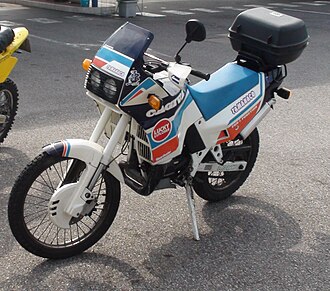
Discovering the Cagiva Tamanaco 125
The Cagiva Tamanaco 125 is a fascinating example of the creativity, engineering ambition, and distinctive styling that characterized Italian motorcycle manufacturing during the late 1980s and early 1990s. Designed for riders who wanted the practicality of a lightweight motorcycle combined with the adventurous appearance of a trail machine, the Tamanaco occupied an interesting position in the increasingly competitive 125 cc motorcycle market. Its combination of a liquid-cooled two-stroke engine, six-speed gearbox, tall riding position, long-travel suspension, and large front wheel gave it a personality that distinguished it from many ordinary commuter motorcycles of its era. Although the Tamanaco never achieved the international fame of some of Cagiva’s better-known sporting models, it remains an appealing motorcycle for enthusiasts who appreciate classic Italian engineering and the distinctive character of vintage lightweight enduro machines.
Produced from approximately 1988 to 1991, the Cagiva Tamanaco 125 emerged during a period when manufacturers were experimenting with motorcycles that could combine everyday usability with the visual language of rally raids, enduro competitions, and long-distance adventure riding. The machine was neither a pure competition enduro nor a conventional road motorcycle disguised with off-road styling. Instead, it occupied the middle ground, offering the proportions and equipment of a trail bike while retaining the performance necessary for spirited road riding. Its relatively powerful engine, high ground clearance, and dual-purpose wheel arrangement made it an interesting proposition for younger riders, enthusiasts, and motorcyclists who wanted something more distinctive than the usual small-displacement commuter.
Today, the Tamanaco deserves attention not simply because it is an old motorcycle, but because it represents a particular moment in motorcycling history. During this period, European manufacturers were producing increasingly sophisticated 125 cc machines, demonstrating that small engine capacity did not necessarily mean basic construction or unexciting performance. The Tamanaco combined Italian design sensibilities with practical trail-bike characteristics, creating a motorcycle that could appeal to riders interested in weekend exploration as well as everyday transportation. Its relatively limited production history, distinctive design, and mechanical relationship with other Cagiva models have helped establish its appeal among collectors and enthusiasts interested in motorcycles from the late 1980s.
The History of Cagiva and the Development of the Tamanaco
Cagiva’s place in Italian motorcycle history
Cagiva became one of the most recognizable names in Italian motorcycling during the 1980s, a decade in which European manufacturers competed through engineering innovation, distinctive styling, and increasingly specialized motorcycle designs. The company developed a reputation for producing machines that combined attractive Italian design with ambitious mechanical specifications, particularly in the lightweight and medium-displacement categories. Rather than treating smaller motorcycles as simple transportation appliances, Cagiva frequently approached them as serious enthusiast products, incorporating liquid cooling, sophisticated suspension arrangements, multiple gearbox ratios, and styling inspired by larger performance motorcycles.
This philosophy was especially evident in the company’s 125 cc range, which was important in several European markets where licensing regulations, taxation, or the preferences of younger riders made small-displacement motorcycles particularly attractive. Manufacturers competing in this segment had to balance affordability and accessibility with enough performance and visual appeal to distinguish their products from inexpensive commuter machines. Cagiva responded by developing a broad family of motorcycles, including sporting models, road-oriented machines, and trail motorcycles, each intended to serve a different type of rider while sharing the company’s broader engineering identity.
The Tamanaco belongs to this wider story of Italian motorcycle development. It appeared at a time when riders increasingly wanted motorcycles that looked adventurous and capable, even when their journeys primarily involved paved roads, country lanes, and occasional unpaved tracks. Its design reflected this growing interest in versatile motorcycles that could offer an upright riding position, generous ground clearance, a large front wheel, and rugged visual proportions without requiring the size, weight, or expense of a large-capacity adventure motorcycle.
The relationship between the Tamanaco and the Cagiva Cruiser
Understanding the Tamanaco becomes easier when it is considered alongside the Cagiva Cruiser 125. The two motorcycles shared important design characteristics and occupied closely related positions in the company’s trail-bike range. The Tamanaco can be understood as part of the development of Cagiva’s lightweight dual-purpose motorcycles, rather than as an entirely isolated model created without reference to earlier machines. This relationship is important because it helps explain why the Tamanaco combined familiar trail-bike proportions with mechanical equipment that was more sophisticated than its modest engine capacity might initially suggest.
The Cruiser established a recognizable approach to the lightweight trail motorcycle, combining an upright riding position, a tall front wheel, and styling that suggested the ability to travel beyond ordinary urban roads. The Tamanaco continued that general concept while presenting its own identity through its styling and technical package. Enthusiasts researching surviving examples may encounter differences in registration descriptions, model-year information, or references to the Cruiser, making it advisable to check the motorcycle’s frame number, engine identification, original documentation, and parts catalogue when establishing the exact specification of an individual machine.
The Tamanaco is also associated with the Cagiva Freccia C10 family through its engine design. This connection illustrates how motorcycle manufacturers used related engine platforms and engineering solutions across different model categories. Sporting motorcycles and trail machines could share important mechanical foundations while being adapted to different purposes through changes in tuning, intake equipment, exhaust arrangements, chassis geometry, and overall packaging. In the Tamanaco’s case, the result was a trail-oriented motorcycle with the lively character associated with a high-performance two-stroke 125 cc engine.
Production years and historical context
The Cagiva Tamanaco 125 is generally listed as a model produced between 1988 and 1991. These years place it near the end of a particularly interesting period for European two-stroke motorcycles, when manufacturers were investing considerable effort in making small-capacity engines more powerful, more responsive, and more sophisticated. Liquid cooling and carefully developed intake and exhaust systems allowed 125 cc motorcycles to deliver performance that would have been difficult to achieve with simpler, air-cooled designs of earlier decades.
The market was also changing. Motorcycle buyers were becoming familiar with specialized categories such as sport motorcycles, enduro machines, trail bikes, and road-oriented touring models. Even within the 125 cc segment, the differences between these categories were becoming more pronounced. The Tamanaco responded to riders who preferred the versatility and commanding appearance of a trail motorcycle but did not necessarily need a competition-focused machine intended for demanding off-road events.
Although production ended in the early 1990s, the Tamanaco’s basic concept remains recognizable today. Modern adventure motorcycles often combine upright ergonomics, tall front wheels, generous suspension travel, and styling inspired by long-distance exploration. The Tamanaco applied many of these same broad ideas on a smaller scale decades earlier, making it an interesting historical reference for understanding the evolution of lightweight dual-purpose motorcycles.
Design and Styling: A Distinctive Italian Trail Motorcycle
A rugged appearance inspired by adventure riding
One of the Tamanaco’s defining characteristics is its tall, purposeful silhouette. The high front mudguard, large front wheel, elevated riding position, and trail-oriented proportions give it a stronger visual connection to enduro motorcycles than to conventional road bikes. These features were not merely decorative details. They reflected the practical requirements of riding on uneven surfaces, where ground clearance, wheel geometry, and suspension movement can influence the rider’s confidence and the motorcycle’s ability to negotiate obstacles.
The styling also captured the spirit of rally-inspired motorcycles that became increasingly influential during the 1980s. Long-distance desert competitions and off-road endurance events helped popularize machines with tall front ends, prominent bodywork, substantial fuel tanks, and purposeful seating arrangements. Manufacturers often incorporated elements of this visual language into production motorcycles, allowing ordinary riders to enjoy a motorcycle that looked ready for adventure even when most journeys took place on public roads.
The Tamanaco’s design has aged in an interesting way. Rather than following the increasingly rounded and compact styling that appeared on some later motorcycles, it retains the angular proportions and unmistakable late-1980s character associated with its generation. For enthusiasts, this period-specific appearance is part of the attraction. The motorcycle feels connected to a time when manufacturers were exploring different interpretations of the lightweight trail bike, and its styling communicates that identity without relying on the oversized engines and electronic systems found on contemporary adventure motorcycles.
Ergonomics and the riding position
The Tamanaco’s tall stance and upright ergonomics are central to its character. Compared with a small sport motorcycle, a trail-oriented machine typically places the rider in a more vertical position, with the handlebars positioned to encourage relaxed control and the footrests arranged to provide a useful balance between seated comfort and standing operation. This configuration can improve visibility in traffic, make slow-speed maneuvering more natural, and give the rider greater freedom to adjust body position when travelling over uneven ground.
A published seat-height figure for the Tamanaco is approximately 880 mm, although measurements and reported specifications can vary between reference sources and individual model versions. This is relatively tall for a 125 cc motorcycle, particularly when compared with small commuter machines designed to accommodate a broad range of riders. Shorter riders may find that the height requires some adaptation, especially when stopping on uneven surfaces or moving the motorcycle while seated. On the other hand, taller riders may appreciate the more spacious proportions and the less cramped riding position.
Ergonomics also depend on the condition of the motorcycle. Decades of use can lead to compressed suspension components, altered seat foam, replacement handlebars, modified footrests, or non-original tyres that change the way the motorcycle feels. A well-preserved example with its original equipment may offer a noticeably different riding experience from a machine that has been extensively modified. For this reason, prospective owners should evaluate the actual motorcycle rather than relying exclusively on period specifications.
Frame, proportions, and ground clearance
The Tamanaco was designed around the practical demands of a trail motorcycle, and its proportions reflect that objective. Its reported wheelbase of approximately 1,375 mm provides a useful balance between stability and maneuverability, while ground clearance of around 320 mm gives the motorcycle space beneath the chassis when travelling over ruts, stones, or uneven ground. These figures help explain why the Tamanaco looks and feels substantially different from a low-slung road motorcycle despite using a relatively small engine.
Ground clearance is particularly relevant when considering a motorcycle’s intended use. A machine with more clearance is less likely to strike its lower components against raised obstacles, although clearance alone does not determine off-road capability. Suspension travel, tyre selection, chassis protection, weight distribution, and the rider’s skill all contribute to performance on unpaved surfaces. The Tamanaco’s geometry should therefore be understood as supporting light trail riding rather than automatically making it equivalent to a specialized competition enduro.
The frame and chassis also need to be evaluated in the context of age. Surface corrosion, previous repairs, bent brackets, damaged mounting points, and poorly executed modifications can affect safety and handling. Anyone restoring a Tamanaco should pay particular attention to the frame, steering head, swingarm pivots, suspension mounting points, and wheel alignment before attempting to improve the motorcycle’s performance or appearance.
Engine and Mechanical Characteristics
The 125 cc liquid-cooled two-stroke engine
At the heart of the Cagiva Tamanaco 125 is a liquid-cooled, single-cylinder, two-stroke engine with a displacement of approximately 124.6 cc. This engine configuration is one of the most important elements of the motorcycle’s identity. During the late 1980s, two-stroke engines remained popular in performance-oriented lightweight motorcycles because they could deliver strong power relative to their displacement and generally offered a compact construction compared with four-stroke alternatives producing similar peak output.
A two-stroke engine completes its power cycle in one crankshaft revolution, with intake, compression, combustion, and exhaust processes arranged differently from those of a conventional four-stroke engine. This design can produce an energetic response and a strong power-to-weight ratio, qualities that made high-performance 125 cc two-strokes attractive to younger riders and enthusiasts. However, the design also brings particular maintenance requirements, including attention to lubrication, carburetion, cooling, exhaust condition, and the mechanical health of the piston and cylinder.
Liquid cooling was another important advantage. By circulating coolant through passages around the engine, the system helps manage operating temperatures under changing riding conditions. This is especially valuable in a high-output small-displacement engine, where sustained high engine speeds can generate considerable heat. Proper coolant condition, radiator cleanliness, hose integrity, and water-pump operation are therefore important considerations when maintaining an original Tamanaco.
The engine’s mechanical character is inseparable from the way it is ridden. Unlike a large four-stroke engine that may deliver relatively broad low-speed torque, a high-performance 125 cc two-stroke generally rewards appropriate gear selection and keeping the engine within its useful operating range. This makes the Tamanaco engaging for riders who enjoy an involved riding experience, but it also means that smooth operation depends on the engine’s state of tune and the rider’s familiarity with two-stroke power delivery.
Power output and performance potential
Technical reference sources commonly list the Tamanaco’s maximum output at approximately 30 horsepower, or around 22 kW, at high engine speeds. The precise published figure varies by source and may depend on the version, measurement convention, or specification being quoted. Some historical or registration-related records report lower outputs, which is a useful reminder that a model’s advertised maximum power should not automatically be assumed to apply to every surviving example.
For a motorcycle weighing approximately 120 to 131 kg depending on the stated weight convention and specification, an output around 30 horsepower would provide a lively power-to-weight ratio. Such a combination helps explain why the Tamanaco could feel considerably more energetic than its 125 cc displacement might suggest. The engine was intended to deliver engaging performance rather than merely transport its rider from one location to another, and the six-speed gearbox helped make effective use of the available power.
Published specifications often quote a maximum speed in the region of 130 to 135 km/h, although real-world results depend on engine condition, gearing, rider weight, wind, elevation, tyre condition, and measurement accuracy. The original workshop manual lists an effective maximum speed of approximately 130 km/h, making that figure a useful historical reference rather than a guarantee of what every motorcycle should achieve today.
It is important to remember that a motorcycle built more than three decades ago may no longer produce its original power. Worn piston rings, a tired piston, carbon accumulation, a damaged exhaust system, poor compression, incorrect carburetor settings, or a malfunctioning exhaust valve can all reduce performance. A restored engine may also have non-standard components or tuning changes that alter its power delivery. Consequently, the best way to assess a particular example is through a mechanical inspection and appropriate diagnostic checks rather than by comparing its performance with a published peak figure alone.
Carburetion, ignition, and lubrication
The Tamanaco uses carburetion and electronic ignition, technologies that were well established in performance motorcycles of its generation. The carburetor meters the fuel and air entering the engine, and its correct adjustment is essential to smooth running, throttle response, fuel economy, and engine durability. An incorrectly configured carburetor can produce poor starting, hesitation, excessive fuel consumption, or an air-fuel mixture that is unsafe for the engine under heavy load.
Electronic ignition provides controlled spark generation without relying on the older contact-breaker arrangements used on some earlier motorcycles. However, the presence of electronic ignition does not make an aging electrical system maintenance-free. Connectors, grounding points, coils, ignition components, wiring insulation, and charging-system parts can deteriorate over time, especially when a motorcycle has been stored outdoors or subjected to improvised repairs.
Two-stroke lubrication deserves particular attention. The Tamanaco’s original system is associated with automatic oil delivery, which means the rider does not necessarily need to prepare a separate premixed fuel supply in the manner required by some simpler two-stroke motorcycles. The oil reservoir, pump, delivery lines, and adjustment procedures should nevertheless be inspected carefully, because inadequate lubrication can cause severe engine damage. Owners should follow the correct workshop-manual procedure and use suitable two-stroke oil rather than assuming that an old system is operating properly simply because the motorcycle starts and idles.
The six-speed transmission
A six-speed manual gearbox is a major part of the Tamanaco’s performance package. Small-displacement engines often benefit from closely spaced ratios because their useful power range can be concentrated at higher engine speeds. By offering six gears, the transmission gives the rider more opportunities to keep the engine operating effectively during acceleration while still providing a suitable ratio for cruising at higher road speeds.
The gearbox also makes the motorcycle more versatile across different types of riding. Lower gears are useful when starting, climbing, negotiating slower sections, or managing difficult surfaces, while the higher ratios help the motorcycle maintain speed on open roads. As with any vintage motorcycle, the quality of the shifting experience depends on the condition of the clutch, gearbox, shift mechanism, chain, and sprockets, as well as the correct adjustment of the controls.
During a pre-purchase inspection, the transmission should be checked across all gears under appropriate riding conditions. Unexpected disengagement, persistent difficulty selecting gears, abnormal mechanical noise, or excessive clutch slip may indicate problems requiring further investigation. Because specialized parts can be difficult to locate for an older model, assessing gearbox health before purchase can save considerable time and expense.
Chassis, Suspension, Wheels, and Braking
Front suspension and trail-oriented handling
The Tamanaco is commonly specified with 40 mm upside-down telescopic front forks. This is a noteworthy feature for a motorcycle of its size and era because inverted forks place the larger-diameter fork tubes at the upper end of the assembly, where they can contribute to stiffness under braking and steering loads. Their presence reinforces the Tamanaco’s position as a comparatively sophisticated lightweight trail machine rather than a basic commuter motorcycle with minimal suspension equipment.
Suspension performance, however, depends on much more than the general fork design. Fork oil condition and level, seal integrity, spring condition, internal wear, and correct assembly all influence how the front end responds to bumps and braking. A motorcycle that has spent years in storage may have hardened seals, contaminated oil, corrosion on exposed fork surfaces, or internal components that no longer operate smoothly. Reconditioning the suspension can therefore make a substantial difference to safety and rider confidence.
The rear suspension is generally described as a hydraulic shock absorber with adjustable spring preload, associated with Marzocchi equipment in commonly published specifications. Spring preload adjustment allows the suspension to be configured more appropriately for rider weight and load, although preload does not directly change the spring’s fundamental stiffness. Correctly maintained rear suspension helps the motorcycle retain traction, control unwanted movement, and respond predictably when the road surface changes.
Wheels and tyres
One of the Tamanaco’s most recognizable technical features is its 21-inch front wheel, paired with a 17-inch rear wheel. This combination is strongly associated with trail and enduro motorcycles because a larger front wheel can roll over certain obstacles more easily than a smaller wheel, while the rear wheel can provide a useful compromise between traction, durability, and packaging. The configuration also contributes to the machine’s tall stance and unmistakable off-road appearance.
Commonly listed original tyre sizes are 2.75-21 at the front and 4.60-17 at the rear. These older inch-based tyre designations do not always translate directly into a single modern metric size, so replacement tyres should be selected using reliable manufacturer cross-reference information and appropriate load and speed ratings. Owners should also confirm the dimensions approved for their particular motorcycle, especially if previous owners have changed the wheels or fitted non-standard tyres.
Tyre condition is especially important on a vintage motorcycle because rubber compounds deteriorate with age even when the tread appears adequate. Cracking, hardened rubber, damaged sidewalls, uneven wear, and outdated manufacturing dates can all compromise grip. For a machine intended to combine road use with occasional light trail riding, the chosen tyres should reflect the owner’s actual use rather than simply reproducing the most aggressive-looking tread pattern available.
Braking equipment
The Tamanaco is generally listed with a single front disc measuring approximately 230 mm and a single rear disc measuring approximately 220 mm. These dimensions were appropriate to the scale and intended use of a lightweight trail motorcycle, and the disc-brake arrangement offered predictable braking performance when the system was in good condition. Some descriptions associate the braking components with Brembo, a familiar name in Italian motorcycle engineering, although the exact equipment on an individual motorcycle should be verified before ordering replacement parts.
A motorcycle’s braking performance depends on the complete system rather than disc diameter alone. Caliper condition, piston movement, brake-pad quality, rotor wear, hydraulic seals, hose condition, and the age of the brake fluid all affect the way the brakes respond. A vintage machine that has remained unused for a long period may require a complete hydraulic inspection and service before it is safe to ride.
Owners should also consider the interaction between the brakes, tyres, and suspension. Even a mechanically powerful braking system cannot provide reliable deceleration when the tyres are hardened or the suspension is poorly maintained. Restoring the Tamanaco to safe road use therefore requires a coordinated approach that addresses the entire chassis, not just the engine.
Riding Experience: What Makes the Tamanaco Special?
Performance on public roads
On paved roads, the Cagiva Tamanaco 125 offers the kind of experience that made high-performance small-capacity motorcycles so appealing during the late 1980s. Its relatively high engine output, manual six-speed transmission, and light construction create a riding character that rewards engagement and thoughtful gear selection. Rather than relying on a large reserve of low-speed torque, the rider needs to work with the engine’s rev range, choosing the right gear and maintaining momentum to extract the best performance.
The upright riding position also makes the motorcycle suitable for varied road conditions. It provides a useful view of surrounding traffic and a more flexible posture than the crouched position associated with small sport motorcycles. On country roads, this can make the Tamanaco enjoyable for riders who prefer a motorcycle that feels lively and responsive without demanding an extreme riding position. Its narrow profile can also be convenient in everyday traffic, although the tall seat height may require additional care for shorter riders.
Comfort and stability on longer journeys depend heavily on the motorcycle’s condition. A well-maintained engine should run cleanly and predictably, while properly serviced suspension helps reduce unnecessary movement over uneven pavement. However, an aging two-stroke machine should not be judged by peak power alone. Engine vibration, wind protection, fuel consumption, gearing, and the availability of serviceable components all influence how suitable it is for extended travel.
Light off-road riding and gravel roads
The Tamanaco’s trail-oriented design makes it an interesting choice for gravel roads, farm tracks, and other relatively mild unpaved routes, provided the motorcycle is mechanically sound and fitted with suitable tyres. Its large front wheel and ground clearance provide useful advantages when navigating uneven surfaces, while the upright riding position allows the rider to shift weight and respond to changing conditions. These characteristics make the motorcycle more adaptable than a typical low-clearance road bike.
Nevertheless, it is important to distinguish between a trail motorcycle and a purpose-built competition enduro machine. The Tamanaco’s age, weight, suspension condition, tyre choice, and original equipment all influence its suitability for demanding off-road use. Deep mud, large rocks, steep technical climbs, and sustained high-impact riding can place considerable stress on components that may already be several decades old. A sensible owner will therefore approach unpaved riding progressively and avoid assuming that the motorcycle’s appearance guarantees modern off-road capability.
For recreational use, the Tamanaco may be most enjoyable on routes that combine ordinary roads with occasional gravel sections and gentle trails. This kind of riding takes advantage of its versatility without requiring the motorcycle to operate beyond the limits of its design. It also reflects the practical appeal of lightweight trail bikes: the freedom to explore different surfaces while maintaining a manageable engine size and relatively simple overall construction.
Fuel consumption and everyday practicality
Fuel consumption is an important consideration when evaluating any older motorcycle, particularly one powered by a performance-oriented two-stroke engine. The original workshop manual lists consumption of approximately 4 litres per 100 km at 90 km/h and approximately 6 litres per 100 km at 120 km/h under the stated test conditions. These figures illustrate how riding speed can affect fuel use, especially when a small engine is operating at high revolutions for sustained periods.
Real-world consumption may be higher or lower depending on carburetor adjustment, engine wear, gearing, rider weight, traffic conditions, terrain, and riding style. A motorcycle with poor compression, an incorrectly adjusted carburetor, or a partially obstructed air filter may consume more fuel while delivering less performance. Consequently, fuel economy should be evaluated only after the engine has been inspected and properly tuned.
The commonly published fuel-tank capacity is approximately 14 litres, which provides useful capacity for a lightweight motorcycle. However, the actual distance between refuelling stops depends on consumption and the amount of fuel that can practically be used from the tank. For regular commuting, the Tamanaco can be enjoyable for someone who appreciates its character and accepts the maintenance requirements of an older two-stroke motorcycle, but it is unlikely to offer the convenience, low-maintenance ownership, or emissions performance of a comparable modern four-stroke commuter.
Reliability, Maintenance, and Common Ownership Considerations
The importance of preventative maintenance
The Cagiva Tamanaco is now a vintage motorcycle, and its reliability depends as much on previous care as on the quality of its original engineering. Even a well-designed motorcycle can become unreliable after decades of neglected maintenance, unsuitable storage, poor-quality repairs, or prolonged inactivity. For this reason, prospective owners should approach the Tamanaco as a classic machine that requires careful assessment rather than assuming that its relatively simple mechanical layout makes it maintenance-free.
The engine deserves particular attention. Compression should be assessed using an appropriate procedure, while the piston, cylinder, crankshaft bearings, seals, cooling system, and exhaust should be examined whenever symptoms or service history suggest that further investigation is necessary. Two-stroke engines can be highly rewarding when correctly maintained, but inadequate lubrication, overheating, air leaks, or an excessively lean fuel mixture can cause serious damage. Using the correct oil and following the factory servicing procedure are essential elements of responsible ownership.
Routine maintenance should also include the transmission, drive chain, sprockets, steering bearings, wheel bearings, suspension, brakes, tyres, and electrical equipment. Because the Tamanaco was built long before many modern electronic diagnostic systems became commonplace, much of its upkeep involves traditional mechanical inspection and methodical troubleshooting. An owner who understands the fundamentals of carburetion, two-stroke lubrication, cooling, and electrical testing may find this work satisfying, while someone expecting the minimal maintenance requirements of a newer motorcycle may find it demanding.
Cooling-system inspection
A liquid-cooled engine depends on a healthy cooling system to operate safely, particularly when ridden at high engine speeds or in warm weather. Radiator damage, clogged cooling passages, leaking hoses, a failing water pump, a defective radiator cap, or an incorrect coolant mixture can all interfere with temperature control. Since overheating can lead to severe damage in a two-stroke engine, cooling-system checks should be a priority before any extended ride.
Owners should inspect the radiator for corrosion and damage, verify that the hoses remain flexible and properly secured, and check for coolant leaks around seals and joints. The system should be filled with suitable coolant according to the manufacturer’s guidance, and the engine should be observed for signs of abnormal temperature rise or coolant loss. If overheating occurs, the cause should be identified rather than concealed by repeatedly topping up the system.
Storage history matters as well. A motorcycle that has stood unused for years may contain deteriorated hoses, deposits, corrosion, or old coolant that no longer provides appropriate protection. Recommissioning should therefore include a systematic examination of the complete cooling system rather than a quick visual check of the radiator alone.
Carburetor and exhaust maintenance
Carburetor condition has a direct effect on starting, idle quality, acceleration, fuel economy, and engine protection. Deposits left by old fuel can obstruct small passages, while worn components or incorrect settings can produce inconsistent operation. A careful cleaning and inspection may resolve some problems, but correct jetting and adjustment must be based on the actual engine specification and its current mechanical condition.
The exhaust system also plays an important role in a two-stroke engine’s performance. Unlike a simple exhaust pipe, a two-stroke expansion-chamber system can influence gas exchange and power delivery through pressure waves. Carbon deposits, internal corrosion, damaged joints, or an unsuitable replacement exhaust may alter the way the engine runs. If the motorcycle performs poorly despite apparently correct carburetor settings, the exhaust should be considered as part of the diagnostic process.
Owners should avoid making several tuning changes at once without recording the original settings. A systematic approach, supported by the workshop manual and suitable mechanical measurements, makes it easier to identify the actual cause of a problem. This is especially important for a rare motorcycle, where replacement parts may be expensive and incorrect modifications can reduce both reliability and originality.
Electrical system and starting
The Tamanaco is commonly described in technical specifications as having kick-start operation, while some surviving-machine accounts describe examples with an electric starter as well. Equipment can vary according to version, market, or individual modifications, so the starting arrangement should be confirmed on the specific motorcycle rather than assumed from a generic specification sheet.
The electrical system should be inspected for damaged insulation, corroded connectors, poor grounding, failing switches, and signs of previous improvised repairs. A weak battery or faulty charging system can create problems that appear unrelated at first, including unreliable lighting, inconsistent electrical operation, or difficulty using equipment that depends on adequate voltage. Replacing components without first checking the wiring and charging system can lead to unnecessary expense.
Starting difficulties can also originate in the fuel system, ignition, engine compression, or crankcase sealing rather than the starter mechanism itself. A properly maintained two-stroke engine should have an appropriate starting procedure, a clean fuel supply, a correctly functioning ignition system, and suitable mechanical condition. Owners should follow the factory instructions and investigate persistent starting problems instead of repeatedly forcing the engine to run.
Buying a Used Cagiva Tamanaco 125
Checking originality and documentation
Buying a Tamanaco today can be an appealing project for a classic motorcycle enthusiast, but finding a good example requires patience. Since the model has been out of production for decades, some surviving motorcycles have been modified, partially restored, or assembled using parts from related Cagiva models. Such changes do not necessarily make a motorcycle undesirable, but they can complicate restoration, maintenance, registration, and the search for the correct replacement components.
Documentation is an important starting point. Prospective buyers should compare the frame and engine identification numbers with available paperwork and establish whether the motorcycle’s model designation and recorded year correspond with its physical specification. Original registration documents, old service records, parts catalogues, workshop manuals, and period receipts can provide valuable clues about the machine’s history. If the motorcycle has been imported, the buyer should also check the local requirements for registration and roadworthiness.
Originality can influence both the historical interest and the potential value of a classic motorcycle. Correct bodywork, factory-style decals, original instruments, suitable wheels, and the appropriate exhaust system may be difficult to replace if missing. Before purchasing a project motorcycle, it is wise to identify which components are present, which are damaged, and which would need to be sourced or reproduced.
Mechanical inspection before purchase
The first priority should be the overall mechanical condition rather than cosmetic appearance. A clean motorcycle with fresh paint may still require extensive engine work, while a less attractive example with a healthy engine and complete original components may be a better restoration candidate. The buyer should inspect the engine for leaks, unusual noises, damaged fasteners, evidence of overheating, and signs of previous disassembly, while also checking the cooling system, gearbox, clutch, and carburetor.
The chassis deserves equally careful attention. Check the frame for corrosion and questionable repairs, inspect the steering and wheel bearings, and examine the suspension for leaks, damaged surfaces, or excessive play. The brakes should be assessed for worn discs, seized calipers, deteriorated hoses, and hydraulic leaks. Tyres that are old or hardened should be treated as a replacement expense even when they retain visible tread.
If a road test is possible and the motorcycle can be ridden safely, observe how the engine starts, warms up, accelerates, and returns to idle. Check whether the gearbox selects every gear correctly and whether the clutch operates consistently. Any signs of serious mechanical trouble should be investigated by a qualified mechanic familiar with two-stroke motorcycles before a final purchase decision is made.
Spare parts and restoration planning
Parts availability is one of the most important practical considerations for anyone planning to own a Tamanaco. Routine service items and some compatible components may be easier to source than model-specific body panels, trim pieces, electrical components, or internal engine parts. The availability of compatible components can also vary by country, so owners should research the local and international market before committing to a restoration.
Original parts catalogues and workshop manuals are particularly useful because they help identify correct part numbers, assembly arrangements, and model-specific differences. Specialist Cagiva communities and classic motorcycle groups can also be valuable sources of information, especially when an owner needs to identify an unfamiliar component or confirm whether a replacement part is compatible. However, advice from enthusiasts should be checked against reliable documentation whenever safety or engine reliability is involved.
A realistic restoration budget should include more than the purchase price. It should account for consumables, tyres, brake servicing, suspension refurbishment, possible engine work, electrical repairs, registration, and any specialist labour that may be required. It is generally better to buy the most complete and mechanically sound example that fits the budget than to choose the cheapest motorcycle without considering the cost of missing or damaged parts.
The Cagiva Tamanaco in the Modern Classic Motorcycle Market
Collectibility and enthusiast appeal
The Tamanaco occupies an interesting position in the classic motorcycle world because it combines a distinctive period design with engineering that remains understandable to mechanically minded owners. It is not as widely recognized as some of the most famous Italian sport motorcycles, but that relative obscurity can be part of its appeal. For collectors who already know the more familiar Cagiva models, the Tamanaco offers a way to explore another side of the brand’s history.
Its value to enthusiasts depends on several factors, including condition, originality, documentation, completeness, and the availability of desirable factory equipment. A well-preserved motorcycle with correct bodywork and a documented history may be more attractive than a heavily modified example, particularly to collectors interested in preserving the model as it appeared when new. Conversely, a project machine may appeal to someone who enjoys rebuilding older motorcycles and does not mind sourcing scarce components.
It would be misleading to describe the Tamanaco as a guaranteed investment. Classic motorcycle prices fluctuate according to demand, location, condition, and changing enthusiast preferences. Restoration costs can also exceed expectations, especially when rare parts are needed. Its strongest appeal is therefore likely to be the enjoyment of ownership, the satisfaction of preserving a distinctive machine, and the opportunity to experience a particular chapter of Italian motorcycle history.
Why the Tamanaco remains relevant
The Tamanaco remains relevant because it illustrates how much performance and technical sophistication manufacturers could extract from a small engine during the two-stroke era. Its liquid cooling, six-speed transmission, trail-oriented chassis, and lively power delivery demonstrate that the 125 cc category was not limited to slow or purely utilitarian motorcycles. For riders interested in engineering history, the machine offers a practical example of how manufacturers balanced performance, packaging, cost, and versatility within a relatively compact design.
It also provides a useful contrast with modern motorcycles. Contemporary 125 cc four-stroke machines often emphasize low fuel consumption, emissions compliance, accessible maintenance, and predictable everyday operation. The Tamanaco reflects a different set of priorities, with greater emphasis on high specific power and the distinctive response of a two-stroke engine. Neither approach is inherently better in every situation; they represent different engineering objectives shaped by the technology, regulations, and customer expectations of their respective eras.
For classic motorcycle enthusiasts, riding a Tamanaco is therefore about more than speed or technical specifications. It is an opportunity to experience the mechanical character of a generation of motorcycles that required active rider involvement and regular maintenance. Its imperfections, including age-related servicing needs and the challenges of sourcing certain parts, are part of the ownership experience, although they should never be romanticized at the expense of safety or realistic budgeting.
Conclusion: A Memorable Chapter in Cagiva’s History
The Cagiva Tamanaco 125 deserves recognition as a distinctive lightweight trail motorcycle from one of the most interesting periods in Italian motorcycle manufacturing. Produced around 1988 to 1991, it combined a liquid-cooled two-stroke engine, a six-speed gearbox, an upright riding position, generous ground clearance, and a chassis designed to handle more than smooth urban streets. Its relationship with the Cagiva Cruiser and the broader Cagiva 125 cc family helps place it within the company’s development of versatile, performance-oriented motorcycles.
Its specifications remain impressive when viewed in their historical context, although published figures differ and should be checked against the documentation for individual examples. The combination of approximately 125 cc displacement, reported peak output of around 30 horsepower, a 21-inch front wheel, disc brakes, and a tall trail-bike stance gave the Tamanaco a distinctive identity. It offered a blend of everyday practicality and enthusiast-focused performance that made sense for riders who wanted a small motorcycle with a more adventurous personality.
Today, the Tamanaco is best appreciated as a classic motorcycle that rewards careful ownership. Its appeal lies in the combination of Italian styling, two-stroke character, practical trail-bike geometry, and relative rarity. Anyone considering buying one should pay close attention to engine health, cooling, lubrication, chassis condition, documentation, and spare-parts availability, while prioritizing safety and originality over unnecessary modifications. For those willing to invest the necessary care, the Cagiva Tamanaco 125 offers a rewarding connection to a period when lightweight motorcycles could be mechanically ambitious, visually distinctive, and genuinely exciting to ride.
Technical Specifications of the Cagiva Tamanaco 125
The following table summarizes the commonly published specifications of the Cagiva Tamanaco 125. Figures can vary according to model version and source, so original workshop documentation should take precedence when restoring a specific motorcycle. The 1989 workshop manual reports a dry weight of 131 kg and a maximum speed of approximately 130 km/h, while other references list different weight conventions or performance figures.
| Specification | Details |
|---|---|
| Manufacturer | Cagiva, Italy |
| Model | Tamanaco 125 |
| Production years | Approximately 1988–1991 |
| Motorcycle category | Trail / enduro |
| Engine type | Single-cylinder, two-stroke |
| Engine displacement | Approximately 124.6 cc |
| Cooling system | Liquid-cooled |
| Bore × stroke | 56 × 50.6 mm |
| Compression ratio | Commonly listed as 13.0:1 |
| Fuel system | Carburetor |
| Ignition | Electronic |
| Lubrication | Automatic two-stroke oil injection |
| Maximum power | Approximately 30 hp (22 kW), depending on version |
| Maximum torque | Approximately 19.9 Nm, commonly reported |
| Transmission | Six-speed manual |
| Clutch | Wet multiplate |
| Final drive | Chain |
| Front suspension | 40 mm upside-down telescopic forks |
| Rear suspension | Hydraulic shock absorber with adjustable preload |
| Front brake | Single disc, approximately 230 mm |
| Rear brake | Single disc, approximately 220 mm |
| Front tyre | 2.75-21 |
| Rear tyre | 4.60-17 |
| Overall length | Approximately 2,040 mm |
| Overall width | Approximately 820–850 mm, depending on source |
| Overall height | Approximately 1,335 mm |
| Wheelbase | Approximately 1,375 mm |
| Seat height | Approximately 880 mm |
| Ground clearance | Approximately 320 mm |
| Weight | Approximately 120–131 kg, depending on source and measurement convention |
| Fuel tank capacity | Approximately 14 litres |
| Maximum speed | Approximately 130–135 km/h, depending on version and conditions |
| Fuel consumption | Approximately 4 L/100 km at 90 km/h and 6 L/100 km at 120 km/h, according to the workshop manual |
