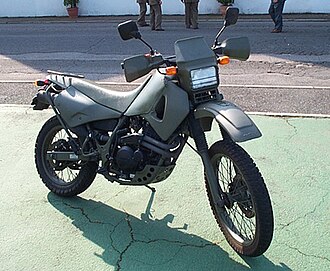
The Cagiva W12 and Its Place in Motorcycle History
The Cagiva W12 is a distinctive example of the Italian motorcycle industry’s approach to lightweight enduro and dual-sport machines during the 1990s. Built around a relatively simple air-cooled, four-stroke single-cylinder engine, the W12 offered riders a combination of everyday usability, practical off-road capability, and unmistakable European character. Rather than relying on a large engine, advanced electronic systems, or elaborate touring equipment, it focused on the qualities that have always made middleweight trail motorcycles appealing: manageable power, long-travel suspension, a tall riding position, spoked wheels, and a chassis designed to cope with a mixture of paved roads and uneven terrain. The result was a motorcycle that occupied an interesting middle ground between a road-oriented commuter and a dedicated competition enduro bike.
The W12 is particularly interesting today because it represents a different era in adventure and dual-sport motorcycling. Modern motorcycles in this category often feature liquid cooling, fuel injection, sophisticated engine management, multiple riding modes, and increasingly complex emissions equipment. The Cagiva W12 belongs to a more mechanically straightforward tradition, in which the engine’s basic architecture and the motorcycle’s overall weight played major roles in defining the riding experience. Historical specifications identify the W12 350 with a displacement of approximately 343 cc, a five-speed gearbox, a 21-inch front wheel, and suspension travel suited to broken roads and moderate off-road riding. Depending on the source and model year, published power figures vary, so the most useful way to understand the motorcycle is to consider its overall design rather than judge it by a single headline number.
History and Development of the Cagiva W12
Cagiva’s Italian Motorcycle Heritage
Cagiva established a reputation for producing motorcycles with a strong Italian identity, spanning road bikes, lightweight machines, enduro models, and competition-inspired designs. The company became associated with bold styling and an interest in combining practical engineering with a distinctive visual character. Its motorcycle range included machines aimed at riders who wanted something more versatile than a conventional road motorcycle, particularly during a period when trail riding and dual-purpose bikes appealed to motorcyclists looking for freedom beyond smooth asphalt. The W-series formed part of this broader approach, offering motorcycles with different engine capacities and intended uses. The W12 was the 350-class four-stroke member of this family, positioned for riders who wanted a relatively light, road-legal motorcycle capable of handling rough surfaces without the demanding character of a full competition machine.
The W12 350 in the 1990s
Reference sources commonly associate the Cagiva W12 350 with the early 1990s, with listings specifically documenting 1991 and 1992 examples, while other motorcycle databases include later model-year entries. This difference matters when researching or purchasing one today, because production history, registration year, specification listings, and individual market availability do not always align neatly. A motorcycle registered in a particular year may have been manufactured earlier, and database entries sometimes cover a broader period than the original model introduction. For that reason, anyone researching the W12 should verify the details of the specific machine using its frame and engine numbers, original documentation, and the relevant national registration records rather than assuming every motorcycle advertised under the same name has identical specifications.
The W12’s basic concept was uncomplicated: provide a usable four-stroke engine, a durable-looking trail-bike chassis, and enough suspension travel and ground clearance to make unpaved routes a realistic part of ordinary riding. It was not designed to compete with large adventure tourers on motorway comfort or with specialist enduro bikes on extreme technical terrain. Instead, it appealed to riders who valued versatility and mechanical simplicity. That practical identity is one reason the model remains of interest to enthusiasts of older dual-sport motorcycles, especially those who appreciate machines from the period before electronic rider aids and complex engine-management systems became standard in many categories.
Design and Styling: A Traditional Trail Motorcycle
Functional Appearance and Italian Character
The Cagiva W12 has the tall, narrow proportions associated with trail motorcycles of its generation. Its overall design places practical riding needs ahead of luxury or aerodynamic sophistication, with an upright riding position, wide handlebars, a relatively slim body, and a front end built around a large-diameter wheel. This arrangement helps create the visual impression of a motorcycle that is ready to leave the road when conditions allow. The bodywork is comparatively restrained, and the machine’s proportions are shaped by the requirements of off-road clearance and rider movement rather than by the broad fairings and substantial fuel tanks seen on modern touring-oriented adventure bikes. A compact headlight area and protective details further reinforce its utilitarian character. Historical descriptions of the model also identify a single-seat arrangement and an exhaust layout positioned high beneath the rear portion of the motorcycle, although individual examples may differ because of market variations or later modifications.
The styling has aged in a way that may appeal to riders who prefer functional motorcycles over heavily sculpted modern designs. The W12 does not need a large screen, extensive body panels, or numerous decorative components to communicate its purpose. Its identity comes from the combination of the high front fender, spoked wheels, upright stance, and straightforward mechanical layout. As with many older Italian motorcycles, originality can contribute significantly to its appeal: correct body panels, period graphics, original instruments, and a complete lighting system help preserve the character that distinguishes a surviving W12 from a heavily modified trail bike.
Ergonomics and Riding Position
A tall seat and upright handlebar position are central to the W12’s intended role. Published specifications list a seat height of approximately 890 mm, which gives the rider a commanding view of traffic and the road ahead but can make the motorcycle less convenient for shorter riders. The high seat also reflects the suspension travel and ground clearance required for trail use. Riders generally benefit from having room to shift their body weight when negotiating loose surfaces, standing on the footrests, or moving around obstacles. At the same time, the height can be a disadvantage in stop-start urban traffic, particularly when the road surface is uneven or when the rider needs to manoeuvre the motorcycle while seated.
The narrow design typical of this class can make the W12 feel less bulky between the rider’s legs than a large touring motorcycle. Its relatively modest engine capacity also means that the motorcycle does not need the broad chassis or substantial mass associated with bigger multi-cylinder machines. However, the ergonomics of a used example should always be assessed in person, because replacement seats, altered suspension settings, different tyres, and non-standard handlebars can substantially change the original riding position. A machine that has been lowered may be easier to manage at a standstill, but lowering can also reduce ground clearance and affect the suspension geometry that contributes to its off-road behaviour.
Engine and Performance: The 343cc Four-Stroke Single
Engine Architecture and Technical Design
At the heart of the Cagiva W12 350 is an air-cooled, four-stroke, single-cylinder engine with a listed displacement of approximately 343.3 cc. The published specifications describe a single overhead camshaft and four valves, a combination intended to support efficient breathing without the complexity of a multi-cylinder powerplant. The bore and stroke are commonly listed as 82 mm by 65 mm, and the compression ratio is approximately 9.5:1. Fuel is supplied by a Mikuni BST 34 carburettor, while electronic ignition manages the spark. These are conventional components for a motorcycle of this period, and they help explain the W12’s relatively direct mechanical character. Instead of relying on extensive electronic control, its operation depends on the condition and adjustment of familiar systems such as the carburettor, ignition, valves, lubrication, and cooling airflow.
Air cooling contributes to the engine’s straightforward appearance and avoids the additional radiator, coolant hoses, and water pump associated with liquid-cooled designs. It does not mean that the engine can be neglected, however. Correct oil level, suitable oil quality, clean cooling surfaces, proper valve clearances, and a well-maintained carburettor remain essential. A single-cylinder engine experiences distinct combustion pulses and mechanical vibration, so the condition of engine mounts, exhaust brackets, fasteners, and other components should be checked carefully on an older motorcycle. When properly maintained, this type of architecture can offer a rewarding balance of accessible servicing and uncomplicated operation, but age and previous maintenance are more important than the apparent simplicity of the design alone.
Power, Torque, and Real-World Riding
Specifications for the W12 vary between sources. Several references quote around 28 horsepower, with peak power reported at approximately 8,500 rpm and maximum torque near 29.4 Nm at 5,750 rpm. Another specification listing gives a lower claimed power figure of 25.5 horsepower at 7,500 rpm, illustrating why the exact year and source should be checked before using a figure in a technical article or sales description. These values should be treated as published specifications rather than guaranteed output from a decades-old individual motorcycle. Engine condition, carburettor tuning, valve adjustment, exhaust changes, and measurement standards can all influence the performance of a particular example.
In practical riding, the W12’s modest power output is best understood in relation to its purpose. It offers enough performance for ordinary road use and recreational trail riding without demanding the acceleration management or physical effort associated with some larger motorcycles. The single-cylinder layout produces a characteristic rhythm and makes the motorcycle feel mechanically connected to the rider. Rather than depending on high-speed performance, the experience centres on selecting the right gear, maintaining momentum, and using the engine sensibly over changing terrain. On steep climbs, deep sand, or demanding off-road sections, the rider must be more deliberate about gear selection and throttle control than on a powerful modern adventure bike. On narrow country roads and slower trails, however, the W12’s performance can feel appropriate to the scale and pace of the ride.
Five-Speed Gearbox and Chain Final Drive
Power is transmitted through a five-speed manual gearbox and a chain final drive. This is a straightforward arrangement that suits the W12’s dual-purpose role, allowing the rider to select a suitable ratio for road speeds, gradients, and lower-speed trail riding. The gearbox’s actual feel depends heavily on the condition of the clutch, shift mechanism, selector components, and internal transmission parts, particularly on machines that have seen years of use or inconsistent servicing. A test ride should include shifts through all gears, checking for false neutrals, jumping out of gear, excessive clutch slip, and unusual mechanical noises. Chain condition and sprocket wear also deserve attention, because a neglected final drive can make an otherwise sound motorcycle feel rough and unresponsive.
The five-speed layout may seem limited compared with modern motorcycles that offer six gears, but the number of ratios alone does not determine whether a transmission suits a particular motorcycle. The important questions are whether the ratios match the engine’s usable power range, whether the clutch operates smoothly, and whether the gearing is suitable for the owner’s intended riding. A W12 used mainly on rural roads and moderate trails may work well with its original gearing, while a machine intended for sustained high-speed road travel or particularly technical terrain may require a different compromise. Any changes to sprocket sizes should be considered carefully, because improving low-speed control can also raise engine speed at a given road speed.
Chassis, Suspension, and Braking
Steel Frame and Lightweight Construction
The Cagiva W12 uses a conventional steel frame, reflecting the practical engineering priorities of trail motorcycles from its era. Steel is well suited to this application because it combines useful strength with repairability and a familiar construction method. The frame must support the engine, suspension, rider, and loads generated when travelling over bumps, potholes, and uneven ground, while maintaining predictable steering behaviour. For a used motorcycle, the frame’s condition is therefore more important than its age alone. Corrosion around joints, damaged mounting points, evidence of previous crash repairs, bent brackets, and misalignment between the front and rear wheels can all indicate problems that deserve closer inspection. A well-preserved frame provides a sound foundation for restoring the rest of the machine, whereas serious structural damage may make a project expensive or impractical.
The W12’s overall mass is relatively modest by modern adventure-motorcycle standards. Published specifications commonly give a dry weight of approximately 152 kg, while one source lists a wet weight of about 157 kg. These figures should not be confused, since dry weight generally excludes operating fluids and may be calculated differently by different manufacturers or databases. Even so, they illustrate the motorcycle’s basic advantage: it is a relatively compact machine with less mass to manage than a large touring enduro. That can be useful when turning around on a narrow trail, manoeuvring in a garage, or recovering from a slow-speed mistake. Actual handling still depends on tyre condition, suspension setup, fuel load, accessories, and the rider’s experience.
Front Fork and Rear Monoshock
The suspension is designed to provide enough movement for uneven surfaces without making the motorcycle unsuitable for ordinary roads. Published technical data commonly lists a hydraulic telescopic front fork with approximately 200 mm of travel and a rear monoshock with around 240 mm. These figures are a major part of the W12’s trail-bike identity: the suspension can absorb bumps that would feel harsh on a road-focused motorcycle, and the available travel helps the wheels maintain contact with irregular ground. Suspension travel alone, however, does not guarantee good off-road performance. Spring condition, damping, bearing wear, fork alignment, shock condition, and correct setup all influence how effectively the suspension works.
Because the W12 is now an older motorcycle, its suspension deserves particular attention when evaluating a used example. Fork seals may leak, the fork oil may be overdue for replacement, and the rear shock may have lost damping effectiveness over time. A motorcycle that bounces excessively after hitting a bump, dives unpredictably under braking, or feels unsettled through a sequence of rough corners may need maintenance rather than simply a change in riding technique. Replacement parts can also vary in availability, so checking the condition of the original components before buying is sensible. If restoration is planned, the owner should establish whether suitable seals, springs, shock components, and compatible replacement units are available before dismantling the motorcycle.
Spoked Wheels, Tyres, and Off-Road Capability
The W12’s wheel configuration is characteristic of dual-sport motorcycles: a 21-inch front wheel and a 17-inch rear wheel, both using tyres suitable for a mixture of road and trail riding. The commonly listed tyre sizes are 90/90-21 at the front and 130/80-17 at the rear. The larger front wheel helps the motorcycle roll over certain obstacles and irregularities more comfortably than a small front wheel typically would, while the rear wheel supports traction and stability under acceleration. Spoked wheels are also associated with traditional off-road machines because they can tolerate certain types of impact differently from many cast road wheels, although their durability depends on spoke tension, rim condition, and the severity of the impact.
Tyre selection can substantially change the W12’s behaviour. Road-oriented tyres may make the motorcycle more predictable on tarmac but provide limited traction in loose soil or mud. More aggressive dual-sport tyres can improve grip on gravel and dirt, although they may produce additional noise, vibration, or less precise behaviour on smooth roads. Riders should select tyres according to their actual use rather than assume that the most aggressive tread is automatically best. On an older machine, checking wheel bearings, spoke tension, rim runout, tyre age, and the condition of the inner tubes where fitted is particularly important. Old tyres can become hard and lose grip even when their tread appears adequate.
Braking Performance
The W12 is commonly specified with a single 260 mm front disc and a two-piston front caliper, paired with a 220 mm rear disc and a single-piston caliper. This arrangement is consistent with the motorcycle’s relatively light construction and moderate performance. The front brake supplies most of the stopping force during firm deceleration, while the rear brake helps control speed and stabilise the motorcycle, especially on loose surfaces when used smoothly. The absence of a modern anti-lock braking system means that the rider must manage braking pressure according to grip and surface conditions. That is particularly important on gravel, wet leaves, mud, and other surfaces where a wheel can lose traction more readily than on dry asphalt.
Brake maintenance is a major consideration when buying or restoring a Cagiva W12. The disc surfaces should be inspected for excessive wear, deep scoring, corrosion, and distortion, while the calipers should be checked for sticking pistons and damaged seals. Brake hoses may also have deteriorated with age, and old fluid can absorb moisture and reduce braking consistency. Replacing consumable components with suitable, correctly specified parts is often a more effective improvement than trying to modify the braking system unnecessarily. Since the motorcycle was designed around a particular balance of weight, wheel size, and suspension, any major brake conversion should be approached with care and checked for compatibility.
Riding Experience: On Roads and Trails
Everyday Road Riding
As a dual-sport motorcycle, the Cagiva W12 is intended to provide useful flexibility rather than excel exclusively in one environment. Its upright ergonomics give the rider a good view of the road, while the relatively narrow body and manageable engine capacity make it suitable for ordinary journeys, country lanes, and lower-speed commuting. The four-stroke single-cylinder engine has a different character from a multi-cylinder road bike, delivering its performance with a distinctive pulse and encouraging a measured riding style. For riders who enjoy exploring back roads instead of travelling everywhere at motorway speeds, this can be an appealing combination. The W12 is not a modern high-speed touring motorcycle, and its limited wind protection, tall seat, and older chassis design should be taken into account when planning long journeys.
Comfort will depend on the rider’s height, the condition of the seat and suspension, and the length of each trip. The tall riding position can be comfortable for some riders because it opens the knees and gives a commanding view, but others may find it tiring when stopping frequently or spending long periods at higher road speeds. Engine vibration is another factor to assess during a test ride. A single-cylinder engine naturally produces a different vibration pattern from a twin or four-cylinder motor, but excessive vibration, unusual rattling, or harshness that changes suddenly with engine speed may indicate worn components or poor maintenance. The correct question is not whether an old trail bike feels identical to a modern motorcycle, but whether it operates smoothly and predictably for its design and age.
Gravel Roads and Moderate Off-Road Riding
The W12’s suspension travel, high ground clearance, 21-inch front wheel, and upright controls make it naturally suited to gravel roads, farm tracks, and moderate trails. On such surfaces, the rider can stand on the footrests when necessary, shift weight to suit the terrain, and use the motorcycle’s relatively simple controls to maintain momentum. Its modest power output may be an advantage for less experienced off-road riders because acceleration is easier to manage than on some powerful enduro or adventure motorcycles. Nevertheless, the W12 is not weightless, and its tall seat may make it difficult for some riders to put a foot down quickly on uneven ground. Confidence comes from understanding the machine’s dimensions and learning how it responds to braking, throttle input, and changes in traction.
The motorcycle’s limitations become more apparent in demanding terrain. Deep mud, steep rocky climbs, large obstacles, and sustained technical sections require suitable tyres, sound suspension, careful technique, and sufficient rider experience. A motorcycle that was designed for dual-purpose riding should not automatically be treated as a competition enduro bike. It may be enjoyable on accessible trails and dirt roads without being the best choice for extreme enduro riding or repeated high-speed impacts. For most owners, the W12 makes the greatest sense when used within the broad range of conditions for which its design was intended.
Fuel Consumption, Range, and Touring Practicality
The Cagiva W12 has a fuel tank capacity commonly listed at approximately 14 litres. This is a practical capacity for a lightweight dual-sport motorcycle, although it is smaller than the tanks found on many long-distance adventure tourers. One technical reference reports average consumption of approximately 19.3 km per litre, which is equivalent to about 5.2 litres per 100 kilometres. If a motorcycle consistently achieved that figure, a 14-litre tank would theoretically allow a range of roughly 270 km before using a reserve margin. Real-world range can be lower because of riding conditions, carburettor tuning, tyre choice, engine condition, fuel quality, and the proportion of off-road riding.
For practical travel planning, it is wise to leave a reserve rather than calculate every journey using the full tank capacity. This is especially important on remote routes where petrol stations may be widely separated. The W12 can be suitable for day trips and exploratory rides, but luggage capacity, wind protection, seat comfort, and fuel range should be assessed before attempting extended touring. Soft luggage can provide a relatively simple way to carry essentials, provided it is securely mounted and kept clear of the exhaust, wheel, chain, and suspension. Any additional luggage also increases the load carried by the motorcycle, so heavy items should be packed carefully and the suspension condition checked before setting out.
Reliability, Maintenance, and Common Ownership Considerations
The Importance of Routine Servicing
The W12’s relatively conventional engine design can make routine maintenance understandable for an owner with suitable mechanical knowledge, but simplicity should never be mistaken for immunity from wear. Regular oil changes, valve-clearance checks, air-filter maintenance, spark-plug inspection, carburettor servicing, and chain adjustment all help preserve reliable operation. The air-cooled engine depends on unobstructed airflow and correct lubrication, so oil quality and level deserve particular attention. The carburettor also needs to be clean and properly adjusted to provide predictable starting, stable idling, and smooth acceleration. A motorcycle that has been stored for a long time may require more than a fresh battery and new fuel before it can be considered roadworthy.
The correct service intervals and fluid specifications should be established from the owner’s manual or reliable workshop documentation for the exact model year. Generic recommendations can be useful as a starting point, but they should not replace model-specific instructions. A written maintenance record is especially valuable when assessing a used W12 because it provides evidence of how consistently the motorcycle has been cared for. Where records are missing, a new owner should consider a baseline service that includes checking valve clearances, changing appropriate fluids, inspecting brakes and tyres, testing the electrical system, and examining the chain and sprockets.
Carburettor, Starting, and Engine Condition
Carburettor-related problems are a sensible area to investigate when inspecting an older W12. Difficult cold starting, an unstable idle, hesitation under acceleration, or fuel leakage may be caused by dirty jets, worn seals, incorrect adjustment, degraded fuel hoses, or a damaged float-valve assembly. These symptoms do not automatically indicate a major engine failure, but they should be diagnosed rather than dismissed as normal behaviour for an old motorcycle. The air filter, intake connections, ignition components, and fuel supply should also be examined because problems in these systems can produce similar symptoms. If a machine has been standing unused for years, cleaning and inspecting the fuel system may be necessary before meaningful conclusions can be drawn about engine performance.
The engine itself should be checked for oil leaks, unusual mechanical noises, smoke, overheating symptoms, and inconsistent power delivery. A cold start is often more informative than viewing a motorcycle that has already been warmed up before the buyer arrives. Listen for how readily the engine starts, whether the idle settles, and whether any noise changes as the engine warms. If possible, arrange an inspection by a mechanic familiar with older Italian or dual-sport motorcycles. A compression or leak-down test may be useful where there are concerns about internal wear, but the results should be interpreted using appropriate service information and in the context of the engine’s overall condition.
Parts Availability and Restoration
Parts availability is one of the practical challenges associated with owning an older, less common motorcycle. Routine consumables such as suitable tyres, chains, sprockets, spark plugs, and certain brake components may be easier to source than model-specific body panels, original instruments, electrical connectors, or unusual engine components. Availability varies by country and supplier, and a part listed for a related Cagiva model should not be assumed to fit the W12 without confirming dimensions and compatibility. Before buying a non-running example as a restoration project, it is sensible to identify any missing components and research whether replacements can be obtained at a reasonable cost.
A sympathetic restoration generally prioritises safety, mechanical condition, and the preservation of the motorcycle’s original character. It may be tempting to fit modern accessories or modify the suspension extensively, but retaining the original specification can be valuable to enthusiasts who appreciate period-correct motorcycles. On the other hand, sensible improvements to consumable parts and maintenance-related components can make an older machine safer and more dependable without fundamentally changing its identity. The best approach depends on whether the goal is a faithful restoration, an everyday trail motorcycle, or a project intended primarily for display and collection.
Buying a Used Cagiva W12
What to Inspect Before Purchase
A used W12 should be evaluated as an individual machine rather than purchased solely on the strength of its model name. Begin with the frame, steering head, swingarm, wheels, and suspension mounts, looking for corrosion, cracks, obvious repairs, or signs of a significant crash. Check that the wheels align correctly and that the steering moves smoothly without catching or excessive play. Inspect the fork seals, rear shock, wheel bearings, spokes, tyres, chain, and sprockets, because neglected items in these areas can quickly add to the cost of making the motorcycle safe. The brakes should operate consistently, and the electrical system should be tested rather than assumed to work because the engine starts.
Next, examine the engine and fuel system. Check the oil condition and level, look for leaks, and ask when the valves, carburettor, and other routine service items were last attended to. If the seller permits a test ride, verify clutch engagement, smooth gear selection, predictable throttle response, stable braking, and straight-line behaviour. Do not ignore smoke, persistent misfiring, excessive noise, or a tendency for the engine to cut out when hot. Documents are equally important: verify the frame number, ownership paperwork, registration details, and any available service history. For a rare or older motorcycle, a complete example with a sound engine and intact bodywork can be a better purchase than a cheaper project missing several difficult-to-find parts.
Is the Cagiva W12 a Good Choice Today?
The W12 can be an appealing choice for a rider who wants an older, relatively simple dual-sport motorcycle with a distinctive Italian background. It may suit enthusiasts who enjoy mechanical projects, prefer moderate power, and want a machine for back roads and accessible trails rather than high-speed touring. Its modest capacity and traditional construction can make it interesting as a second motorcycle or a classic trail-bike project. However, it is less suitable for someone who needs modern safety technology, effortless long-distance comfort, readily available model-specific parts, or the convenience of a contemporary motorcycle with extensive dealer support.
The decision ultimately depends on condition, intended use, and the owner’s willingness to maintain an older machine. A well-maintained W12 can offer an enjoyable and characterful riding experience, while a neglected example may demand considerable time and money before it becomes dependable. Prospective owners should compare the cost of the purchase with the likely expense of servicing, tyres, brakes, suspension work, and any missing parts. The most attractive example is not necessarily the one with the lowest asking price, but the one whose mechanical condition, documentation, and completeness best match the buyer’s expectations.
Cagiva W12 Compared with Modern Dual-Sport Motorcycles
Modern dual-sport motorcycles benefit from decades of development in suspension design, braking systems, fuel delivery, emissions control, and manufacturing consistency. Depending on the model, they may provide fuel injection, anti-lock braking, more refined damping, improved lighting, and easier access to replacement parts. Some also offer greater engine performance without a substantial increase in weight. In contrast, the Cagiva W12 offers a more traditional experience built around a carburetted air-cooled engine and straightforward mechanical systems. The difference is not simply a question of which motorcycle is faster or more advanced; it is a difference in priorities, ownership experience, and the kind of riding each machine encourages.
For technical trails, a modern lightweight enduro may offer superior suspension control and reduced weight. For long-distance road travel, a contemporary adventure bike may provide better wind protection, more comfortable ergonomics, and a larger fuel tank. Yet the W12 retains its appeal for riders who value an older motorcycle’s uncomplicated feel and period character. Its engine capacity is large enough for varied everyday use without turning the machine into a heavy touring bike, while the traditional chassis layout remains recognisable to anyone familiar with trail motorcycles of the 1990s. Choosing the W12 over a newer motorcycle is therefore best understood as a decision based on character, budget, mechanical interest, and intended use rather than a claim that the older machine outperforms newer designs in every area.
The Legacy of the Cagiva W12
The Cagiva W12 occupies a modest but interesting place in the history of dual-sport motorcycling. It reflects a period when manufacturers offered practical trail motorcycles that could be ridden on public roads yet remained capable of venturing onto gravel tracks and unpaved routes. Its air-cooled single-cylinder engine, five-speed transmission, long-travel suspension, spoked wheels, and upright riding position all contribute to that identity. Although it lacks the electronic sophistication and touring refinement of many modern motorcycles, it provides a direct connection to an era when versatility was often achieved through a relatively simple mechanical package.
For enthusiasts, the W12’s greatest strengths are its distinctive character, straightforward design, and ability to serve as a platform for recreational riding or careful restoration. Its weaknesses are equally important to recognise: age-related wear, variable parts availability, limited modern comfort features, and the need to verify specifications across different model-year records. Approached with realistic expectations and supported by proper maintenance, the Cagiva W12 can remain a rewarding motorcycle for riders who appreciate classic dual-sport engineering. It is not simply an old 350cc trail bike; it is a representative of a particular approach to motorcycling, one that prioritised versatility, manageable performance, and the freedom to take the less-travelled route.
Cagiva W12 Technical Specifications
The table below summarises commonly published specifications for the Cagiva W12 350, using the 1992 model as the reference point. Figures can differ between databases and model years, particularly for power output, torque, and some dimensions, so the motorcycle’s original documentation should take precedence when verifying an individual example.
| Specification | Cagiva W12 350 |
|---|---|
| Motorcycle category | Dual-sport / enduro |
| Reference model year | 1992 |
| Engine type | Four-stroke, single-cylinder |
| Cooling system | Air-cooled |
| Valve train | SOHC, 4 valves |
| Displacement | 343.3 cc |
| Bore × stroke | 82 × 65 mm |
| Compression ratio | 9.5:1 |
| Fuel system | Mikuni BST 34 carburettor |
| Ignition | Electronic CDI |
| Maximum power | Approximately 28 hp (20.6 kW) at 8,500 rpm; figures vary by source |
| Maximum torque | Approximately 29.4 Nm at 5,750 rpm |
| Transmission | 5-speed manual |
| Final drive | Chain |
| Frame | Steel |
| Front suspension | Hydraulic telescopic fork |
| Front suspension travel | Approximately 200 mm |
| Rear suspension | Monoshock |
| Rear suspension travel | Approximately 240 mm |
| Front brake | Single 260 mm disc, 2-piston caliper |
| Rear brake | Single 220 mm disc, 1-piston caliper |
| Front tyre | 90/90-21 |
| Rear tyre | 130/80-17 |
| Dry weight | Approximately 152 kg |
| Wet weight | Approximately 157 kg, depending on source |
| Fuel tank capacity | 14 litres |
| Seat height | Approximately 890 mm |
| Ground clearance | Approximately 245 mm |
| Reported average fuel consumption | Approximately 19.3 km/l (about 5.2 L/100 km) |
| Reported top speed | Approximately 147 km/h; actual performance varies |
