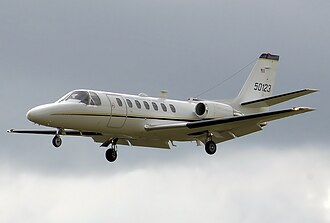
Cessna Citation V: A Comprehensive Guide to the Aircraft, Performance, Design, and Legacy
The Cessna Citation V is an important aircraft in the history of business aviation, combining impressive cruising performance, practical cabin comfort, and the operational flexibility associated with the Citation family. Developed by Cessna, one of the most recognizable manufacturers in general aviation, the Citation V was designed to serve business travelers, corporate flight departments, charter operators, and private owners who needed a capable business jet without moving into the larger and more expensive aircraft categories. Its combination of speed, range, reliability, and relatively straightforward operation helped establish it as a respected member of the midsize-light business jet market.
Introduced as an evolution of the Citation II family, the Citation V incorporated improvements intended to make business travel faster, more comfortable, and more efficient. It offered a longer cabin than earlier aircraft in the family, upgraded systems, and engines that provided the performance needed for demanding business schedules. Rather than focusing exclusively on maximum speed or luxury, Cessna developed an aircraft that balanced several important requirements. Operators wanted to reach destinations quickly, use regional airports, carry passengers and luggage comfortably, and maintain manageable operating costs. The Citation V addressed these priorities with a practical design that made it suitable for a wide variety of missions.
Although newer business jets have introduced more advanced avionics, improved cabin technology, and increasingly sophisticated aerodynamic features, the Citation V remains an interesting aircraft for aviation enthusiasts and business aviation professionals. Its history illustrates how manufacturers responded to the growing demand for private air transportation during the late twentieth century. It also demonstrates why a well-designed aircraft can remain relevant long after production has ended. Understanding the Citation V requires looking beyond its technical specifications and examining its development, construction, flight characteristics, cabin design, operational advantages, limitations, and place within the wider Citation product family.
The History and Development of the Cessna Citation V
The Evolution of the Citation Family
The Citation family was developed to provide business travelers with an alternative to commercial airline schedules and traditional piston-powered private aircraft. Cessna recognized that businesses needed aircraft capable of connecting smaller cities, regional business centers, and major metropolitan areas without depending on airline hubs. This created an opportunity for relatively compact business jets that could combine useful speed with the ability to operate from a broad selection of airports.
The early Citation models established a reputation for practical design and accessible business aviation. As the market developed, customer expectations changed. Companies wanted more passenger space, longer operating range, improved cruising speeds, and better overall performance. Cessna responded by expanding and refining its aircraft lineup, introducing models that retained the general philosophy of the original Citation while offering greater capabilities.
The Citation V emerged from this process as an improved development of the Citation II. Its design incorporated a longer fuselage, allowing passengers to benefit from additional cabin space, together with updated engines and other refinements. The aircraft was intended to provide a more capable business transportation solution while preserving the operational characteristics that had made earlier Citations attractive.
Introduction and Production
The Citation V entered service in the late 1980s, with deliveries beginning in 1989. It became one of the important intermediate developments in the Citation family, occupying a position between smaller entry-level business jets and larger aircraft intended for longer-distance corporate transportation.
The aircraft was produced during a period when business aviation was becoming increasingly established as a practical business tool. Companies were using private aircraft not simply as symbols of prestige but as transportation assets that could improve productivity, connect multiple locations in a single day, and reduce the time employees spent traveling. The Citation V fitted this environment particularly well because it offered a useful combination of passenger capacity, cabin comfort, and operating flexibility.
The original Citation V also provided a foundation for subsequent developments. Its later evolution included the Citation Ultra, which introduced additional refinements and improved performance. This progression demonstrates how Cessna continued to develop an established aircraft platform rather than abandoning its basic architecture whenever customer requirements changed.
Exterior Design and Aerodynamic Characteristics
Fuselage and Overall Appearance
The Cessna Citation V has a recognizable business jet appearance, featuring a relatively slender fuselage, low-mounted swept wings, rear-mounted turbofan engines, and a conventional tail arrangement. These characteristics reflect the design priorities of the Citation family, where aerodynamic efficiency, practical maintenance access, and operational versatility were important considerations.
Its fuselage is longer than that of the Citation II, providing additional interior space without requiring a completely different aircraft configuration. The extended cabin is one of the most important distinguishing characteristics of the Citation V because it allows the aircraft to accommodate passengers more comfortably while retaining a relatively compact external footprint.
The aircraft’s exterior design emphasizes functional efficiency rather than dramatic styling. Its smooth fuselage surfaces, carefully shaped wings, and rear-mounted engines contribute to its aerodynamic configuration. The overall arrangement also provides a practical separation between the passenger cabin and engine installations, helping create a quieter and more comfortable interior environment than might otherwise be possible with different engine placement.
Wing Design and Aerodynamic Efficiency
The Citation V uses swept wings designed to support efficient flight at typical business jet cruising speeds. Wing geometry is particularly important in aircraft operating in the transonic speed range because aerodynamic drag increases significantly as an aircraft approaches the speed of sound. A swept-wing configuration helps manage these aerodynamic effects and contributes to the aircraft’s high-speed cruising capability.
The wing structure must also provide the lift required during takeoff, approach, and landing. This means that designers must balance high-speed aerodynamic performance with lower-speed handling characteristics. The Citation V’s wing and high-lift configuration are designed to provide the necessary performance across these different phases of flight.
Its aerodynamic characteristics make it appropriate for business transportation missions involving a mixture of shorter regional flights and longer journeys. Although it does not offer the performance of newer high-speed business jets, it remains capable of providing efficient transportation over distances that would be impractical for many conventional general aviation aircraft.
Engines and Rear-Mounted Configuration
One of the most recognizable features of the Citation V is its pair of rear-mounted Pratt & Whitney Canada JT15D-5A turbofan engines. Each engine produces approximately 2,900 pounds of thrust, giving the aircraft the power required for its intended operating profile.
Rear-mounted engines are a familiar feature throughout the Citation family. This arrangement leaves the wings relatively unobstructed and can help reduce the amount of engine noise transmitted directly into the passenger cabin. It also gives the aircraft a distinctive business jet profile.
The JT15D engine family became widely associated with smaller business jets because of its compact construction and suitability for aircraft in this performance category. In the Citation V, the engines provide the thrust needed for takeoff, climb, and high-altitude cruise while supporting the aircraft’s practical operating capabilities.
Engine condition, maintenance history, component life, and operating procedures are particularly important when evaluating a used Citation V. As with any older turbine aircraft, the cost of ownership depends not only on the published engine specifications but also on the individual aircraft’s maintenance status and the condition of its installed equipment.
Cabin Design and Passenger Comfort
Interior Layout
The Citation V was designed to offer a more spacious cabin than the earlier Citation II. Its extended fuselage creates additional room for passengers and contributes to a more comfortable environment during longer business trips. Depending on the individual aircraft’s interior configuration, the cabin typically accommodates approximately seven to eight passengers, although actual seating arrangements vary.
The cabin is generally arranged to support business travel, with individual seats positioned to allow passengers to work, communicate, or relax during the flight. Depending on the interior specification, passengers may benefit from a club seating arrangement, additional forward or aft seating, and a compact refreshment area.
The interior of a Citation V is not comparable in size to that of a large-cabin business jet, but its proportions are appropriate for the missions it was designed to perform. It provides enough space for small corporate teams, executives, families, and private groups traveling together. The cabin is particularly useful for journeys where passengers value privacy and flexibility more than extensive onboard facilities.
Comfort During Flight
Passenger comfort depends on several factors, including seat design, cabin noise, ventilation, lighting, temperature control, and the aircraft’s overall condition. The Citation V was designed with business travel in mind, and its cabin environment provides a practical setting for working or relaxing during a flight.
The rear-mounted engines help keep the main cabin separate from the engine installations, while the aircraft’s pressurization system maintains a comfortable cabin environment at high cruising altitudes. Pressurization is especially important for business jets because they frequently operate at altitudes where the outside air pressure would otherwise be unsuitable for normal passenger comfort.
Cabin altitude is an important consideration when comparing aircraft. It describes the equivalent altitude associated with the pressure maintained inside the cabin, rather than the aircraft’s actual flight altitude. A lower cabin altitude generally corresponds to a more comfortable pressure environment for passengers, particularly during longer flights.
Although the Citation V offers useful comfort for its class, potential buyers should inspect the condition of the interior carefully. Older aircraft may have undergone several cabin refurbishments, and the quality of the seating, upholstery, insulation, lighting, and entertainment equipment can differ substantially from one aircraft to another.
Baggage and Practical Storage
Baggage capacity is another important element of the Citation V’s design. Business travelers frequently carry briefcases, personal luggage, presentation equipment, and other items needed for professional activities. The aircraft provides dedicated baggage storage, although the exact usable capacity and loading limitations must be considered when planning a mission.
The amount of luggage that can be carried depends on the aircraft’s empty weight, passenger count, fuel load, and individual baggage limitations. A fully occupied aircraft with maximum fuel may have less available payload for baggage than a lightly loaded aircraft. Consequently, operators must consider actual weight-and-balance calculations rather than relying exclusively on the nominal number of seats.
Flight Performance and Operational Capabilities
Cruising Speed
The Citation V is designed to provide business jet cruising speeds that substantially reduce travel time compared with most piston-powered aircraft and many turboprops. Its maximum cruising speed is commonly quoted at approximately 425 knots true airspeed, although actual performance depends on altitude, aircraft weight, atmospheric conditions, and the selected operating configuration.
This performance allows the aircraft to connect business destinations efficiently, especially when schedules involve several locations within the same region. For companies whose employees need to travel between offices, factories, customer sites, and regional airports, the time savings can be commercially valuable.
Cruising speed should not be confused with average journey speed. A complete flight includes taxiing, takeoff, climb, cruise, descent, approach, and landing. The average speed over the entire journey will therefore be lower than the aircraft’s maximum published cruising speed.
Range and Mission Flexibility
The Citation V has a commonly published maximum range of approximately 1,900 nautical miles under favorable planning assumptions. This makes it suitable for many domestic and regional business aviation missions, although actual achievable range varies according to payload, weather, routing, reserves, and operating conditions.
Range is one of the most important considerations when selecting a business jet. An aircraft may have an impressive published maximum range, but its practical mission capability depends on how much fuel it can carry while accommodating passengers and baggage. Operators must also account for regulatory fuel reserves, alternate airport requirements, potential holding, and adverse winds.
The Citation V is particularly useful for operators who need to travel between destinations that are too far apart for convenient piston aircraft operations but do not require the intercontinental range of a large business jet. Its mission profile is therefore well suited to regional corporate transportation, private travel, and selected charter operations.
Operating Altitude
The Citation V has a maximum operating altitude of approximately 45,000 feet. High-altitude operations offer several potential advantages, including the ability to fly above much of the weather and air traffic congestion that may affect lower flight levels.
Flying at higher altitudes can also improve cruise efficiency, depending on the aircraft’s weight, atmospheric conditions, and flight profile. However, reaching the aircraft’s maximum operating altitude is not always possible immediately after takeoff. Climb performance and the altitude selected for a particular flight depend on aircraft weight, temperature, and other operational factors.
High-altitude operation requires appropriately trained crews, properly functioning pressurization systems, and compliance with applicable aircraft limitations. These requirements are especially important when operating an older business jet.
Takeoff and Landing Performance
The Citation V is capable of operating from many airports that support business jet operations. Its relatively compact dimensions and practical runway performance allow it to serve a variety of regional airports, helping passengers avoid the congestion and ground transportation delays associated with major commercial aviation hubs.
Published takeoff and landing distances should always be interpreted carefully. They depend on aircraft weight, runway elevation, temperature, wind, runway condition, obstacles, and operating procedures. A runway that is adequate under standard conditions may not be suitable when temperatures are high or the aircraft is heavily loaded.
Airport accessibility is one of the central advantages of the business jet category. By using smaller airports closer to business destinations, operators can reduce total journey time even when the aircraft’s airborne speed is similar to that of other private aircraft.
Cockpit, Avionics, and Flight Systems
Flight Deck Configuration
The Citation V’s cockpit reflects the technology available during its original production period. It was designed around a two-pilot operating environment, providing the instruments and controls needed to manage the aircraft’s engines, navigation, communication, electrical systems, and flight controls.
Because the Citation V is an older aircraft type, individual cockpits can differ significantly depending on factory equipment, subsequent modifications, and avionics upgrades. Some aircraft retain equipment associated with their original configuration, while others have received substantial modernization.
These differences are particularly important for pilots and prospective owners. A well-equipped example may provide more modern navigation capabilities, improved situational awareness, and better integration with contemporary air traffic management procedures than an aircraft with an older cockpit installation.
Avionics Modernization
Modern avionics upgrades can improve the usefulness and operational value of an older business jet. Depending on the aircraft and approved modification package, upgrades may include modern navigation displays, GPS equipment, digital flight instruments, traffic awareness systems, weather information, and improved communication capabilities.
However, avionics modernization must be approached as an engineering and regulatory project rather than simply an equipment replacement exercise. Modifications must be compatible with the aircraft’s certification basis and approved installation requirements.
A prospective Citation V buyer should examine the aircraft’s avionics list, maintenance records, modification documentation, software status where applicable, and regulatory compliance. These details can have a substantial influence on the aircraft’s practical usability and future operating costs.
Safety, Reliability, and Maintenance
Aircraft Maintenance Requirements
The Citation V is a turbine-powered aircraft and requires a structured maintenance program to ensure that its engines, airframe, systems, and equipment remain airworthy. Maintenance requirements include scheduled inspections, component servicing, system checks, engine monitoring, and compliance with applicable airworthiness directives.
The aircraft’s age makes maintenance history especially important. Two Citation V aircraft with similar flight hours may have very different ownership prospects because of differences in maintenance quality, component condition, corrosion exposure, engine status, and previous operational environments.
A detailed pre-purchase inspection should examine the aircraft’s maintenance records and physical condition. Particular attention should be paid to the engines, landing gear, flight controls, pressurization system, electrical systems, fuel system, avionics, and structural areas that may be affected by age or operating conditions.
Operational Safety
Safety in business aviation depends on more than the aircraft itself. Pilot experience, training standards, maintenance quality, dispatch procedures, weather assessment, and operational discipline all contribute to safe flight operations.
The Citation V requires pilots to understand the characteristics of a twin-engine jet, including high-speed flight, turbine engine management, pressurized aircraft systems, and the performance considerations associated with takeoff and landing. Operators must ensure that flight crews meet the applicable training, licensing, and qualification requirements.
Regular recurrent training is important because pilots must remain familiar with aircraft-specific systems, emergency procedures, performance calculations, and abnormal operating conditions. An aircraft with a strong maintenance record still requires professional operation and careful flight planning.
Commercial and Private Uses of the Citation V
Corporate Transportation
Corporate transportation is one of the most natural applications for the Citation V. Businesses often need to move small groups of employees between offices, industrial sites, client locations, and regional markets. A private aircraft can make these journeys more convenient by allowing organizations to determine departure times and choose airports closer to their destinations.
For executives, the cabin can provide a relatively private environment for reviewing documents, discussing business matters, or preparing for meetings. The ability to travel without depending on commercial airline schedules may also make it possible to complete several business visits during a single day.
The Citation V is particularly appropriate for companies that do not need a large aircraft but require more capability than a smaller entry-level jet can offer.
Private Ownership
Private ownership offers flexibility for individuals and families who travel frequently. The aircraft can be scheduled according to personal requirements, making it easier to reach destinations that have limited commercial airline service.
However, ownership involves considerable financial and administrative responsibilities. Buyers must consider acquisition costs, insurance, maintenance, crew salaries, hangar space, fuel, training, inspections, and unexpected repairs. The purchase price is only one part of the total cost of operating a business jet.
For some owners, aircraft management companies provide an alternative to handling every aspect of operation independently. These organizations can assist with crew arrangements, maintenance coordination, regulatory matters, scheduling, and other administrative responsibilities.
Charter Operations
The Citation V can also be used in the business aviation charter market, subject to the relevant regulatory approvals and operating requirements. Its passenger capacity and performance make it suitable for selected private charter missions.
Charter suitability depends on the aircraft’s interior configuration, operating economics, maintenance status, and customer expectations. Some customers prioritize speed and flexibility, while others place greater importance on cabin space, baggage capacity, and longer nonstop range.
The aircraft’s age can influence its commercial appeal, particularly when compared with newer jets offering more modern interiors and technology. Nevertheless, a properly maintained Citation V may remain a useful asset for operators serving customers who value practical transportation and competitive pricing.
Advantages of the Cessna Citation V
Balanced Performance
One of the Citation V’s greatest strengths is the balance between speed, range, passenger capacity, and operating flexibility. It is not designed to compete with the largest or fastest business jets, but it provides a useful combination of capabilities for regional and medium-distance transportation.
This balance can be particularly attractive to operators who want to avoid paying for aircraft capabilities they rarely use. A company that regularly transports small groups over regional distances may find a smaller, more practical business jet more appropriate than a large-cabin aircraft.
Comfortable Passenger Environment
The extended cabin provides useful space for business travel and private transportation. Passengers benefit from a dedicated environment that offers greater privacy and flexibility than commercial airline travel.
The cabin is particularly suitable for smaller groups that need to travel together while retaining the ability to work or relax during the flight. Its configuration also allows operators to tailor the interior to the requirements of their customers, subject to approved modifications and the limitations of the aircraft.
Established Aircraft Design
The Citation V benefits from its relationship with the wider Citation family, which has a long history in business aviation. This established design background is an important part of its appeal.
The aircraft’s configuration is familiar to many business aviation maintenance and operating organizations, although support availability, parts requirements, and specialist expertise must still be evaluated in relation to the individual aircraft and its age.
Access to Regional Airports
The Citation V’s operational profile allows it to serve many regional airports, offering an advantage over transportation options that depend on major commercial aviation centers. This can reduce the time spent traveling to and from airports and improve the efficiency of business trips.
Disadvantages and Ownership Considerations
Older Aircraft Technology
The Citation V belongs to an earlier generation of business jets. Although individual aircraft may have received avionics and cabin upgrades, the original design does not offer all the technology and passenger amenities found in newer aircraft.
Buyers should therefore evaluate each aircraft individually rather than assuming that all Citation V examples provide the same level of equipment or comfort.
Maintenance and Operating Expenses
Business jet ownership involves substantial recurring expenses. Engine maintenance, inspections, replacement components, landing fees, fuel, crew compensation, insurance, and hangar costs can create a significant annual financial commitment.
Older aircraft may also require additional attention as components reach their maintenance limits or become more difficult to source. This does not automatically make the Citation V uneconomical, but it means that acquisition decisions should be based on a realistic financial assessment.
Payload and Range Trade-Offs
Like other business jets, the Citation V cannot always carry maximum fuel and maximum payload simultaneously. Operators must balance passenger numbers, baggage, fuel requirements, and mission distance.
A buyer who regularly needs to transport a full cabin over long distances should carefully examine the aircraft’s actual performance documentation. Published range figures alone are insufficient for determining whether a particular aircraft can complete a specific journey with the required reserves.
Citation V Compared With the Citation Ultra
The Citation Ultra represents a later development of the Citation V concept. It retains the general aircraft configuration while introducing improvements intended to increase performance and operational capability.
One of the most important differences is the engine installation. The Citation Ultra uses upgraded Pratt & Whitney Canada JT15D-5D engines, which provide greater thrust than the JT15D-5A engines fitted to the original Citation V. This contributes to improved performance and forms part of the broader development of the aircraft family.
The Ultra also incorporated refinements to its equipment and systems. These developments demonstrate how Cessna continued to improve an existing platform to meet changing customer requirements without fundamentally changing the aircraft’s overall mission.
For buyers comparing the two aircraft, the decision should involve more than model designation. Actual aircraft condition, maintenance status, engine program participation, avionics, interior refurbishment, and operating history may be just as important as the differences between the original models.
The Cessna Citation V in Today’s Business Aviation Market
Although production of the original Citation V has ended, the aircraft continues to be of interest in the pre-owned business aviation market. Its appeal comes from a combination of established engineering, useful passenger capacity, and performance suitable for many regional business travel requirements.
The market for older business jets is different from the market for new aircraft. Buyers are not simply comparing brochure specifications; they are evaluating individual airframes with different histories, maintenance conditions, upgrades, and remaining component life.
A well-maintained aircraft with documented maintenance and an appropriate avionics installation may offer a practical transportation solution. Conversely, an aircraft with deferred maintenance, uncertain records, or expensive upcoming inspections can become a costly acquisition despite an attractive purchase price.
The Citation V should therefore be evaluated as a complete ownership proposition. Prospective buyers should obtain professional technical inspections, review the aircraft’s logbooks, verify its regulatory status, examine engine maintenance arrangements, and prepare a detailed operating budget before committing to a purchase.
Conclusion
The Cessna Citation V occupies an important position in the development of business aviation. By combining an extended passenger cabin, twin turbofan engines, useful cruising speed, and practical operating range, it provided an attractive transportation solution for companies and private owners who needed more capability than a smaller business jet could offer.
Its design reflects an era when business aviation was expanding rapidly and customers increasingly viewed private aircraft as productive transportation assets. The Citation V answered this demand with a balanced approach that emphasized useful performance, passenger comfort, and operational versatility rather than focusing exclusively on luxury or maximum speed.
Today, the aircraft remains an interesting option in the pre-owned business aviation market. Its suitability depends heavily on maintenance history, equipment configuration, operating requirements, and ownership economics. While newer business jets offer more advanced technology and amenities, the Citation V continues to demonstrate the lasting value of a practical and well-established aircraft design.
For aviation enthusiasts, the Citation V is an important chapter in the history of the Citation family. For operators and prospective buyers, it represents a business jet whose capabilities must be understood in the context of its age, condition, and intended mission. Its legacy is ultimately defined by its ability to deliver practical private transportation through a combination of speed, comfort, and versatility.
Cessna Citation V Technical Specifications
The following table summarizes commonly published specifications for the original Cessna Citation V. Figures are approximate and may differ depending on the aircraft’s serial number, equipment, weight, configuration, and operating conditions. Performance figures should always be checked against the applicable aircraft flight manual and approved documentation.
| Technical specification | Cessna Citation V |
|---|---|
| Manufacturer | Cessna Aircraft Company |
| Aircraft category | Light business jet |
| Model designation | Citation V |
| First flight | 1980s development period |
| Entry into service | 1989 |
| Aircraft configuration | Twin-engine business jet |
| Crew | 2 pilots |
| Typical passenger capacity | 7–8 passengers |
| Engines | 2 × Pratt & Whitney Canada JT15D-5A |
| Engine type | Turbofan |
| Thrust per engine | Approximately 2,900 lbf |
| Maximum cruising speed | Approximately 425 knots |
| Maximum operating altitude | Approximately 45,000 ft |
| Maximum range | Approximately 1,900 nautical miles |
| Cabin configuration | Business-class passenger cabin |
| Wing configuration | Swept low-mounted wings |
| Engine location | Rear-mounted |
| Landing gear | Retractable tricycle landing gear |
| Pressurization | Yes |
| Aircraft family | Cessna Citation |
| Successor development | Citation Ultra |
Important specification note: Range, speed, payload, takeoff distance, and landing distance are mission-dependent figures. Actual aircraft performance must be calculated using the relevant flight manual, aircraft weight, weather conditions, runway characteristics, and required fuel reserves.
