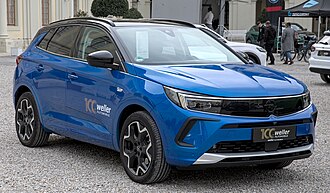
Opel Grandland as a Used Car: Reliability, Common Problems, Engines and Buying Advice
The Opel Grandland is an interesting option for motorists looking for a practical, comfortable and relatively modern SUV on the used-car market. Since its introduction, the model has established itself as an important part of Opel’s family-car range, offering a combination of spacious interior, elevated driving position, useful luggage capacity and a wide choice of petrol, diesel, hybrid and plug-in hybrid powertrains. It was developed to meet the needs of drivers who want the practicality of an SUV without moving into the considerably larger and more expensive vehicle categories.
The Grandland has also undergone an important technical and design evolution during its production life. The original Opel Grandland X, introduced in 2017, was developed during the period when Opel was part of the PSA Group and shared much of its engineering with the Peugeot 3008. In 2021, the model received a substantial facelift and became known simply as the Opel Grandland. This update introduced a redesigned front end, a more modern interior presentation in selected versions and additional technology. A completely new generation arrived in 2024, bringing a different platform, updated powertrains, more digital equipment and a significantly more contemporary design.
These differences are extremely important when buying second-hand. A used Grandland from 2018 is not technically identical to a 2022 facelift model, while the new-generation Grandland introduced in 2024 represents another significant step forward. The engine range, transmission, equipment, dimensions and potential maintenance requirements vary depending on the production year and specification. Buyers should therefore avoid treating every vehicle carrying the Grandland name as the same car.
The model is particularly attractive because it offers a wide selection of used examples. Depending on the market, buyers can find relatively affordable petrol and diesel versions, more powerful plug-in hybrids and newer mild-hybrid or fully electric models. This makes it possible to choose a Grandland according to driving habits and budget rather than being restricted to one particular engine.
However, is the Opel Grandland a reliable used SUV? Which engines are worth considering, what are its most common weaknesses, how expensive is maintenance and what should you check before buying one? This detailed guide examines the model from the perspective of a second-hand buyer, covering its design, interior, practicality, engines, driving characteristics, reliability, running costs, competitors and technical specifications.
Opel Grandland: Model History and Generations
Opel Grandland X (2017–2021)
The first generation of the model was introduced in 2017 under the name Opel Grandland X. It was developed during Opel’s transition into the PSA Group and shared its basic technical architecture with the Peugeot 3008. This relationship provided Opel with access to modern platform technology, efficient engines and contemporary driver-assistance systems, while allowing the manufacturer to retain its own exterior styling and interior character.
The Grandland X was designed as a family-oriented compact SUV, positioned above smaller Opel crossovers and below larger vehicles in the brand’s range. Its main strengths were its relatively spacious cabin, comfortable suspension, practical luggage compartment and wide engine selection. It was available with petrol and diesel engines, as well as a plug-in hybrid system introduced later in its production life.
From the perspective of a used-car buyer, the 2017–2021 Grandland X can offer particularly good value. Depreciation has made early examples considerably more affordable than newer SUVs, and there is now a reasonable amount of information about their ownership experience. Nevertheless, the condition of the engine, transmission, emissions equipment and electronic systems should be carefully assessed because these vehicles are old enough to have accumulated significant mileage.
Opel Grandland (2021–2024)
In 2021, Opel introduced a substantial facelift and dropped the X designation. The updated model received a more distinctive exterior, including the manufacturer’s Vizor front design, redesigned lighting and revised bumpers. The interior was also modernised, with a stronger emphasis on digital displays and a cleaner dashboard arrangement.
The facelift brought improvements to the equipment range and helped the Grandland remain competitive against newer SUVs. Depending on the specification, buyers could find features such as adaptive cruise control, advanced parking assistance, matrix LED lighting, a digital instrument display, improved infotainment and additional safety systems.
The plug-in hybrid range was also an important part of the updated model’s identity. Buyers could choose between front-wheel-drive and more powerful all-wheel-drive configurations, depending on the engine and specification. This makes the facelift particularly interesting for motorists who want a relatively modern SUV with electrified technology but do not necessarily want to purchase a fully electric vehicle.
New Opel Grandland (2024 Onwards)
The second generation of the Grandland was introduced in 2024 and represents a much more comprehensive change than the previous facelift. It uses the Stellantis STLA Medium platform and adopts a larger, more modern design with a redesigned interior, updated digital systems and a different approach to electrification.
The new model is available with electrified powertrains, including mild-hybrid, plug-in hybrid and fully electric versions, depending on the market and production period. It is also larger than its predecessor, with additional attention given to passenger comfort, luggage capacity and long-distance usability.
As a used-car purchase, the second-generation Grandland is still a relatively young proposition. Early examples may offer the advantage of remaining factory warranty, but there is limited long-term reliability information. Buyers should also be aware that its technology and maintenance requirements differ from those of the Grandland X.
For this reason, this article considers all three stages of the model’s development, with particular attention to the first-generation Grandland X and the facelifted Grandland, which are likely to represent the more established part of the used-car market.
Exterior Design and Bodywork
A Practical SUV with Conservative Styling
The Opel Grandland has always followed a relatively restrained design philosophy. Rather than attempting to look like an aggressive off-road vehicle or a sporty coupé SUV, it focuses on clean proportions, a relatively upright body and practical dimensions. This approach has helped the model appeal to families, company-car users and motorists who prefer understated styling.
The original Grandland X has a conventional appearance, with a broad front grille, traditional headlight arrangement and relatively simple body lines. The 2021 facelift made the vehicle more distinctive through the introduction of Opel’s Vizor front design, which connects the headlights and central brand area into one visually unified element. The updated front end gives the car a more modern appearance and helps distinguish it from earlier examples.
The latest generation takes the design further, with sharper bodywork, more elaborate lighting and a more contemporary overall shape. It is noticeably different from the older vehicle and should not be confused with a facelifted first-generation model when comparing prices or specifications.
Bodywork Condition and Accident Inspection
The Grandland is a relatively conventional family SUV, but the condition of its bodywork should still be checked carefully. Used examples may have been driven in urban environments, used as company cars or operated as family vehicles with frequent loading and unloading. Common signs of everyday wear include scratches around door handles, stone chips on the bonnet, parking damage to bumpers and marks on the boot loading area.
Pay particular attention to the lower sections of the doors, wheel arches and bumpers. These areas are often exposed to road debris and minor impacts. The front bumper and windscreen should also be inspected because motorway driving can result in stone chips and damage to exposed plastic components.
When buying a more expensive facelifted or newer-generation model, it is worth checking the alignment of the body panels and measuring the paint thickness. Differences in paint colour, uneven gaps and signs of repairs may indicate previous accident damage. Modern vehicles also incorporate sensors and cameras into their bumpers and exterior components, so even a relatively minor collision can involve more expensive repairs than expected.
Interior: Comfort, Space and Equipment
Dashboard and Driving Position
The Grandland’s interior is designed around everyday comfort and straightforward operation. The original Grandland X has a relatively conventional dashboard layout, with physical controls for many important functions and an infotainment screen positioned centrally. This arrangement can be attractive to drivers who prefer traditional buttons rather than having every function integrated into a touchscreen.
The facelifted Grandland introduced a more modern dashboard presentation, including Opel’s Pure Panel design in selected specifications. This combines digital instrumentation with a central infotainment display, creating a more contemporary driving environment. The exact screen size, connectivity functions and available equipment depend on the production year and trim level.
The driving position is one of the vehicle’s strengths. The elevated seat provides a good overview of the road, while the steering wheel and seat adjustments allow most drivers to find a comfortable position. The seats are generally suitable for longer journeys, although their design and support vary depending on the equipment specification. Some higher versions offer more sophisticated seat designs and additional adjustment functions.
When inspecting a used Grandland, check the driver’s seat for excessive wear, especially around the side bolsters. Look at the steering wheel, gear selector, door armrests and frequently used switches. A vehicle with relatively low mileage should not show unusually heavy wear in these areas.
Material Quality and Interior Durability
The interior materials are generally appropriate for a mainstream family SUV. The Grandland is not a premium vehicle, so harder plastics can be found in the lower sections of the dashboard and doors. Higher equipment levels may include more attractive upholstery, decorative inserts and improved seat materials.
Assembly quality should be checked individually. Listen for rattles from the dashboard, door panels and centre console when driving over uneven roads. Although small interior noises are not necessarily a serious mechanical problem, they can become annoying during long journeys and may indicate that trim components have been removed or poorly refitted in the past.
Also test the operation of the air conditioning, heating, electric windows, central locking and infotainment system. On vehicles equipped with digital displays, check for flickering, delayed responses and warning messages. A properly functioning interior should feel consistent with the vehicle’s age and mileage.
Passenger Space and Rear Seats
One of the reasons the Grandland is popular with families is its relatively generous passenger compartment. The front seats provide a comfortable driving environment, while the rear bench offers enough space for adults on ordinary journeys. The relatively high roofline also makes entering and leaving the rear compartment easier than in some coupé-style SUVs.
The rear seats are particularly useful for families with children because they provide space for child seats and everyday passenger equipment. Buyers should nevertheless check the exact seating arrangement and the number of available ISOFIX mounting points on the particular vehicle.
Three adults can sit in the rear, but the middle position is naturally less comfortable than the two outer seats. As with most vehicles in this class, the Grandland is best considered a five-seat family SUV rather than a car designed for regularly transporting five adults over long distances.
Boot Capacity and Practicality
The luggage compartment is one of the Grandland’s strongest selling points. The original Grandland X and facelifted first-generation model offer approximately 514 litres of boot capacity in conventional combustion-engine versions, although the figure varies according to the measuring method and specification. The plug-in hybrid versions have a smaller luggage compartment because part of the available space is used by the battery and associated equipment.
The latest generation offers a larger boot, with approximately 550 litres available in the mild-hybrid version and around 485 litres in the electric version, depending on the configuration. These figures make the new Grandland particularly attractive to families who regularly carry luggage, shopping or sports equipment.
The shape of the luggage compartment is at least as important as its nominal capacity. The Grandland offers a practical loading opening and a relatively useful boot floor, making it suitable for everyday family activities. Folding the rear seats creates additional space for larger objects, although the resulting floor arrangement depends on the model and equipment.
When buying second-hand, inspect the boot floor, side panels, rear seat folding mechanisms and loading sill. Missing luggage covers, damaged plastic trim and scratched interior panels may not affect mechanical reliability, but they can reduce the overall appeal of an otherwise attractive vehicle.
Engines: Which Opel Grandland Is the Best Used-Car Choice?
The Grandland has been offered with a wide selection of petrol, diesel and electrified powertrains. The exact engine range depends on the production year and market, so buyers should always verify the engine code and technical specifications using the vehicle identification number.
1.2 Turbo Petrol
The 1.2-litre three-cylinder turbocharged petrol engine is one of the most widely encountered powertrains in the first-generation Grandland. Depending on the year and specification, it produces approximately 130 horsepower and is usually combined with a manual or automatic transmission.
Its main advantage is its relatively good balance between performance and fuel consumption. The engine is sufficiently powerful for everyday urban and suburban driving, and it can also handle motorway journeys without major difficulties. However, drivers who regularly travel with a fully loaded vehicle may find its performance less impressive than that of the more powerful diesel or hybrid alternatives.
The most important consideration is maintenance history. Some versions of this engine family use a timing belt running in engine oil, often referred to as a wet timing belt. This design requires the correct engine oil specification and proper maintenance. Incorrect oil, neglected servicing or deterioration of the belt can create serious engine problems.
Before purchasing a 1.2 Turbo Grandland, ask for evidence of regular oil changes and any timing-belt inspection or replacement that has been required according to the applicable maintenance schedule. A specialist should inspect the belt where possible, and the exact service requirements should be verified for the engine code and production date.
This engine can be a reasonable choice when properly maintained, but it is not one that should be purchased purely because the vehicle has a low advertised mileage.
1.6 Turbo Petrol
The 1.6-litre turbocharged petrol engine is available in selected markets and specifications, particularly in connection with plug-in hybrid powertrains. It provides stronger performance than the smaller 1.2-litre petrol engine and is designed to work together with an electric motor in hybrid versions.
The plug-in hybrid configuration can be particularly attractive to drivers who want a powerful family SUV with the ability to cover shorter journeys using electric power. The petrol engine provides additional range and flexibility when the battery is depleted.
However, the more complicated powertrain means that the condition of both the combustion engine and electrical components must be assessed. A used plug-in hybrid should be checked for battery health, charging functionality, software updates and any stored faults relating to the hybrid system.
1.5 Diesel
The 1.5-litre diesel engine is an attractive option for motorists who regularly travel longer distances. It generally offers good fuel efficiency and sufficient torque for ordinary family use. Depending on the production year, it is available with different transmission configurations.
Diesel powertrains can make sense for motorists who regularly drive on motorways or cover substantial annual mileage. Their efficiency can be particularly useful when the Grandland is carrying several passengers and luggage.
However, modern diesel engines incorporate complex emissions-control equipment, including a diesel particulate filter and selective catalytic reduction technology on relevant versions. Short journeys and frequent cold starts can prevent the emissions systems from operating under ideal conditions. Buyers should therefore pay particular attention to the vehicle’s previous usage.
During the inspection, check for warning lights, abnormal exhaust smoke, engine hesitation and evidence of emissions-system repairs. Ask whether the AdBlue system has required maintenance and whether the diesel particulate filter has experienced repeated regeneration problems.
2.0 Diesel
The 2.0-litre diesel engine is one of the more attractive choices for drivers who value strong torque and long-distance comfort. It offers more performance than the smaller diesel engine and is particularly suitable for motorway journeys, overtaking and regular travel with a full passenger load.
Its higher output makes the Grandland feel more relaxed at higher speeds, although the exact availability of this engine depends on the model year and market. It is generally found in selected early Grandland X versions rather than throughout the model’s entire production life.
As with other modern diesel vehicles, the condition of the emissions system and maintenance history should be checked carefully. A vehicle that has spent most of its life on longer journeys may be a better proposition than one with similar mileage accumulated through frequent short urban trips.
1.6 Plug-in Hybrid
The plug-in hybrid Grandland combines a turbocharged petrol engine with an electric motor and a rechargeable battery. Early versions offer approximately 225 horsepower in front-wheel-drive form, making them considerably more powerful than the conventional petrol and diesel alternatives.
The main advantage is the ability to cover shorter daily journeys using electric power, provided that the battery is charged regularly. This can reduce petrol consumption considerably for drivers who have convenient access to home or workplace charging.
However, the plug-in hybrid is less attractive if the owner rarely charges the battery. In that situation, the vehicle has to carry the additional weight of its electrical components without fully benefiting from the advantages of electric driving. Fuel consumption can consequently be higher than expected, especially during motorway journeys with a depleted battery.
A used plug-in hybrid should be inspected by a workshop familiar with high-voltage systems. The battery’s condition, charging port, charging cable, electrical cooling system and hybrid control software should all be checked.
1.6 Plug-in Hybrid4
The more powerful Hybrid4 configuration combines a petrol engine with two electric motors and all-wheel drive. Depending on the version, combined output can reach approximately 300 horsepower.
This version offers considerably stronger acceleration and improved traction compared with the front-wheel-drive alternatives. It is particularly attractive to drivers who want the performance of a powerful SUV while retaining the ability to travel short distances using electric power.
The additional complexity is also important. The vehicle has more electrical components, an additional electric motor and a more complicated drive system. Buyers should check that all-wheel drive operates correctly and that there are no stored faults relating to the hybrid system or rear electric motor.
The Hybrid4 should be purchased primarily by motorists who will genuinely benefit from its performance and electrification. For someone who mainly wants an economical family SUV, a simpler petrol or diesel version may be a more sensible choice.
Mild-Hybrid and Electric Powertrains in the New Generation
The second-generation Grandland introduced a new range of electrified powertrains. These include a 48-volt mild-hybrid petrol version, a plug-in hybrid and fully electric variants, with availability and specifications varying according to market and model year.
The mild-hybrid version uses a small electric motor to assist the combustion engine and improve efficiency, particularly in urban driving. It does not need external charging and is therefore relatively convenient for buyers who want electrification without changing their driving habits.
The plug-in hybrid offers greater electric driving capability and is more suitable for motorists who can charge regularly. The fully electric Grandland provides quiet operation and zero local exhaust emissions, but its suitability depends heavily on driving distances and access to charging facilities.
Because the new generation uses different engineering from the Grandland X, its reliability and maintenance should be evaluated separately. Buyers should not assume that experience with an older 1.2-litre petrol Grandland automatically applies to the newer mild-hybrid or electric models.
Transmission: Manual or Automatic?
The Opel Grandland has been offered with both manual and automatic transmissions, depending on the engine and production year. The choice can have a noticeable effect on driving comfort and maintenance considerations.
The manual gearbox is generally straightforward to use and can be attractive to buyers who prefer a more traditional driving experience. When inspecting a used vehicle, check the clutch for slipping, unusual noises and excessive pedal vibration. Gear changes should be smooth, and the transmission should not produce grinding noises when selecting individual gears.
Automatic versions offer greater convenience, especially in urban traffic and during longer journeys. However, their operation should be tested carefully. Pay attention to delayed engagement when selecting drive or reverse, hesitation during acceleration and unusual behaviour when changing gears at low speeds.
The Grandland’s transmission technology differs between engine versions and model years. Some vehicles use conventional automatic transmissions, while electrified versions may employ different transmission arrangements. It is therefore important to identify the exact gearbox fitted to the vehicle rather than assuming that all automatic Grandlands use the same system.
A professional inspection is recommended if the gearbox produces unusual noises, jerking or warning messages.
Driving Characteristics and Comfort
City Driving
The Grandland is relatively easy to drive in urban environments. Its elevated seating position gives the driver a good overview of surrounding traffic, while the steering is generally light enough for parking and low-speed manoeuvres.
Its dimensions are larger than those of a small crossover, so parking in particularly narrow spaces requires more attention. Parking sensors and a reversing camera can make everyday use easier, especially on higher equipment versions.
Petrol and hybrid versions are generally attractive for drivers who spend a significant amount of time in town. Diesel versions can also be used in urban areas, but repeated short journeys are less favourable for their emissions-control systems.
Motorway Driving
Long-distance comfort is one of the Grandland’s strongest qualities. The vehicle offers a relatively comfortable driving position, sufficient passenger space and a suspension setup designed for ordinary family use.
The 1.5-litre and 2.0-litre diesel engines are particularly suitable for motorway driving because of their torque and fuel efficiency. The more powerful petrol and plug-in hybrid versions also provide good acceleration reserves.
The Grandland is not intended to be a sporty SUV, but it offers predictable handling and a stable feel at normal motorway speeds. Buyers should nevertheless check tyre condition, wheel alignment and suspension components because these can have a significant effect on noise and comfort.
Suspension and Handling
The suspension is designed to provide a compromise between comfort and predictable road behaviour. It absorbs ordinary road imperfections reasonably well, although the ride can become firmer on vehicles equipped with larger wheels.
During a test drive, listen for knocking sounds over potholes and speed bumps. Check whether the vehicle pulls to one side, whether the steering wheel remains straight when driving on a level road and whether there are vibrations at higher speeds.
The condition of the tyres is particularly important. Uneven wear may indicate incorrect wheel alignment, damaged suspension components or previous accident repairs.
Opel Grandland Reliability: Common Problems and Weak Points
1.2 Turbo Engine and Wet Timing Belt
One of the most important subjects when buying a petrol Grandland is the 1.2 Turbo engine’s timing-belt arrangement. Certain versions use a belt that operates inside the engine and is exposed to the oil. This design makes the quality and specification of the engine oil particularly important.
If the belt deteriorates, material can contaminate the lubrication system and potentially cause problems with oil circulation. In severe cases, this can result in expensive engine damage.
Not every 1.2 Turbo Grandland will experience this problem, and the risk depends on the specific engine version, maintenance history and production date. Nevertheless, it is important enough to justify additional checks before purchase.
Ask for documentation of oil changes, verify that the correct oil specification was used and establish whether the timing belt has been inspected or replaced according to the applicable maintenance requirements. Do not rely solely on the seller’s statement that the engine has been serviced regularly.
2. Diesel Particulate Filter Problems
Diesel versions are equipped with emissions-control equipment designed to reduce particulate emissions. The diesel particulate filter needs suitable operating conditions to regenerate and burn accumulated soot.
If the vehicle is mainly used for short journeys, the regeneration process may be interrupted repeatedly. Over time, this can contribute to warning messages, reduced performance and expensive repairs.
Before buying a diesel Grandland, ask about its typical usage and check the diagnostic data for the particulate filter. A specialist can assess soot loading, regeneration history and related sensor values.
A diesel Grandland that has regularly travelled long motorway distances may be a more sensible purchase than one with similar mileage accumulated through repeated short journeys.
3. AdBlue and Emissions-System Faults
Selected diesel versions use AdBlue technology to reduce nitrogen oxide emissions. The system incorporates a tank, pump, injector, sensors and associated electronic controls.
Problems with these components can result in warning messages and, in certain circumstances, a countdown that eventually prevents the vehicle from restarting if the fault remains unresolved.
Check whether the AdBlue system has required previous repairs and whether any warning messages are stored in the control units. A diagnostic scan is especially useful because some emissions-related faults may not be immediately obvious during a short test drive.
4. Automatic Transmission Behaviour
Automatic Grandland models should be checked for smooth gear changes and predictable behaviour. Depending on the version, the vehicle may use different transmission technologies, so the potential issues are not identical across the entire range.
During the test drive, check forward and reverse engagement, acceleration from a standstill and gear changes at both low and higher speeds. Repeated hesitation, strong jerking or unusual noises should be investigated.
If a transmission repair is required, the cost can be substantial compared with ordinary maintenance. It is therefore better to identify any problems before completing the purchase.
5. Electronic and Infotainment Problems
The Grandland includes numerous electronic systems, particularly in facelifted and higher-specification versions. These can include digital instrumentation, infotainment, cameras, parking sensors, driver-assistance equipment and advanced lighting.
Software-related problems may appear as intermittent screen freezes, connectivity issues, warning messages or malfunctioning assistance functions. Some issues can be resolved through software updates, but persistent faults should be investigated by an authorised workshop.
Test every major electronic function and check for stored diagnostic errors. A vehicle with several unrelated warning messages should receive a more detailed inspection before purchase.
6. Suspension and Steering Components
Suspension components naturally wear with mileage and age. On the Grandland, buyers should pay attention to noises from the front suspension, steering behaviour and uneven tyre wear.
Listen for knocks over uneven roads and check whether the vehicle remains stable when braking. Worn bushes, links, dampers or other suspension components can affect comfort and handling.
These problems are not necessarily specific design defects. They are ordinary inspection points for a used family SUV, especially one that has spent much of its life on roads with poor surfaces.
7. Plug-in Hybrid Battery and Charging System
Plug-in hybrid Grandlands introduce additional components that are not found in conventional petrol and diesel versions. These include the high-voltage battery, electric motor, charging system and associated control electronics.
The battery should be inspected by a qualified workshop, particularly if the vehicle has been used extensively or has spent long periods without being charged. Check whether the car accepts a charge correctly and whether the displayed electric range is reasonable for the temperature and operating conditions.
A professional diagnostic assessment is preferable to judging battery condition from the dashboard range estimate alone.
8. Recalls and Manufacturer Service Campaigns
Before purchasing any Grandland, check the vehicle identification number with an authorised Opel dealer to establish whether outstanding recalls or service campaigns apply.
A recall does not necessarily mean that a particular vehicle is unsafe or defective. It means that the manufacturer has identified an issue affecting a defined group of vehicles and has specified corrective action.
Ask for confirmation that all relevant work has been completed. This is especially important for vehicles with complex electronic, emissions or electrified systems.
Fuel Consumption and Running Costs
Fuel consumption is an important factor when choosing between the different Grandland engines. The petrol, diesel and plug-in hybrid versions have different strengths, and the most economical option depends heavily on how the vehicle is used.
The 1.2 Turbo petrol engine generally offers reasonable fuel consumption for a family SUV, particularly when driven at moderate speeds. However, consumption can increase noticeably during motorway driving, when fully loaded or when the engine is frequently required to accelerate the vehicle.
The diesel versions are generally more attractive for motorists who cover high annual mileage. Their strong torque and relatively low fuel consumption make them suitable for longer journeys. However, their emissions-control systems introduce additional maintenance considerations.
Plug-in hybrid versions can be extremely economical when charged regularly and used for shorter journeys. If the battery is not charged, however, the vehicle carries additional weight and may consume more petrol than expected.
The following factors should be included in the total cost of ownership:
- Regular engine oil and filter changes.
- Timing-belt inspection and replacement where applicable.
- Transmission servicing according to the manufacturer’s requirements.
- Diesel particulate filter and AdBlue system maintenance.
- Brake discs, pads and suspension components.
- Tyre replacement and wheel alignment.
- Hybrid battery and charging-system inspection.
- Insurance and vehicle taxation.
- Software updates and electronic repairs.
A used Grandland should not be judged solely by its purchase price. A cheaper diesel vehicle with an uncertain emissions-system history may prove more expensive than a slightly newer petrol version with complete maintenance records.
Opel Grandland as a Family Car
The Grandland is particularly well suited to family use. Its elevated seating position, practical luggage compartment and comfortable passenger compartment make it suitable for commuting, school runs, shopping and longer holidays.
The five-seat configuration is sufficient for most families, while the luggage compartment provides useful space for suitcases, pushchairs and everyday equipment. The rear seats offer reasonable room for children and adults, and the vehicle’s overall dimensions make it more practical than smaller crossovers.
Safety equipment is another important consideration. Depending on the production year and trim level, the Grandland can be equipped with automatic emergency braking, lane assistance, traffic-sign recognition, adaptive cruise control, parking assistance and other driver-support systems.
When buying a family vehicle, it is worth checking the condition of the rear seat belts, ISOFIX mounting points and child-safety locks. Also test the operation of the rear windows and doors, particularly if the vehicle has regularly transported children.
The plug-in hybrid can be an interesting family option when the household has access to charging. It allows everyday journeys to be completed using electric power while retaining the flexibility of a petrol engine for longer trips.
Equipment Levels: Which Version Should You Choose?
The exact equipment names vary by country and production year, but Grandland buyers will commonly encounter trim levels such as Edition, Elegance, GS Line, GS and Ultimate, depending on the model period.
Basic versions usually offer essential comfort and safety equipment, while higher specifications can include more advanced lighting, larger infotainment displays, improved upholstery, digital instruments and additional driver-assistance functions.
A higher trim level is not automatically the best purchase. More equipment can make the vehicle more attractive, but it also introduces additional components that should be checked for correct operation.
For most second-hand buyers, a well-maintained mid-range specification is likely to offer a good balance between purchase price, comfort and equipment. Features such as automatic climate control, parking sensors, a reversing camera, heated seats and modern smartphone connectivity can make a noticeable difference in everyday use.
Before purchasing, check the actual equipment list using the VIN. Advertisements sometimes contain inaccurate descriptions, particularly when vehicles have been imported or registered in different markets.
What to Check Before Buying a Used Opel Grandland
Buying a used Grandland should involve more than a short test drive and a visual inspection. Its different engine and transmission combinations mean that the inspection should be adapted to the exact vehicle.
1. Check the VIN and Vehicle History
Start by comparing the VIN on the vehicle with the registration documents. Establish the production date, first registration date, original market and exact engine specification.
Check whether the vehicle has been involved in accidents, whether the mileage is consistent with available records and whether there are any outstanding financial or legal issues. Imported vehicles deserve particular attention because their service history may be spread across different countries.
2. Inspect the Engine
Start the engine from cold and listen for abnormal noises. Observe whether the idle speed is stable, whether there is excessive smoke and whether any warning lights remain illuminated.
For 1.2 Turbo versions, investigate the timing-belt maintenance requirements and confirm that the correct oil specification has been used. For diesel vehicles, check the emissions systems and ask whether the particulate filter or AdBlue equipment has required previous repairs.
3. Test the Transmission
Check the operation of the clutch in manual versions and the gear changes in automatic versions. The transmission should behave predictably, without repeated hesitation, strong vibrations or unusual mechanical noises.
Test the vehicle both when cold and after it has reached normal operating temperature.
4. Inspect the Hybrid System
For plug-in hybrid models, check battery condition, charging operation, charging cables and electric driving functionality. Verify whether the vehicle can complete a charging session without interruptions or error messages.
For the newer mild-hybrid generation, check the 48-volt system and associated control electronics using suitable diagnostic equipment.
5. Check the Suspension and Brakes
Drive over uneven roads and listen for knocking sounds. Check for vibrations when braking and make sure that the vehicle does not pull to one side.
Inspect tyre wear and compare the condition of all four tyres. Uneven wear may indicate alignment problems or worn suspension components.
6. Test the Electronic Equipment
Check the infotainment screen, digital instruments, air conditioning, parking sensors, reversing camera, windows and central locking.
On higher-specification versions, also test adaptive cruise control, lane assistance, automatic emergency braking and advanced lighting where possible.
7. Verify Recalls and Service Campaigns
Ask an authorised Opel dealer to check the VIN for outstanding recalls and service campaigns. Request written confirmation that the necessary corrective work has been completed.
8. Arrange an Independent Technical Inspection
A professional inspection is particularly important for plug-in hybrids, higher-mileage diesels and vehicles with automatic transmissions.
An independent specialist can perform a diagnostic scan, inspect the underside, assess the engine and transmission, check the hybrid system and identify evidence of accident repairs. The inspection may cost money, but it can help prevent much larger expenses later.
Opel Grandland Compared with Its Main Competitors
Opel Grandland vs. Peugeot 3008
The Peugeot 3008 is one of the closest alternatives because the first-generation Grandland shares its underlying engineering with the same model. Both vehicles use related platforms and powertrain technology, although their styling, interior design and equipment presentation are different.
The Peugeot has a more distinctive dashboard and a stronger emphasis on interior design, while the Opel offers a more conventional driving environment. Buyers should compare engine condition, equipment and maintenance history rather than assuming that one is automatically more reliable.
Opel Grandland vs. Volkswagen Tiguan
The Volkswagen Tiguan is a major competitor in the compact SUV segment. It offers a wide engine range, a practical interior and a strong presence on the European used-car market.
The Tiguan may appeal to buyers who prefer Volkswagen’s interior layout and familiar engine options. The Grandland, however, can offer attractive value for money, particularly when comparing vehicles of similar age, mileage and equipment.
Opel Grandland vs. Škoda Karoq
The Škoda Karoq is another practical family SUV, with a useful interior, good luggage capacity and a broad selection of engines.
The Karoq is particularly attractive to motorists who value straightforward ergonomics and everyday practicality. The Grandland can be an interesting alternative when its purchase price is lower or when a particular engine and equipment combination better suits the buyer’s needs.
Opel Grandland vs. Ford Kuga
The Ford Kuga offers a broad range of petrol, diesel and hybrid powertrains, with a strong emphasis on driving comfort and road behaviour.
Compared with the Kuga, the Grandland is generally more conservative in its driving character, focusing on everyday comfort rather than sporty handling. Both vehicles can be suitable family cars, and the better purchase will depend on the condition of the individual example.
Opel Grandland vs. Hyundai Tucson
The Hyundai Tucson is a strong competitor with modern styling, generous equipment and a broad range of electrified powertrains.
The Tucson may appeal to buyers who prioritise equipment and a modern interior, while the Grandland can offer competitive second-hand prices and a familiar European driving experience. Warranty conditions should also be compared, especially when purchasing a nearly new vehicle.
Warranty and Maintenance Considerations
A used Opel Grandland may still benefit from the original manufacturer’s warranty, depending on its first registration date, mileage, country of sale and warranty conditions.
This can be particularly valuable when buying a newer facelifted or second-generation model, as repairs involving electronics, automatic transmissions or hybrid components can be expensive.
Before completing the purchase, confirm the remaining warranty in writing and establish whether it transfers to the new owner. Check whether the vehicle has been serviced according to the manufacturer’s schedule and whether any exclusions or special conditions apply.
For plug-in hybrid and fully electric versions, the high-voltage battery may have a separate warranty with different terms from the general vehicle warranty. These conditions should be checked independently.
Regular servicing remains important even when the vehicle is covered by a factory warranty. Buyers should obtain a realistic maintenance estimate from an authorised Opel workshop or a specialist familiar with Stellantis vehicles.
Which Opel Grandland Should You Buy?
The best version depends primarily on annual mileage, driving environment and budget.
For motorists who mainly drive in towns and suburbs, a petrol version may be the most convenient choice. The 1.2 Turbo can provide sufficient performance for ordinary use, provided that its maintenance history is convincing and the timing-belt requirements have been properly followed.
For motorists who regularly cover long distances, the 1.5 diesel can be a sensible option. It offers good efficiency and useful torque, although it is best suited to drivers whose journeys allow the emissions systems to operate properly.
The 2.0 diesel is worth considering for those who want more power and frequently travel with passengers and luggage. However, its availability is more limited, and its condition should be evaluated carefully.
The plug-in hybrid is attractive for drivers who can charge regularly and cover many shorter journeys. The Hybrid4 is particularly interesting for those who want additional performance and all-wheel drive, but its more complicated technology makes a professional inspection essential.
The newer mild-hybrid and electric Grandland models are worth considering if the budget allows a more recent vehicle. However, their long-term reliability record is still developing.
Advantages and Disadvantages of the Opel Grandland
Main Advantages
- Practical and spacious family-oriented SUV.
- Comfortable driving position and elevated seating.
- Useful luggage compartment.
- Wide selection of petrol, diesel and electrified powertrains.
- Good motorway comfort.
- Attractive second-hand prices compared with some competitors.
- Modern safety equipment, particularly in facelifted versions.
- Available plug-in hybrid all-wheel-drive configuration.
- Relatively straightforward interior layout in earlier versions.
- Good availability of used examples in European markets.
Main Disadvantages
- The 1.2 Turbo engine requires careful attention to timing-belt maintenance where a wet belt is fitted.
- Diesel emissions systems can be expensive to repair.
- Some automatic versions require careful inspection.
- Plug-in hybrid systems are more complicated than conventional petrol and diesel powertrains.
- Infotainment and electronic systems can develop software-related faults.
- Some interior materials feel relatively basic.
- Plug-in hybrid versions have reduced luggage capacity.
- Reliability depends significantly on the exact engine and production year.
- The newest generation does not yet have a long-term reliability record.
Final Verdict: Is the Opel Grandland a Good Used Car?
The Opel Grandland is a sensible used-car proposition for motorists who need a practical, comfortable and versatile family SUV. It offers a spacious passenger compartment, useful luggage capacity, a relatively comfortable suspension setup and a broad selection of powertrains. Its availability in both conventional and electrified configurations makes it possible to choose a vehicle that matches different driving habits and budgets.
The first-generation Grandland X and the facelifted Grandland are particularly interesting because they have already experienced a significant period of depreciation. This means that buyers can often obtain a relatively modern SUV without paying the price of a new vehicle. However, choosing the right engine is essential.
The 1.2 Turbo petrol version can be a reasonable choice for ordinary everyday driving, but its timing-belt maintenance requirements must be investigated carefully. Diesel versions are attractive for long-distance motorists, although the diesel particulate filter and AdBlue system deserve attention. Plug-in hybrid versions offer impressive performance and the possibility of electric driving, but they require a more detailed technical inspection.
The 2024-onwards second generation represents a more modern alternative with updated technology, different platforms and new electrified powertrains. It is an attractive choice for buyers with a larger budget, although its long-term reliability is not yet fully established.
Our recommendation: A well-maintained facelifted Opel Grandland with a documented service history, verified recall status and a suitable engine can be a very good used family SUV. For most buyers, the condition of the individual vehicle is more important than its trim level or advertised mileage. A professional inspection before purchase is strongly recommended, especially for automatic and hybrid versions.
Technical Specifications of the Opel Grandland
The following table focuses primarily on the first-generation Opel Grandland X and facelifted Grandland (2017–2024), which are particularly relevant when searching for a used example. Figures are representative European-market specifications and can vary according to production year, engine and equipment.
Main technical data
| Specification | Opel Grandland |
|---|---|
| Model generation | First generation |
| Production period | 2017–2024 |
| Body type | Compact SUV |
| Number of doors | 5 |
| Seating capacity | 5 |
| Length | 4,477 mm |
| Width (without mirrors) | 1,856 mm |
| Width (with mirrors) | Approx. 2,098 mm |
| Height | Approx. 1,609–1,630 mm |
| Wheelbase | 2,675 mm |
| Boot capacity (petrol/diesel) | 514 litres |
| Maximum boot capacity | 1,652 litres |
| Boot capacity (plug-in hybrid) | Approx. 390 litres |
| Fuel tank | Approx. 53 litres |
| Drive configuration | Front-wheel drive / AWD |
| Transmission | Manual / automatic |
| Platform | EMP2 |
| Main competitors | Peugeot 3008, VW Tiguan, Škoda Karoq |
Engine specifications
| Engine | Fuel | Power | Transmission |
|---|---|---|---|
| 1.2 Turbo | Petrol | 130 hp | Manual / automatic |
| 1.5 Diesel | Diesel | 130 hp | Manual / automatic |
| 1.6 Diesel | Diesel | 120 hp | Manual / automatic |
| 2.0 Diesel | Diesel | 177 hp | Automatic |
| 1.6 Hybrid | Petrol / electricity | 225 hp | Automatic |
| 1.6 Hybrid4 | Petrol / electricity | 300 hp | Automatic, AWD |
| 1.2 Hybrid (new generation) | Petrol / electricity | 136 hp | Automatic |
| 1.6 Plug-in Hybrid (new generation) | Petrol / electricity | Market-dependent | Automatic |
| Grandland Electric (new generation) | Electricity | Market-dependent | Single-speed |
Important: Not every engine was available throughout the entire production period or in every European market. The new-generation Grandland introduced in 2024 uses a different platform, so its technical specifications should not be confused with those of the Grandland X.
