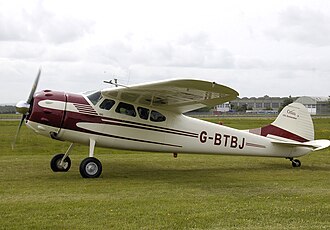
Cessna 195: A Complete Guide to the Classic Radial-Engine Aircraft
The Cessna 195 is one of the most distinctive and recognizable aircraft ever produced by the Cessna Aircraft Company. Known for its elegant appearance, powerful radial engine, spacious cabin, and impressive post-war engineering, this classic American aircraft occupies a special place in the history of general aviation. Introduced in the late 1940s, the Cessna 195 was designed during a period when private aviation was expanding rapidly and aircraft manufacturers were looking for new ways to make personal and business air travel more practical, comfortable, and accessible. Unlike many modern light aircraft that use horizontally opposed piston engines, the Cessna 195 features a large seven-cylinder radial engine mounted prominently at the front of its fuselage, giving it an unmistakable appearance and a personality that continues to attract aviation enthusiasts.
Often referred to as the Businessliner, the Cessna 195 was developed as a sophisticated personal and executive aircraft capable of transporting passengers over considerable distances while offering a level of comfort that was unusual for its category at the time. Its all-metal construction, high-wing configuration, spacious interior, and powerful engine made it suitable for both private and commercial applications. The aircraft was also notable for its engineering innovations, particularly its distinctive spring-steel landing gear, which became an important feature of Cessna’s post-war aircraft designs. Although production ended in the 1950s, the Cessna 195 has remained popular among vintage aircraft collectors, private pilots, restoration specialists, and aviation museums.
What makes the Cessna 195 particularly interesting is the way it combines traditional radial-engine technology with the practical design philosophy of a modern-for-its-era light aircraft. Its appearance reflects an earlier period of aviation, when large exposed engines, polished aluminum surfaces, and carefully crafted cabin interiors were common features of premium private aircraft. At the same time, its construction and operational characteristics demonstrate the progress that American aircraft manufacturers achieved during the years immediately following the Second World War. Understanding the Cessna 195 means exploring not only its technical specifications but also its development history, engine technology, aerodynamic design, passenger comfort, flight characteristics, maintenance requirements, military applications, and continuing importance in the vintage aviation community.
The History and Development of the Cessna 195
The Post-War Aviation Environment
The development of the Cessna 195 took place during an important period in American aviation history. Following the Second World War, aircraft manufacturers faced a rapidly changing market. Military production had created enormous advances in manufacturing techniques, materials, engines, and aircraft systems, while returning military personnel had introduced a large population of people familiar with aviation. At the same time, businesses increasingly recognized the potential of private aircraft for transportation, communication, and commercial operations.
Cessna identified an opportunity to develop an aircraft that would appeal to customers seeking something more substantial and comfortable than a basic training airplane. The company wanted to create a practical personal aircraft that could also serve business travelers who needed to visit customers, industrial facilities, regional offices, and other destinations without depending on commercial airline schedules. This concept required a combination of passenger capacity, useful range, reliable performance, and an interior that would provide a pleasant environment during longer journeys.
The result was the Model 190 and Model 195 family. These aircraft shared a similar overall design but used different engines. The Model 190 was powered by a Continental radial engine, while the Model 195 used a larger and more powerful Jacobs radial engine. The distinction allowed Cessna to offer customers two closely related aircraft with different performance characteristics while benefiting from a largely common airframe design.
Introduction and Production
The Cessna 195 entered the market in 1947 and remained in production until 1954. It was introduced as a premium single-engine aircraft with a strong emphasis on business and personal transportation. During its production period, the aircraft underwent several refinements, resulting in different versions and configurations that reflected improvements in engines, aerodynamics, and equipment.
The aircraft was marketed as the Businessliner, a name that clearly communicated its intended role. Cessna wanted potential customers to understand that the aircraft was not simply a recreational machine but a practical tool for professional transportation. Its cabin, seating arrangement, baggage accommodation, and cruising performance were intended to make it useful for business owners and executives who needed to travel regularly.
The broader Model 190 and 195 family achieved a notable level of commercial success for its era. The Deutsches Museum reports that 890 examples of the Cessna 195 type were built between 1947 and 1954. Production figures for the entire 190/195 family vary according to whether military derivatives and prototypes are included, but the aircraft became one of Cessna’s most recognizable post-war designs. Its continued presence in museums and private collections demonstrates the lasting appeal of its engineering and styling.
The Evolution of the 195A and 195B
The original Cessna 195 was followed by later versions that introduced changes to the aircraft’s equipment and powerplant. The 195A and 195B developments helped maintain the model’s competitiveness as the aviation market evolved.
These later versions incorporated refinements to areas such as the tail surfaces, flaps, engine installation, and exterior details. Engine configurations and rated power varied between versions, so it is important to distinguish the original 300-horsepower Cessna 195 from later aircraft when discussing technical specifications.
The improvements were intended to preserve the aircraft’s fundamental identity while making it more capable and attractive to potential buyers. The basic high-wing configuration, spacious cabin, and distinctive radial-engine appearance remained central characteristics throughout the production history.
Exterior Design and Aircraft Construction
A Distinctive High-Wing Configuration
One of the most recognizable characteristics of the Cessna 195 is its high-wing configuration. The wing is positioned above the fuselage, creating a traditional aircraft profile that provides several practical advantages. The arrangement offers passengers a relatively unobstructed view from the cabin windows and provides the pilot with useful visibility during many phases of flight.
The high-wing layout also places the wing structure above the main cabin, allowing the interior to benefit from a relatively open arrangement. This was particularly important for an aircraft intended to accommodate business travelers and passengers who expected a more comfortable environment than that found in basic light aircraft.
Unlike many high-wing aircraft that use external wing-support struts, the Cessna 195 features a cantilever wing design. This means that the wing is supported internally by its structure rather than by conventional external bracing struts. The arrangement creates a cleaner exterior appearance and reflects the aircraft’s more sophisticated construction philosophy.
All-Metal Airframe Construction
The Cessna 195 was built using an all-metal airframe, an important characteristic for an aircraft developed during the post-war period. Its structure incorporates an aluminum fuselage and wing construction designed to provide strength while keeping the overall aircraft weight within practical limits.
The fuselage uses a semi-monocoque construction philosophy, in which the external skin works together with internal structural elements to carry flight loads. This type of construction was widely used in aircraft manufacturing because it provided a favorable combination of structural strength, durability, and weight efficiency.
The metal construction also contributes to the aircraft’s long-term restoration potential. Many surviving examples have been carefully maintained, refurbished, and returned to flying condition. Nevertheless, age-related issues such as corrosion, previous repairs, structural damage, and fatigue must be considered when evaluating an individual aircraft.
The Iconic Radial Engine Appearance
The large radial engine mounted at the front of the Cessna 195 is arguably its most recognizable visual feature. Unlike modern light aircraft with streamlined engine cowlings and relatively compact piston engines, the Cessna 195 has a prominent radial powerplant that gives it a powerful and traditional appearance.
The engine is positioned at the front of the aircraft and drives a two-bladed propeller. Its distinctive circular arrangement of cylinders and prominent exhaust components create the visual identity that makes the Cessna 195 immediately recognizable at vintage aircraft gatherings and airshows.
The radial engine is not simply an aesthetic feature. Its relatively high power output for the aircraft’s size contributes directly to the Cessna 195’s performance and gives it the ability to carry passengers and baggage over useful distances. Its sound, mechanical character, and operating procedures are also part of the experience that makes flying this aircraft different from flying a conventional modern light airplane.
The Famous Spring-Steel Landing Gear
Another important feature of the Cessna 195 is its distinctive fixed landing gear. The aircraft uses a conventional tailwheel arrangement, with two main wheels and a smaller tailwheel at the rear. Its main landing gear incorporates spring-steel legs that absorb landing loads through controlled flexing.
This landing gear design became particularly associated with Cessna aircraft and represents an important engineering characteristic of the company’s post-war product development. Rather than relying on a more complicated system of conventional shock absorbers, the spring-steel structure provides a relatively simple and durable method of absorbing landing forces.
The tailwheel configuration also contributes to the aircraft’s classic appearance and traditional ground-handling characteristics. However, it requires pilots to understand the differences between conventional-gear and tricycle-gear aircraft. Ground handling, crosswind operations, and directional control during landing require appropriate training and experience.
Engine and Propulsion System
The Jacobs R-755 Radial Engine
The original Cessna 195 is powered by the Jacobs R-755-A2 seven-cylinder radial engine, producing approximately 300 horsepower. This engine is one of the defining elements of the aircraft and was selected to provide the power necessary for its intended business and personal transportation missions.
Radial engines operate differently from the horizontally opposed engines commonly found in modern light aircraft. In a radial engine, the cylinders are arranged around a central crankcase, with each cylinder positioned at an angle to the others. This arrangement creates a compact engine package with a relatively large frontal area and a distinctive mechanical appearance.
The Jacobs R-755 was well suited to an aircraft of the Cessna 195’s size and weight. Its power output allowed the aircraft to achieve useful cruising speeds while maintaining sufficient performance for takeoff, climbing, and carrying passengers. The engine’s seven-cylinder configuration also contributed to its characteristic sound and smooth operating qualities when properly maintained.
Radial Engine Operating Characteristics
Operating a radial-engine aircraft requires an understanding of several characteristics that distinguish it from more conventional light aircraft. Engine management, oil consumption, temperature monitoring, starting procedures, and lubrication requirements are particularly important.
Radial engines generally have a different oil-management profile from horizontally opposed piston engines. Their design and lubrication arrangements require pilots and maintenance personnel to follow the appropriate procedures carefully. Before starting, the engine must be checked for conditions that could indicate oil accumulation in a lower cylinder, a phenomenon commonly associated with radial engines and known as hydraulic lock.
Proper engine handling is essential for preserving the condition of the powerplant. Pilots must follow the manufacturer’s recommended starting, warm-up, operating, and shutdown procedures. Temperature management is also important because radial engines rely on effective airflow through the engine cooling system.
Propeller System
The Cessna 195 uses a two-bladed Hamilton Standard constant-speed propeller. Unlike a fixed-pitch propeller, a constant-speed system automatically or manually adjusts blade pitch to maintain a selected rotational speed within its operating limits.
This arrangement allows the engine and propeller to operate efficiently across different flight conditions. During takeoff, the propeller can provide the blade angle needed for strong acceleration, while during cruise it can adjust to support efficient forward flight.
The propeller system is an important part of the aircraft’s overall performance. Proper maintenance of the blades, hub, governor, and associated components is necessary to ensure reliable operation and maintain the aircraft’s approved airworthiness condition.
Cabin Design and Passenger Comfort
A Spacious Interior for Its Era
The Cessna 195 was designed to provide a comfortable cabin environment for passengers, distinguishing it from many simpler aircraft of the late 1940s. Its interior was one of the central selling points of the Businessliner concept, as Cessna wanted to attract customers who expected private air travel to provide more than basic transportation.
The cabin is relatively wide for a single-engine aircraft of its period, measuring approximately 46 inches in width in commonly published specifications. The interior arrangement allows for a practical passenger seating configuration and provides useful space for personal belongings and baggage.
Although the aircraft is commonly associated with four-passenger travel, its type certification provides for a maximum occupancy of five people, including the pilot. Actual seating and passenger arrangements depend on the aircraft’s approved configuration and individual weight-and-balance limitations.
The cabin was designed to make longer journeys more pleasant, with comfortable seating, large windows, and an interior layout that reflected the expectations of premium private aircraft customers. Compared with basic post-war trainers and utility aircraft, the Cessna 195 offered a noticeably more refined environment.
Visibility and Natural Lighting
The cabin windows are an important part of the Cessna 195’s design. They provide passengers with useful external visibility while allowing natural light to enter the interior. The high-wing configuration also creates a distinctive viewing experience, particularly during sightseeing flights and journeys over scenic landscapes.
For pilots, visibility is an important operational consideration. The aircraft’s high-wing layout and cockpit arrangement provide useful forward and side visibility, although the large radial engine and conventional landing gear configuration influence sightlines during certain ground operations.
The aircraft’s traditional cockpit design reflects the technology available during its production period. Modern pilots accustomed to digital displays and sophisticated avionics may find the original instrument panel relatively simple, but it provides the essential information needed to operate the aircraft within its approved flight envelope.
Baggage Capacity and Practicality
The Cessna 195 was designed with business travel in mind, and its baggage compartment is an important part of that philosophy. The aircraft provides dedicated storage space for passenger luggage and equipment, with commonly published baggage limits reaching approximately 220 pounds, subject to the applicable configuration and loading restrictions.
For an aircraft of its era, this was a useful feature because business travelers often needed to carry documents, personal luggage, and equipment for their professional activities. The baggage compartment also made the aircraft practical for recreational journeys and longer private trips.
As with all aircraft, the actual amount of baggage that can be carried depends on passenger weight, fuel load, aircraft empty weight, and the approved center-of-gravity limits. Pilots must calculate the weight and balance for every flight rather than relying on nominal baggage capacity alone.
Flight Performance and Handling Characteristics
Cruising Speed and Maximum Performance
The Cessna 195 offers impressive performance for a post-war single-engine aircraft. Depending on the particular model, engine installation, and operating conditions, published cruising speeds are generally in the region of 140 to 160 miles per hour.
The original 300-horsepower version is commonly associated with a maximum speed of approximately 180 miles per hour under specified conditions. These figures demonstrate the benefits of combining a relatively powerful radial engine with an aerodynamic all-metal airframe.
Cruising performance is influenced by altitude, aircraft weight, atmospheric conditions, engine condition, propeller efficiency, and power settings. Pilots must use the appropriate performance information for their individual aircraft rather than assuming that every surviving Cessna 195 will achieve identical figures.
The aircraft’s cruising speed made it a useful business transportation platform during the late 1940s and early 1950s. It could connect regional destinations more efficiently than many conventional light aircraft, making it attractive to owners who valued flexibility and reduced travel time.
Range and Endurance
Range is another important characteristic of the Cessna 195. The aircraft is commonly listed with a standard fuel capacity of approximately 81 gallons, although usable fuel capacity and optional tank configurations can differ.
Published range figures are generally around 695 to 750 nautical miles, depending on the source, variant, power setting, and assumptions used for the calculation. These figures should be treated as reference values rather than guaranteed operational distances.
Actual range depends on the amount of fuel available, aircraft loading, cruise altitude, wind conditions, engine performance, and the fuel reserves required for the planned flight. A headwind can substantially reduce the distance covered over the ground, while a favorable tailwind can increase it.
For private owners, the aircraft’s range makes it suitable for regional transportation, cross-country recreational flights, and journeys between smaller airports. However, proper flight planning remains essential, particularly when operating over areas with limited diversion options.
Climbing Performance
The Cessna 195’s powerful radial engine gives it a useful rate of climb for its category. Commonly published figures place the initial rate of climb at approximately 1,100 to 1,200 feet per minute, although the exact value depends on the aircraft version and conditions.
Climb performance is affected by aircraft weight, temperature, pressure altitude, engine condition, and the selected climb speed. A heavily loaded aircraft operating in warm weather will generally climb less effectively than a lightly loaded aircraft under standard atmospheric conditions.
The ability to climb efficiently was particularly valuable for an aircraft intended to transport passengers and baggage. It helped the Cessna 195 operate from a wide range of regional airports while providing useful performance for private and business travel.
Takeoff and Landing Characteristics
The aircraft’s conventional landing gear gives it a different ground-handling personality from modern tricycle-gear aircraft. During takeoff, the pilot must manage directional control carefully as the aircraft accelerates and transitions into flight.
Landing also requires appropriate tailwheel technique. Pilots must maintain directional control during the rollout and be prepared for the aerodynamic and ground-handling effects that can influence conventional-gear aircraft in crosswinds.
The Cessna 195’s spring-steel landing gear helps absorb landing loads, but it does not eliminate the need for precise landing technique. Runway surface, wind direction, aircraft weight, and pilot experience all influence the quality and safety of a landing.
Although the aircraft is capable of operating from a variety of suitable airfields, runway requirements should always be calculated using the aircraft’s approved performance information. Historical brochure figures should not replace actual flight planning.
Cockpit, Instruments, and Aircraft Systems
Traditional Cockpit Design
The cockpit of the Cessna 195 reflects the aviation technology of the late 1940s and early 1950s. Its instrument panel uses traditional analog instruments to display essential flight and engine information, while mechanical controls provide the pilot with direct interaction with the aircraft’s systems.
The layout is relatively straightforward compared with modern glass-cockpit aircraft, but it requires pilots to understand the aircraft’s traditional instrumentation and operating procedures. Flight instruments, engine gauges, navigation equipment, and communication systems provide the information necessary for normal operation.
The original cockpit design also reflects the aircraft’s intended role as a private and business transportation platform. It was not designed primarily as a training aircraft, although its handling characteristics and mechanical systems provide valuable experience for pilots interested in vintage aviation.
Modern Avionics Upgrades
Many surviving Cessna 195 aircraft have received avionics improvements over the years. Depending on the aircraft, these modifications may include modern radios, GPS navigation equipment, transponders, updated flight instruments, and other approved systems.
These upgrades can make the aircraft more practical for contemporary operations, especially when flying in controlled airspace or operating under modern air traffic management requirements. However, avionics modifications must comply with the applicable certification and installation requirements.
A prospective buyer should examine the aircraft’s equipment list and maintenance documentation carefully. A recently upgraded instrument panel may improve convenience, but the quality of the installation, approval documentation, and ongoing maintenance support are equally important.
Military Service and Utility Applications
The Military Connection
Although the Cessna 195 was primarily designed for civilian use, the wider Model 190/195 family also attracted military interest. Its relatively simple single-engine configuration, useful payload, and ability to operate from smaller airfields made it suitable for selected military support roles.
Military versions of the family were used by the United States armed services under designations including UC-126 and LC-126. These aircraft were employed for utility and liaison duties, including transportation and support missions.
The military connection illustrates the versatility of the basic design. An aircraft originally marketed as a premium business and personal machine could also provide practical services in environments where straightforward transportation and operational flexibility were important.
Utility and Liaison Operations
Liaison aircraft are used to move personnel, messages, equipment, and other essential materials between locations. They generally need to combine reliable performance with the ability to operate from a variety of airfields.
The Cessna 195’s high-wing design, fixed landing gear, and radial engine made it a suitable platform for selected utility operations. Its cabin could accommodate passengers and equipment, while its relatively compact dimensions allowed it to operate from smaller airports than those required by larger military transport aircraft.
These applications helped demonstrate that the Cessna 195 was more than an executive aircraft. Its engineering characteristics gave it a useful degree of versatility, contributing to its historical significance.
The Cessna 195 in Modern Aviation
A Popular Vintage Aircraft
Today, the Cessna 195 is primarily appreciated as a vintage aircraft and classic example of post-war American aviation engineering. It is particularly popular among collectors and pilots who enjoy traditional aircraft with radial engines and conventional landing gear.
Its appearance makes it a regular attraction at vintage aviation gatherings, fly-ins, and airshows. The large radial engine, polished metal surfaces, and elegant high-wing design give it a distinctive presence among both historic and modern aircraft.
For aviation enthusiasts, flying a Cessna 195 offers an experience that differs significantly from operating a contemporary light aircraft. The sound and behavior of the radial engine, the traditional cockpit environment, and the tailwheel landing gear all contribute to its historic character.
Restoration and Preservation
Preserving a Cessna 195 requires considerable technical knowledge, financial resources, and access to suitable maintenance expertise. Because the aircraft is several decades old, restoration projects often involve more than cosmetic improvements.
A comprehensive restoration may include structural inspections, corrosion treatment, engine overhaul, propeller servicing, landing gear refurbishment, interior reconstruction, electrical system improvements, and replacement of worn components.
The availability of original parts and specialist expertise is an important consideration. Owners frequently rely on experienced vintage aircraft maintenance organizations and specialist communities to locate components and maintain historical accuracy.
Restoration quality can have a major influence on the aircraft’s value and long-term operating prospects. A carefully restored example with complete documentation may be considerably more attractive than an aircraft requiring extensive structural or mechanical work.
The Vintage Aviation Community
The Cessna 195 has developed a dedicated following among aircraft owners and enthusiasts. Specialist clubs and owner organizations provide opportunities to exchange maintenance knowledge, discuss restoration projects, organize gatherings, and share information about aircraft operation.
These communities are particularly valuable for owners of older aircraft because experience from other operators can help identify maintenance considerations and locate specialist support.
The aircraft’s relatively limited production period and distinctive engineering features also make it an interesting subject for aviation historians. Its story provides insight into how Cessna approached the private aircraft market during the post-war period and how customer expectations influenced aircraft design.
Advantages of the Cessna 195
Distinctive Design and Historical Character
The Cessna 195 has one of the most recognizable appearances among classic American single-engine aircraft. Its radial engine, cantilever high wing, polished metal surfaces, and conventional landing gear create a combination that is difficult to confuse with other aircraft.
For collectors and vintage aviation enthusiasts, this visual identity is an important part of its appeal. The aircraft represents a period when manufacturers placed considerable emphasis on distinctive styling and traditional mechanical engineering.
Strong Radial Engine Performance
The Jacobs radial engine provides substantial power for an aircraft of this size and period. Its approximately 300-horsepower original configuration gives the Cessna 195 useful performance for passenger transportation and cross-country flying.
The radial engine is also valued by enthusiasts for its mechanical character and historical significance. Its operation requires specialized knowledge, but for owners who appreciate traditional aviation engineering, it is one of the aircraft’s most attractive features.
Comfortable Cabin
The Cessna 195 offers a spacious interior for its class and production period. Its passenger accommodation and baggage capacity were designed to support business and private travel rather than simply basic transportation.
This practical approach helped establish its reputation as the Businessliner. Even today, its cabin arrangement remains an important part of the aircraft’s identity.
All-Metal Construction
The aircraft’s all-metal construction provides a solid structural foundation and supports long-term preservation when appropriate maintenance is performed. Its design also offers restoration specialists an established airframe structure with a substantial history of operational experience.
However, the aircraft’s age means that inspections for corrosion, fatigue, and previous repairs remain essential.
Disadvantages and Ownership Considerations
Age and Maintenance Complexity
The Cessna 195 is a vintage aircraft, and its age creates maintenance considerations that are less common with newer general aviation designs. Components may require specialist inspection, original parts may be difficult to obtain, and some maintenance tasks demand experience with radial-engine aircraft.
Owners should be prepared for a more specialized maintenance environment than that associated with a modern training aircraft. A detailed review of the airframe, engine, propeller, landing gear, and maintenance history is essential before purchasing an example.
Radial Engine Operating Costs
Radial engines can require more specialized maintenance than many modern horizontally opposed aircraft engines. Oil management, engine temperature monitoring, cylinder condition, ignition components, and other mechanical considerations require careful attention.
The cost of operating the aircraft depends heavily on the condition of the engine and the availability of qualified maintenance providers. Engine overhaul planning is particularly important because an older aircraft may have components approaching their approved inspection or replacement limits.
Tailwheel Handling Requirements
The Cessna 195’s conventional landing gear provides an authentic vintage flying experience, but it also requires appropriate pilot training and experience. Tailwheel aircraft can demand more attention during ground operations, particularly in crosswinds and during landing rollouts.
Pilots transitioning from tricycle-gear aircraft should obtain suitable instruction before operating the Cessna 195 independently. The aircraft’s historical character should never distract from the importance of proper training and operating discipline.
Limited Availability
Because production ended in 1954, the Cessna 195 is no longer available as a new aircraft. Buyers must search the pre-owned vintage aircraft market, where examples vary considerably in condition, equipment, restoration quality, and documentation.
The aircraft’s limited availability can make finding a suitable example challenging. Prospective owners should prioritize maintenance history and structural condition rather than selecting an aircraft solely because of its appearance or asking price.
Buying a Used Cessna 195
Evaluating the Airframe
A pre-purchase inspection is essential when considering a used Cessna 195. The aircraft’s age means that its structural history, previous repairs, and exposure to different operating environments can have a significant influence on its condition.
The inspection should include the fuselage, wings, control surfaces, landing gear, attachment points, fuel system, and other structural areas. Corrosion and poorly documented repairs deserve particular attention.
The aircraft’s logbooks and maintenance records should be reviewed alongside the physical inspection. A complete and consistent history can help buyers understand how the aircraft has been maintained and whether important inspections or repairs have been completed.
Evaluating the Engine
The Jacobs radial engine is one of the most important factors in determining the aircraft’s operating condition and financial value. Buyers should examine the engine’s maintenance history, overhaul documentation, component condition, and any available inspection reports.
An engine that has recently received professional attention may be more attractive than one with uncertain maintenance records, even if both aircraft appear similar externally.
A qualified specialist familiar with Jacobs radial engines should be involved in the evaluation. This is particularly important because radial engines have operating and maintenance characteristics that may not be fully understood by mechanics who primarily work on modern light aircraft.
Ownership Costs and Financial Planning
The purchase price of a vintage aircraft represents only one part of its financial commitment. Owners must also consider insurance, hangar space, fuel, maintenance, inspections, engine reserves, propeller servicing, and unexpected repairs.
Restoration expenses can be substantial, particularly when an aircraft requires structural work or a major engine overhaul. Prospective buyers should therefore establish a realistic budget before purchasing and avoid assuming that a low initial price necessarily represents good long-term value.
For many owners, the Cessna 195 is a passion-driven purchase rather than the most economical method of transportation. Its historical character, distinctive appearance, and enjoyable flying experience are important parts of the ownership proposition.
Cessna 195 Compared With the Cessna 190
The Cessna 190 and Cessna 195 belong to the same aircraft family and share many design characteristics. Both use an all-metal high-wing configuration, conventional landing gear, and a spacious cabin intended for private and business transportation.
The primary difference is the engine installation. The Model 190 uses a Continental W-670 radial engine, while the original Model 195 uses the larger Jacobs R-755-A2 engine. The difference in power contributes to the distinction between the two models.
The Cessna 195’s stronger engine helped establish its reputation as the more powerful member of the family. Its performance characteristics and distinctive radial-engine installation also contributed to its appeal among customers looking for a premium personal aircraft.
Although the two models share much of their engineering philosophy, buyers and enthusiasts should remember that engine specifications, maintenance requirements, and individual aircraft modifications can differ considerably.
The Legacy of the Cessna 195
The Cessna 195 represents an important period in the development of general aviation. It demonstrates how aircraft manufacturers responded to the growing demand for comfortable, capable private aircraft following the Second World War.
Its combination of radial-engine power, all-metal construction, a cantilever high wing, and spring-steel landing gear made it a distinctive design. It also demonstrated that a single-engine aircraft could provide a level of comfort and performance suitable for executive transportation and longer private journeys.
Although the aviation industry eventually moved toward smaller horizontally opposed engines, more modern cockpit systems, and increasingly efficient aerodynamic configurations, the Cessna 195 retained a special place in aviation history. Its unusual combination of traditional engineering and practical passenger accommodation has helped it remain desirable among vintage aircraft enthusiasts.
The aircraft’s lasting reputation is also reflected in the dedication of owners who continue to maintain and restore surviving examples. Every carefully preserved Cessna 195 provides a connection to an important chapter in American aviation history and demonstrates the long-term value of thoughtful aircraft engineering.
Conclusion
The Cessna 195 is much more than an old single-engine aircraft. It is a symbol of post-war American aviation development and an example of how manufacturers combined performance, comfort, and traditional mechanical engineering to create a premium personal transportation aircraft. Its powerful Jacobs radial engine, elegant high-wing configuration, spacious cabin, and distinctive spring-steel landing gear make it one of the most recognizable aircraft of its generation.
Introduced in 1947, the Cessna 195 served private owners, business travelers, and selected military operators during an important period of aviation expansion. Its performance made it useful for regional transportation, while its interior design helped establish the Businessliner identity. Although production ended in 1954, the aircraft’s reputation has continued through the efforts of collectors, pilots, restoration specialists, and aviation organizations.
In today’s aviation environment, the Cessna 195 is primarily valued as a classic aircraft rather than a modern economical transportation solution. Its maintenance requirements, age, and specialized engine technology mean that ownership requires careful planning and appropriate technical expertise. Nevertheless, for those who appreciate vintage aircraft and traditional radial-engine performance, the Cessna 195 remains an exceptional example of American aircraft design.
Its enduring popularity demonstrates that an aircraft’s historical importance is not measured solely by its production numbers or technical performance. Character, engineering originality, passenger comfort, and the experiences associated with flying all contribute to its legacy. The Cessna 195 continues to represent an era when private aviation was developing a new identity, combining the practicality of business transportation with the craftsmanship and individuality of classic aircraft design.
Cessna 195 Technical Specifications
The following table presents commonly published specifications for the original Cessna 195. Some figures vary between the original model and later 195A and 195B versions, as well as between individual aircraft with different equipment and modifications.
| Technical specification | Cessna 195 |
|---|---|
| Manufacturer | Cessna Aircraft Company |
| Country of manufacture | United States |
| Aircraft category | Single-engine general aviation aircraft |
| Aircraft type | Personal and business aircraft |
| Production years | 1947–1954 |
| Engine | Jacobs R-755-A2 |
| Engine configuration | Seven-cylinder radial piston engine |
| Engine power | Approximately 300 hp |
| Propeller | Hamilton Standard, two-blade, constant-speed |
| Crew | 1 pilot |
| Maximum certified occupancy | 5 people |
| Typical passenger accommodation | 4 passengers |
| Length | 27 ft 4 in (8.33 m) |
| Wingspan | 36 ft 3 in (11.05 m) |
| Height | Approximately 7 ft 2 in (2.18 m) |
| Wing area | 218 sq ft (20.25 m²) |
| Empty weight | Approximately 2,168 lb (983 kg) |
| Maximum gross weight | 3,350 lb (1,520 kg) |
| Useful load | Approximately 1,182 lb (536 kg) |
| Fuel capacity | Approximately 81 US gal (307 L) |
| Usable fuel | Approximately 75 US gal (284 L) |
| Maximum speed | Approximately 180 mph (290 km/h) |
| Typical cruising speed | Approximately 143–160 mph (230–257 km/h) |
| Maximum range | Approximately 695–750 nautical miles (1,287–1,389 km) |
| Initial rate of climb | Approximately 1,135 ft/min (5.77 m/s) |
| Service ceiling | Approximately 18,300 ft (5,578 m) |
| Landing gear | Fixed conventional tailwheel |
| Wing configuration | High-wing cantilever monoplane |
| Construction | All-metal |
| Main landing gear | Spring-steel legs |
| Baggage capacity | Up to approximately 220 lb (100 kg), subject to configuration |
Technical note: These specifications are representative reference figures, not guaranteed performance figures for every surviving aircraft. The 195A and 195B have different engine and equipment configurations. Actual performance and operating limitations must be verified using the individual aircraft’s approved documentation and flight manual.
