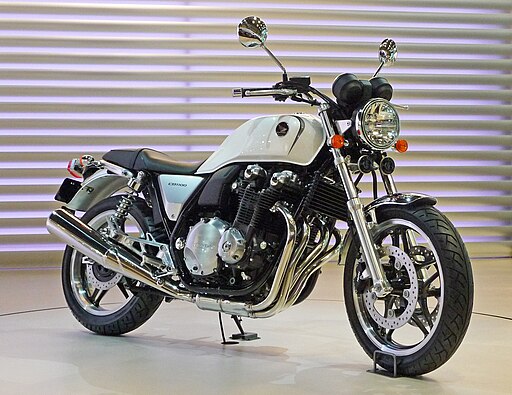
The Honda CB1100 is a modern classic motorcycle that pays homage to the legendary CB series of the 1970s while integrating contemporary engineering and refinement. Introduced in 2010, the CB1100 was Honda’s tribute to its own heritage—a blend of timeless styling and modern technology. With its air-cooled inline-four engine, retro-inspired design, and smooth, predictable power delivery, the CB1100 became a symbol of Honda’s craftsmanship and dedication to mechanical purity in the age of electronics and plastic fairings.
Designed to evoke the spirit of the original CB750 Four, the CB1100 reinterprets the traditional UJM (Universal Japanese Motorcycle) formula for the modern era. It is an embodiment of balance—neither overly aggressive nor minimalist, but instead, a harmonious machine engineered for enjoyment, reliability, and authenticity.
Design Philosophy
The development of the CB1100 was guided by three core principles: heritage, craftsmanship, and usability. Honda engineers sought to create a motorcycle that captured the soul of the early CB series while incorporating the precision and performance expected from a 21st-century machine.
Unlike most modern motorcycles, the CB1100 was designed largely by hand, with meticulous attention to detail. The aluminum side covers, chrome fenders, steel fuel tank, and round headlight recall the aesthetics of the classic CBs from the 1970s and 1980s. Every component was engineered to convey a sense of solidity and mechanical honesty—elements that appeal to purists who appreciate the feel of real metal and the rhythm of an air-cooled engine.
Engine and Performance
At the heart of the CB1100 lies an 1,140 cc air- and oil-cooled inline-four engine—a rare configuration in the modern motorcycle landscape, where liquid cooling has become the norm. This engine was developed specifically for the CB1100, designed to deliver linear, torque-rich performance rather than outright speed.
-
Engine Type: Air- and oil-cooled, 4-stroke, inline-four, DOHC, 16-valve
-
Displacement: 1,140 cc
-
Bore x Stroke: 73.5 mm × 67.2 mm
-
Compression Ratio: 9.5:1
-
Fuel System: PGM-FI (Programmed Fuel Injection)
-
Ignition System: Digital transistorized ignition
-
Maximum Power Output: Approximately 88 hp (66 kW) at 7,500 rpm
-
Maximum Torque: Approximately 91 Nm (67 lb-ft) at 5,000 rpm
The CB1100’s character is defined by its broad torque curve, smooth revving nature, and classic exhaust note. Unlike modern superbikes, which chase peak power, the CB1100 emphasizes real-world usability, offering instant throttle response and effortless acceleration across the rev range.
Honda employed a four-into-one stainless steel exhaust system tuned for both performance and tone. The result is a rich, mellow sound that reinforces the bike’s classic personality without excessive noise.
Transmission and Drivetrain
The CB1100 was initially launched with a 5-speed gearbox, but later versions, including the CB1100EX and CB1100RS, featured a 6-speed transmission to improve cruising comfort and fuel efficiency. The transmission complements the engine’s smooth torque delivery, offering light clutch action and precise gear shifts.
-
Transmission: 5-speed (early models) / 6-speed (later models)
-
Clutch Type: Wet, multi-plate hydraulic
-
Final Drive: O-ring chain
The ratios were designed for relaxed, low-RPM cruising as well as responsive acceleration when needed. The sixth gear acts as an overdrive, reducing engine noise and vibration during highway riding.
Chassis and Frame Construction
The CB1100’s chassis architecture combines traditional design with modern rigidity. It uses a tubular steel double-cradle frame, reminiscent of classic CB motorcycles but optimized through computer-aided design for improved stiffness and stability.
-
Frame Type: Tubular steel double cradle
-
Rake (Caster Angle): 27°
-
Trail: 114 mm
-
Wheelbase: 1,490 mm
The frame’s geometry ensures balanced handling—stable at speed yet agile in urban environments. Its weight distribution and low center of gravity make the CB1100 approachable for riders of all skill levels.
Suspension System
Honda equipped the CB1100 with a traditional suspension setup that matches its retro appeal while maintaining modern ride quality.
-
Front Suspension: 41 mm conventional telescopic forks, preload adjustable
-
Rear Suspension: Twin Showa shock absorbers, adjustable for preload
-
Front Wheel Travel: 120 mm
-
Rear Wheel Travel: 114 mm
This suspension tuning provides a comfortable, compliant ride on rough roads while retaining enough firmness for spirited cornering. Later versions such as the CB1100RS received upgraded suspension components, including stiffer forks and higher-performance rear shocks for more aggressive handling.
Braking System and Wheels
Safety and control were enhanced through a capable braking system and lightweight cast wheels.
-
Front Brakes: Dual 296 mm floating discs with four-piston calipers
-
Rear Brake: Single 256 mm disc with single-piston caliper
-
ABS: Standard on most models (depending on region and year)
-
Front Tire: 110/80 R18 (CB1100EX) or 120/70 ZR17 (CB1100RS)
-
Rear Tire: 140/70 R18 (CB1100EX) or 180/55 ZR17 (CB1100RS)
The CB1100EX featured spoked wheels, further emphasizing its classic aesthetic, while the RS version came with 17-inch cast aluminum wheels for sportier handling.
Electrical System and Instrumentation
The CB1100’s instrumentation strikes a perfect balance between retro styling and modern functionality. The dual analog gauges—for speed and engine RPM—are complemented by a digital display providing information such as fuel level, gear position, and trip data.
-
Electrical System: 12V DC
-
Battery Capacity: 12V, 11.2Ah
-
Lighting: Round halogen headlight (later models featured LED units)
The attention to detail in the instrument cluster and switchgear highlights Honda’s focus on quality and tactile experience.
Dimensions and Weight
-
Overall Length: 2,200 mm
-
Overall Width: 830 mm
-
Overall Height: 1,130 mm
-
Wheelbase: 1,490 mm
-
Seat Height: 795 mm
-
Ground Clearance: 135 mm
-
Curb Weight: 248–255 kg (depending on variant)
-
Fuel Tank Capacity: 17.5 liters (CB1100) / 16.8 liters (CB1100RS)
While not lightweight, the CB1100’s weight contributes to its planted, stable ride, giving it a sense of solid, old-school road presence.
Variants and Model Evolution
Over its production life, Honda released several variants of the CB1100, each emphasizing different aspects of the platform:
-
CB1100 (2010–2013): The original model featuring a 5-speed gearbox and classic styling.
-
CB1100EX (2014–2021): Featured wire-spoked wheels, chrome details, a 6-speed transmission, and a refined exhaust system for enhanced classic appeal.
-
CB1100RS (2017–2021): Sportier version with lower handlebars, 17-inch wheels, upgraded suspension, and a slightly more aggressive riding position.
All versions shared the same fundamental engine and frame, offering variations in style and ergonomics rather than major mechanical differences.
Performance and Riding Experience
The CB1100 delivers a smooth, linear, and engaging riding experience that rewards finesse over aggression. The engine’s broad torque spread makes it ideal for relaxed riding, while its excellent balance and chassis stability inspire confidence through corners.
Vibration is minimal thanks to Honda’s precision balancing, and the throttle response is predictable, making the CB1100 suitable for both newcomers and seasoned riders seeking a refined, retro experience.
Although its 250 kg weight prevents it from feeling razor-sharp, the CB1100 excels in delivering a composed, enjoyable ride—especially in urban or scenic touring conditions where comfort and character matter more than lap times.
Legacy and Impact
The Honda CB1100 represents more than a motorcycle—it embodies a philosophy. In a market saturated with electronics and digital complexity, the CB1100 stood as a celebration of mechanical authenticity, reminding riders of an era when motorcycles were defined by craftsmanship and emotional connection.
It revived Honda’s classic four-cylinder spirit in a modern context and demonstrated that elegance, reliability, and nostalgia could coexist without compromise.
Although discontinued in most regions by 2021, the CB1100 remains a beloved collector’s motorcycle and a benchmark for retro-modern design.
Conclusion
The Honda CB1100 is a masterpiece of balance—a motorcycle that bridges generations. It honors the mechanical purity of Honda’s golden age while delivering modern-day refinement, reliability, and usability.
With its air-cooled inline-four engine, handcrafted styling, and impeccable engineering, the CB1100 stands as one of the finest modern interpretations of the classic UJM. It is not just a motorcycle; it is a mechanical time capsule, offering riders a pure connection to the open road and to the enduring legacy of Honda’s engineering excellence.
