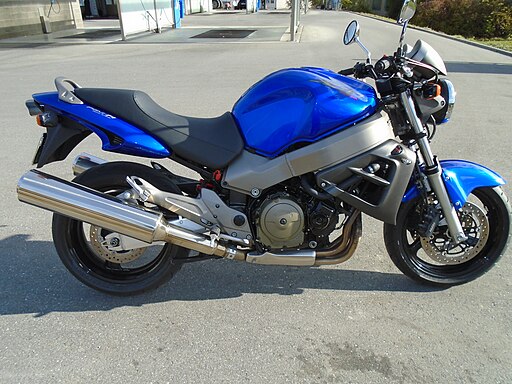
The Honda X11, also known in some markets as the CB1100SF X-11, was Honda’s bold foray into the high-performance naked bike segment at the turn of the millennium. Produced between 1999 and 2001, this motorcycle combined the brute power of the CBR1100XX Super Blackbird with a minimalist, muscular design intended for riders seeking superbike performance in a more versatile, street-oriented form.
With its advanced aerodynamics, innovative cooling system, and distinctive styling, the X11 was more than just a stripped-down superbike—it was an engineering statement that blended technological sophistication with raw mechanical strength.
Development and Design Philosophy
Honda developed the X11 during a period when the “super naked” category was rapidly gaining popularity. European markets, in particular, demanded bikes that offered superbike performance without the full fairings—machines that could deliver both comfort and aggression on open roads.
Rather than designing an entirely new motorcycle, Honda engineers took the CBR1100XX Super Blackbird—then the world’s fastest production bike—and reimagined it as a streetfighter. The result was a machine with similar power delivery and stability, but tuned for better low- and mid-range response and more accessible handling characteristics.
A major design goal was rider control and usability. The X11 featured upright ergonomics, a reinforced chassis, and advanced aerodynamics integrated into its radiator shrouds. It was not merely a detuned superbike; it was a purpose-built performance street machine designed for precision handling and comfort.
Engine and Performance
At the heart of the X11 lies a 1,137 cc inline-four engine, derived directly from the CBR1100XX Super Blackbird. Although the X11 shared the same bore and stroke dimensions, Honda retuned the powerplant to deliver more usable torque across the rev range, enhancing its street performance and eliminating the extreme top-end focus of the Blackbird.
-
Engine Type: 4-stroke, inline-four, liquid-cooled, DOHC, 16 valves
-
Displacement: 1,137 cc
-
Bore x Stroke: 79.0 mm × 58.0 mm
-
Compression Ratio: 11.0:1
-
Fuel System: PGM-FI electronic fuel injection
-
Ignition System: Digital transistorized ignition with 3D mapping
-
Maximum Power Output: Approx. 140 hp (105 kW) at 9,000 rpm
-
Maximum Torque: Approx. 116 Nm (85 lb-ft) at 7,000 rpm
The engine featured fuel injection rather than carburetors, ensuring precise throttle response and efficient combustion. Power delivery was smooth yet forceful, allowing the X11 to accelerate rapidly from any gear. The top speed exceeded 250 km/h (155 mph), placing it among the most powerful naked bikes of its era.
Transmission and Drivetrain
The X11 employed a 6-speed constant mesh gearbox, carried over from the Blackbird but optimized for smoother midrange performance. Its wet multi-plate clutch offered excellent feel and durability under both urban and sport-riding conditions.
-
Transmission: 6-speed manual
-
Clutch Type: Wet, multi-plate hydraulic
-
Final Drive: O-ring chain
Gear ratios were tuned to complement the engine’s torque curve, allowing strong acceleration without constant shifting, while maintaining relaxed cruising capability at highway speeds.
Chassis and Frame Construction
To manage the engine’s power, Honda designed a dual-spar aluminum backbone frame, which provided exceptional rigidity and torsional strength. The geometry was adjusted from the Blackbird to deliver sharper steering and improved low-speed maneuverability.
-
Frame Type: Aluminum twin-spar backbone
-
Rake (Caster Angle): 25°
-
Trail: 99 mm
-
Wheelbase: 1,490 mm
The chassis was complemented by a refined suspension setup, ensuring stability during high-speed riding and agility through corners.
Suspension System
Honda equipped the X11 with a suspension system that balanced sport performance and road comfort.
-
Front Suspension: 43 mm conventional telescopic forks, preload adjustable
-
Rear Suspension: Monoshock with adjustable preload and rebound damping
-
Front Wheel Travel: 120 mm
-
Rear Wheel Travel: 130 mm
This setup provided a firm yet compliant ride, capable of absorbing road imperfections while maintaining precision during spirited riding.
Braking and Wheels
The braking system on the X11 was engineered to match its power. Honda used a dual front disc setup with large 310 mm floating rotors and powerful four-piston calipers, paired with a single 256 mm rear disc.
-
Front Brakes: Dual 310 mm discs with 4-piston Nissin calipers
-
Rear Brake: Single 256 mm disc with single-piston caliper
-
Front Tire: 120/70 ZR17
-
Rear Tire: 180/55 ZR17
-
Wheels: Lightweight cast aluminum alloy
A distinctive feature was Honda’s Dual Combined Braking System (DCBS), which linked the front and rear brakes to ensure balanced deceleration and enhanced control, particularly under heavy braking conditions.
Aerodynamics and Cooling System
One of the most innovative aspects of the X11 was its aerodynamic radiator shroud, designed to manage airflow around the engine and rider. Unlike typical naked bikes, which rely purely on airflow exposure, the X11 featured integrated ducting that directed cool air through the radiator while venting warm air away from the rider.
This system, dubbed the Direct Airflow Cooling System (DACS), reduced aerodynamic drag and improved engine cooling efficiency at high speeds. It also gave the X11 its distinctive “shoulder” appearance, a signature design element that set it apart from competitors.
Dimensions and Weight
Despite its large displacement, the X11 maintained a balanced mass distribution and compact proportions.
-
Overall Length: 2,160 mm
-
Overall Width: 720 mm
-
Overall Height: 1,170 mm
-
Wheelbase: 1,490 mm
-
Seat Height: 795 mm
-
Dry Weight: Approx. 223 kg
-
Wet Weight: Approx. 252 kg
-
Fuel Tank Capacity: 22 liters
The bike’s ergonomics were tuned for comfort, featuring a slightly forward-leaning posture, wide handlebars, and a supportive saddle suitable for long rides.
Electrical and Instrumentation
The X11 employed a 12V electrical system with a powerful alternator designed to support modern accessories and lighting. The instrumentation combined analog and digital displays, including a large tachometer and digital speedometer, fuel gauge, and trip computer.
A distinctive safety feature was the self-diagnosis function integrated into the ECU, alerting riders to any electrical or fuel-injection faults.
Performance and Handling
In real-world conditions, the X11’s performance was both explosive and refined. The torque-rich engine allowed seamless overtakes without frequent downshifting, while the chassis delivered confident cornering stability. The bike’s mass was well-balanced, and its aerodynamic bodywork reduced wind buffeting—a rarity among naked bikes of its time.
Acceleration from 0–100 km/h took roughly 3 seconds, with quarter-mile times in the mid-10-second range. The engine’s flexibility and smooth delivery made it equally suited for urban commuting, highway touring, or aggressive sport riding.
Legacy and Market Impact
The Honda X11 was a motorcycle ahead of its time—an early example of what would later become the “hyper naked” segment. Despite its impressive technology and engineering, it was often misunderstood by the market, as riders gravitated toward more visually aggressive European rivals like the Yamaha FZ1 and Suzuki B-King.
However, the X11 developed a cult following among enthusiasts who appreciated its understated design and robust engineering. Its combination of Blackbird-derived power, unique aerodynamics, and remarkable build quality make it one of Honda’s most underrated performance motorcycles.
Conclusion
The Honda X11 represented a fusion of brute strength and technical sophistication. It delivered the heart of a superbike in a chassis optimized for real-world riding, with an innovative aerodynamic and cooling design that distinguished it from traditional naked machines.
While its production run was short, the X11 remains a mechanical masterpiece—an expression of Honda’s engineering excellence and their willingness to experiment beyond conventional motorcycle categories. Today, it stands as a rare and respected icon among collectors and riders who value performance, reliability, and originality in equal measure.
