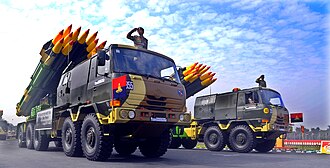
Tatra 816 – Engineering, Architecture, and Technical Deep Dive
The Tatra 816 is one of the most distinctive heavy-duty truck families ever produced in Europe. Built by the Czech manufacturer Tatra Trucks, it represents a continuation and modernization of a design philosophy that dates back decades—centered on extreme off-road capability, modular military adaptability, and a unique chassis architecture that separates it from almost every conventional truck on the market.
Unlike standard heavy trucks that rely on ladder frames and rigid axle assemblies, the Tatra 816 inherits the brand’s signature central backbone tube chassis combined with independently suspended swinging half-axles. This combination allows it to perform in terrain conditions where many comparable vehicles would fail or suffer structural limitations.
The T816 family was developed primarily for military logistics, heavy transport, and specialized off-road applications, although civilian variants—especially firefighting and recovery trucks—have also become increasingly common. The platform is closely related to the earlier Tatra T815, but significantly upgraded in terms of payload capacity, engine options, and modular configuration flexibility.
Historical Development and Design Philosophy
The Tatra 816 did not emerge as a standalone concept; instead, it is part of a long evolutionary chain that begins with early Tatra heavy vehicles and continues through the widely used T815 platform.
The main design philosophy behind the T816 can be summarized as:
- Maximum off-road mobility under extreme conditions
- High structural rigidity under torsional stress
- Modular configuration for military and industrial customization
- Long operational life with field serviceability
- Compatibility with multiple engine and transmission suppliers
This philosophy is rooted in Tatra’s engineering heritage, particularly its refusal to adopt conventional rigid axle systems. Instead, Tatra developed a central load-bearing tube chassis, which acts as both structural backbone and drivetrain housing. This approach isolates the vehicle body from twisting forces generated by uneven terrain.
The result is a truck that behaves more like a mechanical organism than a traditional rigid-frame machine.
Chassis Architecture: The Tatra Backbone System
At the core of the Tatra 816 is the central tubular backbone frame, a design element that defines the entire vehicle family.
Structural Concept
The backbone tube serves three main functions:
- Load-bearing structural element
- Drivetrain housing (propeller shafts inside the tube)
- Protection for mechanical components in harsh environments
Unlike ladder frames that flex under load, the backbone tube resists torsional deformation, significantly improving durability under uneven stress conditions.
Swing Half-Axle Suspension
Each axle is independently suspended using swinging half-axles, which pivot around the central tube. This provides:
- Constant ground contact of wheels
- Extremely high wheel articulation
- Improved traction in uneven terrain
- Reduced mechanical stress on the frame
This system is especially beneficial in military logistics where vehicles must traverse:
- Rocky terrain
- Mud fields
- Snow-covered landscapes
- Sand and desert environments
The suspension system also allows high ground clearance—often exceeding 400 mm in many configurations, depending on variant.
Configuration Variants and Drivetrain Layouts
One of the most powerful aspects of the Tatra 816 platform is its modular drivetrain configuration system.
Available configurations include:
- 4×4
- 6×6
- 8×8
- 10×8
- 10×10
- 12×8
- 12×12
This modularity allows the vehicle to be adapted for:
- Cargo transport
- Heavy artillery carriers
- Bridge-laying systems
- Firefighting superstructures
- Mobile workshops
- Recovery vehicles
The drivetrain layout is designed so that power distribution remains efficient even in high axle-count vehicles. The backbone tube ensures synchronized torque transfer while reducing stress on individual drivetrain components.
Engine Systems and Powertrain Options
The Tatra 816 is unusual among heavy military trucks because it does not rely on a single standardized engine. Instead, it supports a wide range of power units depending on the configuration and customer requirements.
Engine Families
The two main categories of engines used in the T816 family are:
Air-cooled Tatra engines
- Typically V8 configurations
- Displacement around 12–13 liters
- Known for extreme durability in harsh climates
- Less dependent on liquid cooling systems
Water-cooled engines from external manufacturers
These include:
- Cummins (L10, M11, ISM, ISL, ISB)
- Deutz V6 and V8 series
- Caterpillar C13–C18 engines
- MTU V12 high-output engines
- Detroit Diesel units
These engines significantly expand performance range, with outputs exceeding 400 horsepower and in some configurations well above 600 horsepower, depending on mission requirements.
Transmission Systems
The T816 uses heavy-duty transmission systems, including:
- Manual Tatra gearboxes (e.g., 10-speed units)
- TwinDisc automatic transmissions
- Allison automatic gearboxes (5- and 6-speed variants)
A key design goal is torque stability under extreme load, especially in low-speed off-road conditions.
Mobility and Off-Road Performance
The Tatra 816 is designed for environments where standard trucks cannot operate effectively.
Terrain Capabilities
Thanks to its suspension and drivetrain design, the vehicle can operate in:
- Deep mud
- Arctic snowfields
- Mountain terrain
- Desert sand dunes
- Flooded areas (with fording capability)
Performance Metrics
Typical performance parameters include:
- High ground clearance (400–600 mm depending on configuration)
- Fording depth exceeding 1 meter
- Climb gradients approaching or exceeding 60–70%
- Operational range up to ~800 km depending on fuel configuration
- Road speeds up to or above 100 km/h in optimized variants
These values place the T816 among the most capable off-road heavy vehicles in its category.
Military Applications
The Tatra 816 was originally designed primarily for military use, and this remains one of its dominant roles today.
Common Military Roles
- Missile launcher platforms (e.g., Smerch systems)
- Heavy logistics transport
- Radar and communication systems carriers
- Engineering support vehicles
- Recovery and towing units
Protection Systems
Military versions of the T816 may include:
- Armored cab structures (protection against small arms fire up to 7.62 mm)
- Mine and fragmentation protection
- Central tire inflation systems
- NBC (nuclear, biological, chemical) filtration systems
- Electronic warfare countermeasures
The modular design allows integration of mission-specific equipment without compromising structural integrity.
Civilian and Industrial Variants
Although military applications dominate, the T816 is also widely used in civilian industries.
Firefighting Vehicles
One of the most prominent civilian roles is:
- Heavy off-road firefighting trucks
- Forest fire suppression units
- Airport crash response vehicles
Industrial Applications
Other uses include:
- Oil and gas field logistics
- Mining operations
- Heavy construction transport
- Remote infrastructure projects
The ability to operate independently in undeveloped terrain makes it highly valuable in these industries.
Cab Design and Ergonomics
The Tatra 816 uses a cab-over-engine (COE) layout, which helps reduce overall vehicle length while maximizing cargo or equipment space.
Features
- Reinforced steel cab structure
- Modular interior configurations
- Military communication system integration
- Air filtration systems for hazardous environments
The cab is designed for functionality rather than luxury, focusing on survivability, visibility, and operational efficiency.
Maintenance and Operational Considerations
One of the strengths of the T816 platform is maintainability in field conditions.
Advantages
- Modular drivetrain components
- Easy axle replacement systems
- Centralized drivetrain simplifies access
- Compatibility with multiple engine suppliers
Challenges
- High mechanical complexity compared to standard trucks
- Specialized knowledge required for suspension maintenance
- Heavy weight increases transport logistics requirements
Despite these challenges, the design prioritizes field repairability over factory dependence.
Engineering Significance
The Tatra 816 is often studied in engineering circles because it represents a rare alternative to conventional truck architecture. Its backbone tube and independent suspension system provide:
- Superior torsional rigidity
- Exceptional terrain adaptability
- Long-term structural durability
This makes it not only a vehicle but also a case study in non-traditional mechanical engineering solutions.
Summary of Key Engineering Characteristics
- Backbone tube chassis instead of ladder frame
- Independent swinging half-axle suspension
- Modular 4×4 to 12×12 drivetrain configurations
- Multi-engine compatibility (Tatra, Cummins, Deutz, MTU, etc.)
- Military-grade durability and protection systems
- Exceptional off-road performance and mobility
Technical Specifications Table – Tatra 816
| Parameter | Specification |
|---|---|
| Manufacturer | Tatra Trucks (Czech Republic) |
| Vehicle class | Heavy-duty off-road truck |
| Chassis type | Central backbone tube with swinging half-axles |
| Drive configurations | 4×4, 6×6, 8×8, 10×8, 10×10, 12×8, 12×12 |
| Engine types | Tatra air-cooled V8, Cummins, Deutz, Caterpillar, MTU, Detroit Diesel |
| Engine displacement range | ~5.9 L to 22.5 L (depending on engine) |
| Power output | ~300 hp to 600+ hp (variant dependent) |
| Transmission options | Manual Tatra 10-speed, TwinDisc automatic, Allison automatic |
| Maximum speed | ~90–100+ km/h (configuration dependent) |
| Ground clearance | ~400–600 mm |
| Fording depth | ~1.0–1.2 m |
| Payload capacity | Highly variable (military and civilian superstructures) |
| Operating range | Up to ~800 km |
| Gradeability | ~60–70% |
| Cab type | Cab-over-engine (COE) |
| Suspension | Independent swinging half-axle system |
| Primary use | Military transport, off-road logistics, firefighting, heavy industry |
.jpg)