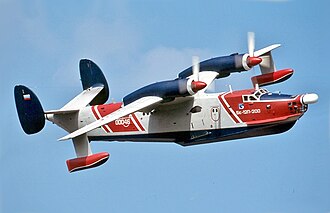
The Beriev Be-12 is one of those rare aviation designs that seems to belong equally to two different worlds: the sky and the sea. Developed during the height of the Cold War, it was built to patrol vast maritime frontiers, hunt submarines, perform search-and-rescue missions, and operate from both conventional airfields and water surfaces. In many ways, it represents the peak of Soviet amphibious aircraft philosophy, where versatility, endurance, and ruggedness were prioritized over elegance or speed. Even today, decades after its introduction, the Be-12 remains an iconic example of how far engineering ingenuity can go when shaped by strategic necessity.
The story of the Be-12 is not just about an aircraft, but about an era when maritime surveillance became a critical component of global military strategy. As nuclear submarines multiplied and naval doctrines evolved, the Soviet Union needed an aircraft capable of long-range patrols over oceans, lakes, and coastal zones—especially in regions where infrastructure was sparse or nonexistent. The result was a machine that could land on water like a flying boat yet still operate from land bases with relative ease.
Origins and Development of the Be-12
The origins of the Be-12 trace back to the late 1950s, a period when Soviet naval aviation was undergoing rapid transformation. The design bureau responsible for its creation, the Beriev Aircraft Company, had already established itself as the Soviet Union’s primary developer of seaplanes and amphibious aircraft. Following earlier designs such as the Be-6 flying boat, engineers sought to create a more advanced platform capable of anti-submarine warfare (ASW) using jet-age avionics and turboprop efficiency.
Development began as a response to the increasing threat posed by NATO submarine fleets, particularly those armed with nuclear weapons. The Soviet Navy required an aircraft that could cover vast maritime regions such as the Black Sea, Baltic Sea, and Northern Fleet zones. Unlike land-based patrol aircraft, amphibians could operate closer to the action, using remote lakes or coastal waters as staging areas.
The first prototype of the Be-12 took flight in 1960, and it quickly demonstrated promising characteristics. It retained the hull-based fuselage typical of flying boats but incorporated swept aerodynamic improvements and more powerful turboprop engines. After extensive testing, the aircraft entered service in the mid-1960s, gradually becoming a key component of Soviet naval aviation units.
Design Philosophy: A Hybrid Between Airplane and Seaplane
The Be-12 was designed around a very specific philosophy: operational independence from fixed infrastructure. This meant that it needed to take off and land both on conventional runways and open water surfaces, sometimes in rough sea conditions. Achieving this dual capability required careful balancing of aerodynamic efficiency and hydrodynamic stability.
At its core, the aircraft features a boat-shaped fuselage, which allows it to displace water during takeoff and landing. The wing configuration is high-mounted, reducing spray exposure to engines and improving stability on water. The twin turboprop engines are mounted on the wings, elevated to minimize contact with waves. This configuration also enhances maintenance accessibility and reduces corrosion risks compared to lower-mounted engine designs.
What makes the Be-12 particularly fascinating is how it integrates military avionics and weapons systems into an amphibious structure without compromising structural integrity. Unlike earlier flying boats that prioritized civilian transport or reconnaissance, the Be-12 was designed from the outset as a combat-capable platform.
Airframe Structure and Hydrodynamic Engineering
The fuselage of the Be-12 is one of its most distinctive features. It is shaped like a deep-V marine hull, allowing it to cut through waves during water operations. This design helps reduce hydrodynamic drag and ensures smoother transitions between taxiing, takeoff, and landing on water surfaces.
The aircraft’s structural composition relies heavily on corrosion-resistant aluminum alloys, as constant exposure to saltwater environments poses significant durability challenges. Special sealing techniques and drainage systems were incorporated into the design to minimize water intrusion into sensitive compartments.
The wing design is moderately swept and optimized for medium-speed flight. While not designed for supersonic or high-speed performance, the Be-12 excels in long-duration patrol missions where endurance is more important than speed. The large wings also provide ample lift, which is crucial when operating from water where takeoff resistance is significantly higher than on land.
Another important structural feature is the aircraft’s sponsons—small lateral buoyancy extensions near the lower fuselage. These provide stability during water operations, preventing excessive rolling and ensuring safe maneuvering even in moderate sea states.
Propulsion System and Flight Performance
The Be-12 is powered by two turboprop engines, specifically the Ivchenko AI-20 series. These engines were widely used in Soviet aviation and were known for their reliability and fuel efficiency. Each engine drives a four-bladed propeller, providing sufficient thrust for both airborne and waterborne operations.
Turboprop propulsion was chosen over jet engines for several reasons. First, turboprops offer superior fuel efficiency at low to medium altitudes, which is ideal for maritime patrol missions. Second, they provide better short takeoff performance, essential for water operations where runway length is effectively variable and dependent on sea conditions.
In terms of performance, the Be-12 is not a fast aircraft by modern standards, but it was never intended to be. Its cruise speed allows it to loiter over patrol areas for extended periods, scanning for submarine activity or conducting search-and-rescue operations. Its range is sufficient to cover vast maritime zones without requiring frequent refueling, which was critical for Soviet naval doctrine.
Avionics and Anti-Submarine Warfare Systems
One of the most important aspects of the Be-12 is its ASW capability. Equipped with sonar buoys, magnetic anomaly detectors (MAD), and radar systems, the aircraft was designed to locate and track submerged submarines.
The onboard radar system allows for surface search operations, detecting ships and periscopes under favorable conditions. Sonobuoys dropped into the ocean transmit acoustic data back to the aircraft, allowing operators to triangulate submarine positions. Meanwhile, the magnetic anomaly detector helps identify disturbances in Earth’s magnetic field caused by large metallic objects underwater.
The aircraft also carried electronic warfare and communication systems suitable for coordinating with naval fleets and coastal command centers. In later variants, upgraded avionics improved detection accuracy and reduced operator workload, although the core systems remained largely analog in nature throughout its service life.
Operational Roles and Variants
The Be-12 was not limited to anti-submarine warfare. Over time, it evolved into a multi-role platform with several variants adapted for different missions.
The primary version served as a maritime patrol and ASW aircraft. However, the Be-12PS variant was developed for search-and-rescue operations, equipped with additional life-saving equipment and modified interior configurations for evacuating survivors from maritime disasters. Another notable variant, the Be-12P, was configured for firefighting duties, capable of scooping and dropping water on forest fires—leveraging its amphibious nature in a civilian role.
These adaptations highlight the flexibility of the platform, which could be reconfigured depending on mission requirements. Despite its military origins, the Be-12 found value in humanitarian and environmental applications as well.
Service History and Cold War Deployment
The Be-12 entered operational service during a period of intense naval rivalry between NATO and the Soviet Union. It was deployed primarily with Soviet Naval Aviation units stationed in strategic maritime regions. These included the Black Sea Fleet, Baltic Fleet, and Northern Fleet, where it conducted routine patrols and surveillance missions.
During its operational peak, the aircraft played a key role in monitoring NATO submarine activity in the Atlantic and Arctic regions. Its ability to operate from remote coastal bases and lakes made it particularly useful in regions lacking developed airfield infrastructure.
Following the dissolution of the Soviet Union, some Be-12 aircraft were inherited by successor states, including Ukraine. However, operational numbers gradually declined due to aging airframes and the emergence of more modern patrol aircraft.
Despite its retirement from frontline service in most countries, the Be-12 remains in limited use for specialized missions and is still recognized as one of the most capable amphibious military aircraft ever built.
Legacy and Technological Significance
The legacy of the Be-12 lies in its successful fusion of maritime and aeronautical engineering. Few aircraft in history have been able to operate so effectively in both environments while maintaining military-grade capabilities. It represents a design philosophy that is increasingly rare in modern aviation, where specialization often replaces versatility.
Today, the Be-12 is remembered not only as a Cold War relic but as a testament to the ingenuity of Soviet aerospace engineering. It paved the way for later amphibious aircraft developments and remains a reference point for designers exploring hybrid operational platforms.
In many respects, the Be-12 marks the end of the era of large military flying boats. As land-based patrol aircraft and helicopters became more capable, the need for amphibious patrol planes declined. However, its unique design ensures that it continues to hold a special place in aviation history.
Technical Specifications Table
| Parameter | Specification |
|---|---|
| Aircraft type | Amphibious anti-submarine warfare aircraft |
| Crew | 4–5 (pilot, co-pilot, navigator, systems operators) |
| Length | ~30.1 m |
| Wingspan | ~29.8 m |
| Height | ~7.4 m |
| Maximum takeoff weight | ~36,000 kg |
| Powerplant | 2 × Ivchenko AI-20D turboprop engines |
| Propellers | 4-blade constant-speed propellers |
| Maximum speed | ~550 km/h |
| Cruise speed | ~420–450 km/h |
| Range | ~3,300 km |
| Service ceiling | ~10,000 m |
| Endurance | Up to ~6–8 hours (mission dependent) |
| Takeoff/landing | Land runways and water surfaces |
| Primary roles | Anti-submarine warfare, maritime patrol, SAR |
| Secondary roles | Firefighting (variant), transport, reconnaissance |
| Avionics | Radar, sonar buoys, MAD system |
| First flight | 1960 |
| Introduction into service | Mid-1960s |
| Operators | Soviet Union, Russia, Ukraine (limited) |
