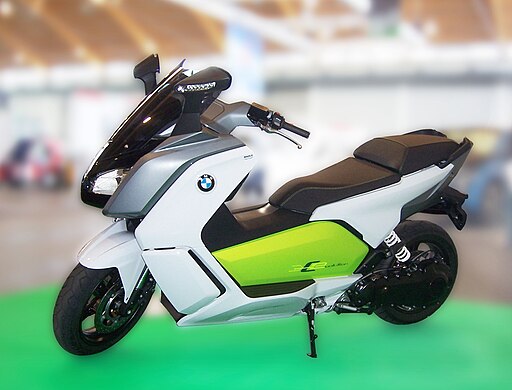
The BMW C evolution represents a significant step in urban and commuter electric mobility from BMW Motorrad, blending electric propulsion technology with the comfort and practicality expected from a maxi-scooter. Rather than adapting a conventional internal combustion engine platform to electric, BMW engineered the C evolution from the ground up as a purpose-built electric scooter. The result is a vehicle that defies typical electric scooter limitations with performance figures and everyday usability that rival traditional petrol-powered scooters. Its engineering centers around a robust electric drivetrain, carefully calibrated energy management, and a chassis designed to balance weight, rigidity, and rider confidence.
Powertrain and Electric Motor
At the heart of the C evolution lies a highly engineered electric motor and drivetrain architecture. The mid-mounted motor unit is a liquid-cooled permanent magnet synchronous motor mounted on the swing arm, driving the rear wheel via a toothed belt and planetary gear reduction system. This configuration reduces unsprung mass compared to hub-mounted motors, improves handling, and enables a compact packaging solution that doesn’t compromise storage or ergonomics.
Depending on the specific variant, the rated continuous output differs: the standard version produces 11 kW (15 hp) while the Long Range version has a higher continuous output of 19 kW (26 hp). Both share a peak output of around 35 kW (47–48 hp) delivered at approximately 4,650 rpm and a maximum torque of 72 Nm available from nearly zero speed, typical for electric motors. This torque profile offers brisk acceleration from stoplights and confident overtaking in urban conditions.
Battery, Charging, and Range
The C evolution uses an air-cooled lithium-ion high-voltage battery pack with a nominal voltage around 133 V. In the original version, the battery capacity was 8 kWh, allowing a real-world range of up to roughly 100 km (62 miles) under everyday riding conditions. The Long Range variant increased the energy capacity via higher-capacity cells (94 Ah) to extend usable range to approximately 160 km (about 100 miles) under WMTC testing cycles.
Charging is supported via an integrated 3 kW onboard charger connected through a Type 1 connector. On a standard 220 V domestic socket at 12 A, a full recharge from empty generally takes around 4 to 4.5 hours, with approximately 80 % charge achieved in about 2.5 to 3.8 hours depending on current capability. A higher supply current (16 A) can reduce full charge times closer to 3 hours. In addition to the traction battery, a 12 V / 8 Ah auxiliary battery maintains vehicle electronics.
Recuperation and Energy Management
A standout feature of the C evolution is its intelligent recuperation system, which automatically recovers kinetic energy during both coasting and braking phases and feeds it back into the battery. This regenerative braking strategy can improve overall efficiency and extend range by up to around 10–20 % compared to riding without energy recovery. The rider selectable ride modes allow customization of power delivery and recuperative behavior, enhancing either performance or efficiency as needed.
Chassis and Suspension
The C evolution’s chassis is built around a hybrid construction that integrates the battery pack as a load-bearing structural element. This approach lowers the center of gravity, aiding handling stability despite the significant weight of the battery system. The front suspension consists of a 40 mm upside-down telescopic fork with approximately 120 mm of travel, while the rear uses a single-sided swing arm with a direct-link spring strut and seven levels of preload adjustment to tailor ride comfort and responsiveness.
Braking, Wheels, and Tires
Stopping power comes from a comprehensive brake setup featuring dual 270 mm floating discs at the front with two-piston floating calipers and a single 270 mm disc at the rear, again with dual-piston actuation. The integrated BMW Motorrad ABS system ensures confident deceleration under varying road conditions. Both front and rear wheels are cast aluminum, measuring 3.50 × 15″ and 4.50 × 15″ respectively, shod with sporty 120/70 R15 front and 160/60 R15 rear tires optimized for grip and feedback.
Dimensions, Weight, and Ergonomics
The overall dimensions position the C evolution as a true maxi-scooter: approximately 2,190 mm in length, 947 mm in width including mirrors, and upwards of 1,255 mm in height without mirrors. The wheelbase of around 1,610 mm contributes to stable high-speed behavior and confident highway cruising when needed. Seat height sits around 765 mm to 785 mm depending on configuration, making the scooter accessible to a broad range of riders. The curb weight, due primarily to the battery pack, is in the region of 275 kg (606 lbs) for road-ready models, while the total permissible mass approaches 445 kg accounting for rider and luggage. (motorcycle.com)
Performance and Ride Experience
Performance figures for the C evolution are notable for an electric maxi-scooter. Acceleration from 0–50 km/h is brisk, typically in the sub-3 second range, while 0–100 km/h times around 6.2–6.8 seconds place it in the performance bracket of mid-sized petrol scooters. Top speed is electronically limited to around 120 km/h on the standard version, with the Long Range capable of up to approximately 129 km/h. These statistics underline the C evolution’s dual capability as both an urban commuter and a capable machine on faster roads.
Electronics and Features
Beyond core propulsion and chassis hardware, the C evolution incorporates features enhancing rider interaction and safety. Standard systems typically include multifunction instrument displays with riding metrics, LED daytime running lights, and supportive rider aids such as traction control. Reverse assist can ease parking and maneuvering in tight urban spaces. The symmetrical integration of braking, suspension, and rider assistance technologies emphasizes both safety and driver confidence across urban and suburban environments.
Conclusion
In summary, the BMW C evolution stands as a compelling electric maxi-scooter that embodies BMW Motorrad’s engineering prowess in electric mobility. With a sophisticated powertrain, well thought-out battery and recuperation systems, balanced chassis dynamics, and comprehensive braking and suspension components, it delivers a riding experience that challenges traditional petrol-engine scooters. Its blend of performance, range, and everyday practicality highlights how electric propulsion can be successfully integrated into larger two-wheeled vehicles, setting a standard for future electric commuter platforms.
