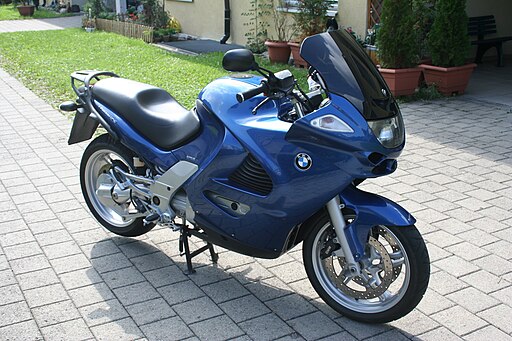
The BMW K1200RS is a high-performance sport-touring motorcycle developed by BMW and produced by its motorcycle division BMW Motorrad between 1997 and 2005. The model represented a major evolution of the K-series concept and was designed to combine the comfort of a touring motorcycle with the dynamic performance expected from a sport machine. By integrating advanced engineering, a powerful inline four-cylinder engine, and a highly stable chassis, the K1200RS became one of the flagship motorcycles in BMW’s lineup during the late 1990s and early 2000s.
The K1200RS was positioned as a premium sport-touring motorcycle capable of covering long distances at high speed while maintaining exceptional comfort and reliability. It built upon the reputation established by earlier K-series models such as the K100 and K1100, but introduced significant improvements in engine power, suspension technology, and overall chassis design. The motorcycle quickly gained popularity among riders who desired a combination of high-speed capability, touring practicality, and German engineering precision.
Development and Design Philosophy
During the mid-1990s, BMW sought to develop a motorcycle that could compete with powerful sport-touring machines produced by other manufacturers. The goal was to create a motorcycle that offered strong performance while preserving the durability and stability that had become trademarks of the K-series platform.
The result was the K1200RS, which featured a completely redesigned engine and an updated chassis architecture. Engineers retained the characteristic longitudinal engine orientation used in previous K-series motorcycles but refined the overall packaging to improve weight distribution and riding dynamics. The engine was mounted low within the frame, helping to maintain a low center of gravity and improving high-speed stability.
Stylistically, the motorcycle adopted a streamlined sport-touring appearance with aerodynamic bodywork designed to reduce wind resistance and improve rider comfort during long journeys. The fairing provided substantial wind protection while still maintaining an aggressive and sporty profile. The design allowed the motorcycle to perform equally well on highways and winding roads, making it suitable for both long-distance travel and spirited riding.
Engine Configuration and Performance
At the heart of the BMW K1200RS is a liquid-cooled inline four-cylinder engine with a displacement of 1,171 cc. The engine uses a double overhead camshaft configuration and four valves per cylinder, allowing efficient airflow and improved combustion efficiency. This design enables the engine to produce high power output while maintaining smooth and reliable operation.
The power unit generates approximately 130 horsepower at 8,750 rpm and produces around 117 Nm of torque at 6,750 rpm. These figures gave the K1200RS significantly stronger performance than earlier K-series motorcycles. The engine delivers a broad torque curve, providing strong acceleration at low and mid-range speeds while still allowing the motorcycle to reach high engine speeds for sporty riding.
Fuel delivery is controlled by an advanced electronic fuel injection system that ensures precise fuel metering and improved throttle response. The smoothness of the inline four-cylinder configuration also contributes to the motorcycle’s refined character, producing minimal vibration even during long rides at highway speeds.
Power is transmitted through a five-speed gearbox connected to BMW’s well-known shaft drive system. This drivetrain design offers exceptional durability and requires less maintenance compared with chain-driven motorcycles, making it especially suitable for long-distance touring.
Frame Construction and Structural Engineering
The chassis of the BMW K1200RS is built around a robust aluminum bridge frame that provides a rigid and stable platform for the powerful engine. The frame design integrates the engine as a structural element, which increases torsional rigidity and improves handling precision.
The motorcycle features a relatively long wheelbase, which contributes to its excellent stability at high speeds. This characteristic makes the K1200RS particularly well suited for long highway journeys where consistent stability and comfort are essential.
Another distinctive feature is the single-sided swingarm at the rear of the motorcycle. This component houses the shaft drive system and simplifies rear wheel maintenance. The swingarm design also adds to the mechanical aesthetic that characterizes BMW motorcycles.
The overall structural design focuses on providing stability, durability, and precise handling while accommodating the demands of both sport and touring riding styles.
Suspension and Handling Technology
The suspension system of the BMW K1200RS incorporates several advanced engineering solutions designed to enhance both comfort and control. At the front, the motorcycle uses BMW’s Telelever suspension system, which separates braking forces from suspension movement. This design significantly reduces front-end dive during heavy braking and improves overall stability.
At the rear, the motorcycle features the Paralever suspension system, which integrates the shaft drive with a monoshock suspension arrangement. This system minimizes torque reactions caused by the shaft drive during acceleration, ensuring smoother power delivery and more predictable handling characteristics.
The combination of Telelever and Paralever technology provides a balanced riding experience. The motorcycle remains stable under braking, maintains good traction during acceleration, and absorbs road imperfections effectively. These characteristics make the K1200RS capable of both comfortable touring and dynamic cornering performance.
Braking System and Safety Features
To match the motorcycle’s performance capabilities, BMW equipped the K1200RS with a powerful braking system designed for both high-speed riding and everyday safety. The front wheel is fitted with dual large-diameter brake discs paired with multi-piston calipers, providing strong and consistent stopping power.
The rear brake consists of a single disc that supports overall braking performance and contributes to vehicle stability during deceleration. Many versions of the K1200RS were equipped with ABS (Anti-lock Braking System), which was one of the most advanced motorcycle safety technologies available at the time.
ABS prevents wheel lock during emergency braking situations and helps riders maintain steering control even on slippery surfaces. This feature significantly increased the safety of the motorcycle, particularly for riders traveling long distances in varying weather conditions.
Comfort and Touring Capabilities
One of the defining characteristics of the BMW K1200RS is its exceptional long-distance capability. The motorcycle was designed to provide a comfortable riding position that balances sportiness with ergonomic support. The handlebars are positioned slightly above the level of typical sport motorcycles, reducing strain on the rider’s wrists and shoulders.
The seat is well padded and shaped to provide comfort during extended rides. With a fuel tank capacity of approximately 21 liters, the motorcycle offers a substantial riding range, allowing riders to travel long distances between fuel stops.
Additional touring features were available as optional equipment, including heated grips, luggage systems, and adjustable windscreens. These features enhanced the practicality of the motorcycle and made it an attractive choice for riders who frequently traveled long distances.
The fairing design also plays a significant role in rider comfort by providing effective wind protection. This aerodynamic bodywork reduces fatigue during high-speed travel and allows the rider to maintain stable control even in challenging weather conditions.
Legacy and Importance in the K-Series Lineup
The BMW K1200RS represented an important step forward in the development of BMW’s sport-touring motorcycles. It demonstrated that the company could produce a machine capable of combining high performance with the durability and comfort expected from a touring motorcycle.
The model also helped establish BMW as a serious competitor in the high-performance sport-touring segment. Many of the engineering solutions introduced in the K1200RS later influenced the development of subsequent models in the K-series, including the K1200S and K1300S.
Even years after production ended, the K1200RS continues to be appreciated by enthusiasts for its solid engineering, powerful engine, and ability to deliver comfortable long-distance performance without sacrificing sporty handling.
Technical Specifications – BMW K1200RS
| Parameter | Specification |
|---|---|
| Manufacturer | BMW Motorrad |
| Production years | 1997–2005 |
| Motorcycle type | Sport-touring |
| Engine type | Liquid-cooled inline 4-cylinder, DOHC, 4 valves per cylinder |
| Displacement | 1,171 cc |
| Bore × Stroke | 70.5 mm × 75 mm |
| Compression ratio | 11.5:1 |
| Maximum power | 130 hp (96 kW) at 8,750 rpm |
| Maximum torque | 117 Nm at 6,750 rpm |
| Fuel system | Electronic fuel injection |
| Transmission | 5-speed manual |
| Final drive | Shaft drive |
| Frame | Aluminum bridge frame |
| Front suspension | BMW Telelever |
| Rear suspension | BMW Paralever single-sided swingarm |
| Front brakes | Dual disc brakes |
| Rear brake | Single disc brake |
| Wheelbase | 1,565 mm |
| Seat height | approx. 820 mm |
| Fuel tank capacity | 21 L |
| Wet weight | approx. 285 kg |
| Top speed | approx. 250 km/h |
