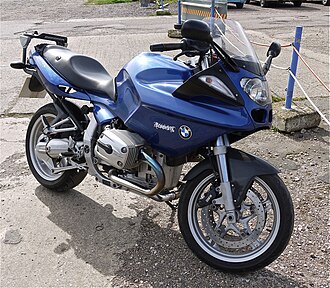
BMW R1100S: The Forgotten Bavarian Sports Motorcycle That Refused to Follow the Rules
Among motorcycle enthusiasts, there are machines that become legends almost instantly, and then there are motorcycles whose reputation grows slowly over time. The BMW R1100S belongs firmly to the second category. When it first appeared in the late 1990s, many riders did not quite know what to make of it. It was neither a pure superbike nor a traditional sport-tourer. It lacked the screaming inline-four engine that dominated Japanese competitors, and it certainly did not resemble the aggressive Italian V-twins that ruled European racetracks. Instead, BMW built a motorcycle that embodied its own philosophy: balance over brute force, engineering over fashion, and real-world performance over marketing numbers.
More than two decades later, the R1100S enjoys an almost cult-like following. Owners rarely sell them willingly, and many riders who once overlooked the bike now recognize it as one of the most interesting motorcycles BMW ever produced. It represented a bold attempt by the German manufacturer to enter a segment that it had largely ignored while staying true to the mechanical principles that defined the brand.
The R1100S was a machine built for riders who appreciated long mountain roads, high-speed autobahn travel, and technical engineering solutions rather than quarter-mile statistics. It was comfortable enough to cross entire countries, agile enough to tackle winding alpine passes, and durable enough to accumulate hundreds of thousands of kilometers with proper maintenance. In many ways, it was a motorcycle designed for adulthood—a sports bike that did not demand physical sacrifice every time the rider climbed aboard.
Today, as modern motorcycles become increasingly dependent on electronics, riding modes, and digital intervention systems, the R1100S stands as a reminder of an era when mechanical character mattered just as much as outright speed.
The Background: BMW Before the R1100S
BMW’s Conservative Image
Throughout much of the twentieth century, BMW had built a reputation for manufacturing motorcycles that prioritized reliability, comfort, and engineering sophistication over outright excitement. The company’s famous boxer twin engine had become an icon, but it was also often criticized for being old-fashioned.
Japanese manufacturers such as Honda, Yamaha Motor Company, and Suzuki dominated the sport motorcycle market with lightweight, high-revving inline-four machines capable of astonishing acceleration and top speeds.
Meanwhile, Italian brands like Ducati offered charismatic V-twins that combined racing pedigree with unmistakable style.
BMW, by comparison, was largely associated with police motorcycles, long-distance touring machines, and practical transportation for mature riders.
The company understood that this image limited its appeal to younger enthusiasts. During the 1990s, BMW began exploring ways to modernize its lineup without abandoning the boxer engine that had defined the brand for decades.
The Oilhead Revolution
A major step came with the introduction of the so-called “Oilhead” engine family. Unlike the older air-cooled boxers, these engines used a combination of air and oil cooling, allowing tighter tolerances and improved performance.
The first major success was the BMW R1100RS, which introduced several groundbreaking technologies, including the Telelever front suspension.
The R1100RS demonstrated that BMW could innovate while maintaining its traditional architecture. The logical next step was creating a motorcycle that emphasized sportiness without losing the everyday usability that BMW customers expected.
The result would become the BMW R1100S.
Development of the R1100S
A New Direction
When BMW engineers started working on the R1100S, they faced a difficult challenge. They knew they could not compete directly against 150-horsepower Japanese superbikes. The boxer twin simply could not match those engines at the top end.
Instead, BMW decided to create something entirely different.
The goal was to produce a motorcycle that could deliver enjoyable performance under real riding conditions rather than only on a racetrack. Stability at high speed, rider comfort, mechanical durability, and predictable handling became priorities equal to horsepower figures.
This philosophy influenced every aspect of the motorcycle.
Styling That Broke Tradition
The R1100S looked unlike any previous BMW motorcycle.
Its aerodynamic fairing wrapped tightly around the engine while leaving the boxer cylinder heads proudly exposed. The dual asymmetrical headlights gave the front end an unmistakable identity, while the raised tail section hinted at sporting intentions.
The single-sided Paralever swingarm allowed the rear wheel to become a visual centerpiece, emphasizing the motorcycle’s engineering sophistication.
Many critics initially found the styling unusual. Others immediately appreciated that BMW had created a machine that could not be mistaken for anything else.
Time has been kind to the design. Today, the R1100S appears elegant and purposeful rather than dated.
The Famous Boxer Engine
An Unmistakable Character
At the heart of the R1100S lies its 1,085 cc horizontally opposed twin-cylinder engine.
Unlike conventional motorcycle engines, the cylinders extend outward from each side of the motorcycle. This layout lowers the center of gravity and creates a unique feeling of balance while riding.
The engine produces approximately 98 horsepower and around 97 Nm of torque, figures that may seem modest by modern standards. However, numbers alone never tell the full story.
The boxer delivers its power with remarkable smoothness and a broad torque curve. Instead of requiring constant high-rev operation, the engine pulls strongly from low and middle rpm ranges.
This allows the rider to accelerate confidently out of corners without frantic gear changes.
Mechanical Personality
One of the defining characteristics of boxer engines is the slight sideways movement felt when the throttle is blipped at a standstill. The rotating crankshaft creates a gentle rocking motion that becomes part of the motorcycle’s personality.
Many owners consider this mechanical quirk one of the bike’s greatest charms.
The engine also produces a deep, distinctive exhaust note that differs completely from inline-fours or V-twins. It sounds deliberate, refined, and unmistakably German.
Telelever and Paralever: BMW’s Engineering Statement
Telelever Front Suspension
Perhaps the most revolutionary feature of the R1100S is its Telelever suspension system.
Traditional telescopic forks perform both steering and suspension duties. Under hard braking, they compress significantly, causing the front of the motorcycle to dive.
BMW engineers sought to minimize this effect.
The Telelever separates steering from suspension functions by using an A-arm connected to a central shock absorber.
The result is dramatically reduced front-end dive during braking.
For riders accustomed to conventional motorcycles, the sensation can initially feel unusual. However, after adapting, many discover that the system provides exceptional stability, especially during aggressive corner entry.
The Paralever Rear Suspension
The rear suspension complements the front with BMW’s Paralever shaft-drive design.
Shaft-driven motorcycles traditionally suffered from unwanted suspension movement during acceleration and deceleration.
The Paralever system largely eliminated these effects, allowing the R1100S to enjoy the cleanliness and low maintenance of shaft drive without sacrificing handling precision.
For long-distance riders, this represented a major advantage over chain-driven competitors.
Riding the BMW R1100S
Everyday Usability
The true brilliance of the R1100S becomes apparent not during a short test ride but over many hours in the saddle.
The riding position strikes an excellent compromise between comfort and sportiness. The clip-on handlebars are lower than those of a touring motorcycle but far less extreme than those of contemporary superbikes.
The seat offers substantial support, and the footpeg position avoids excessive knee bend.
A rider can comfortably spend an entire day traveling through mountain roads without suffering the physical exhaustion commonly associated with pure sport motorcycles.
Mountain Roads
The motorcycle excels on winding roads.
The low center of gravity created by the boxer engine allows surprisingly quick direction changes.
Once leaned over, the bike feels planted and confidence inspiring.
Rather than encouraging reckless riding, the R1100S rewards smoothness and precision.
Its handling reflects BMW’s overall philosophy: efficiency through control rather than aggression.
Autobahn Performance
On unrestricted sections of the German autobahn, the motorcycle demonstrates another aspect of its personality.
At speeds well above 180 km/h, the chassis remains remarkably composed.
The aerodynamic fairing provides good wind protection, while the engine settles into a relaxed rhythm.
The bike may not achieve the ultimate top speed of Japanese rivals, but it delivers sustained high-speed cruising with exceptional confidence.
BMW R1100S Versus Its Rivals
Comparing the R1100S to its competitors reveals just how unconventional it was.
Against the Honda VTR1000F Firestorm, the BMW offered better long-distance comfort and superior build quality.
Compared with the Ducati 900SS, it lacked some Italian passion but compensated with greater reliability and lower maintenance demands.
Facing Japanese inline-four sport bikes, the R1100S simply occupied a different category altogether.
BMW never intended to build the fastest machine.
It built a motorcycle for riders who valued the journey as much as outright speed.
A Motorcycle That Ages Gracefully
One of the most remarkable aspects of the BMW R1100S is how well it has aged.
Modern motorcycles often become technologically obsolete within a decade. Electronics fail, software becomes outdated, and replacement parts grow difficult to source.
The R1100S, by contrast, remains largely mechanical.
Its fuel injection system is straightforward, its engine is robust, and its shaft drive eliminates many routine maintenance tasks.
Many examples have exceeded 200,000 kilometers while continuing to serve as dependable daily riders.
For enthusiasts who enjoy maintaining their own motorcycles, the boxer engine offers excellent accessibility, making valve adjustments and basic servicing relatively simple.
