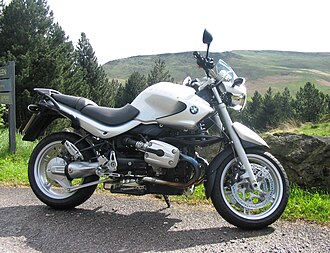
BMW R1150R: The Last Great Analog Roadster from Bavaria
Motorcycles often fall into easily recognizable categories. Some are designed to dominate racetracks, others are built to cross continents, and many are intended primarily for everyday transportation. Every now and then, however, a manufacturer creates a machine that seems to ignore conventional classifications and instead follows its own philosophy. The BMW R1150R was one such motorcycle. It was not a superbike, although it handled corners with surprising confidence. It was not a luxury touring machine, yet it could comfortably cover enormous distances. It was not an adventure motorcycle, despite sharing much of its engineering DNA with one of the most famous adventure bikes ever built. Instead, it represented the purest interpretation of what many riders call a “standard motorcycle”—a machine stripped of unnecessary excess and focused entirely on the pleasure of riding.
Introduced at the beginning of the twenty-first century, the BMW R1150R inherited decades of boxer-twin tradition while embracing enough modern engineering to remain competitive in a rapidly changing market. At a time when motorcycle manufacturers increasingly pursued extreme performance figures and aggressive styling, BMW quietly offered a roadster that emphasized balance, mechanical honesty, and long-term ownership satisfaction.
More than twenty years after its debut, the R1150R has become one of the most respected motorcycles among enthusiasts who appreciate engineering over marketing. Owners often describe it not simply as transportation but as a companion capable of adapting to almost any situation. Whether navigating crowded city streets, carving through mountain passes, commuting to work, or crossing national borders on extended tours, the motorcycle seems equally at home.
Perhaps that is why the R1150R has aged so gracefully. While many motorcycles become obsolete as technology advances, the BMW appears almost timeless. Its exposed boxer engine, shaft drive, Telelever suspension, and understated styling still look purposeful rather than old-fashioned. It belongs to an era when motorcycles were designed to last decades rather than model cycles.
This is the story of the BMW R1150R, a machine that may never have been the fastest or the most fashionable, but which quietly became one of the finest all-around motorcycles BMW ever produced.
The Historical Background
BMW and the Boxer Tradition
To understand the significance of the R1150R, one must first understand BMW’s unique place in motorcycle history. Since the introduction of the original R32 in 1923, BMW had remained remarkably loyal to the horizontally opposed twin-cylinder engine. While other manufacturers experimented with parallel twins, V-twins, triples, and inline-four configurations, BMW continued refining the boxer concept.
The boxer layout offered several practical advantages. The horizontally opposed cylinders lowered the motorcycle’s center of gravity, improving stability at low and high speeds alike. The exposed cylinder heads benefited from direct airflow, simplifying cooling, while the longitudinal crankshaft worked naturally with shaft-drive transmissions.
For decades, this configuration became inseparable from the BMW identity.
The Transition to the Oilhead Era
By the 1990s, increasingly strict emissions regulations and customer expectations forced BMW to modernize its traditional engine architecture.
The result was the so-called “Oilhead” generation, combining air cooling with additional oil cooling to improve temperature management and performance.
Electronic fuel injection replaced carburetors, and advanced engine management systems delivered smoother throttle response and greater efficiency.
The R1150R emerged from this period of technological evolution, benefiting from years of refinement while preserving the essential boxer character.
Design Philosophy
Simplicity as a Form of Sophistication
Unlike many naked motorcycles that appear unfinished after removing bodywork, the R1150R was designed from the beginning as an exposed mechanical object.
The large boxer cylinders project confidently from each side of the frame, becoming visual centerpieces rather than components to hide.
The fuel tank flows naturally into the seat, while the compact headlight assembly and minimal body panels create a clean and functional appearance.
BMW designers understood that true elegance often comes from restraint.
There are no unnecessary wings, exaggerated angles, or decorative plastics. Every visible component serves a purpose.
The result is a motorcycle that looks just as appropriate today as it did when it first entered production.
A Motorcycle Without Pretension
The R1150R never tried to imitate race bikes or adventure machines.
It did not promise lap records or extreme off-road capability.
Instead, it offered something arguably more valuable: versatility.
A rider could commute through urban traffic during the week, explore mountain roads during the weekend, and embark on a cross-country vacation without changing motorcycles.
That flexibility became one of the bike’s defining strengths.
The 1130 cc Boxer Engine
Engineering Character
At the heart of the motorcycle lies BMW’s famous 1,130 cubic centimeter air-and-oil-cooled boxer twin.
Producing approximately 85 horsepower and nearly 98 Newton meters of torque, the engine prioritizes usable performance rather than peak numbers.
Maximum torque arrives relatively early, allowing effortless acceleration without requiring constant high engine speeds.
This characteristic transforms the riding experience.
Instead of aggressively chasing the redline, riders find themselves surfing the engine’s broad wave of torque.
The motorcycle rewards smooth inputs and precise control rather than brute force.
Mechanical Personality
Starting the engine reveals one of the boxer motor’s most beloved traits.
A brief sideways rocking motion accompanies the first throttle input, a natural consequence of the crankshaft’s orientation.
Far from being a flaw, this movement has become part of the motorcycle’s identity.
The exhaust note is equally distinctive.
Deep, measured, and confident, it lacks the high-pitched scream of an inline-four while avoiding the harshness sometimes associated with large V-twins.
Many owners claim that the boxer engine feels almost alive, developing a personality that grows stronger over years of ownership.
Telelever and Paralever Technology
Reinventing Front Suspension
One of BMW’s most innovative contributions to motorcycle engineering is the Telelever suspension system.
Traditional telescopic forks combine steering and suspension duties, resulting in noticeable front-end dive during heavy braking.
The Telelever separates these functions through an additional control arm connected to a centrally mounted shock absorber.
This dramatically reduces dive while preserving steering precision.
Initially, riders accustomed to conventional forks may find the sensation unusual.
However, many soon discover that the system offers remarkable stability and confidence, particularly during aggressive braking on uneven roads.
The Advantages of Shaft Drive
The Paralever rear suspension complements the Telelever by controlling the reactions traditionally associated with shaft-driven motorcycles.
Older shaft-drive designs often caused unwanted suspension movement during acceleration.
BMW engineers largely eliminated these effects while preserving the durability and low maintenance advantages of shaft drive.
Owners appreciate never having to clean, lubricate, or adjust a chain after long rides.
For touring enthusiasts, this alone represents a significant advantage.
Everyday Riding
Urban Environments
Despite weighing considerably more than many middleweight motorcycles, the R1150R performs exceptionally well in city traffic.
The upright seating position provides excellent visibility, while the broad handlebars offer substantial leverage at low speeds.
The low center of gravity created by the boxer engine helps the motorcycle feel lighter than its specifications suggest.
Filtering through traffic becomes surprisingly manageable.
The engine’s generous torque also minimizes gear changes, making stop-and-go riding less tiring.
Open Roads
Away from the city, the motorcycle reveals its true character.
Country roads seem perfectly matched to the R1150R’s strengths.
The engine delivers smooth acceleration out of corners, while the Telelever suspension maintains composure under braking.
Rather than encouraging reckless riding, the bike rewards flowing lines and deliberate inputs.
Its handling feels mature and predictable.
Touring Capability
Although marketed as a roadster, the R1150R possesses remarkable touring potential.
Factory luggage systems integrate neatly with the motorcycle, allowing riders to carry substantial amounts of equipment.
Optional windscreens improve weather protection without compromising the bike’s clean appearance.
Many owners have completed journeys covering thousands of kilometers across Europe and North America.
The comfortable ergonomics, relaxed engine characteristics, and shaft drive combine to create a motorcycle capable of extraordinary distances.
Unlike dedicated touring motorcycles, however, the R1150R never feels cumbersome when the luggage comes off.
Reliability and Ownership
Built to Last
One of the reasons the R1150R enjoys such a loyal following is its exceptional durability.
Properly maintained examples routinely exceed 150,000 or even 200,000 kilometers.
The boxer engine’s accessible cylinder heads simplify valve adjustments, while the shaft drive reduces routine maintenance requirements.
Many owners perform their own servicing, strengthening the bond between rider and machine.
Common Maintenance Considerations
Like any motorcycle, the R1150R has known areas that deserve attention.
Regular valve adjustments and throttle body synchronization are important for smooth operation.
Brake systems should be inspected carefully, particularly on models equipped with servo-assisted ABS.
Transmission and final drive oil changes form part of routine maintenance.
Fortunately, most of these procedures are straightforward compared with many modern motorcycles.
The R1150R in the Modern World
Motorcycling has changed dramatically since the R1150R entered production.
Modern machines feature traction control, cornering ABS, riding modes, adaptive suspension, radar cruise control, and sophisticated electronic dashboards.
The BMW offers none of these.
Instead, it provides a direct mechanical connection between rider and road.
Many enthusiasts now view this simplicity as one of the motorcycle’s greatest strengths.
Without layers of electronic intervention, every input feels authentic.
The rider remains fully responsible for every decision.
In an increasingly digital world, that analog experience has become surprisingly valuable.
Why Enthusiasts Still Love the BMW R1150R
The R1150R occupies a unique position in motorcycle history.
It represents the final evolution of a generation that balanced traditional engineering with modern reliability.
It is comfortable without becoming dull, practical without appearing utilitarian, and sophisticated without unnecessary complexity.
Perhaps its greatest achievement is that it never tries to impress.
The motorcycle simply performs its tasks with quiet competence, mile after mile, year after year.
Many owners eventually realize that they stop thinking about replacing it because it already does everything they actually need.
That may explain why so many examples remain cherished decades after leaving the factory.
The BMW R1150R was never built to chase trends.
It was built to accompany riders through a lifetime of journeys.
And that is precisely what makes it one of the last truly great analog motorcycles.
