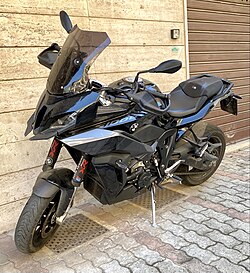
The BMW S1000XR occupies one of the most fascinating spaces in modern motorcycling. It is neither a pure superbike nor a traditional adventure tourer, yet it borrows heavily from both worlds to create something uniquely versatile. In a market where motorcycles are often designed with very specific purposes in mind—track performance, off-road capability, or long-distance touring—the S1000XR stands out as a machine that deliberately refuses to be confined to a single category.
At its core, the BMW S1000XR is an “Adventure Sport” motorcycle, a concept that blends the high-revving performance of BMW’s S1000RR superbike platform with the comfort, ergonomics, and touring practicality of an upright adventure bike. The result is a motorcycle capable of covering vast distances at high speed while still offering the agility and excitement expected from a sport machine.
Since its introduction, the S1000XR has gained a loyal following among riders who want one motorcycle that can do almost everything: commute during the week, carve through mountain roads on weekends, and cross entire countries without fatigue. It represents BMW Motorrad’s philosophy of engineering without compromise, where performance and comfort are not treated as opposing forces but as complementary traits.
This article explores the origins, engineering, design philosophy, engine performance, electronics, riding experience, practicality, and long-term ownership of the BMW S1000XR in detail. It also examines why this motorcycle has become one of the most respected sport-adventure machines in the world.
The Origins of the BMW S1000XR
The BMW S1000XR was first introduced in 2015 as a bold expansion of BMW’s already successful S1000 family. The S1000RR had proven that BMW could build world-class superbikes, while the S1000R showed that superbike performance could be adapted into a naked roadster format. The logical next step was to create a motorcycle that could retain superbike DNA while introducing touring comfort and long-distance capability.
BMW identified a growing demand among riders who wanted high performance without sacrificing comfort. Traditional adventure bikes were excellent for long distances but often lacked excitement on paved twisty roads. Conversely, superbikes were thrilling but physically demanding and impractical for long journeys. The S1000XR was designed to bridge this gap.
Built on a modified version of the S1000R platform, the XR adopted a taller stance, revised ergonomics, longer suspension travel, and wind protection, while maintaining the inline-four engine architecture. Over time, BMW refined the motorcycle with improved electronics, lighter construction, better aerodynamics, and enhanced comfort features.
The result was a machine that defied conventional classification. It was too fast and sharp to be considered a traditional touring bike, yet too comfortable and practical to be labeled a superbike. This dual identity became its greatest strength.
Design Philosophy: Function-Driven Adventure Sport Styling
The BMW S1000XR has a distinctive visual identity that reflects its hybrid nature. It combines elements of adventure motorcycles with aggressive sportbike styling, creating a machine that looks equally at home on mountain roads and highways.
The front of the motorcycle features a tall windscreen and angular LED headlights that emphasize its touring capability while maintaining BMW’s modern design language. The bodywork is sharp and aerodynamic, designed to channel airflow efficiently around the rider during high-speed cruising.
Unlike fully faired superbikes, the S1000XR exposes more mechanical components, reinforcing its rugged adventure-inspired character. The fuel tank is large and sculpted, providing both range and ergonomic support for long-distance riding.
The upright riding position is immediately noticeable. Wide handlebars, a tall seat, and centrally positioned footpegs create a posture that prioritizes comfort without sacrificing control. Riders sit “in” the motorcycle rather than “on top of it,” which contributes to stability at high speed.
BMW also paid careful attention to aerodynamics. Despite its tall stance, the S1000XR manages airflow efficiently, reducing rider fatigue during long highway stretches. Wind protection is significantly better than that of naked motorcycles, making it suitable for extended touring.
Every design element serves a purpose: stability, comfort, performance, or efficiency.
The Heart of the Machine: Inline-Four Performance
At the core of the BMW S1000XR lies its most defining feature: the 999 cc liquid-cooled inline-four engine derived from BMW’s superbike lineage.
This engine produces approximately 165 horsepower and 114 Nm of torque in its latest iterations, placing it among the most powerful engines in the adventure sport category. While these numbers are slightly lower than those of the S1000RR superbike, the tuning is optimized for midrange torque and real-world usability.
The engine delivers a wide and usable powerband, allowing riders to accelerate strongly without constantly chasing high RPM. This makes the motorcycle incredibly flexible in real-world riding conditions, especially when overtaking or climbing steep mountain roads.
Throttle response is smooth and predictable, thanks to ride-by-wire technology. Power delivery is linear, making the motorcycle easier to control despite its impressive performance capabilities.
At higher RPMs, the engine retains its characteristic inline-four scream, delivering exhilarating acceleration that rivals many sport-oriented motorcycles. However, unlike pure superbikes, the XR maintains composure and stability even during long-distance high-speed cruising.
BMW’s engineering focus ensures that performance does not come at the expense of reliability or refinement.
ShiftCam Technology: Smart Performance Delivery
One of the most significant advancements in modern BMW engines is the ShiftCam variable valve timing system, and the S1000XR benefits greatly from this innovation.
ShiftCam allows the engine to switch between two camshaft profiles depending on riding conditions. At lower RPMs, the system prioritizes smooth torque delivery, fuel efficiency, and ease of control. At higher RPMs, it transitions to a more aggressive profile that enhances airflow and maximizes power output.
The transition is seamless and unnoticeable to the rider, yet the effect is transformative. The engine feels relaxed and refined during city riding but becomes aggressively responsive when the throttle is opened fully.
This dual-character behavior is one of the key reasons the S1000XR feels so versatile. It behaves like a comfortable touring engine when needed and like a sport machine when demanded.
Chassis and Frame Engineering
The BMW S1000XR uses a modified version of BMW’s aluminum bridge frame, optimized for stability, comfort, and long-distance durability.
Compared to the S1000R and S1000RR, the XR features a longer wheelbase and revised geometry to improve straight-line stability and reduce rider fatigue during extended rides.
The frame is designed to balance stiffness and controlled flexibility, allowing the motorcycle to absorb road imperfections while maintaining precise handling.
Engine integration into the frame contributes to reduced weight and improved structural efficiency. The overall design ensures that even at high speeds, the motorcycle remains planted and stable.
Despite its touring focus, the XR retains impressive agility. It can still be confidently leaned into tight corners, making it far more entertaining on twisty roads than traditional adventure motorcycles.
Suspension System: Comfort Meets Control
Suspension is one of the most important aspects of the BMW S1000XR, and BMW has equipped it with components designed to handle a wide range of riding conditions.
The front suspension consists of upside-down telescopic forks that provide excellent feedback and stability under braking and cornering. The rear monoshock is tuned for comfort while maintaining sporting capability.
Many versions of the S1000XR feature Dynamic ESA (Electronic Suspension Adjustment), which automatically adapts damping settings based on riding conditions.
Sensors continuously monitor road conditions, throttle input, braking force, lean angle, and acceleration. The system adjusts suspension behavior in real time, softening for comfort during cruising and firming up during aggressive riding.
This technology eliminates the need for manual suspension adjustments and ensures optimal performance across different environments.
Whether riding on rough roads, smooth highways, or winding mountain passes, the suspension system maintains a consistent balance between comfort and control.
Braking Performance and Safety Systems
Given its performance capabilities, the BMW S1000XR is equipped with a powerful and highly refined braking system.
Dual front discs paired with radial-mounted calipers deliver strong and consistent braking performance. The rear brake provides additional stability during slow-speed maneuvers and corner entry.
BMW Motorrad ABS Pro enhances braking safety by incorporating lean-angle data. This means the system adjusts braking force even when the motorcycle is leaned over, significantly improving control in emergency situations.
Brake feel is progressive and predictable, allowing riders to confidently modulate stopping power in all conditions.
The braking system complements the motorcycle’s performance-oriented nature while ensuring safety during long-distance touring.
Electronics and Rider Aids
The BMW S1000XR features one of the most advanced electronics packages in its category.
Riding Modes
Multiple riding modes allow riders to tailor the motorcycle’s behavior to different environments. Rain mode prioritizes safety, Road mode balances comfort and performance, while Dynamic mode sharpens throttle response for spirited riding. Additional Pro modes offer deeper customization for experienced riders.
Traction Control
Dynamic Traction Control continuously monitors wheel slip and adjusts power delivery to maintain optimal grip. The system operates smoothly and rarely feels intrusive.
Wheelie Control
Given the engine’s power, wheelie control helps maintain stability during aggressive acceleration by managing front-wheel lift without compromising performance.
Cruise Control
Cruise control enhances long-distance comfort by allowing riders to maintain consistent speed without constant throttle input.
TFT Display
A large full-color TFT screen provides essential riding data, navigation, connectivity, and performance metrics in a clear and customizable format.
Riding Experience: The Dual Personality of the S1000XR
What makes the BMW S1000XR truly special is its dual personality.
On one hand, it is a comfortable touring machine capable of covering hundreds of kilometers with minimal fatigue. The upright seating position, wind protection, and suspension comfort make long journeys surprisingly relaxing.
On the other hand, it is a high-performance machine with superbike-level acceleration and precise handling. On winding roads, the XR transforms into an exciting and responsive sport motorcycle.
In urban environments, the motorcycle feels manageable despite its size and power. Visibility is excellent, throttle response is smooth, and low-speed maneuverability is surprisingly good for a liter-class machine.
On highways, it excels as a long-distance cruiser, maintaining stability at high speeds with minimal rider effort.
In mountain riding scenarios, it reveals its sportbike DNA, offering sharp handling and thrilling acceleration.
Few motorcycles can transition between these roles so seamlessly.
Touring Capability and Practicality
The BMW S1000XR is one of the most capable sport-touring motorcycles available today.
Its large fuel tank provides excellent range, making it suitable for long-distance travel. Wind protection reduces fatigue during extended highway rides.
Optional luggage systems allow riders to carry significant cargo, making it suitable for multi-day touring.
Heated grips, adjustable windshields, and ergonomic seating further enhance comfort.
Despite its performance focus, the motorcycle is practical enough for daily commuting, weekend touring, and even light travel duties.
Competition in the Adventure Sport Segment
The BMW S1000XR competes in a highly competitive segment that includes motorcycles such as the Ducati Multistrada V4, Kawasaki Versys 1000, Yamaha Tracer 9 GT+, and KTM 1290 Super Adventure S.
While each competitor offers unique strengths, the S1000XR distinguishes itself through its inline-four engine character, superbike-derived performance, and refined German engineering.
It is often considered the most sport-oriented machine in its category, offering a stronger emphasis on performance compared to rivals that prioritize comfort or off-road capability.
Ownership Experience and Reliability
BMW motorcycles are known for strong build quality and engineering precision, and the S1000XR continues this tradition.
Routine maintenance is straightforward, and service intervals are well structured.
Owners report strong long-term reliability when maintenance schedules are followed.
The motorcycle retains good resale value due to its reputation and versatility.
BMW’s global service network also ensures support in most regions.
While maintenance costs are higher than average motorcycles, they are justified by the performance and technology offered.
Why Riders Choose the BMW S1000XR
Riders choose the S1000XR because it eliminates compromise.
It delivers superbike-level performance in a comfortable and practical package.
It offers long-distance touring ability without sacrificing excitement.
It handles daily commuting, weekend riding, and extended travel with equal confidence.
It provides advanced electronics that enhance both safety and enjoyment.
It appeals to riders who want one motorcycle capable of doing everything well.
Conclusion
The BMW S1000XR represents one of the most complete and versatile motorcycles in modern motorcycling. It successfully combines the performance DNA of BMW’s superbike platform with the comfort and practicality of an adventure tourer. The result is a machine that feels equally at home on highways, mountain roads, and city streets.
Its powerful inline-four engine, advanced electronics, adaptive suspension, refined ergonomics, and excellent touring capabilities make it one of the most capable sport-adventure motorcycles available today. Unlike motorcycles that excel in only one area, the S1000XR delivers a balanced and rewarding experience across virtually every riding scenario.
For riders seeking a motorcycle that can replace multiple machines while still delivering excitement and emotion, the BMW S1000XR stands as one of the most compelling choices in its class. It is not just a motorcycle designed for travel—it is a motorcycle designed for freedom, performance, and limitless versatility.
BMW S1000XR Technical Specifications
| Parameter | Specification |
|---|---|
| Manufacturer | BMW Motorrad |
| Model | BMW S1000XR |
| Motorcycle Category | Adventure Sport / Sport Tourer |
| Engine Type | Liquid-cooled Inline Four-Cylinder |
| Displacement | 999 cc |
| Bore × Stroke | 80 mm × 49.7 mm |
| Compression Ratio | 12.5:1 |
| Maximum Power | 165 hp (121 kW) @ 11,000 rpm |
| Maximum Torque | 114 Nm @ 9,250 rpm |
| Valve Train | DOHC, 16 Valves with BMW ShiftCam |
| Fuel System | Electronic Fuel Injection |
| Cooling System | Liquid-cooled |
| Transmission | 6-speed Manual |
| Final Drive | Chain |
| Clutch | Wet Multi-Plate with Slipper Function |
| Frame | Aluminum Bridge Frame |
| Front Suspension | 45 mm Upside-Down Fork |
| Rear Suspension | Monoshock with Optional Dynamic ESA |
| Electronic Suspension | Dynamic ESA (Optional/Model Dependent) |
| Front Brakes | Dual 320 mm Discs with Radial Calipers |
| Rear Brake | Single 265 mm Disc |
| ABS | BMW Motorrad ABS Pro (Cornering ABS) |
| Front Tire | 120/70 ZR17 |
| Rear Tire | 190/55 ZR17 |
| Wheelbase | 1,552 mm |
| Seat Height | 850 mm |
| Fuel Tank Capacity | 20 liters |
| Wet Weight | Approximately 226 kg |
| Riding Modes | Rain, Road, Dynamic, Dynamic Pro |
| Traction Control | Dynamic Traction Control (DTC) |
| Wheelie Control | Standard |
| Cruise Control | Standard/Optional depending on model |
| Instrumentation | 6.5-inch Full-Color TFT Display |
| Lighting | Full LED |
| Top Speed | Over 250 km/h |
| Average Fuel Consumption | Approximately 5.5–6.5 L/100 km |
| Emissions Standard | Euro 5 / Euro 5+ |
