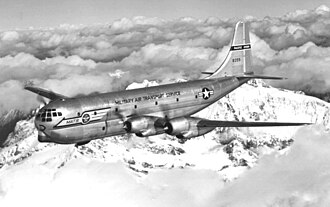
Boeing C-97 Stratofreighter – The Revolutionary Heavy Transport Aircraft of the Early Jet Age
The Boeing C-97 Stratofreighter was one of the most important transport aircraft developed during the transition between the Second World War and the modern jet age. Although it is not as widely remembered today as the Boeing B-29 Superfortress bomber from which it evolved or the Boeing 707 airliner that followed it, the C-97 played a crucial role in shaping postwar military aviation. It introduced a new generation of large, long-range transport capability and became the foundation for one of the most successful aerial refueling aircraft families in history.
Developed from the successful Boeing B-29 and B-50 Superfortress programs, the C-97 combined proven engineering with innovative design concepts. It featured a distinctive double-bubble fuselage, powerful radial engines, a pressurized cabin, and the ability to carry large numbers of passengers, troops, cargo, or medical evacuees over long distances. For the United States Air Force, it provided a strategic mobility capability at a time when global military operations were becoming increasingly dependent on rapid transportation.
The aircraft arrived during a period of enormous change in aviation. The Second World War had demonstrated the importance of long-range air transport, but postwar military planners required aircraft capable of moving personnel and equipment across continents. The emergence of the Cold War created new demands for rapid deployment, worldwide logistics, and aerial refueling. The C-97 became one of the aircraft that made this new era of global air power possible.
The Boeing C-97 Stratofreighter was also significant because it created a direct connection between military and civilian aviation. The same basic fuselage design was adapted into the Boeing 377 Stratocruiser, one of the most luxurious and advanced passenger aircraft of the late 1940s and 1950s. This relationship demonstrated how military technology could influence commercial aviation development.
This article explores the history, engineering, operational career, and lasting legacy of the Boeing C-97 Stratofreighter, examining why this large transport aircraft remains an important milestone in aviation history.
The Origins of the Boeing C-97 Stratofreighter
Developing a New Generation of Strategic Transport
The origins of the Boeing C-97 can be traced back to the wartime success of the Boeing B-29 Superfortress. During the Second World War, the B-29 represented the cutting edge of aircraft technology, featuring pressurization, advanced systems, long range, and a large internal volume. After the war, Boeing engineers recognized that the B-29’s basic design could serve as the foundation for a new class of transport aircraft.
Military planners understood that future conflicts would require the rapid movement of troops, equipment, and supplies across vast distances. Traditional cargo aircraft were limited in range and capacity, while many wartime transports were designed around temporary requirements rather than long-term strategic needs. The United States required a more capable aircraft that could support global operations during the emerging Cold War.
Boeing began developing the aircraft during the mid-1940s under the designation Model 367. Although it shared components and design concepts with the B-29, the new aircraft was extensively redesigned to serve a completely different purpose. Instead of carrying bombs, the aircraft needed a large, comfortable, pressurized cargo and passenger area.
The prototype first flew on 15 November 1944, even before the end of the Second World War. Development continued after the war, and the aircraft eventually entered service with the United States Air Force as the C-97 Stratofreighter in 1947.
The timing of the aircraft’s introduction was important. The world was entering the Cold War, and the ability to move forces quickly became a major strategic advantage. The C-97 provided the United States with a transport aircraft capable of supporting operations on a global scale.
Design Philosophy of the C-97 Stratofreighter
Combining Bomber Technology With Transport Requirements
The Boeing C-97 represented a creative combination of existing military technology and new transport requirements. Engineers used lessons learned from the B-29 and B-50 programs while adapting the aircraft for logistics rather than combat.
One of the most distinctive features of the C-97 was its double-deck fuselage design. The aircraft used a “double-bubble” cross-section, created by joining two circular sections together. This unusual shape provided a large internal volume while maintaining structural strength and aerodynamic efficiency.
The upper section housed the main passenger and crew areas, while the lower section could accommodate cargo, equipment, or additional storage. This arrangement gave the aircraft impressive flexibility and allowed it to perform many different missions.
The pressurized cabin was another important feature. At the time, many transport aircraft operated at relatively low altitudes and lacked pressurization. The C-97 allowed passengers and crew to operate in a more comfortable environment while flying at higher altitudes, improving efficiency and reducing exposure to weather conditions.
The aircraft also inherited advanced construction techniques from Boeing’s bomber programs. Its all-metal structure provided strength and durability, allowing it to operate for many years in demanding military environments.
Airframe Construction and Engineering Features
A Strong and Spacious Transport Design
The C-97’s airframe was significantly larger than that of the B-29, although many engineering concepts were shared between the two aircraft. The fuselage was strengthened to handle cargo loads and the stresses associated with transport operations.
The aircraft featured a high-mounted wing design that provided additional ground clearance and allowed cargo operations to take place more easily. The wings were based on proven Boeing bomber technology but modified for the heavier transport role.
The large fuselage allowed the aircraft to carry a wide variety of loads. Depending on configuration, it could transport troops, vehicles, supplies, passengers, or medical patients. This versatility became one of the aircraft’s greatest strengths.
The rear fuselage included large access doors that simplified loading operations. Although the aircraft did not have the sophisticated cargo systems found on later transports, it represented a major improvement over earlier designs.
The C-97’s engineering approach emphasized reliability and adaptability. The aircraft was designed not for a single mission but as a flexible platform capable of supporting many different military requirements.
The Pratt & Whitney R-4360 Wasp Major Engines
Powering a New Heavy Transport
The Boeing C-97 was powered by four Pratt & Whitney R-4360 Wasp Major radial engines, the same basic family of engines used on the B-50 Superfortress. These engines were among the most powerful piston engines ever produced and provided the aircraft with the performance necessary for long-range transport missions.
Each engine produced approximately 3,500 horsepower, giving the C-97 a total power output of around 14,000 horsepower. This enormous power allowed the aircraft to carry heavy loads while maintaining respectable cruising speeds.
The R-4360 was a highly advanced but mechanically complex engine. It used a four-row radial configuration with 28 cylinders, representing the peak of piston-engine development before jet propulsion became dominant.
For the C-97, these engines provided excellent reliability and endurance. They allowed the aircraft to operate over long distances and from a wide range of airfields around the world.
However, the engines also required significant maintenance. Their complexity and fuel consumption became disadvantages as jet technology improved. Nevertheless, during the period when the C-97 entered service, they represented one of the best available propulsion systems.
Passenger and Cargo Capacity
The Boeing C-97 was designed to provide exceptional flexibility. Unlike aircraft designed only for cargo or only for passengers, the Stratofreighter could quickly adapt to different mission requirements.
In troop transport configuration, the aircraft could carry a large number of military personnel over long distances. Comfortable seating, pressurization, and long-range capability made it ideal for strategic troop movements.
For cargo operations, the spacious fuselage allowed transportation of equipment and supplies that could not be carried by smaller aircraft. This capability was especially valuable during the early Cold War, when the United States maintained military commitments around the world.
The aircraft could also be configured for medical evacuation missions. Its large interior space allowed the installation of medical equipment and patient facilities, making it an important humanitarian and military asset.
This adaptability helped the C-97 remain useful throughout its service career, even as newer transport aircraft entered service.
Early Service With the United States Air Force
The Boeing C-97 entered operational service with the United States Air Force in 1947. It quickly became an important part of the Air Force’s strategic transport capability, supporting the movement of personnel and equipment around the world.
The aircraft was assigned primarily to transport units and became a key element of America’s global military logistics system. During the early Cold War, maintaining overseas bases required a reliable method of moving supplies and personnel, and the C-97 provided that capability.
The aircraft also supported humanitarian missions, disaster relief operations, and other non-combat tasks. Its large capacity and long range made it valuable whenever significant amounts of material or personnel needed to be transported quickly.
Cockpit and Crew Operations of the Boeing C-97 Stratofreighter
Managing a Large Four-Engine Transport Aircraft
Operating the Boeing C-97 Stratofreighter required a highly trained crew because the aircraft combined the complexity of a heavy bomber with the responsibilities of a strategic transport. Unlike smaller cargo aircraft, the C-97 demanded careful coordination between pilots, flight engineers, navigators, and other specialists. Long-distance missions often required many hours of flight, making teamwork and disciplined procedures essential.
The cockpit was positioned in the forward section of the aircraft and reflected Boeing’s experience with large military aircraft design. Pilots operated a wide range of mechanical and electrical systems, while the flight engineer monitored the four Pratt & Whitney R-4360 engines and assisted with fuel management, engine settings, and aircraft systems.
The flight engineer position was especially important because the Wasp Major engines were powerful but complex machines. Maintaining proper temperatures, pressures, and fuel flow required constant attention. During long missions, the engineer played a critical role in preventing mechanical problems and ensuring efficient operation.
The navigator was another essential member of the crew. Before the widespread use of modern satellite navigation, long-range aircraft depended on skilled navigators using radio navigation systems, celestial observations, and traditional navigation methods. Accurate navigation was crucial because the C-97 was designed to operate over enormous distances.
The aircraft’s size also required specialized ground support. Maintenance teams, loading crews, and technicians worked together to keep the Stratofreighter operational. The aircraft represented a major logistical system rather than simply a flying machine.
Strategic Air Mobility During the Cold War
The C-97 as a Foundation of Global Military Logistics
The Boeing C-97 entered service at a time when the United States was building a worldwide military presence. After the Second World War, American forces maintained bases across Europe, Asia, and other strategic regions. Supporting these locations required a reliable transport network capable of moving people and equipment quickly.
The C-97 became one of the aircraft that made this global network possible. Its combination of long range, large capacity, and pressurized comfort allowed the United States Air Force to move personnel between continents more efficiently than earlier transport aircraft.
During the early Cold War, rapid deployment was considered a major strategic advantage. Military planners recognized that the ability to move forces quickly could influence the outcome of a crisis. The Stratofreighter contributed to this capability by connecting distant bases and supporting overseas operations.
The aircraft was also valuable during peacetime operations. Routine supply flights, training missions, and logistical movements helped maintain readiness. These activities formed the foundation of the large-scale air mobility system that would later be expanded with aircraft such as the C-141 Starlifter and C-5 Galaxy.
Medical Evacuation and Humanitarian Missions
A Transport Designed to Save Lives
One of the most important secondary roles of the Boeing C-97 was medical evacuation. The aircraft’s large pressurized interior made it suitable for transporting injured personnel over long distances while providing medical support during flight.
Medical evacuation versions could be equipped with patient beds, medical equipment, and support stations for healthcare personnel. This capability allowed wounded service members to be moved quickly from operational areas to advanced medical facilities.
The ability to perform humanitarian missions demonstrated the flexibility of the C-97 design. Although developed primarily as a military transport, the aircraft could support disaster relief, emergency transportation, and other non-combat operations.
These missions highlighted an important characteristic of large transport aircraft: their value extends beyond military capability. By moving people, supplies, and medical resources, aircraft like the C-97 became important tools for international assistance.
The Development of the KC-97 Stratotanker
Transforming the Stratofreighter Into an Aerial Refueling Aircraft
One of the most significant developments in the history of the Boeing C-97 was its conversion into the KC-97 Stratotanker. As military aviation moved toward longer-range operations, aerial refueling became increasingly important. Tanker aircraft allowed fighters and bombers to remain airborne longer and extended the reach of American air power.
The KC-97 retained the basic structure of the C-97 but was modified with specialized refueling equipment. The aircraft carried large quantities of fuel and used a flying boom system to transfer fuel to compatible aircraft.
The KC-97 became one of the most important tanker aircraft of the early Cold War. It supported Strategic Air Command missions and allowed long-range bombers and fighters to operate farther from their bases.
The aircraft played a particularly important role before the widespread introduction of jet-powered tankers. During the 1950s, it provided the United States with a reliable aerial refueling capability while jet technology continued to develop.
Challenges of Operating the KC-97
Although successful, the KC-97 faced challenges when used with early jet aircraft. The tanker itself was powered by piston engines, while many of the aircraft it supported were increasingly powered by jet engines. The difference in cruising speeds created operational difficulties.
Jet fighters often had to reduce speed significantly during refueling operations to match the KC-97’s performance. This limitation encouraged the development of faster jet-powered tanker aircraft.
Despite these challenges, the KC-97 played a crucial historical role. It established procedures, techniques, and operational experience that influenced later tanker aircraft development.
The Boeing C-97 and the Boeing 377 Stratocruiser Connection
From Military Transport to Luxury Airliner
One of the most interesting aspects of the C-97 program was its connection to civilian aviation. Boeing adapted the same basic fuselage concept into the Boeing 377 Stratocruiser, a luxury passenger aircraft introduced in the late 1940s.
The Stratocruiser used the C-97’s spacious double-deck fuselage design and transformed it into one of the most advanced passenger aircraft of its era. Airlines used the aircraft for long-distance international routes, offering passengers a level of comfort previously unavailable.
The upper passenger deck provided a spacious cabin environment, while the lower deck could include lounges and additional facilities. This design reflected the flexibility of Boeing’s original transport concept.
Although the Stratocruiser was eventually surpassed by jet airliners, it represented an important step in commercial aviation development. The connection between the C-97 and Stratocruiser demonstrated how military engineering could influence civilian aircraft design.
Operational Experiences and Challenges
Reliability and Maintenance Requirements
The Boeing C-97 was generally considered a successful aircraft, but operating such a large piston-powered machine presented challenges. The R-4360 engines provided impressive power but required significant maintenance because of their complexity.
Maintenance crews needed extensive training to support the aircraft. Engine inspections, structural checks, and system maintenance were critical parts of keeping the fleet operational.
Fuel consumption was another major consideration. Large radial engines consumed significant amounts of fuel, especially compared with later jet aircraft. As fuel efficiency became increasingly important, piston-powered transports became less competitive.
Nevertheless, the aircraft’s reliability and versatility allowed it to remain in service for many years. Its strengths outweighed its disadvantages during the period when it was most needed.
The C-97 During International Operations
The Boeing C-97 supported numerous international missions during its career. The aircraft operated from American bases around the world and contributed to maintaining military connections between continents.
Its ability to carry large numbers of personnel made it valuable for troop movements, while its cargo capacity allowed it to transport essential equipment and supplies.
During periods of tension, the aircraft helped demonstrate American mobility and readiness. It was not designed for combat itself, but it provided the logistical foundation necessary for military operations.
The Beginning of Replacement by Jet Transports
By the late 1950s, advances in jet technology began changing military transport aviation. Aircraft powered by jet engines offered higher speeds, greater efficiency, and improved performance at high altitudes.
The arrival of aircraft such as the Boeing C-135 family gradually reduced the need for piston-powered transports and tankers. Jet aircraft could better match the speed requirements of modern fighters and bombers.
However, the C-97 remained historically important because it served during the critical transition period between wartime piston aircraft and modern jet-powered mobility systems.
Comparison With Other Military Transport Aircraft
Boeing C-97 Versus Earlier Wartime Transports
The Boeing C-97 Stratofreighter represented a significant advancement compared with the transport aircraft used during the Second World War. Aircraft such as the Douglas C-54 Skymaster and Curtiss C-46 Commando had proven valuable during wartime logistics operations, but they lacked the combination of range, capacity, and comfort required for the postwar strategic environment.
The C-97 offered a much larger fuselage, higher cruising altitude, and a pressurized cabin. These characteristics allowed it to move passengers and cargo across continents more efficiently. While earlier transports were primarily designed for wartime necessity, the C-97 was developed with long-term global operations in mind.
The aircraft also benefited from Boeing’s experience building large bombers. The company had developed advanced methods of producing strong, lightweight aircraft structures, and these lessons were applied to the Stratofreighter.
Although the C-97 was more complex than earlier transports, its capabilities represented the direction that military aviation was moving. Large, long-range aircraft would become essential components of modern air mobility systems.
Boeing C-97 Versus Modern Jet Transports
The arrival of jet-powered transports eventually made the C-97 obsolete, but comparing the aircraft with later designs highlights its historical importance. Modern transports such as the Boeing C-135 and C-141 offered higher speeds, improved fuel efficiency, and better performance at high altitudes.
The C-97’s piston engines limited its speed and increased maintenance requirements compared with jet aircraft. However, during the late 1940s and early 1950s, jet transport technology was still developing, and the Stratofreighter provided a reliable solution during this transition period.
The aircraft established many operational concepts that continued with later transports, including worldwide logistics networks, strategic mobility planning, and large-scale aerial support operations.
The Importance of the C-97 in Building American Air Mobility
Creating a Global Transportation Network
The Boeing C-97 played a major role in creating the foundations of modern American military air mobility. Before aircraft like the Stratofreighter, moving large numbers of troops and equipment across oceans was slow and dependent on ships or limited-range aircraft.
The C-97 changed expectations by demonstrating that air transport could support global military operations. Its range and capacity allowed commanders to move resources quickly between distant locations.
This capability became increasingly important during the Cold War. Military commitments expanded around the world, requiring constant movement of personnel, supplies, and equipment.
The lessons learned from operating the C-97 influenced later transport aircraft development and contributed to the creation of increasingly capable airlift systems.
The C-97 Stratofreighter in the Civil Reserve Air Fleet
The influence of the C-97 extended beyond military operations. Like many large transport aircraft, it contributed to the broader development of commercial aviation and national transportation capabilities.
The civilian Boeing 377 Stratocruiser demonstrated how military engineering could be adapted for passenger service. Although the commercial aircraft had a relatively short career due to the rapid arrival of jet airliners, it represented an important stage in the evolution of long-distance passenger travel.
The relationship between the C-97 and the Stratocruiser showed the close connection between military and civilian aviation during the postwar period. Technologies developed for defense programs often influenced the aircraft used by airlines around the world.
Retirement of the Boeing C-97 Stratofreighter
The End of the Piston Transport Era
By the 1960s, the Boeing C-97 was gradually replaced by newer jet-powered aircraft. Advances in jet propulsion had transformed aviation, making piston-powered transports increasingly outdated for major military roles.
Aircraft such as the Boeing C-135 Stratotanker and Lockheed C-130 Hercules offered improved performance, efficiency, and operational flexibility. These aircraft better matched the requirements of modern military aviation.
The final C-97 military operations ended in the early 1970s, although some aircraft continued flying with civilian operators and specialized organizations.
The retirement of the C-97 marked the end of an important era. It represented the final generation of large piston-powered transports before jet aircraft became dominant.
Surviving Boeing C-97 Aircraft Today
Because of its historical importance, several Boeing C-97 Stratofreighters have been preserved by museums and aviation organizations. These surviving aircraft provide valuable insight into the development of postwar aviation technology.
Restoring and maintaining a C-97 is a major undertaking. The aircraft’s enormous size, complex systems, and rare components make preservation challenging. Restoration groups often rely on specialized knowledge, historical documentation, and careful mechanical work.
Preserved examples allow visitors to experience the scale of early strategic transports. Walking through a C-97 reveals the spacious interior, large cargo areas, and engineering complexity that defined this aircraft.
These aircraft serve as reminders of the era when piston-powered machines connected continents and supported the growth of global air mobility.
The Legacy of the Boeing C-97 Stratofreighter
The Boeing C-97 Stratofreighter occupies an important place in aviation history because it represented a turning point between wartime aircraft development and modern strategic mobility. It demonstrated that large aircraft could efficiently support worldwide operations and helped establish concepts that remain central to military aviation today.
Its influence can be seen in later transport and tanker aircraft. The idea of combining large capacity, long range, and mission flexibility became a standard feature of modern military airlift design.
The KC-97 tanker variant was particularly important because it helped establish aerial refueling as a fundamental capability of modern air forces. The techniques developed through Stratotanker operations influenced generations of tanker aircraft.
Although the C-97 itself was eventually replaced by faster jet aircraft, its contribution was lasting. It helped transform the United States from a force dependent on regional transportation into one capable of maintaining a truly global presence.
Technical Specifications of the Boeing C-97 Stratofreighter
| Specification | Boeing C-97 Stratofreighter |
|---|---|
| Manufacturer | Boeing Aircraft Company |
| Aircraft Type | Heavy strategic transport aircraft |
| First Flight | 15 November 1944 |
| Introduction Into Service | 1947 |
| Primary Operator | United States Air Force |
| Production Period | 1947–1958 |
| Total Production | 888 aircraft including tanker variants |
| Crew | Approximately 5 to 8 personnel depending on mission |
| Passenger Capacity | Up to approximately 134 passengers depending on configuration |
| Length | 33.66 metres |
| Wingspan | 43.05 metres |
| Height | 11.66 metres |
| Wing Area | 164.3 square metres |
| Empty Weight | Approximately 37,000 kg |
| Maximum Takeoff Weight | Approximately 79,380 kg |
| Engines | 4 × Pratt & Whitney R-4360 Wasp Major radial engines |
| Engine Power | Approximately 3,500 horsepower each |
| Total Power Output | Approximately 14,000 horsepower |
| Maximum Speed | Approximately 603 km/h |
| Cruising Speed | Approximately 480 km/h |
| Range | Approximately 6,900 km |
| Service Ceiling | Approximately 9,700 metres |
| Cargo Capacity | Approximately 20,000 kg depending on configuration |
| Armament | None in standard transport configuration |
| Major Variants | C-97A, C-97C, C-97D, KC-97 tanker series, EC/WB research versions |
| Related Aircraft | Boeing B-29 Superfortress, Boeing B-50 Superfortress, Boeing 377 Stratocruiser |
Conclusion – The Transport Aircraft That Helped Create Global Air Mobility
The Boeing C-97 Stratofreighter was far more than a simple cargo aircraft. It was a symbol of aviation’s transition from the wartime piston era into the age of global strategic mobility. By combining advanced engineering from the B-29 and B-50 programs with the practical needs of military transportation, Boeing created an aircraft that shaped the future of air logistics.
Its large pressurized fuselage, long range, powerful engines, and adaptable design allowed it to perform many roles, from troop transport and cargo missions to aerial refueling and scientific research. The aircraft helped the United States build the worldwide transportation capabilities required during the Cold War.
The C-97 also demonstrated the close relationship between military and civilian aviation. Its influence continued through the Boeing 377 Stratocruiser and the many transport aircraft that followed.
Today, the Boeing C-97 Stratofreighter remains a remarkable example of postwar aerospace innovation. It represents an era when engineers pushed piston-powered aircraft to their limits and created machines capable of connecting continents, supporting global operations, and shaping the future of aviation.
