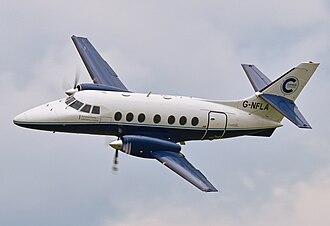
British Aerospace Jetstream: The Evolution of a British Regional Aviation Classic
The British Aerospace Jetstream is one of the most recognizable names in the history of British regional aviation, representing a family of turboprop aircraft whose story stretches from the ambitious designs of Handley Page in the 1960s through Scottish Aviation and ultimately to British Aerospace. Although the name is often associated particularly with the Jetstream 31, Jetstream 32 and Jetstream 41, the family has a considerably deeper history. The original Jetstream was conceived as a compact, pressurized commuter aircraft intended to bring airline-style speed and comfort to regional routes, while the later British Aerospace versions transformed the concept with more powerful engines, improved avionics and increased passenger capacity. The result was a group of aircraft that became especially important in regional aviation, particularly in the United States, Britain, Australia and other markets where airlines needed economical aircraft for relatively short sectors. The Jetstream was never the largest or fastest turboprop in commercial service, but its combination of a pressurized cabin, two-abreast-and-one seating arrangement, respectable cruise speed and relatively modest operating requirements gave it a distinctive place in aviation history. British Aerospace eventually built hundreds of Jetstream 31 and 32 aircraft, followed by the larger Jetstream 41, ensuring that the name remained familiar to airline passengers and aviation enthusiasts for decades.
The Origins of the Jetstream
Handley Page’s Original Concept
The story of the British Aerospace Jetstream begins not with British Aerospace itself but with Handley Page, one of Britain’s historic aircraft manufacturers. During the 1960s, Handley Page developed the HP.137 Jetstream as a small, pressurized twin-turboprop aircraft aimed particularly at the growing American commuter-airline market. The idea was to provide a compact aircraft capable of operating regional routes while offering passengers a degree of comfort and speed that smaller unpressurized aircraft could not match. The prototype first flew on 18 August 1967, and the aircraft subsequently entered production in small numbers. The design featured a relatively narrow fuselage, a high-mounted tailplane and two turboprop engines mounted on the wings, while its pressurized cabin allowed it to operate at higher altitudes than many competing commuter aircraft.
The original aircraft was technologically interesting but encountered significant commercial and financial difficulties. Its Turbomeca Astazou engines presented reliability and maintenance challenges for some operators, while Handley Page itself experienced serious financial problems. The company’s difficulties eventually led to the Jetstream production and design rights passing to Scottish Aviation, which was based at Prestwick in Scotland. Scottish Aviation continued to develop the aircraft and found an important customer in the British military. The Royal Air Force ordered Jetstreams for training duties, demonstrating that the aircraft could be adapted successfully beyond its original commuter-airline role. When the British aircraft industry was reorganized in the late 1970s, Scottish Aviation became part of the newly formed British Aerospace, bringing the Jetstream design into the BAe family.
The Birth of the British Aerospace Jetstream 31
A New Generation
British Aerospace recognized that the basic Jetstream still possessed considerable potential, but the original engines and systems limited its competitiveness. The company therefore began developing a substantially improved version, ultimately designated the Jetstream 31. Rather than simply continuing production of the older aircraft, British Aerospace installed new Garrett TPE331 turboprop engines, modernized the systems and made a series of structural and aerodynamic improvements. The new aircraft first flew on 28 March 1980, beginning a development program that would eventually transform the Jetstream into one of the most successful small regional turboprops of its generation.
The TPE331 engines were particularly important. Depending on the specific configuration, the engines were flat-rated at approximately 1,020 shaft horsepower, substantially improving the aircraft’s performance compared with early Jetstreams. They also offered longer overhaul intervals than the original powerplants. This gave British Aerospace an opportunity to address some of the practical problems associated with the earlier aircraft while preserving the fundamental strengths of the design. The Jetstream 31 was certified in the United Kingdom in June 1982, and the aircraft subsequently achieved considerably greater commercial success than the original Handley Page version.
One of the clever characteristics of the Jetstream 31 was its compact but highly functional cabin. The aircraft could carry up to 19 passengers, generally arranged in a 2+1 configuration, with two seats on one side of the aisle and a single seat on the other. This arrangement was particularly well suited to a narrow regional fuselage because it avoided the uncomfortable four-abreast seating sometimes associated with larger aircraft of similar capacity. The pressurized cabin also allowed airlines to operate above much of the weather encountered at lower altitudes, improving passenger comfort and potentially reducing flight times.
Why the Jetstream 31 Became Popular
The American Regional Market
The Jetstream 31 achieved considerable success in the North American commuter market, where airlines needed aircraft capable of linking smaller communities to major hubs. Its size was an important advantage. A regional airline could operate a 19-seat Jetstream on a route where a 30- or 50-seat aircraft would have been uneconomical, while passengers still received the advantages of a pressurized twin-engine aircraft.
The aircraft’s relatively high cruise speed also helped make it competitive. Published specifications put the Jetstream 31’s maximum speed at roughly 303 mph (487 km/h), with a long-range cruise speed around 265 mph (426 km/h). Its certificated ceiling could reach approximately 25,000 feet, allowing operators to take advantage of the operational benefits of higher-altitude flight.
British Aerospace’s success with the Jetstream 31 was reflected in production numbers. Approximately 386 Jetstream 31 and 32 aircraft were produced before production ended in 1993, a substantial improvement over the limited production of the original Handley Page aircraft. The type consequently became a familiar sight at regional airports, particularly in North America, while also serving airlines in Europe, Australia and elsewhere.
The Jetstream Super 31 and Jetstream 32
More Power and Better Performance
British Aerospace continued improving the aircraft after the Jetstream 31 had established itself. During the 1980s, engineers developed a further engine upgrade that resulted in the Jetstream Super 31, commonly known as the Jetstream 32. The new version used more powerful TPE331 engines and incorporated higher operating weights and performance improvements. The updated aircraft first flew in 1988, and certification followed later that year.
The Jetstream 32 retained the compact dimensions and passenger capacity of the 31 but benefited from the additional power. This was particularly useful in demanding operating environments, including airports at high elevations or locations with high ambient temperatures. An enhanced-performance version known as the J32EP was subsequently developed to improve payload capability under hot-and-high conditions. These improvements extended the practical usefulness of the aircraft without requiring British Aerospace to design an entirely new airframe.
The Jetstream 31 and 32 therefore illustrate a classic approach to aircraft development: establish a successful basic design and then improve its weakest areas through incremental engineering. The airframe remained recognizable, but engines, systems and operating capabilities evolved. This strategy helped British Aerospace build a substantial installed fleet and allowed operators to benefit from familiarity with the aircraft while receiving improved performance.
The Jetstream 41: A Much Larger Aircraft
Stretching the Concept
The next major development was the British Aerospace Jetstream 41, which took the original concept into a larger market. British Aerospace wanted an aircraft capable of carrying approximately 30 passengers and competing directly with regional turboprops such as the Embraer Brasilia, Saab 340 and Dornier 328. The answer was not simply a slightly stretched Jetstream 31. Instead, British Aerospace created an extensively redesigned aircraft that retained the Jetstream name while introducing a new fuselage, larger wing and substantially more powerful engines.
The J41 was stretched by approximately 16 feet, with an 8-foot-3-inch fuselage plug positioned forward of the wing and a 7-foot-9-inch plug behind it. The redesigned fuselage could accommodate 29 passengers, normally in the same 2+1 seating arrangement that characterized the smaller Jetstream. The wing was also redesigned and increased in span, while its mounting position was changed so that the wing structure passed below the fuselage. This arrangement allowed British Aerospace to increase baggage capacity in the wing-root fairings while avoiding a significant obstruction in the passenger cabin.
More Powerful Engines
The Jetstream 41 was powered by two AlliedSignal TPE331-14 turboprop engines, eventually rated at approximately 1,650 shaft horsepower each. Five-bladed propellers were used to convert the engine power into thrust. This was a significant increase over the power available on the Jetstream 31/32 and was necessary to move the larger aircraft while maintaining the performance expected of a regional airliner.
The aircraft also received a more modern flight deck featuring electronic flight instrumentation. Its development represented a major step forward from the original Jetstream concept, and the J41 became the first turboprop to be certified to both JAR-25 and FAR-25 standards, reflecting the stringent requirements applied to larger transport-category aircraft.
The prototype flew on 25 September 1991, with European certification following in November 1992 and United States certification in April 1993. The first delivery took place on 25 November 1992. Despite its technical capabilities, however, the J41 faced a difficult commercial environment and production ended in 1997 after approximately 100 aircraft had been delivered.
The Jetstream’s Military Career
Training and Special Missions
The Jetstream’s story is not limited to civilian airline operations. Military and government organizations also recognized the advantages of the compact, pressurized twin-turboprop design. The Royal Air Force had already adopted earlier Jetstream variants for pilot training, and the Royal Navy later ordered Jetstream aircraft for radar-observer training. Four Jetstream 31-based aircraft were ordered for the Royal Navy in 1985, later being used for VIP transportation.
Military operators valued the aircraft’s relatively straightforward handling, reliable twin-engine configuration and ability to provide a realistic environment for training personnel who would later operate larger aircraft. The Jetstream could also be adapted to specialized transport and liaison duties, making it a versatile platform beyond its original regional-airline purpose.
Its military history reinforces an important characteristic of the Jetstream family: the aircraft was fundamentally a practical machine. Its design was not dependent upon a single narrow commercial application. A pressurized cabin, good cruise performance and flexible interior allowed it to perform several different roles with relatively modest modification.
The Jetstream Name Becomes a Brand
British Aerospace’s Broader Strategy
In 1993, British Aerospace adopted the Jetstream name as a brand for its twin-turboprop aircraft. This was significant because the company was no longer treating Jetstream simply as the name of a particular model. The name had become associated with British Aerospace’s regional turboprop business more broadly. The Jetstream 31 and 32 continued under the name, while the larger J41 extended the family upward in capacity. British Aerospace also associated the name with the ATP, although the proposed “Jetstream 61” designation never replaced the ATP name in normal service.
This period illustrates the complexity of the British regional-aircraft industry. British Aerospace had several turboprop designs and was attempting to maintain a competitive position against manufacturers from Europe, North America and elsewhere. The regional-aircraft market was increasingly sensitive to operating economics, while airlines were also becoming more interested in larger regional jets. The Jetstream family remained useful, but the market was gradually moving toward newer aircraft with different combinations of capacity, speed and operating cost.
The Legacy of the British Aerospace Jetstream
An Aircraft Family That Outlived Its Manufacturer
The Jetstream’s greatest achievement may be its longevity. The original aircraft was conceived in the 1960s, yet substantially redesigned versions remained commercially relevant decades later. The Jetstream 31 and 32 became particularly successful because they combined a proven airframe concept with more capable engines, while the J41 demonstrated that the design philosophy could be expanded into a larger regional-airliner category.
The aircraft’s relatively small size was both an advantage and a limitation. On thin regional routes, carrying fewer than 20 passengers could make excellent economic sense, particularly where demand was insufficient for larger aircraft. However, airlines also needed to balance that flexibility against the costs associated with operating a small aircraft. As regional networks evolved, some routes demanded greater capacity, which encouraged the development of larger turboprops and regional jets.
Nevertheless, the Jetstream remained valuable in specialist operations and with regional carriers serving communities that could not support larger aircraft. Its ability to use relatively small airports, combined with its pressurized cabin and respectable cruising performance, ensured that the aircraft remained useful long after production ended.
Why the Jetstream Is Important in Aviation History
The British Aerospace Jetstream is important because it demonstrates how an aircraft concept can survive through several generations of ownership, engineering development and changing market conditions. Handley Page created the original concept, Scottish Aviation refined and manufactured it, and British Aerospace transformed it into a successful modern regional-aircraft family. That continuity is unusual in an industry where aircraft programs often disappear when their original manufacturers encounter financial difficulties.
The Jetstream also demonstrates the importance of evolutionary engineering. The Jetstream 31 was not revolutionary in appearance, but its new engines and system improvements made it a dramatically more practical aircraft than the earliest versions. The Jetstream 32 extended those improvements, while the Jetstream 41 used the same broad philosophy to create a much larger aircraft with an entirely new fuselage and redesigned wing.
Perhaps most importantly, the Jetstream helped establish the modern concept of the small pressurized regional turboprop. It offered airlines an alternative between small general-aviation aircraft and much larger regional airliners, providing an important transportation link for communities that otherwise might have had limited air service. For passengers, it combined the compact dimensions of a commuter aircraft with the speed and weather protection associated with larger commercial aircraft.
Conclusion
The British Aerospace Jetstream is far more than a single aircraft model. It is the product of a long British aviation story that began with Handley Page’s HP.137 in the 1960s and continued through Scottish Aviation and British Aerospace. The Jetstream 31 and Jetstream 32 established the family as a successful small regional turboprop, while the Jetstream 41 expanded the concept into a 29-seat aircraft designed to compete with the leading regional airliners of its era.
Although the Jetstream eventually faced strong competition from newer turboprops and regional jets, its contribution to regional aviation remains significant. Its pressurized cabin, economical turboprop engines, 2+1 seating arrangement and adaptability made it especially useful on thin regional routes. Hundreds of Jetstream 31 and 32 aircraft were produced, and the larger J41 added another 100 examples to the family before production ended in 1997.
The aircraft’s lasting appeal comes from its practicality. It was never intended to dominate the world’s major airports. Instead, the Jetstream was designed to connect smaller communities efficiently and reliably, and it performed that role for decades. Its distinctive shape, compact cabin and unmistakable turboprop sound have consequently become part of the history of regional aviation. For aviation enthusiasts, the British Aerospace Jetstream remains an excellent example of how a relatively small aircraft can have an outsized impact on the development of commercial air travel.
British Aerospace Jetstream Technical Specifications
Because the British Aerospace Jetstream name covers several variants, the table below focuses on the two most significant BAe generations: the Jetstream 31/32 and the larger Jetstream 41. Figures can vary between individual subvariants, equipment configurations and operating conditions.
| Specification | Jetstream 31/32 | Jetstream 41 |
|---|---|---|
| Aircraft type | Regional/commuter turboprop | Regional/feeder turboprop |
| Manufacturer | British Aerospace | British Aerospace |
| First flight | 28 March 1980 | 25 September 1991 |
| Typical passenger capacity | Up to 19 | 29 |
| Crew | 2 | 2 pilots + cabin crew |
| Length | 14.37 m (47 ft 2 in) | 19.25 m (63 ft 2 in) |
| Wingspan | 15.85 m (52 ft) | 18.29 m (60 ft) |
| Height | Approx. 5.32 m (17 ft 5 in) | 5.74 m (18 ft 10 in) |
| Wing area | Approx. 25.1 m² | 32.59 m² |
| Engines | 2 × Garrett/Honeywell TPE331 | 2 × AlliedSignal TPE331-14 |
| Typical engine power | Approx. 900–1,020 shp each | Up to 1,650 shp each |
| Propellers | Four-/five-bladed, depending on version | 5-bladed |
| Maximum takeoff weight | Approx. 6,600 kg | Approx. 10,886 kg |
| Maximum speed | Approx. 487 km/h (263 kt) | Approx. 546 km/h (295 kt) |
| Typical cruise speed | Approx. 426 km/h (230 kt) | Approx. 482 km/h (260 kt) economical cruise |
| Service ceiling | Up to approximately 25,000 ft | Approximately 26,000 ft |
| Typical range | Approximately 780 km with commuter payload | Approximately 1,433 km with 29 passengers and reserves |
| Flight deck | Conventional/updated avionics depending on variant | Modern EFIS flight deck |
| Primary role | Commuter and regional passenger transport | Regional and feeder airline service |
| Production | 386 Jetstream 31/32 aircraft | Approximately 100 aircraft |
| Production period | 1980–1993 | 1992–1997 |
Note: Jetstream specifications differed between individual versions, particularly engine ratings, maximum weights and range. The figures above are intended as representative historical specifications rather than a flight-planning reference.
