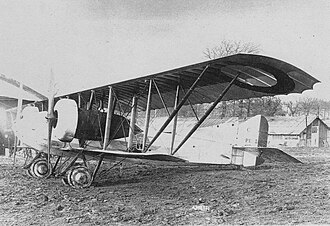
Caudron G.6: The French Reconnaissance Biplane of World War I
The Caudron G.6 was a French military aircraft developed during the First World War, a period when aviation was evolving from an experimental technology into an essential instrument of modern warfare. Designed to perform reconnaissance, artillery observation, and light bombing missions, the G.6 reflected the growing importance of aircraft that could gather intelligence over enemy territory while operating in increasingly dangerous skies. Manufactured by the French company Caudron, the aircraft combined the broad-winged, twin-engine arrangement associated with the earlier Caudron G.4 with a more conventional fuselage and tail assembly. This combination represented an important step in the development of the company’s military aircraft, as designers sought to retain the useful characteristics of an established design while addressing the practical and operational demands of frontline service. The G.6 first flew in July 1916, and approximately 512 examples were built for the French military aviation service, making it a significant production aircraft in the history of French First World War aviation.
Although it is not as widely remembered as some of the famous fighters and bombers of the conflict, the Caudron G.6 played a valuable role in the less glamorous but strategically essential work of aerial observation. During the war, commanders increasingly depended on information gathered from the air to understand enemy movements, identify defensive positions, and correct artillery fire. An aircraft such as the G.6 therefore served as more than a means of transportation or a flying weapons platform: it was part of a developing military information system that connected aircrews, observers, ground troops, and artillery units. Its two-person crew, twin-engine configuration, and capacity to carry observation equipment and defensive armament made it suitable for the demanding conditions of reconnaissance operations. The G.6 also illustrates a broader feature of early military aviation: aircraft designs could become obsolete remarkably quickly as engine technology, air combat tactics, and battlefield requirements changed, yet even relatively short-lived types contributed to the experience from which later generations of aircraft emerged.
Historical Background and Development
The Caudron Company and the Evolution of Military Aviation
The Caudron company was one of the French aircraft manufacturers that helped establish the country’s position at the forefront of early aviation. Founded by brothers René and Gaston Caudron, the company initially became known for aircraft used in civilian flying, demonstrations, training, and competitions. As military interest in aviation increased before and during the First World War, Caudron adapted its design experience to the requirements of armed forces that needed reliable aircraft for observation and other operational duties. Early military aviation placed a premium on relatively straightforward construction, stable flight characteristics, and the ability to operate from basic airfields. Aircraft did not yet possess the advanced instruments, enclosed cockpits, powerful engines, or sophisticated navigation systems associated with later military aviation, so their usefulness depended heavily on sound structural design and the skill of their crews.
The company’s G-series aircraft formed an important part of this development. The Caudron G.3 became well known as a reconnaissance and training aircraft, while the larger G.4 introduced a twin-engine arrangement intended to provide greater power and operational capability. The G.4’s distinctive design used a central crew nacelle and open tail booms rather than a conventional fully enclosed fuselage extending to the tail. This arrangement was characteristic of an experimental period in aviation design, when manufacturers were still exploring different ways to balance structural weight, engine placement, stability, and payload. The G.6 drew upon the G.4’s general wing and propulsion concept but moved toward a more conventional airframe, demonstrating how aircraft manufacturers refined existing ideas rather than abandoning them entirely with every new model.
The Design of Paul Deville
The G.6 is associated with French aircraft designer Paul Deville, who developed the aircraft around the need for a more conventional fuselage while retaining the twin-engine, biplane layout that had already been explored by Caudron. This was a meaningful design change because the fuselage was not simply a covering for the crew; it was a major structural component that influenced how loads were distributed, how the crew occupied the aircraft, and how the tail surfaces were supported. Instead of relying on the G.4’s exposed tail-boom arrangement, the G.6 used a more recognisable fuselage and a single vertical fin with conventional horizontal tail surfaces. The new arrangement gave the aircraft a different overall appearance and represented an attempt to make a successful operational layout more practical for military service.
The aircraft’s first flight took place in July 1916, according to several aviation reference sources, and the type entered the French military inventory during a period when the Western Front was becoming increasingly dependent on aerial intelligence. The G.6 was not an entirely new concept in the sense of discarding everything that had come before it. Rather, it combined familiar components and design principles with changes intended to improve its usefulness. This approach was typical of wartime aircraft development: manufacturers often worked under pressure to deliver aircraft quickly, so modifying a known configuration could be more practical than creating a completely new design from the beginning. The resulting G.6 was produced in substantial numbers for a reconnaissance type, although its operational career was affected by the technical limitations and rapid technological advances that characterised aviation during the war.
Design and Structural Characteristics
A Twin-Engine Biplane Configuration
One of the defining characteristics of the Caudron G.6 was its twin-engine biplane configuration. The biplane arrangement used two principal wing surfaces, one above the other, joined by a system of struts and bracing wires. At the time, this layout remained a practical way to generate sufficient lift with relatively modest engine power, particularly for aircraft that needed to carry two crew members, fuel, equipment, and sometimes weapons or a small bomb load. The upper wing extended farther than the lower wing, giving the aircraft a sesquiplane-like appearance. Such arrangements reflected the design priorities of the era, when engineers were attempting to balance lift, structural strength, drag, and visibility using construction techniques and materials that were available to them.
The G.6’s two engines were positioned on the wings, one on either side of the fuselage. This layout gave the aircraft a symmetrical powerplant arrangement and distinguished it from the more common single-engine reconnaissance machines of the period. Twin engines could provide a useful increase in total power, but they also brought additional mechanical complexity, weight, maintenance requirements, and fuel consumption. Their presence did not automatically make the aircraft safe after an engine failure, especially given the modest power reserves and limited control systems of early aircraft. Nevertheless, the arrangement formed part of the G.6’s design identity and linked it closely to the earlier Caudron G.4. In a war where aircraft needed to carry both people and equipment across contested territory, the ability to combine a relatively large airframe with two engines offered practical advantages even if it did not eliminate operational risks.
Fuselage, Cockpit, and Tail Assembly
The most visible difference between the Caudron G.6 and its predecessor was the more conventional fuselage. Instead of the G.4’s prominent open tail booms, the G.6 had a more integrated body extending toward a conventional tail assembly. This change gave the aircraft a silhouette that was closer to the form increasingly adopted by military aircraft as the First World War progressed. The fuselage provided a structure for the crew positions and connected the wing and tail assemblies, while the single vertical fin and horizontal stabilising surfaces contributed to directional and longitudinal stability. Although the design still relied on the exposed construction and external bracing common to the period, its overall layout represented a move away from the unusual open framework of the earlier aircraft.
The G.6 typically carried a crew of two: a pilot and an observer. The pilot was responsible for controlling the aircraft, managing the engines, and navigating through changing weather and battlefield conditions, while the observer concentrated on spotting enemy activity, recording information, operating communications equipment where fitted, and defending the aircraft when armed. These responsibilities could be difficult to manage in an open cockpit, where wind, cold, vibration, engine noise, and exposure to the elements placed considerable demands on both crew members. Observation was not a passive task. The observer needed to identify features on the ground, distinguish military activity from ordinary movement, communicate findings, and often maintain awareness of enemy aircraft approaching from different directions. The two-seat arrangement was therefore central to the G.6’s intended operational role rather than simply a way of accommodating an additional passenger.
Wings, Landing Gear, and Materials
Like many aircraft of its generation, the Caudron G.6 was built using a combination of lightweight structural materials, fabric covering, and external bracing. Wooden structural members and fabric-covered surfaces were common because they could be manufactured and repaired using the industrial methods available to aircraft workshops of the time. The construction techniques were not as durable or weather-resistant as the metal structures that became widespread in later decades, but they offered a workable balance between weight and strength. Fabric-covered wings also required careful maintenance because damage, moisture, and deterioration could affect the aerodynamic surfaces. At operational airfields, ground crews therefore played a crucial role in keeping aircraft serviceable, checking the rigging, inspecting structural members, maintaining the engines, and repairing damaged covering.
The aircraft’s fixed landing gear was another feature typical of First World War military design. Retractable landing gear was not a practical priority for most aircraft of this category, as the additional weight and mechanical complexity were difficult to justify. A fixed undercarriage was easier to build and maintain, although it produced drag throughout the flight. The G.6’s relatively large wing area helped it generate lift at the comparatively low speeds typical of early reconnaissance aircraft, while its multi-bay biplane structure provided the bracing needed to support the wings. As with many aircraft of the period, the final performance of an individual machine could depend on its engine installation, equipment load, structural condition, and the quality of maintenance it received. Published dimensions and performance figures should therefore be understood as reference values rather than guarantees that every operational aircraft behaved identically.
Engines and Flight Performance
The Le Rhône Rotary Engines
The Caudron G.6 used two Le Rhône rotary engines, with the exact engine model and rated output varying across descriptions of the aircraft and its development. Early production examples are associated with the Le Rhône 9C, rated at approximately 80 horsepower per engine, while later or differently specified versions are described with more powerful Le Rhône engines, including installations rated around 110 or 120 horsepower each. Some technical summaries identify the Le Rhône 9J family in connection with the G.6. These differences matter because it is misleading to assign a single engine rating to every aircraft without explaining that production and prototype configurations could differ. The general principle, however, remains clear: the G.6 relied on two air-cooled rotary engines mounted on the wings, providing substantially more combined power than a typical single-engine training or observation aircraft of the early war period.
Rotary engines were widely used in early aviation because they offered a favourable power-to-weight ratio for their time. In a rotary engine, the engine cylinders rotate around a stationary crankshaft, helping to provide cooling airflow while the aircraft is in flight. The arrangement was mechanically distinctive, but it also had disadvantages, including oil consumption, vibration, and operational demands that modern pilots would find unfamiliar. Lubrication systems often expelled oil into the airflow, and the engines required careful handling and regular maintenance. In a twin-engine aircraft, mechanics also needed to maintain two separate powerplants and ensure that both were operating correctly. These requirements made engine servicing a major part of daily operations, especially at forward airfields where spare parts, specialist tools, and experienced mechanics might be in short supply.
Speed, Range, and Operational Limits
Published specifications place the Caudron G.6’s maximum speed at roughly 145–152 kilometres per hour in common production-oriented descriptions, although figures differ according to engine rating, altitude, aircraft weight, and the source being consulted. Some sources give higher figures for prototype performance under particular test conditions. A maximum speed figure alone does not tell the whole story of an aircraft’s operational effectiveness, especially for reconnaissance missions, where time spent observing a target, returning safely, and delivering useful information could matter more than outright speed. The G.6 was designed to carry a crew and equipment while operating over a battlefield, not to compete directly with the fastest single-seat fighters.
Its service ceiling is commonly reported in the region of 4,400 to 4,725 metres, while published endurance figures often fall around two and a half to three hours, depending on the configuration and assumptions used. These figures made the aircraft useful for certain observation missions, but they also reveal the limits of early military aviation. Weather, headwinds, fuel reserves, engine reliability, the weight of onboard equipment, and the threat posed by enemy fighters could all reduce the practical distance an aircraft could travel and the time it could safely remain over a target. A crew might be able to reach a location on paper yet still face serious challenges completing the mission and returning to friendly territory. The G.6’s operational value must therefore be understood in the context of its mission profile and the technological limitations of the period rather than through headline performance figures alone.
Military Roles and Combat Employment
Reconnaissance and Battlefield Observation
The principal value of the Caudron G.6 lay in reconnaissance and observation. During the First World War, military commanders faced an enormous challenge in understanding what was happening beyond the immediate view of their ground forces. Trenches, defensive wire, artillery positions, supply routes, troop concentrations, and reserve movements could be difficult to identify from the ground, particularly across the heavily fortified Western Front. Aircraft offered a new way to observe these areas, and the information they gathered increasingly influenced planning and battlefield decisions. A reconnaissance aircraft could fly beyond friendly lines, search for changes in enemy activity, photograph selected positions when equipped for aerial photography, and report information that might otherwise have remained unavailable until scouts or ground troops reached the area.
The G.6’s two-person crew was especially relevant to this work because flying and observing placed competing demands on a single individual. The pilot needed to maintain altitude, heading, engine performance, and awareness of other aircraft, while the observer could focus more fully on the ground. In practice, observation required experience and judgement. Camouflage, smoke, shadows, weather, and the sheer scale of the landscape could make it difficult to distinguish a military installation from ordinary terrain. Even when a target was correctly identified, the crew still needed a reliable way to record and communicate the information. The G.6 was part of the growing class of aircraft that turned aerial observation into a regular military activity, helping air services develop procedures for collecting, interpreting, and transmitting intelligence.
Artillery Spotting and Communication
Artillery observation became one of the most important tasks performed by aircraft during the First World War. Heavy guns could fire across distances that made it difficult for ground observers to see where shells landed or whether a target had been destroyed. From the air, an observer could look for the impact of artillery fire, estimate whether rounds were falling short or beyond the target, and relay corrections to the relevant unit. This process could improve the effectiveness of artillery, although it depended on clear visibility, communication systems, coordination with ground forces, and the observer’s ability to interpret what was happening below. The aircraft itself did not need to carry a large bomb load to be militarily valuable; accurate information could have a substantial effect on operations.
The Caudron G.6 was suitable in concept for this work because it offered room for a pilot and observer and could carry equipment required for reconnaissance duties. A successful sortie involved more than simply flying over enemy territory. Aircrews had to identify the correct positions, communicate information accurately, and return with observations that could be understood and acted upon by commanders. Wireless equipment, visual signals, written notes, and aerial photography were all part of the wider development of reconnaissance methods during the war, though the equipment fitted to a particular aircraft could vary. The G.6’s role should be viewed within this wider system of aerial-ground cooperation, in which aircraft became increasingly important partners to artillery units and military intelligence organisations.
Light Bombing and Defensive Armament
Although reconnaissance was central to the G.6’s role, references also describe the aircraft as capable of light bombing. A modest bomb load could allow it to attack selected targets when conditions made such a mission practical. Early aerial bombing was still developing as a military discipline, and aircraft often carried relatively small weapons compared with the heavier bomb loads associated with later dedicated bombers. The G.6’s capacity to undertake light attacks did not make it equivalent to a specialised heavy bomber. Rather, it reflected the flexible requirements of early military aviation, when the same basic aircraft type might be expected to gather intelligence on one sortie and perform a limited attack on another.
Defensive armament is also associated with the G.6 in technical references, which describe flexible Lewis machine guns and, in some accounts, a forward-and-rear arrangement. The precise fit could vary, and published descriptions are not entirely uniform about how many guns were installed or their position. Defensive weapons offered an observer a means of responding to hostile aircraft, but they did not eliminate the vulnerability of a relatively large reconnaissance biplane. Open cockpits left the crew exposed, while the aircraft’s size and mission profile could make it easier for enemy fighters to locate and attack. The G.6’s military purpose was therefore not to dominate the air through speed and manoeuvrability; its task was to gather information and, when required, defend itself well enough to complete its mission.
Operational Service in the First World War
Entry into Service and Frontline Use
The Caudron G.6 entered service as French military aviation was expanding and reorganising to meet the growing demands of the Western Front. The aircraft’s introduction followed a period of rapid experimentation, during which air services learned that reconnaissance aircraft needed more than basic flying ability. They required dependable engines, useful payload capacity, sufficient range, and arrangements that allowed observers to perform their duties while the pilot concentrated on flying. The G.6’s design was intended to meet these needs, and more than five hundred aircraft were reportedly built for the French military. This production total indicates that the type was more than a small experimental project, even though its frontline career was comparatively brief.
The G.6 is reported to have served with numerous French observation and reconnaissance units, with one specialist account identifying its use in at least 38 escadrilles. Such service demonstrates the scale of the operational requirement for aircraft capable of gathering intelligence and supporting ground operations. However, a large production run should not automatically be interpreted as evidence that an aircraft was universally successful. Wartime procurement depended on immediate need, industrial capacity, replacement requirements, and the availability of alternative designs. Aircraft might enter service while improvements were still being made, and the demands of combat could reveal weaknesses that had not been apparent during initial testing. The G.6’s experience reflects this tension between the urgent need for operational aircraft and the continuous process of technical evaluation.
Technical Difficulties and Reliability Concerns
Like other early military aircraft, the Caudron G.6 encountered technical challenges during its operational life. Specialist historical material describes problems involving the tail fin and wing rigging, including the need to replace or adjust components before aircraft could safely resume flying. These issues illustrate how the performance of an aircraft depended not only on its basic design but also on the quality of its construction, the accuracy of assembly, the condition of its bracing, and the inspection procedures followed by ground crews. An aircraft’s tail surfaces and wing rigging were particularly important because they affected stability, structural integrity, and the ability to withstand the loads imposed during flight.
Such problems were especially serious in wartime. A technical defect could reduce the number of aircraft available to a unit, disrupt planned reconnaissance missions, and place additional pressure on maintenance personnel. Even a relatively minor issue could become significant when aircraft were required to operate frequently from rough airfields under difficult weather conditions. The G.6’s problems formed part of a broader pattern in First World War aviation, when manufacturers and military authorities were still learning how to standardise production, test new designs, and manage fleets of increasingly complex machines. These difficulties do not erase the aircraft’s contribution, but they help explain why its operational career did not continue indefinitely.
Replacement by Newer Aircraft
By 1917 and 1918, military aircraft were changing rapidly. Improved engines, more refined airframes, stronger structures, better armament, and increasing specialisation made it possible for newer reconnaissance aircraft to offer capabilities that older types struggled to match. The Caudron G.6 began to be replaced in frontline units by more modern aircraft, including types such as the Breguet 14 A.2, Salmson 2 A.2, and SPAD 16 A.2. The transition was part of the general evolution of French army cooperation aviation, in which observation aircraft were expected to operate under increasingly hostile conditions and provide more effective support to ground forces.
The arrival of newer types did not mean that the G.6 had been without value. Rather, it demonstrated how quickly the standards for military aircraft were changing. An aircraft that represented a reasonable solution in 1916 could become less competitive within a year as the requirements of combat intensified. Reconnaissance machines faced growing threats from dedicated fighters, and their crews needed improved speed, protection, communications, and reliability to survive over contested territory. The G.6’s eventual replacement is therefore best understood as part of the broader maturation of military aviation, in which experience gained by earlier designs helped shape the expectations placed on their successors.
Production, Variants, and Design Legacy
Production Numbers and French Military Use
Approximately 512 Caudron G.6 aircraft were built for the French military, according to several aviation reference sources. This figure places the type among the more substantial French reconnaissance aircraft production programmes of its period. Manufacturing aircraft in these numbers required coordination between design offices, factories, suppliers, engine manufacturers, and military procurement authorities. Each completed airframe also needed engines, instruments, controls, armament where applicable, and the equipment required for its assigned role. The production total reflects the wartime demand for aircraft that could provide battlefield information, even as the military increasingly sought improved performance and greater operational reliability.
The G.6’s production history also highlights an important distinction between an aircraft’s industrial success and its long-term combat effectiveness. During a major war, armed forces may order a type because it is available in useful numbers and can meet an immediate requirement. Subsequent operational experience can reveal limitations, while newer designs may become available before the original aircraft has reached the end of its potential service life. In the G.6’s case, the combination of technical issues and the arrival of more advanced reconnaissance aircraft limited its longer-term frontline role. Nevertheless, its production and deployment demonstrate how the French aviation industry worked to provide aircraft for a rapidly expanding military organisation.
How the G.6 Differed from the Caudron G.4
The Caudron G.6 is often discussed in relation to the Caudron G.4 because the two aircraft shared the broad concept of a twin-engine biplane. Their most significant difference was the fuselage and tail arrangement. The G.4 used a central nacelle with an exposed framework of tail booms, while the G.6 introduced a more conventional fuselage and a single vertical fin. The G.6 retained the twin-engine layout but adopted a structure that brought it closer to the increasingly standardised form of military aircraft. This evolution shows how designers could preserve a configuration’s useful features while changing the airframe around them to address practical needs.
The comparison also illustrates the experimental character of early aircraft design. At a time when aerodynamic theory, engine technology, and military requirements were developing rapidly, there was no single universally accepted arrangement for a reconnaissance aircraft. Different manufacturers explored variations in wing configuration, engine placement, fuselage structure, and crew accommodation. The G.6 represented one attempt to refine a known Caudron formula, rather than a complete break with the company’s earlier work. Its history is consequently useful for understanding how aircraft design progressed through incremental changes as well as through the introduction of entirely new types.
The Caudron G.6 in the History of Aviation
The Importance of Reconnaissance Aircraft
The historical significance of the Caudron G.6 extends beyond its speed, dimensions, or production total. It belongs to the generation of aircraft that helped make aerial reconnaissance a routine component of military planning. Before the First World War, powered flight was still relatively new, and military establishments were only beginning to understand its practical applications. By the middle of the conflict, aircraft had become vital tools for observing enemy positions, photographing defensive systems, supporting artillery, and monitoring changes across the battlefield. The development of aircraft such as the G.6 reflected this transformation from experimental flying to organised military aviation.
Reconnaissance work also helped establish procedures that would remain important long after the G.6 disappeared from frontline service. Crews had to plan sorties, navigate over unfamiliar territory, interpret observations, communicate with ground units, and return with information that could be used in decision-making. These activities required coordination between pilots, observers, intelligence personnel, artillery officers, and maintenance teams. The aircraft was only one part of a much larger operational system. Its usefulness depended on how effectively that system converted observations made in the air into practical information for commanders on the ground.
A Transitional Aircraft of the First World War
The Caudron G.6 can be regarded as a transitional aircraft because it combined an earlier twin-engine biplane concept with a more conventional fuselage arrangement. Its construction reflected the materials and engineering methods of its time, while its operational role anticipated the increasingly specialised reconnaissance and army-cooperation aircraft that emerged later in the war. It was neither a primitive experimental machine nor a fully mature example of the more advanced military aircraft that would soon dominate the skies. Instead, it occupied an intermediate stage in the development of military aviation, when designers were still balancing structural simplicity, engine power, crew requirements, and combat effectiveness.
Its relatively short period of frontline usefulness also provides a reminder of the extraordinary pace of technological change between 1914 and 1918. Aircraft development moved so quickly that a type could progress from introduction to replacement within only a few years. The G.6’s experience demonstrates how wartime operational feedback influenced aircraft design and procurement, while also showing that technical reliability was as important as theoretical performance. For historians and aviation enthusiasts, it is a useful example of the practical challenges faced by aircraft manufacturers during the early years of air warfare.
Caudron G.6 Technical Specifications
The table below summarises commonly published specifications for the Caudron G.6. Figures differ between references, particularly for engine power, maximum speed, height, and weight. These differences may reflect prototype versus production aircraft, different engine installations, or variations in the way historical sources define operational weight. The values below therefore represent a commonly cited production-oriented configuration rather than a claim that every G.6 was identical.
| Specification | Caudron G.6 details |
|---|---|
| Aircraft designation | Caudron G.6 |
| Country of origin | France |
| Manufacturer | Société des avions Caudron |
| Designer | Paul Deville |
| Aircraft category | Military reconnaissance aircraft and light bomber |
| First flight | July 1916 |
| Introduction to service | 1916 |
| Number built | Approximately 512 |
| Crew | 2: pilot and observer |
| Construction | Wooden structure with fabric-covered surfaces and external bracing |
| Wing configuration | Biplane / sesquiplane-type arrangement |
| Fuselage | Conventional fuselage with single vertical tail fin |
| Powerplant | 2 × Le Rhône rotary engines; installation varied |
| Commonly listed engine rating | Approximately 110 hp per engine in some production specifications |
| Total engine power | Approximately 220 hp using the 110 hp rating |
| Wingspan | Approximately 17.22 m |
| Length | Approximately 8.60 m |
| Height | Approximately 2.50–2.95 m, depending on reference |
| Wing area | Approximately 36.9–39 m², depending on reference |
| Empty weight | Approximately 895–940 kg in published specifications |
| Maximum loaded weight | Approximately 1,435–1,440 kg |
| Maximum speed | Approximately 145 km/h at 2,000 m; some references list around 150 km/h or more |
| Service ceiling | Approximately 4,400–4,725 m |
| Endurance | Approximately 2.5–3 hours, depending on configuration |
| Range | Approximately 275–360 km in published summaries |
| Defensive armament | Flexible Lewis machine gun installation(s), varying by configuration |
| Bomb load | Up to approximately 100 kg in some references |
| Principal operator | French military aviation service |
| Main operational roles | Reconnaissance, artillery observation, army cooperation, light bombing |
Conclusion
The Caudron G.6 was an important French reconnaissance biplane of the First World War, developed at a time when military aviation was expanding at an extraordinary rate. By retaining the twin-engine concept of the Caudron G.4 while introducing a more conventional fuselage and tail, it represented a practical stage in the evolution of Caudron’s military aircraft. Its two-person crew and reconnaissance-oriented design suited the growing need for aerial intelligence, artillery observation, and limited attack missions. With approximately 512 examples produced, the G.6 made a meaningful contribution to French wartime aviation, even though its frontline career was curtailed by technical difficulties and the arrival of more advanced aircraft.
The aircraft’s legacy lies less in exceptional speed or lasting fame than in what it reveals about the development of military aviation. The G.6 belonged to a period when designers, pilots, observers, mechanics, and military commanders were learning how to use aircraft effectively in a modern war. Its strengths and shortcomings demonstrate the importance of reliability, structural design, crew coordination, and timely technological improvement. For anyone studying First World War aircraft, the Caudron G.6 offers a valuable example of the transitional machines that helped bridge the gap between the experimental aircraft of the pre-war years and the increasingly specialised combat aircraft of the post-war era.
