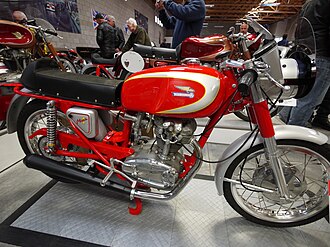
Ducati Mach 1: The Legendary Italian 250 That Redefined the Lightweight Sports Motorcycle
The Ducati Mach 1 is one of the most fascinating motorcycles ever produced during Ducati’s classic single-cylinder era. Built between 1964 and 1966, the Mach 1 was a small-capacity motorcycle with an enormous reputation. Its 248.6cc single-cylinder engine, sophisticated overhead-camshaft valve train, five-speed transmission, lightweight chassis, and striking Italian styling combined to create a motorcycle that was capable of remarkably strong performance for its size. In an era when 250cc motorcycles were generally considered lightweight transportation or entry-level sporting machines, Ducati’s Mach 1 demonstrated that a quarter-liter motorcycle could be a serious performance motorcycle. Contemporary and later sources have described it as one of the fastest production 250s of its era, with road-going examples capable of exceeding 160 km/h and some specifications quoting approximately 177 km/h under favorable conditions.
The Mach 1 was also important because it represented the work of Ducati’s celebrated engineer Fabio Taglioni, whose development of the company’s bevel-driven overhead-camshaft singles helped establish Ducati as a manufacturer capable of extracting impressive performance from relatively small engines. Rather than relying on displacement, Ducati concentrated on engine breathing, high compression, efficient valve control, low weight, and carefully developed chassis dynamics. The result was a motorcycle that could rev hard, carry speed through corners, and offer an unusually sophisticated riding experience for a 250cc machine.
Today, an original Ducati Mach 1 is considerably more than an old Italian motorcycle. It is a highly desirable piece of Ducati history. Only around 800–840 examples are generally cited as having been produced, and many of those motorcycles were subsequently modified or sacrificed for racing. That combination of limited production, competition success, distinctive engineering, and elegant styling has made surviving original examples particularly interesting to collectors.
The Origins of the Ducati Mach 1
From the Diana to a Serious Sports Motorcycle
The Mach 1 emerged from Ducati’s successful family of single-cylinder motorcycles, developing ideas that had already appeared in machines such as the Diana. Ducati had spent years refining its overhead-camshaft single-cylinder engine, and the Mach 1 represented a particularly focused interpretation of that technology. Rather than being designed primarily as an economical road motorcycle, it was engineered to provide genuinely sporting performance from a compact displacement.
The model entered production in 1964 and remained available through 1966, replacing the Diana in Ducati’s European range before itself being succeeded by the Ducati 250 Mark 3. Production was extremely limited by modern standards. Historical production figures commonly list 296 motorcycles in 1964, 308 in 1965, and 98 in 1966, with additional examples allocated to the United States. That produces a total of roughly 838 motorcycles when the documented U.S. allocations are included.
The Mach 1 was therefore never a mass-market motorcycle. Its relatively small production run was one consequence of its specialized nature, but it also reflected the motorcycle industry’s very different economics during the 1960s. A highly developed 250cc single-cylinder motorcycle could occupy a genuine performance niche without requiring the enormous production volumes expected from modern motorcycles.
A Connection to Ducati Racing
The Mach 1’s character was heavily influenced by Ducati’s competition activities. Its engine belonged to the same broad family of bevel-driven singles that had already demonstrated their potential in racing, and many Mach 1 motorcycles were subsequently converted into competition machines. This is an important part of the model’s history because it explains why relatively few completely original examples survive today.
The motorcycle’s competition credentials were reinforced by its success in production racing. Alastair Michael Rogers, better known as Mike Rogers, famously won the 250cc Production TT on a Mach 1 at the Isle of Man, giving Ducati an important victory in one of the world’s most demanding motorcycle events.
The Mach 1 therefore occupied an unusual position. It could be purchased as a road motorcycle, but its underlying engineering was sufficiently capable that enthusiasts could turn it into an effective racing machine. That dual identity has contributed greatly to its reputation.
The 248.6cc Ducati Single
A High-Performance Bevel-Drive Engine
The heart of the Mach 1 was its 248.6cc air-cooled four-stroke single-cylinder engine. The bore measured 74mm while the stroke was 57.8mm, creating an oversquare configuration that suited the engine’s sporting ambitions. The compression ratio was approximately 10:1, unusually high for a small motorcycle of the period.
The engine used a single overhead camshaft driven by bevel gears. This arrangement was one of Ducati’s defining engineering features. Instead of using a conventional chain to drive the camshaft, Ducati employed a vertical shaft and bevel gears, producing an extremely precise and mechanically distinctive valve-train system.
The Mach 1’s engine also used two valves per cylinder and conventional rocker-operated valve actuation, while period documentation and modern reference material describe the motorcycle as using Ducati’s desmodromic-style valve control. Published specifications generally quote output in the region of 27–28 horsepower at 8,500 rpm, depending on the source and specification being described.
For a 250cc motorcycle weighing only around 116kg dry, that was impressive. The power-to-weight ratio was one of the Mach 1’s greatest strengths, allowing the motorcycle to perform at a level that its engine capacity alone would not suggest.
Carburetion and High-RPM Character
Fuel was supplied by a Dell’Orto SSI 29-series carburetor, with references identifying the SSI29D or SS1 29A depending on the source and specification. Ignition was handled by a battery-and-coil system, with a 6-volt electrical generator. The motorcycle was started by kick starter, reinforcing the mechanical nature of the machine.
The carbureted single was designed to breathe effectively at high engine speeds. Maximum power arrived around 8,500 rpm, meaning that the rider had to work the engine and five-speed gearbox to extract its best performance. This gave the Mach 1 a very different personality from a low-revving utility motorcycle.
The high compression ratio, relatively short stroke, large carburetor, and sophisticated overhead-camshaft arrangement all worked together to create an engine that was ambitious for its displacement. The motorcycle’s performance was therefore not an accident of low weight alone; it was the result of careful engineering.
Five-Speed Transmission and Performance
Gearing That Exploited the Single-Cylinder Engine
The Mach 1 used a five-speed manual gearbox with a wet multi-plate clutch. Primary drive was through gears and final drive through a chain. Published ratios list first gear at approximately 2.53:1, second at 1.73:1, third at 1.35:1, fourth at 1.10:1, and fifth at 0.97:1.
The five-speed arrangement was especially useful because it allowed the rider to keep the engine in its effective operating range. A high-performance 250 single does not have the broad torque delivery of a large multi-cylinder engine, so appropriate gearing becomes essential. The Mach 1’s gearbox allowed the rider to keep the engine spinning rather than allowing revs to fall too far between shifts.
Top-speed figures vary among historical references. Some specifications quote approximately 160 km/h, or 100 mph, in full road trim, while other technical references list approximately 177 km/h or 110 mph. The discrepancy is understandable because gearing, test conditions, rider position, exhaust configuration, and the exact specification of an individual motorcycle could all affect the result.
Regardless of the exact number, the historical significance is clear: the Mach 1 was extraordinarily fast for a 250cc production motorcycle in the mid-1960s.
The Mach 1 Chassis
Lightweight Tubular-Steel Construction
The engine was housed in a tubular-steel single, open-cradle frame. A large-diameter backbone tube formed a prominent part of the structure, while the engine itself contributed to the overall rigidity of the chassis.
The frame was deliberately simple, but simplicity should not be confused with a lack of sophistication. The low overall mass was central to the motorcycle’s performance. At approximately 116kg dry, the Mach 1 was dramatically lighter than most modern motorcycles, and that allowed Ducati to achieve excellent acceleration, braking response, and agility without requiring enormous power.
The wheelbase was approximately 1,350mm, producing compact proportions that suited the motorcycle’s sporting character. A seat height of around 760mm also made the machine relatively accessible while maintaining the traditional proportions of a mid-1960s sporting motorcycle.
Marzocchi Rear Suspension
At the front, the Mach 1 used a hydraulic telescopic fork with 31.5mm tubes. At the rear was a swinging arm with twin Marzocchi shock absorbers, with the shocks offering three-way adjustment.
The use of adjustable Marzocchi shocks was a notable feature for a motorcycle of this size. It demonstrated that Ducati was paying close attention to chassis performance rather than concentrating exclusively on engine output.
The suspension was designed to support the motorcycle’s sporting ambitions, allowing riders to carry speed through corners while keeping the lightweight chassis controlled. For a period motorcycle, the combination of low weight, compact dimensions, telescopic front suspension, and adjustable rear damping made the Mach 1 a remarkably serious road machine.
Braking and Wheels
Classic Drum Brakes
The Mach 1 used traditional drum brakes, with a 180mm front drum and 160mm rear drum. The motorcycle rode on 18-inch wire-spoke wheels, typically fitted with a 2.50-18 front tire and a 2.75-18 rear tire.
From today’s perspective, those braking specifications appear modest, especially when compared with the enormous radial disc brakes found on modern sport motorcycles. However, the Mach 1’s braking system must be considered alongside its 116kg dry weight and period tire technology.
The lightweight construction helped the drums perform effectively enough for their era. Nevertheless, a modern rider should remember that a vintage drum-brake motorcycle requires more anticipation and a greater safety margin than a contemporary machine with hydraulic discs and electronic assistance.
The wire wheels were also an important part of the motorcycle’s appearance. Their thin spokes, narrow tires, and classic proportions contributed significantly to the elegant visual identity that makes the Mach 1 so recognizable today.
Ducati Mach 1 Styling
A Distinctive Italian Silhouette
The Mach 1 is often remembered as much for its appearance as for its performance. The motorcycle combined a simple round headlamp, slim fuel tank, long dual seat, exposed mechanical components, wire-spoke wheels, and twin rear shocks to create a very pure Italian sporting silhouette.
The color combination is particularly memorable. Red-and-silver examples are strongly associated with the model and have a direct visual connection with Ducati’s competition machines of the period. The minimalist bodywork leaves much of the engine and frame visible, allowing the mechanical components to become part of the motorcycle’s design.
The exhaust system was positioned along the right-hand side, reinforcing the motorcycle’s purposeful appearance. Unlike modern sport motorcycles with extensive fairings hiding the engine, the Mach 1 displayed its mechanical architecture openly.
This approach has aged extremely well. While many motorcycles from the 1960s now look dated, the Mach 1 retains an elegant, almost timeless appearance because its styling is based primarily on proportion and mechanical clarity.
Why the Mach 1 Was So Fast
Performance Through Low Weight
The Mach 1’s performance was the product of several factors working together rather than one spectacular component. Its approximately 28 horsepower was impressive, but the real secret was the motorcycle’s low mass.
At only around 116kg dry, the Mach 1 required relatively little power to accelerate. The five-speed transmission allowed the rider to keep the engine near its effective operating range, while the compact chassis reduced the physical effort required to change direction.
This philosophy remains relevant today. Modern manufacturers often pursue performance by adding power, but Ducati’s engineers demonstrated that reducing weight can be equally effective. The Mach 1 is a historical example of how a relatively small engine can deliver serious performance when placed in an exceptionally light chassis.
Its reported ability to reach 100 mph in road trim was remarkable in the context of the 1960s. Some technical references quote even higher speeds, although these should be treated cautiously because period testing conditions and specifications varied.
The Mach 1 and Motorcycle Racing
A Road Bike With Competition Potential
One of the most interesting aspects of the Mach 1 is how frequently examples found their way onto racetracks. Many motorcycles were modified for competition, and the model’s relatively low production volume means that racing activity probably contributed significantly to the scarcity of completely original survivors.
The motorcycle’s success in production racing provided powerful evidence that Ducati’s engineering philosophy worked. The Mach 1 was not simply a stylish road motorcycle with an enthusiastic specification sheet. It had the chassis, engine, gearbox, and low weight necessary to compete effectively.
The Isle of Man connection is especially important. Mike Rogers’ victory in the 250cc Production TT demonstrated the Mach 1’s potential on one of the most demanding road circuits in the world. Such success naturally enhanced the motorcycle’s reputation among enthusiasts and helped cement its image as a genuine sporting machine.
The End of the Mach 1 Era
From Mach 1 to Mark 3
Ducati’s Mach 1 production run lasted only three years. By 1966, the model was replaced by the Ducati 250 Mark 3, continuing the company’s development of its high-performance single-cylinder motorcycles.
The transition was not a rejection of the Mach 1’s engineering philosophy. Instead, the Mark 3 represented another stage in the evolution of Ducati’s bevel-drive singles. The fundamental concepts of a lightweight chassis, overhead-camshaft single-cylinder engine, five-speed gearbox, and sporting performance remained important.
The Mach 1 can therefore be viewed as a bridge between Ducati’s earlier Diana generation and the increasingly sophisticated Mark 3 and later wide-case singles.
Owning and Restoring a Ducati Mach 1
For collectors, an original Mach 1 presents a particularly attractive restoration challenge because of the motorcycle’s rarity. Many surviving machines have histories involving racing, modification, partial restoration, or the use of replacement components. An apparently complete motorcycle therefore deserves careful examination before its originality is assumed.
The engine is naturally one of the most important areas to inspect. The bevel-drive camshaft system is sophisticated and requires correct adjustment and lubrication. Historical technical information also highlights the importance of the lubrication system, including the route of oil to the connecting-rod bearing through the crankshaft.
Correct carburetion, ignition equipment, exhaust components, wheels, suspension, brakes, and bodywork are equally important. A restored Mach 1 may look spectacular while still containing components from other Ducati singles, so knowledgeable buyers often pay close attention to details that distinguish an authentic example from a motorcycle assembled from compatible parts.
The scarcity of original machines adds another dimension to restoration. A historically significant motorcycle should ideally be preserved rather than unnecessarily modernized. While upgrades may make a vintage motorcycle easier to ride, an original Mach 1 has far greater historical interest when its distinctive period components and engineering remain intact.
Ducati Mach 1 Technical Specifications
The following table summarizes commonly published specifications for the 1964–1966 Ducati 250 Mach 1. Some historical references differ slightly on power, fuel capacity, dimensions, and top speed, so the figures should be regarded as period/model references rather than absolute values for every surviving example.
| Specification | Ducati Mach 1 |
|---|---|
| Production | 1964–1966 |
| Manufacturer | Ducati Meccanica |
| Class | Sporting / Standard motorcycle |
| Engine | Air-cooled 4-stroke single-cylinder |
| Valve Train | SOHC, bevel-gear driven |
| Valve Control | Desmodromic system |
| Displacement | 248.6 cc |
| Bore × Stroke | 74 × 57.8 mm |
| Compression Ratio | 10:1 |
| Carburetor | Dell’Orto SSI/SS1 29-series |
| Ignition | Battery and coil |
| Electrical System | 6V, 60W generator |
| Starting System | Kick starter |
| Maximum Power | Approx. 27–28 hp @ 8,500 rpm |
| Transmission | 5-speed manual |
| Clutch | Wet multi-plate |
| Primary Drive | Gears |
| Final Drive | Chain |
| Frame | Tubular-steel single/open cradle |
| Front Suspension | 31.5 mm telescopic fork |
| Rear Suspension | Swingarm with twin Marzocchi shocks |
| Rear Shock Adjustment | Three-way adjustable |
| Front Brake | 180 mm drum |
| Rear Brake | 160 mm drum |
| Front Tire | 2.50-18 |
| Rear Tire | 2.75-18 |
| Wheelbase | Approx. 1,350 mm |
| Length | Approx. 2,000 mm |
| Width | Approx. 590 mm |
| Seat Height | Approx. 760 mm |
| Dry Weight | Approx. 116 kg |
| Fuel Capacity | Approx. 13 litres |
| Claimed/Reported Top Speed | Approx. 160–177 km/h, depending on specification and source |
| Production Quantity | Approximately 800–840 examples |
The Legacy of the Ducati Mach 1
The Ducati Mach 1 deserves its legendary status because it achieved something that remains difficult even today: it made a small engine feel genuinely special. Its 248.6cc single-cylinder engine was not powerful by modern standards, but the motorcycle weighed only about 116kg, used a close-ratio five-speed gearbox, employed sophisticated bevel-drive overhead-camshaft technology, and was equipped with a chassis designed for enthusiastic riding.
Its historical significance is also tied to Ducati’s broader engineering development. The Mach 1 belongs to the generation of motorcycles that helped establish Fabio Taglioni’s single-cylinder designs as technically distinctive and competitive. The bevel-driven camshaft, high compression, lightweight construction, and racing-derived character would remain important themes throughout Ducati’s subsequent single-cylinder history.
The motorcycle’s short production run adds to its fascination. With fewer than a thousand examples generally documented, and with many subsequently modified for racing, an authentic Mach 1 is now a rare survivor. Its scarcity is not simply the result of low factory production; it also reflects the fact that these motorcycles were genuinely useful competition machines and were treated accordingly.
Perhaps the most remarkable thing about the Mach 1 is how modern its basic performance philosophy seems. Ducati did not attempt to make the motorcycle fast by adding enormous displacement. Instead, it pursued efficiency, low weight, precise valve control, good gearing, and a responsive chassis. That formula is still central to performance motorcycle design more than half a century later.
The Ducati Mach 1 therefore stands as one of the great lightweight motorcycles of the 1960s. It was fast, technically ambitious, beautifully proportioned, and closely connected with Ducati’s racing heritage. Its combination of Italian styling and serious engineering made it much more than another quarter-liter motorcycle.
For today’s enthusiasts, the Mach 1 offers a glimpse into a remarkable period when a 250cc single could be considered a genuine high-performance motorcycle. It represents Ducati’s willingness to challenge assumptions about displacement and performance, and it demonstrates how much could be achieved through intelligent engineering and a relentless focus on reducing weight. That is why the Ducati Mach 1 remains one of the most memorable and desirable classic Ducati singles ever produced.
