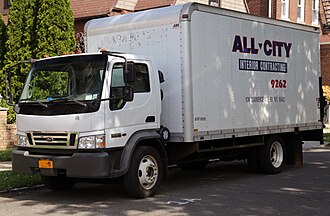
Ford LCF: The Compact Workhorse That Redefined Urban Commercial Trucking
The Ford LCF, short for Low Cab Forward, is a distinctive commercial truck designed to address the practical demands of businesses operating in urban environments, delivery networks, vocational industries, and regional transportation. Unlike traditional conventional trucks with long front hoods, the Ford LCF uses a cab-over-engine layout that places the driver above the front axle and allows the vehicle to provide maximum cargo capacity within a compact overall footprint. This design philosophy made the truck especially valuable for companies that needed a maneuverable, efficient, and durable medium-duty vehicle capable of navigating crowded streets while still carrying substantial payloads.
Introduced during the 2000s as part of Ford’s commercial truck strategy, the Ford LCF represented an effort to expand Ford’s presence in the growing market for low cab forward trucks. These vehicles had become increasingly popular among delivery companies, municipalities, contractors, and fleet operators because they offered advantages that conventional trucks could not easily match. A shorter turning radius, improved forward visibility, easier entry and exit, and better use of available body length all contributed to the appeal of the platform.
Although production of the Ford LCF eventually ended, the model remains an interesting and important chapter in Ford’s commercial vehicle history. It demonstrated how manufacturers could adapt truck design to changing business needs and showed the importance of specialized vehicle platforms for industries where efficiency and practicality matter more than appearance or maximum highway speed. The Ford LCF was created as a tool for professionals, and its design reflected the real-world requirements of people who depended on trucks every day.
The Origins and Development of the Ford LCF
The development of the Ford LCF was influenced by the growing demand for compact medium-duty trucks in North America. Many businesses were looking for alternatives to larger conventional trucks that could be difficult to maneuver in cities and expensive to operate. Delivery routes were becoming more complex, urban traffic was increasing, and companies needed vehicles that could combine commercial strength with passenger-vehicle-like usability.
Ford introduced the LCF as a low cab forward truck based on a cab-over-engine configuration. This arrangement had already proven successful in many international markets because it maximized usable space. By moving the cab forward, engineers were able to create a shorter vehicle while maintaining a long frame area for cargo bodies, equipment installations, and specialized applications.
The Ford LCF was positioned in the Class 4 and Class 5 commercial truck segments, making it suitable for a wide range of jobs. It competed with other medium-duty cab-over trucks used by delivery fleets, service companies, and vocational operators. Its purpose was not to replace every conventional truck but rather to provide a specialized solution for situations where compact dimensions and accessibility were critical.
Cab-Over Design: The Main Advantage of the Ford LCF
Maximum Space Efficiency
The most important characteristic of the Ford LCF is its cab-over-engine design. In a conventional truck, the engine sits in front of the driver, creating a long hood that increases the overall vehicle length. In the LCF, the cab is positioned directly above the engine, allowing the front of the truck to be much shorter. This creates more available frame space for cargo bodies without increasing the total length of the vehicle.
For delivery businesses, this design provides a significant operational advantage. A shorter truck can carry a larger box body while remaining easier to park and maneuver. Companies transporting packages, food products, tools, equipment, or commercial supplies benefit from being able to access locations that may be difficult for larger trucks.
Improved Visibility and Maneuverability
Urban driving requires excellent visibility because drivers must constantly deal with pedestrians, narrow streets, traffic congestion, and frequent stops. The Ford LCF’s forward-control layout places the driver closer to the front of the vehicle, improving awareness of the truck’s surroundings.
The large windshield and elevated seating position provide a commanding view of the road. This can help drivers judge distances more accurately when approaching intersections, loading areas, and tight spaces. For businesses operating in cities, these characteristics can reduce stress and improve productivity throughout a workday.
Engine Performance and Mechanical Engineering
The Ford LCF was designed around the needs of commercial users who required dependable power rather than extreme performance. Medium-duty trucks are expected to operate under heavy loads, make frequent stops, and accumulate high mileage. As a result, the LCF focused on durability, torque delivery, and long-term reliability.
Depending on model year and configuration, the Ford LCF was equipped with diesel engines designed to provide the pulling power required for commercial applications. Diesel engines are particularly suitable for work trucks because they produce strong low-speed torque, which is important when accelerating with heavy cargo or climbing grades.
The truck’s drivetrain was engineered to balance performance and efficiency. Commercial operators typically evaluate vehicles based on operating costs, including fuel consumption, maintenance requirements, and downtime. The Ford LCF’s mechanical systems were developed with these practical concerns in mind.
Transmission and Driving Experience
Medium-duty commercial trucks must provide predictable and reliable operation, especially when driven by multiple employees within a fleet. The Ford LCF was offered with transmission systems selected to handle demanding commercial workloads while remaining accessible for professional drivers.
The driving experience was different from a conventional pickup or full-size truck. The driver sat higher, closer to the front wheels, and operated a vehicle designed around visibility and functionality. While this layout required some adjustment for drivers unfamiliar with cab-over trucks, many operators appreciated the improved control in tight environments.
Interior Design and Driver Comfort
Commercial drivers often spend many hours inside their vehicles, making cabin design an important factor in productivity and safety. The Ford LCF was created as a practical workplace, with features aimed at making daily operation easier and less physically demanding.
The low cab forward structure allowed easier entry and exit compared with some larger trucks. This was especially useful for delivery drivers who might enter and leave the vehicle dozens of times during a route. Reduced climbing effort can help minimize fatigue during long working days.
The interior layout emphasized functionality. Controls were positioned for convenient access, visibility was prioritized, and the cabin provided a straightforward environment suitable for professional use. While it did not attempt to provide luxury-car refinement, the LCF delivered the features that mattered most in commercial transportation.
Commercial Applications of the Ford LCF
The flexibility of the Ford LCF made it suitable for many different industries. One of the most common uses was delivery transportation, where companies needed compact trucks capable of carrying large volumes of goods through urban areas. Parcel delivery, retail distribution, and local freight operations all benefited from the truck’s efficient packaging.
The LCF was also used for vocational applications. Businesses could equip the chassis with different body types, including box bodies, flatbeds, utility bodies, service equipment, and other specialized configurations. This adaptability allowed one basic truck platform to support many professional roles.
Construction companies, maintenance providers, municipalities, and service organizations often require trucks that can carry equipment while still operating effectively in crowded environments. The Ford LCF addressed these needs by combining medium-duty capability with compact dimensions.
Fuel Efficiency and Operating Costs
Running costs are one of the most important considerations for commercial truck buyers. A truck that performs well but consumes excessive fuel or requires frequent repairs can reduce business profitability. The Ford LCF was developed during a period when companies were increasingly focused on improving efficiency and controlling operating expenses.
Several design elements contributed to its efficiency. The compact cab-over layout reduced unnecessary vehicle length and weight, while diesel engine technology provided strong performance without requiring excessive engine size. The truck’s intended operating environment—primarily regional and urban routes—also allowed businesses to choose a vehicle optimized for their specific needs.
Maintenance accessibility was another important consideration. Commercial trucks must be serviced regularly, and practical designs that simplify inspection and repair can reduce downtime. The Ford LCF’s engineering reflected the realities of fleet ownership, where reliability and serviceability are essential.
Safety Features and Practical Protection
Visibility as a Safety Advantage
One of the strongest safety benefits of the Ford LCF was its excellent visibility. In urban environments, accidents often occur because drivers cannot easily see nearby vehicles, cyclists, or pedestrians. The forward-control design helped address this challenge by placing the driver in a position where surrounding traffic was easier to monitor.
The elevated driving position also improved awareness of road conditions. Professional drivers could better understand vehicle positioning, especially when navigating loading docks, narrow streets, and busy commercial areas.
Commercial Truck Safety Considerations
Like all commercial vehicles, the Ford LCF was designed with the expectation that it would operate under demanding conditions. Strong construction, reliable braking systems, and stable handling characteristics were essential for maintaining control while carrying heavy loads.
Fleet operators also benefited from the predictable nature of the truck. A vehicle that behaves consistently allows drivers to develop confidence and operate more safely over time.
The Legacy of the Ford LCF
Although the Ford LCF was not produced for many years, its influence remains visible in the commercial truck market. The model represented the importance of specialized vehicle design and showed that different industries require different transportation solutions. A large conventional truck may be ideal for long-distance hauling, but a low cab forward truck can be the better choice for urban logistics.
The Ford LCF also reflected broader changes in commercial transportation. Businesses increasingly demanded vehicles that were efficient, easy to operate, and adaptable. The truck demonstrated that practical engineering decisions could create significant advantages for professional users.
Today, used Ford LCF models continue to serve various commercial roles. Their durability, compact design, and vocational flexibility allow them to remain useful even after production has ended. For many operators, the LCF represents a dependable example of a purpose-built commercial vehicle.
Comparison With Traditional Conventional Trucks
The difference between the Ford LCF and traditional trucks is primarily a matter of design philosophy. Conventional trucks prioritize certain advantages, such as easier engine access and familiar driving characteristics, while cab-over trucks focus on space efficiency and maneuverability.
In urban environments, the LCF’s shorter front end provided clear benefits. Drivers could navigate tighter streets, park more easily, and use more of the vehicle’s overall length for cargo. These advantages made the truck particularly valuable for businesses whose daily operations depended on frequent stops and limited-space locations.
The choice between a conventional truck and a low cab forward truck ultimately depends on the job. The Ford LCF was created for a specific purpose, and within that purpose it offered a highly effective solution.
Technical Specifications Summary
| Specification | Ford LCF Details |
|---|---|
| Vehicle Type | Medium-duty low cab forward commercial truck |
| Production Period | Mid-2000s era commercial truck production |
| Truck Classes | Class 4 and Class 5 commercial vehicle segments |
| Cab Style | Cab-over-engine (low cab forward) design |
| Primary Applications | Delivery, freight, vocational work, utility services, commercial transport |
| Engine Type | Turbocharged diesel engine options depending on configuration |
| Fuel Type | Diesel |
| Transmission | Automatic and manual transmission options depending on model |
| Drive Configuration | Rear-wheel-drive medium-duty chassis |
| Design Advantage | Compact dimensions with improved cargo space and maneuverability |
| Body Configurations | Box truck, flatbed, service body, and specialized vocational bodies |
| Main Strengths | Visibility, efficiency, urban maneuverability, commercial versatility |
Conclusion
The Ford LCF was a specialized commercial truck created to solve practical transportation challenges. Its low cab forward design, efficient use of space, strong diesel performance, and excellent maneuverability made it a valuable tool for businesses that operated in demanding urban and regional environments.
While it was not designed to replace every type of truck, the Ford LCF succeeded because it understood its purpose. It was built for drivers who needed accessibility, companies that needed efficiency, and industries that required dependable transportation solutions. Its legacy demonstrates that successful truck design is not only about size or power but about creating the right machine for the right job.
