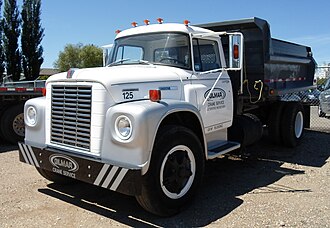
International Loadstar: The Legendary Medium-Duty Truck That Defined American Workhorse Engineering
The International Loadstar is one of the most recognizable and respected medium-duty trucks in the history of American commercial transportation. Produced by International Harvester during a period when industries across North America were rapidly expanding, the Loadstar became known for its durability, adaptability, and ability to perform a wide variety of demanding jobs. From farms and construction sites to municipal fleets, delivery operations, and emergency services, the International Loadstar earned a reputation as a dependable machine designed to work hard every day.
Unlike many specialized vehicles that were built for only one purpose, the Loadstar was developed as a flexible platform capable of supporting numerous applications. Its chassis could be configured as a cargo truck, dump truck, tow vehicle, fire apparatus, agricultural hauler, service truck, or even a military-support vehicle. This versatility was one of the main reasons the model became such an important part of North American trucking history.
Introduced in the 1960s, the International Loadstar represented a new approach to medium-duty truck design. It combined rugged mechanical engineering with improved driver comfort and a more modern appearance compared with earlier International models. While the truck was built primarily as a commercial tool rather than a luxury vehicle, it introduced many features that made daily operation easier for professional drivers.
Decades after production ended, the International Loadstar remains popular among collectors, restoration enthusiasts, and working truck operators. Its strong construction, classic styling, and mechanical simplicity have helped it maintain a loyal following. The Loadstar represents an era when trucks were engineered with heavy-duty components, straightforward maintenance, and a focus on long-term reliability.
The History and Development of the International Loadstar
The International Loadstar was introduced by International Harvester in 1962 as part of the company’s effort to strengthen its position in the medium-duty truck market. At the time, American businesses were experiencing significant growth in agriculture, construction, manufacturing, and regional transportation. Companies needed trucks that could handle heavier workloads than pickup trucks but were more maneuverable and economical than large highway tractors.
International Harvester already had decades of experience producing commercial vehicles, agricultural machinery, and industrial equipment. The Loadstar benefited from this engineering background by incorporating durable components developed for demanding environments. The truck was designed from the beginning as a professional working vehicle, emphasizing strength, reliability, and adaptability.
The Loadstar replaced older medium-duty International models and introduced a more modern cab design with improved visibility and ergonomics. It quickly became a popular choice among businesses that needed a dependable truck capable of performing multiple tasks. Its success helped establish International Harvester as one of the leading manufacturers in the North American commercial truck industry.
Design Philosophy: Built for Work and Adaptability
A Strong Chassis for Multiple Applications
The foundation of the International Loadstar was its heavy-duty chassis. Commercial trucks must be capable of carrying different types of loads, and the Loadstar was engineered with a strong frame that could support a wide variety of body configurations. This flexibility was essential because customers purchased trucks for very different industries and working conditions.
A single Loadstar chassis could become a farm truck transporting crops, a dump truck carrying construction materials, a utility vehicle maintaining infrastructure, or a fire engine responding to emergencies. The ability to support these different roles made the Loadstar extremely valuable for businesses and government organizations.
The truck’s robust construction also contributed to its longevity. Many examples remained in service for decades because their mechanical systems were designed with durability rather than short-term cost savings as the primary goal. Heavy frames, reliable axles, and simple mechanical layouts allowed owners to maintain and repair their vehicles without excessive complexity.
Classic International Styling
The appearance of the International Loadstar reflected the design trends of the 1960s and 1970s while maintaining a clearly functional purpose. The cab featured a large windshield, upright proportions, and a straightforward layout that emphasized visibility and practicality.
The front-end design became one of the truck’s most recognizable characteristics. The bold grille, large headlights, and squared-off styling gave the Loadstar a distinctive presence on roads and job sites. Even today, many enthusiasts appreciate the truck’s classic appearance because it represents a period when commercial vehicles had a strong mechanical identity.
Engine Options and Mechanical Performance
The International Loadstar was offered with a variety of gasoline and diesel engine options throughout its production life. This allowed customers to select a configuration appropriate for their specific needs, whether they required lower operating costs, additional power, or compatibility with specialized applications.
Gasoline engines were popular among some operators because they provided reliable performance and simpler maintenance. Diesel engines, however, became increasingly important for customers who required stronger torque, improved fuel economy, and extended durability under heavy workloads.
International Harvester used engines from its own manufacturing programs as well as other suppliers depending on model and market requirements. These engines were selected because they could provide dependable service under demanding commercial conditions.
Torque and Heavy-Duty Capability
The key performance characteristic of the International Loadstar was not high-speed performance but usable working power. Medium-duty trucks spend most of their lives carrying loads, operating at lower speeds, and performing repetitive tasks. For these situations, strong torque delivery and mechanical durability are more important than maximum horsepower figures.
The Loadstar’s engines were matched with transmissions and drivetrains designed to handle commercial workloads. Whether climbing hills with a full load, pulling equipment, or operating in rough environments, the truck provided the dependable performance expected from a professional vehicle.
Transmission Systems and Driving Experience
International Loadstar models were available with several transmission choices depending on application and customer preference. Manual transmissions were common during the truck’s production era because they provided durability, mechanical simplicity, and direct driver control.
Professional drivers operating heavy commercial trucks often preferred manual gearboxes because they allowed better management of engine power when carrying heavy loads or working in difficult terrain. The transmissions used in the Loadstar were designed to withstand demanding service conditions and frequent operation.
Driving the Loadstar provided a distinctly traditional truck experience. The driver sat in an upright position with excellent visibility and direct feedback from the mechanical systems. Compared with modern trucks equipped with electronic controls and automated transmissions, the Loadstar offered a simpler and more mechanical connection between driver and vehicle.
Cab Design and Driver Comfort
Although the International Loadstar was built primarily for work, International Harvester recognized that driver comfort influenced productivity and safety. The cab design provided improved visibility and easier operation compared with many earlier commercial trucks.
The large windshield and side windows helped drivers monitor traffic, job sites, and surrounding conditions. This was particularly important for vocational applications where trucks frequently operated around workers, equipment, and confined spaces.
The interior was practical rather than luxurious. Durable materials, straightforward controls, and functional layouts were prioritized because commercial operators needed a cabin that could withstand years of daily use. The Loadstar was designed as a workplace, and every component reflected that purpose.
Applications and Industries Served by the Loadstar
The greatest strength of the International Loadstar was its versatility. Few trucks of its era could serve such a wide range of industries. Businesses and organizations selected the Loadstar because they could adapt the chassis to their specific requirements.
Agricultural Operations
Farming communities widely adopted the Loadstar because agricultural work required durable trucks capable of carrying heavy materials. Farmers used Loadstar models for transporting grain, livestock equipment, fertilizer, machinery, and other supplies. The truck’s rugged construction made it suitable for rural roads and demanding seasonal workloads.
Construction and Industrial Work
Construction companies valued the Loadstar because it could support dump bodies, flatbeds, cranes, and specialized equipment. Job sites often expose vehicles to dust, uneven terrain, and heavy loads, making reliability essential.
The truck’s strong frame and available configurations allowed contractors to create vehicles tailored to specific construction tasks. Whether transporting materials or supporting field operations, the Loadstar provided a dependable foundation.
Emergency and Government Services
Many municipalities and emergency organizations used International Loadstar chassis for fire trucks, rescue vehicles, and utility applications. Government fleets often require vehicles that can remain operational for many years with consistent maintenance, making the Loadstar an attractive choice.
Durability and Maintenance Philosophy
One of the main reasons the International Loadstar remains respected today is its mechanical simplicity. The truck was produced during an era when commercial vehicles were designed to be repaired, rebuilt, and maintained for long service lives.
Many components were accessible and understandable to mechanics without requiring advanced electronic diagnostic equipment. This characteristic made the Loadstar especially valuable in rural areas and industries where reliable transportation was essential.
Owners often kept Loadstar trucks operating far beyond their expected service life because the basic design allowed continued maintenance and restoration. Strong frames, durable engines, and replaceable components contributed to the truck’s legendary reputation.
The International Loadstar in Modern Collecting and Restoration
Today, the International Loadstar has become a popular classic truck among collectors and restoration enthusiasts. Many people appreciate the model because it represents an important period in American truck manufacturing when vehicles were designed around durability and practical engineering.
Restored Loadstar trucks are often displayed at classic vehicle events, used in agricultural operations, or maintained as working historical vehicles. Their distinctive appearance and mechanical character make them appealing to enthusiasts who enjoy traditional trucks.
Unlike many collectible vehicles that are valued only for appearance, the Loadstar remains admired because it was genuinely useful. Many examples continue to demonstrate the capability that made them successful when they were new.
The Legacy of the International Loadstar
The International Loadstar represents an important chapter in the development of American medium-duty trucks. It combined versatility, durability, and practical engineering in a way that allowed it to serve countless industries.
The truck helped establish the idea that a commercial vehicle should be more than a transportation device. It needed to be a reliable partner for businesses, capable of adapting to changing demands and performing consistently under difficult conditions.
Although newer trucks now offer advanced electronics, improved emissions technology, and greater comfort, the fundamental principles demonstrated by the Loadstar remain relevant. A successful work truck must still be dependable, efficient, and suited to the needs of its operator.
Technical Specifications Summary
| Specification | International Loadstar Details |
|---|---|
| Manufacturer | International Harvester |
| Production Period | 1960s through the 1980s era |
| Vehicle Class | Medium-duty commercial truck |
| Primary Uses | Agriculture, construction, delivery, utilities, emergency services |
| Cab Configuration | Conventional medium-duty truck cab |
| Engine Options | Multiple gasoline and diesel engine choices depending on year and configuration |
| Engine Type | Inline gasoline and diesel commercial engines |
| Transmission | Manual transmission options with heavy-duty commercial gearboxes |
| Drive Layout | Rear-wheel-drive configurations with multiple axle choices |
| Chassis Design | Heavy-duty frame designed for multiple vocational bodies |
| Body Configurations | Flatbed, dump truck, cargo body, utility body, fire apparatus, specialty vehicles |
| Main Strengths | Durability, versatility, simple maintenance, long service life |
Conclusion
The International Loadstar remains one of the most respected medium-duty trucks ever produced by International Harvester. It succeeded because it was designed around real-world needs: reliability, strength, adaptability, and ease of operation. Whether working on farms, construction sites, highways, or municipal projects, the Loadstar proved itself as a dependable partner for countless operators.
Its continued popularity among collectors and working truck enthusiasts shows the lasting impact of thoughtful commercial vehicle engineering. The International Loadstar was not created to be flashy or fashionable; it was created to work. That simple mission is exactly what made it a legend in the world of American trucks.
