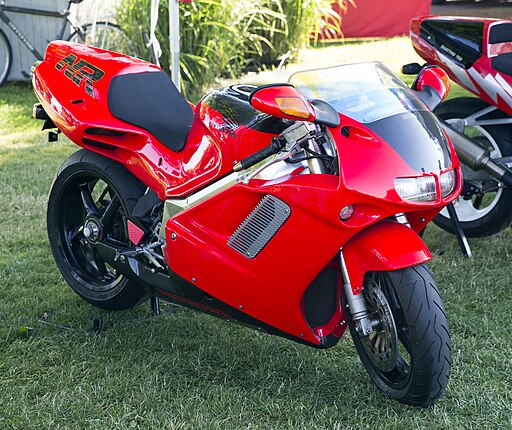
The Honda NR stands as one of the most radical production motorcycles ever built. Launched in 1992 as a limited-edition homologation special, it introduced oval-piston technology to the road for the first time. Beyond its exotic engine, the NR combined race-derived chassis geometry, cutting-edge suspension, and precise fuel metering to deliver a riding experience unmatched by any contemporary superbike. This article dissects the NR’s engineering breakthroughs, performance benchmarks, servicing requirements, and its enduring influence on sportbike design.
Development and Racing Heritage
Honda conceived the NR to legitimize its NSR500 Grand Prix program by producing a street-legal bike with parallel technology. Key development objectives included:
- Implementing oval-piston architecture to approximate an eight-cylinder configuration within a four-cylinder layout
- Maintaining perfect mechanical balance through crankpins phased at 90°
- Crafting a lightweight yet rigid aluminum chassis for razor-sharp handling
- Delivering track-level performance while preserving rideability for road use
Just 300 units of the NR750 were built, each hand-assembled and fitted with bespoke engine components unavailable on any other production model.
Engine Architecture
Configuration and Displacement
- Type: Liquid-cooled, four-stroke, 90° V-4
- Displacement: 749 cc
- Bore × Stroke: 72.0 mm × 48.5 mm
- Compression Ratio: 11.0 : 1
A pair of oval pistons occupy each cylinder, effectively yielding eight connecting rods and eight valves per cylinder, for a total of 32 valves and 16 spark plugs.
Valvetrain and Cam Drive
- Valvetrain: Dual overhead camshafts per bank
- Valves: 8 per cylinder (32 total)
- Cam Drive: Duplex chain with automatic hydraulic tensioners
The oval pistons necessitate dual rocker arms per valve and two cam lobes per valve, delivering high-rev precision and maintaining minimal valve lash under load.
Induction and Fueling
- Carburetors: Four Mikuni flat-slide CV units with dual throttle butterflies (eight throttle bodies total)
- Carburetor Diameter: 30 mm per throttle body
- Intake Tracts: Individual velocity stacks tuned for midrange torque
Sequential intake trumpets and constant-velocity slides ensure smooth throttle response from idle up to the 12 500 rpm redline.
Cooling and Lubrication
- Radiator: 3-row aluminum core with thermostatic electric fan
- Coolant Capacity: 2.5 L
- Oil System: Wet sump, total capacity 4.2 L
- Oil Cooler: Front-mounted stacked-plate unit
Critical engine surfaces receive dedicated coolant cross-flows to prevent thermal hotspots, while a scavenge pump ensures reliable oil pressure at high lean angles.
Drivetrain
- Transmission: 6-speed constant-mesh gearbox
- Clutch: Wet multi-plate, cable-actuated
- Final Drive: 520 O-ring chain; sprockets 17 T front, 43 T rear
The close-ratio gearing keeps the powerband tightly packed, with a tall sixth gear enabling relaxed motorway cruising.
Chassis, Suspension, and Braking
Frame Geometry
- Frame Type: Billet aluminum twin-spar perimeter
- Wheelbase: 1 420 mm
- Rake / Trail: 24° / 108 mm
- Seat Height: 805 mm
- Dry Weight: 182 kg
Front Suspension
- Forks: 41 mm Showa cartridge-style, adjustable preload, compression, rebound
- Travel: 120 mm
Rear Suspension
- Swingarm: Pro-Link single-shock aluminum
- Shock: Showa piggyback reservoir, adjustable preload, compression, rebound
- Travel: 120 mm
Brakes and Wheels
- Front Brakes: Dual 296 mm floating discs with four-piston radial-mount calipers
- Rear Brake: Single 220 mm disc with two-piston caliper
- Wheels: 17 × 3.50 in front; 17 × 5.50 in rear
- Tires: 120/60 ZR17 front; 180/55 ZR17 rear
This race-inspired chassis and suspension package delivers instant turn-in, razor-sharp feedback, and fade-free braking under extreme conditions.
Electrical System and Instrumentation
- Battery: 12 V, 10 Ah sealed lead-acid
- Alternator Output: 350 W at 6 000 rpm
- Ignition: Digital CDI with two-stage advance curve
- Lighting: 55 W halogen headlight; 21/5 W tail/brake lamp
- Instrument Cluster: Analog tachometer, speedometer; digital odometer; warning lights for oil pressure and coolant temperature
A compact fuse block and dedicated ground bus streamline wiring runs, reducing weight and simplifying fault tracing.
Performance Figures
- Peak Power: 100 hp (75 kW) @ 12 000 rpm
- Peak Torque: 80 Nm @ 10 000 rpm
- Top Speed: 255 km/h
- 0–100 km/h: 3.2 s
- Fuel Economy: 8 L/100 km at steady 100 km/h
- Fuel Capacity: 18 L (including 3 L reserve)
The NR’s power delivery is razor-sharp above 7 000 rpm, with a surge of torque that demands precise throttle control.
Maintenance and Preventative Care
- Valve Clearance: Inspect every 12 000 km; complex shim-under-bucket arrangement requires specialized gauge blocks
- Carburetor Synchronization: Balance every 6 000 km for smooth idle and equal cylinder fueling
- Coolant Change: Replace every two years; inspect hoses and radiator core for microfractures
- Chain Service: Adjust and lubricate every 1 000 km; monitor for O-ring degradation
- Brake Fluid: Flush annually with DOT 4 to prevent moisture build-up and caliper corrosion
- Suspension Seals: Inspect and replace fork and shock seals every 12 000 km; upgrade to modern low-friction components where available
Strict adherence to these intervals preserves the NR’s peak performance and mechanical integrity.
Technical Specifications Summary
| Parameter | Specification |
|---|---|
| Engine Type | Liquid-cooled 90° V-4 with oval pistons |
| Displacement | 749 cc |
| Bore × Stroke | 72.0 mm × 48.5 mm |
| Compression Ratio | 11.0 : 1 |
| Valvetrain | DOHC per bank; 8 valves/cylinder (32 total) |
| Carburetion | 4 × Mikuni 30 mm flat-slide CV |
| Transmission | 6-speed constant-mesh |
| Final Drive | 520 O-ring chain (17 T/43 T) |
| Frame | Billet aluminum twin-spar perimeter |
| Front Suspension | 41 mm Showa adjustable cartridge forks |
| Rear Suspension | Pro-Link single-shock Showa |
| Wheelbase | 1 420 mm |
| Dry Weight | 182 kg |
| Fuel Capacity | 18 L (3 L reserve) |
| Peak Power | 100 hp @ 12 000 rpm |
| Peak Torque | 80 Nm @ 10 000 rpm |
| Top Speed | 255 km/h |
Legacy and Collectibility
As one of only 300 factory-built units, the NR750 commands intense collector interest. Its engineering innovations—oval pistons, precision valvetrain, and race-bred chassis—have inspired modern superbike development. Genuine NR components remain scarce and highly valued, but reproduction gaskets, seals, and performance upgrades are now available through specialist vendors. Well-maintained examples continue to appreciate in value and attract invitations to premier concours and vintage racing events.
Conclusion
The Honda NR merged Grand Prix technology with limited-run exclusivity to create a machine that still captivates riders and engineers alike. Its pioneering oval-piston V-4 engine and race-spec chassis set new standards for precision and performance. For enthusiasts willing to tackle its exacting maintenance requirements, the NR offers an undeniably visceral riding experience and a stake in motorcycling history.
.jpg)