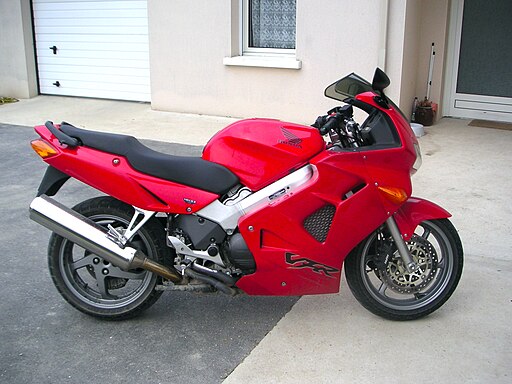
The Honda VFR800 redefined the sport-touring segment when it launched in 1998. Marrying a rev-happy 781 cc V-4 engine with a precision aluminum frame and long-distance comfort, it struck a balance between canyon-carving agility and motorway stability. Over successive updates, including the addition of VTEC variable valve timing in 2002, the VFR800 earned a reputation for bullet-proof reliability, razor-sharp handling, and year-round versatility. This article dissects its technical anatomy, performance figures, maintenance regimen, and enduring appeal for riders and engineers alike.
Model Evolution and Design Objectives
Honda’s goal with the VFR800 was to deliver:
- The character and smoothness of a 90° V-4 with minimal vibration
- A compact package achieved through gear-driven camshafts and tight engine packaging
- A rigid, lightweight chassis that inspires confidence at speed
- Ergonomics supportive of long days on the saddle without fatigue
Introduced as the “Interceptor” in North America, the VFR800Fi set new benchmarks for mechanical refinement. The 2002 VFR800 VTEC added a third intake valve per cylinder under 6,800 rpm, broadening the torque curve without sacrificing top-end power.
Engine Architecture
Core Configuration
- Layout: 90° longitudinal V-4 four-stroke
- Displacement: 781 cc
- Bore × Stroke: 72.0 mm × 48.0 mm
- Compression Ratio: 10.5 : 1
Valvetrain and Timing
- Camshafts: Dual overhead cams per bank driven by steel gears
- Valves: 4 per cylinder (16 total)
- VTEC System (2002+): Two intake valves operate below 6,800 rpm; all four open above that threshold
Gear-driven cams eliminate belt servicing and deliver pinpoint timing accuracy even under high rpm stress. The VTEC mechanism enriches midrange torque without raising complexity for the rider.
Fueling and Induction
- Throttle Bodies: Four 38 mm EFI throttle bodies with throttle-position sensor
- Fuel Control: Programmed electronic injection with closed-loop O₂ feedback
- Intake Design: Tuned-length runners for a broad torque spread from 3,000 to 10,500 rpm
The precision-port injection system ensures crisp throttle response and consistent mixture delivery whether winding through twisties or cruising at highway speeds.
Cooling and Lubrication
- Radiator: 3-row aluminum core with thermostatic electric fan
- Coolant Capacity: 2.8 L
- Oil System: Wet sump with full-flow spin-on filter; capacity 3.7 L
- Oil Cooler: Integrated front-mounted plate cooler
Optimized coolant channels through each cylinder head prevent thermal hotspots during hard touring, while the oil circuit and cooler maintain stable viscosity under load.
Drivetrain and Final Drive
- Transmission: Six-speed constant-mesh gearbox
- Clutch: Wet multi-plate, cable-actuated
- Final Drive: 520 O-ring chain; sprockets 17 T front, 41 T rear
- Gear Ratios: Close-ratio first five gears, tall sixth for relaxed cruising
Precise shift gating and an optional quick-shifter on later models keep the V-4 in its sweet spot, delivering seamless power transfer to the rear wheel.
Chassis Geometry and Ergonomics
- Frame: Aluminum twin-spars cast in a perimeter design
- Wheelbase: 1,435 mm
- Rake/Trail: 26° / 108 mm
- Seat Height: 800 mm
- Ground Clearance: 155 mm
- Dry Weight: 195 kg
Cockpit dimensions provide a sport-leaning posture without cramping, and optional adjustable handlebars and footpegs accommodate a range of rider sizes.
Suspension and Braking
Front Suspension
- Forks: 43 mm Showa inverted cartridge
- Adjustments: Preload, compression, rebound
- Travel: 125 mm
Rear Suspension
- Layout: Pro-Arm single shock with rising-rate linkage
- Adjustments: Spring preload, rebound
- Travel: 129 mm
Brakes and Wheels
- Front Brakes: Dual 296 mm discs with two-piston calipers
- Rear Brake: Single 256 mm disc with two-piston caliper
- Wheels: 17 × 3.50 in front; 17 × 5.50 in rear
- Tires: 120/70 ZR17 front; 180/55 ZR17 rear
The suspension platform strikes a balance between compliance on highway expansions joints and firmness when pushing through fast bends. Brake packages provide confident, fade-resistant stopping power.
Electrical and Instrumentation
- Battery: 12 V, 12 Ah sealed lead-acid
- Alternator: 350 W at 5,000 rpm
- Ignition: Digital CDI with full-advance mapping
- Lighting: 55 W headlight; LED tail/stop lamp conversions common
- Instrument Cluster: Twin analog gauges (tachometer, speedometer) with digital odometer, fuel gauge, coolant temperature, and trip meters
A centralized fuse block and consolidated grounds simplify diagnostics and accessory installations.
Performance Metrics
- Peak Power: 104 hp (77 kW) @ 10,500 rpm
- Peak Torque: 83 Nm @ 8,000 rpm
- Top Speed: 235 km/h
- 0–100 km/h: 3.6 s
- Fuel Economy: 5.6 L/100 km at steady 90 km/h
- Fuel Capacity: 21 L (including 3.8 L reserve)
Strong midrange torque makes daily riding effortless, while exhilarating top-end punch keeps the VFR800 engaging on back-road blasts.
Maintenance and Preventative Strategies
- Valve Clearance: Inspect every 16,000 km; gear-drive timing guarantees repeatability but still requires shim checks
- Fuel Injection: Clean throttle bodies and O₂ sensors every 24,000 km for consistent fueling
- Coolant Service: Replace every two years; monitor hoses for heat-age cracking
- Chain and Sprockets: Lube and adjust every 1,000 km; replace sprockets when chain stretch exceeds 1 %
- Brake Fluid: Flush dual circuits annually with DOT 4 fluid to prevent moisture buildup
- Suspension Seals: Inspect forks and shock every 24,000 km; upgrade to modern low-friction seals if desired
Proactive attention to these items preserves the V-4’s smoothness and the chassis’s precision, minimizing unplanned downtime.
Technical Specification Summary
| Parameter | Specification |
|---|---|
| Engine Type | Liquid-cooled 90° V-4 |
| Displacement | 781 cc |
| Bore × Stroke | 72.0 mm × 48.0 mm |
| Compression Ratio | 10.5 : 1 |
| Valvetrain | DOHC per bank; 4 valves/cylinder; gear-drive |
| Fuel System | Electronic fuel injection; 4 × 38 mm bodies |
| Transmission | 6-speed constant-mesh |
| Final Drive | 520 O-ring chain (17 T/41 T) |
| Frame | Aluminum twin-spar perimeter |
| Front Suspension | 43 mm inverted, preload/comp/rebound |
| Rear Suspension | Pro-Arm single shock, preload/rebound |
| Wheelbase | 1,435 mm |
| Seat Height | 800 mm |
| Dry Weight | 195 kg |
| Fuel Capacity | 21 L (3.8 L reserve) |
| Peak Power | 104 hp @ 10,500 rpm |
| Peak Torque | 83 Nm @ 8,000 rpm |
| Top Speed | 235 km/h |
Legacy and Aftermarket Ecosystem
Decades on, the VFR800 remains a gold standard for sport-touring enthusiasts. Its adaptability is buoyed by:
- A wealth of OEM and quality aftermarket parts, from rebuild kits to performance cam sprockets
- Electronic enhancements such as quick-shifters, LED lighting, and adjustable clutch levers
- Suspension upgrades including cartridge-style fork kits and aftermarket rear shocks
- Active owner communities sharing dyno maps, custom mapping files, and touring itineraries
These resources ensure the VFR800 retains its sharp handling, comfortable touring manners, and strong resale value.
Conclusion
The Honda VFR800 combines razor-sharp chassis feedback, a character-packed V-4 powerplant, and touring comfort in a single package. Its gear-driven cams and optional VTEC system showcase Honda’s engineering prowess, while robust service intervals and global support networks make ownership a pleasure rather than a chore. Whether carving mountain passes, tackling cross-country distances, or serving as an everyday commuter, the VFR800 endures as a benchmark in sport-touring performance.
