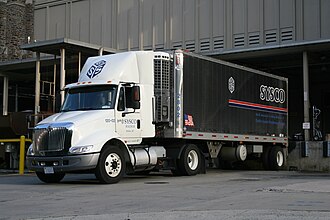
International Transtar: The Heavy-Duty Truck That Helped Shape Modern American Freight Transportation
The International Transtar occupies a significant place in the history of North American commercial trucking. Developed by International Harvester, and later produced under the International Truck brand, the Transtar became synonymous with durability, engineering excellence, and adaptability across countless vocational and long-haul applications. At a time when freight transportation was expanding rapidly across the United States and Canada, trucking companies demanded vehicles capable of operating reliably under increasingly demanding workloads. The International Transtar answered those demands by combining rugged construction, powerful diesel engines, dependable drivetrains, and practical cab designs that emphasized productivity over unnecessary complexity. Throughout multiple generations, the Transtar evolved alongside changing industry requirements, emissions regulations, safety standards, and driver expectations while maintaining the core characteristics that made International trucks respected throughout the commercial transportation industry.
Unlike many trucks designed exclusively for highway freight or specialized vocational work, the Transtar developed a reputation for remarkable versatility. Fleet operators configured these trucks as regional haulers, interstate tractors, dump trucks, tanker trucks, flatbeds, logging vehicles, municipal service units, heavy equipment transporters, and numerous other commercial applications. This adaptability enabled businesses of every size—from independent owner-operators to national logistics companies—to tailor the vehicle according to specific operational requirements. Even decades after many early Transtar models left production, surviving examples continue to work on farms, construction sites, industrial facilities, and restoration projects, demonstrating the remarkable longevity that has become one of the truck’s defining qualities.
Today, the International Transtar is remembered not only as a dependable commercial truck but also as an important milestone in American truck engineering. It represents an era when heavy-duty vehicles were built with exceptional structural strength, mechanical simplicity, and long-term serviceability. For collectors, trucking enthusiasts, mechanics, and historians, the Transtar continues to symbolize the rugged practicality that defined International’s approach to commercial vehicle manufacturing throughout much of the twentieth century.
The Origins of the International Transtar
The history of the International Transtar begins during a period of tremendous growth within North America’s transportation industry. Following the expansion of interstate highways, manufacturing, agriculture, and nationwide freight distribution, trucking companies required vehicles capable of transporting increasingly larger payloads over longer distances. International Harvester had already established itself as a respected manufacturer of agricultural equipment and commercial vehicles, but growing competition encouraged the company to develop increasingly advanced heavy-duty trucks capable of serving diverse industries.
The Transtar emerged as one of International’s flagship heavy-duty truck platforms, designed to accommodate both highway transportation and vocational applications. Engineers emphasized durability above all else, recognizing that commercial trucks often operated continuously under heavy loads and difficult environmental conditions. Rather than designing a truck optimized for only one task, International created a flexible platform that could be adapted to countless commercial applications through various chassis lengths, axle configurations, cab styles, and drivetrain options.
As the trucking industry evolved throughout subsequent decades, the Transtar underwent continuous refinement. New engines, improved transmissions, upgraded cab interiors, enhanced suspension systems, and evolving safety equipment allowed the truck to remain competitive despite changing market expectations. These updates reflected International’s commitment to preserving reliability while embracing technological advancement.
Design Philosophy
Built Around Commercial Productivity
Every aspect of the International Transtar reflected a straightforward engineering philosophy: commercial trucks exist to generate productivity. Unlike passenger vehicles that often prioritize luxury or styling, heavy-duty trucks must deliver dependable performance throughout years of continuous operation. Engineers therefore concentrated on structural integrity, maintenance accessibility, mechanical durability, and operational efficiency. The resulting truck possessed an unmistakably purposeful appearance characterized by strong body lines, robust chassis components, generous cooling capacity, and highly functional cab layouts.
This practical approach proved especially valuable for fleet operators responsible for controlling maintenance costs and maximizing vehicle utilization. Components were engineered for long service intervals whenever possible, while maintenance procedures remained relatively straightforward compared with increasingly complex modern commercial vehicles. As a result, mechanics appreciated the truck’s accessibility, and operators benefited from reduced downtime.
Distinctive Exterior Styling
Although functionality remained the primary objective, the Transtar developed a distinctive visual identity that became instantly recognizable across North American highways. Its large rectangular grille, substantial front bumper, broad hood, and commanding stance projected confidence while supporting effective engine cooling and straightforward service access. Depending on production year and configuration, various grille designs and aerodynamic improvements reflected changing design trends while preserving the truck’s unmistakable International character.
Large mirrors, wide windshields, integrated steps, and durable exterior components further emphasized practicality. Every element served multiple purposes, balancing appearance with long-term durability under demanding commercial conditions.
Chassis Engineering and Structural Strength
Beneath its exterior, the International Transtar relied upon a heavy-duty ladder-frame chassis engineered for exceptional strength. High-strength steel frame rails, reinforced crossmembers, commercial-grade suspension mounting points, and heavy-duty axle assemblies enabled the truck to withstand years of operation under substantial payloads. Whether hauling freight trailers across interstate highways or transporting construction materials through rugged job sites, the chassis provided remarkable structural integrity.
Multiple wheelbase lengths and axle configurations significantly expanded the platform’s versatility. Customers could specify tandem rear axles for heavy hauling, single-drive configurations for regional transportation, or specialized vocational arrangements tailored to unique commercial requirements. This flexibility allowed International dealers to supply trucks suitable for virtually every heavy-duty application.
Body builders also appreciated the Transtar’s adaptable frame design. Flatbeds, dump bodies, tanker installations, refuse equipment, cranes, utility bodies, and countless specialized commercial conversions could be mounted efficiently while preserving frame durability. This capability transformed the Transtar into one of the industry’s most versatile heavy-duty platforms.
Engine Options and Performance
Diesel Power for Demanding Applications
Throughout its production history, the International Transtar was available with numerous gasoline and diesel engines depending upon model year, market, and intended application. As commercial transportation increasingly embraced diesel technology, many Transtar models featured engines from respected manufacturers including Cummins, Detroit Diesel, Caterpillar, and International’s own engine programs. These powerplants delivered abundant torque essential for hauling heavy loads while maintaining reasonable fuel economy for long-distance operation.
Heavy-duty diesel engines differ significantly from passenger vehicle engines because they prioritize low-speed torque, continuous operation, and extended durability. Rather than emphasizing rapid acceleration, Transtar engines generated strong pulling power across broad operating ranges, enabling confident hill climbing, trailer towing, and sustained highway performance even under maximum payload conditions.
Cooling and Reliability
Commercial engines generate substantial heat during continuous operation, particularly when transporting heavy freight through mountainous terrain or high-temperature environments. International therefore equipped the Transtar with generous cooling systems incorporating large radiators, high-capacity fans, and carefully engineered airflow management. These systems contributed significantly to long-term engine reliability by maintaining stable operating temperatures under demanding conditions.
Transmission Options and Drivetrain Technology
The International Transtar offered numerous transmission choices reflecting the diverse requirements of commercial operators. Heavy-duty manual transmissions remained the dominant choice throughout much of the truck’s production because they provided exceptional durability, direct driver control, and excellent compatibility with powerful diesel engines. Eaton Fuller transmissions became particularly popular due to their robust construction and proven reliability within heavy-haul applications.
Depending upon configuration, transmissions ranged from traditional five-speed units to sophisticated multi-speed gearboxes capable of handling substantial gross combination weights. Carefully selected gear ratios optimized engine performance across varying terrain while supporting fuel-efficient highway cruising.
Heavy-duty differentials, reinforced driveshafts, and commercial-grade axle assemblies completed the drivetrain package, ensuring dependable power delivery regardless of operating conditions. These components collectively established the Transtar’s reputation for mechanical durability.
Cab Design and Driver Experience
Designed for Professional Drivers
Long-haul truck drivers often spend days or even weeks inside their vehicles, making cab design an important consideration. International recognized this reality by continuously improving the Transtar’s interior throughout successive model generations. Large seating areas, logical dashboard layouts, expansive windshield visibility, and practical storage compartments created a comfortable working environment despite the truck’s fundamentally utilitarian purpose.
Controls were positioned to minimize driver distraction while gauges provided clear monitoring of engine temperature, oil pressure, air pressure, fuel levels, charging systems, and other essential operating parameters. Durable materials ensured the cabin remained functional despite years of heavy commercial use.
Visibility and Ergonomics
Excellent visibility represented another defining characteristic of the Transtar. Large side windows, carefully positioned mirrors, elevated seating, and wide windshield glass improved awareness of surrounding traffic and road conditions. This visibility enhanced safety while reducing fatigue during extended operating periods.
Vocational Versatility
Few heavy-duty trucks matched the International Transtar’s adaptability. Long-haul carriers employed highway tractor configurations for interstate freight transportation, while regional operators selected day-cab variants optimized for shorter routes. Construction companies relied upon dump truck versions to transport aggregate, soil, and demolition materials. Logging businesses appreciated the truck’s structural durability under extreme operating conditions.
Municipal governments configured Transtar chassis for snowplows, water tankers, refuse collection, street maintenance, and emergency response vehicles. Agricultural operations utilized grain trucks, livestock transporters, and equipment haulers. Petroleum companies selected tanker configurations for fuel distribution, while heavy equipment contractors employed lowboy tractor variants for moving construction machinery.
This remarkable versatility significantly expanded the truck’s market appeal and contributed to its long production history. Rather than designing multiple specialized platforms, International created a fundamentally adaptable vehicle capable of supporting virtually every commercial transportation requirement.
Fuel Economy and Operational Efficiency
Although heavy-duty trucks naturally consume considerable fuel due to their size and payload capacity, operational efficiency remained an important design objective throughout the Transtar’s evolution. Advances in diesel engine technology, improved aerodynamics on later models, optimized transmission gearing, and refined drivetrain components collectively reduced operating costs while maintaining excellent hauling capability.
Fleet managers evaluated trucks not solely according to purchase price but rather total lifecycle cost. The Transtar’s durable components, dependable engines, and relatively straightforward maintenance procedures frequently translated into lower long-term ownership expenses compared with less robust competitors.
Maintenance and Longevity
One of the International Transtar’s greatest strengths has always been its remarkable longevity. Many examples remained productive for decades because their mechanical systems were designed with rebuildability and serviceability in mind. Engines could often be overhauled rather than replaced, while frame structures and drivetrain components tolerated repeated maintenance cycles without compromising structural integrity.
Preventive maintenance—including lubrication, cooling system servicing, brake inspections, suspension maintenance, and drivetrain adjustments—allowed operators to accumulate exceptionally high mileage. Many owner-operators considered the Transtar a lifetime investment capable of supporting multiple engine rebuilds throughout its working life.
Extensive dealer networks and widespread parts availability further enhanced long-term ownership. Even today, numerous replacement components remain accessible through aftermarket suppliers, supporting restoration projects and continued commercial operation.
Safety Features
Engineering for Commercial Protection
Safety standards evolved considerably throughout the Transtar’s production history, and International responded by incorporating progressively improved braking systems, stronger cab structures, enhanced lighting, improved mirror arrangements, and increasingly sophisticated steering components. These improvements helped drivers maintain better vehicle control while reducing accident risk under demanding operating conditions.
Air brake systems, commercial-grade suspension designs, and predictable handling characteristics further contributed to safe operation despite substantial payloads. Proper driver training combined with robust mechanical engineering enabled the Transtar to achieve an excellent reputation among professional operators.
The Legacy of the International Transtar
The International Transtar occupies a respected position within commercial trucking history because it successfully combined engineering durability with remarkable versatility. Countless businesses depended upon these trucks for transporting freight, supporting industrial operations, maintaining public infrastructure, and enabling economic growth throughout North America. Its influence extends beyond production numbers, reflecting International’s longstanding commitment to practical commercial vehicle engineering.
Collectors increasingly recognize early Transtar models as historically significant examples of American truck manufacturing. Restored examples frequently appear at transportation museums, truck shows, and vintage commercial vehicle events where enthusiasts celebrate their distinctive styling and mechanical simplicity. Working trucks continue earning admiration by remaining productive decades after leaving factory assembly lines.
Modern heavy-duty trucks feature advanced electronics, automated transmissions, sophisticated emissions systems, and integrated telematics unimaginable during the Transtar’s earliest years. Nevertheless, the core engineering principles that defined the Transtar—durability, adaptability, serviceability, and productivity—remain fundamental requirements for every successful commercial vehicle produced today.
Technical Specifications Summary
| Specification | International Transtar |
|---|---|
| Manufacturer | International Harvester / International Truck (Navistar) |
| Production Period | Multiple generations from the late 1960s through later modern variants (depending on market and model) |
| Vehicle Class | Heavy-Duty Commercial Truck (Class 7–8) |
| Body Configurations | Day Cab, Sleeper Cab, Tractor, Straight Truck, Vocational Chassis |
| Cab Layout | Conventional Cab |
| Engine Options | International, Cummins, Caterpillar, Detroit Diesel, and others depending on model year |
| Fuel Type | Primarily Diesel |
| Transmission Options | Eaton Fuller Manual, Automatic options on later models |
| Drive Configurations | 4×2, 6×4, and vocational axle arrangements |
| Frame Type | Heavy-Duty High-Strength Steel Ladder Frame |
| Brake System | Commercial Air Brakes with ABS on later models |
| Suspension | Heavy-Duty Leaf Spring and Optional Air Ride Systems |
| Typical GVWR | Varies according to configuration and intended application |
| Primary Applications | Long-haul freight, regional transportation, dump trucks, tankers, logging, municipal fleets, construction, agriculture, equipment hauling |
Conclusion
The International Transtar stands as one of the defining heavy-duty trucks in American commercial transportation history. Through decades of continuous development, it demonstrated that successful truck engineering depends not upon unnecessary complexity but rather upon strength, durability, adaptability, and long-term reliability. Fleet operators trusted the Transtar because it consistently delivered dependable performance across an extraordinary range of commercial applications, while mechanics appreciated its serviceability and owner-operators valued its exceptional longevity.
Even as commercial trucking continues evolving toward advanced driver assistance technologies, connected fleet management, alternative fuels, and electrification, the legacy of the International Transtar remains highly relevant. Its emphasis on structural integrity, productive design, and practical engineering established standards that continue influencing modern heavy-duty truck development. Whether remembered as a hardworking highway tractor, a dependable vocational truck, or a beautifully restored classic commercial vehicle, the International Transtar remains a lasting symbol of American trucking excellence and a testament to the enduring value of vehicles built to perform demanding work year after year.
