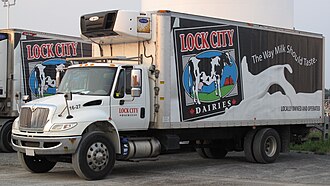
International DuraStar: The Medium-Duty Truck That Became a Benchmark for Commercial Reliability
For more than two decades, the International DuraStar has been recognized as one of the most versatile and dependable medium-duty commercial trucks ever produced in North America. Designed to serve an enormous range of industries—from local delivery services and municipal fleets to construction companies, utility providers, towing operations, emergency services, and vocational applications—the DuraStar established itself as a platform capable of adapting to virtually any commercial task. Combining a robust chassis, powerful diesel engines, driver-focused ergonomics, and a reputation for durability, the DuraStar became one of the most successful products in International Truck’s long history.
Unlike trucks developed exclusively for long-distance freight transportation, the DuraStar was engineered as a flexible vocational platform. Businesses rarely require a vehicle that performs only one task, and International understood this reality during the truck’s development. Instead of focusing on maximum horsepower or luxury, engineers concentrated on creating a truck that offered dependable daily performance, straightforward maintenance, multiple wheelbase options, extensive body compatibility, and long-term durability. These characteristics helped establish the DuraStar as a favorite among both large fleet operators and independent business owners.
Throughout its production life, the International DuraStar evolved alongside changing emissions regulations, advancements in diesel engine technology, and increasing customer expectations regarding safety, comfort, fuel efficiency, and connectivity. Although newer models have since joined International’s commercial lineup, the DuraStar remains highly respected for its engineering excellence and continues to serve businesses throughout North America. Many examples remain in active commercial service today, demonstrating the longevity that has become one of the truck’s defining characteristics.
The History of the International DuraStar
The International DuraStar traces its roots to the early 2000s, when International Truck sought to modernize its medium-duty commercial lineup. Commercial transportation was undergoing significant transformation as businesses demanded trucks capable of offering greater productivity while complying with increasingly strict emissions standards and safety regulations. Customers wanted vehicles that could reduce operating costs without sacrificing payload capacity or durability. In response, International introduced the DuraStar as a modern medium-duty platform intended to replace earlier truck models while introducing substantial improvements in comfort, engineering, and serviceability.
The truck quickly gained popularity across numerous industries because it addressed practical business needs rather than emphasizing unnecessary complexity. Fleet managers appreciated its relatively simple maintenance procedures, dependable drivetrain options, and broad range of available configurations. The platform’s versatility enabled it to serve industries with dramatically different requirements, ranging from refrigerated food delivery to utility maintenance, municipal services, moving companies, construction contractors, and specialized vocational equipment.
As environmental regulations evolved throughout the 2000s and 2010s, International continually updated the DuraStar’s powertrain offerings, emissions systems, and electronic controls. These improvements allowed the truck to remain competitive while preserving the reliability that had already established its reputation within the commercial vehicle market.
Design Philosophy
Engineering for Everyday Commercial Operations
The fundamental design philosophy behind the International DuraStar centered on practicality. Commercial trucks rarely operate under ideal conditions. Instead, they spend their working lives navigating congested urban streets, construction sites, industrial facilities, distribution centers, highways, and rural roads. International therefore designed the DuraStar as a vehicle capable of handling virtually every environment encountered by medium-duty commercial operators.
Rather than focusing exclusively on raw performance, engineers balanced payload capacity, durability, maneuverability, maintenance accessibility, and driver comfort. Every design decision reflected the understanding that commercial trucks generate revenue only when they remain operational. Downtime represents lost productivity, making reliability one of the truck’s most valuable characteristics.
Modern Yet Functional Styling
Although appearance plays a secondary role in commercial vehicles, the DuraStar introduced a clean, professional exterior that reflected International’s contemporary design language. The aerodynamic hood, integrated lighting, large grille, and smoothly contoured body panels contributed not only to the truck’s visual identity but also to improved airflow and easier maintenance access.
Large side mirrors, expansive windshield glass, and carefully designed sightlines enhanced visibility while reducing blind spots. Wide-opening doors and sturdy entry steps simplified cab access, particularly important for delivery drivers and service technicians who entered and exited the truck repeatedly throughout the day.
Chassis Engineering and Structural Strength
One of the DuraStar’s greatest strengths lies beneath the bodywork. Its heavy-duty ladder-frame chassis was engineered using high-strength steel designed to withstand years of demanding commercial service. Multiple frame options enabled customers to configure the truck for countless applications without compromising structural integrity.
Various wheelbase lengths allowed businesses to optimize cargo capacity while maintaining maneuverability appropriate for their operating environment. Body builders benefited from a straightforward chassis design that simplified installation of utility bodies, box vans, dump beds, cranes, flatbeds, tow equipment, vacuum systems, tanker bodies, and numerous specialized commercial installations.
Reinforced crossmembers, commercial-grade suspension mounting points, and durable axle assemblies further contributed to the truck’s reputation for longevity. Many DuraStar chassis remain in service after hundreds of thousands of miles, highlighting the effectiveness of International’s engineering philosophy.
Engine Options and Diesel Performance
Power for Commercial Productivity
Throughout its production history, the International DuraStar offered several diesel engine options depending upon model year, emissions requirements, and customer specifications. Engines such as the International DT466, MaxxForce DT, MaxxForce 7, Cummins ISB, and Cummins B6.7 became common choices due to their combination of durability, fuel efficiency, and strong torque characteristics.
Unlike passenger vehicle engines that emphasize high-speed horsepower, commercial diesel engines focus primarily on producing abundant torque at relatively low engine speeds. This characteristic enables trucks like the DuraStar to accelerate confidently while carrying heavy loads, tow substantial equipment, and maintain steady highway speeds without excessive engine stress.
The Legendary DT466 Engine
Among the various powerplants available for the DuraStar, the International DT466 earned legendary status within the trucking industry. Featuring a wet-sleeve cylinder design that simplified engine rebuilding, the DT466 became renowned for exceptional durability and long service life. Fleet operators frequently reported engines exceeding several hundred thousand miles before requiring major overhauls, making the DT466 one of the most respected medium-duty diesel engines ever produced.
Strong low-end torque, dependable cooling systems, and relatively straightforward maintenance requirements contributed significantly to the engine’s popularity. For businesses seeking maximum long-term value, the DT466 represented an outstanding investment.
Transmission Choices and Drivability
The DuraStar was available with multiple transmission options designed to accommodate different commercial applications. Automatic transmissions became increasingly popular due to their ability to reduce driver fatigue, particularly during urban delivery routes involving frequent stops. Allison automatic transmissions proved especially popular because of their durability, smooth shifting characteristics, and proven commercial reliability.
Manual transmissions remained available for operators preferring greater control under demanding vocational conditions. Carefully selected gear ratios allowed engines to remain within optimal operating ranges, improving both fuel economy and overall performance regardless of payload.
Steering systems were engineered to provide precise vehicle control despite varying load conditions. Combined with carefully calibrated suspension systems, the truck delivered predictable handling whether operating empty or carrying substantial cargo.
Cab Design and Driver Comfort
Creating an Efficient Workplace
Commercial drivers often spend entire workdays behind the wheel, making cabin ergonomics critically important. International designed the DuraStar’s cab as an efficient workplace rather than simply a transportation compartment. Large seats with multiple adjustment options, logically arranged controls, excellent visibility, and durable interior materials contributed to reduced fatigue during extended operating periods.
Dashboard instrumentation prioritized clarity and functionality. Drivers could quickly monitor engine performance, vehicle systems, fuel levels, and maintenance indicators without unnecessary distractions. Storage compartments, document holders, and conveniently positioned cup holders reflected practical understanding of daily commercial operations.
Visibility and Accessibility
Large windows combined with expansive mirrors provided excellent visibility in crowded urban environments. Drivers benefited from elevated seating positions that improved awareness of surrounding traffic, pedestrians, cyclists, and job-site activity. Entry and exit were simplified through strategically positioned grab handles and wide-opening doors, an important feature for operators making frequent deliveries.
Vocational Applications
The remarkable versatility of the DuraStar allowed it to serve an extraordinary range of industries. Utility companies equipped the chassis with service bodies carrying specialized tools and replacement equipment. Municipal governments utilized DuraStar trucks for road maintenance, snow removal support, parks departments, sanitation operations, and public works projects.
Construction companies frequently selected the DuraStar for dump trucks, crane trucks, flatbeds, concrete support vehicles, and equipment transportation. Landscape contractors installed stake bodies and irrigation equipment, while moving companies relied upon box van configurations for residential and commercial relocation services.
Beverage distributors, refrigerated food suppliers, parcel delivery companies, and retail logistics operators appreciated the truck’s combination of maneuverability and payload capacity. Emergency response organizations further expanded the platform’s applications by converting chassis into rescue units, command vehicles, hazardous materials response trucks, and mobile communications centers.
Fuel Economy and Operating Costs
Fuel expenses represent one of the largest operating costs for commercial fleets, making efficiency a critical purchasing consideration. International continuously refined engine calibrations, transmission programming, and aerodynamic features to improve fuel economy while maintaining strong vocational capability. Although actual consumption varied according to payload, terrain, and operating conditions, many fleet operators found the DuraStar to deliver competitive efficiency within its class.
Equally important was maintenance accessibility. Routine servicing procedures—including oil changes, filter replacement, brake inspections, and cooling system maintenance—were designed to minimize labor requirements. Lower maintenance costs, combined with dependable component durability, contributed significantly to reduced total cost of ownership.
Safety Features
Protecting Drivers and Surrounding Traffic
Safety remained a central consideration throughout the DuraStar’s development. High-strength cab construction, anti-lock braking systems, electronic braking technologies on later models, stable chassis dynamics, and excellent visibility all contributed to safer commercial operation. Commercial trucks frequently operate in complex environments involving pedestrians, cyclists, heavy traffic, and active construction zones, making predictable handling characteristics essential.
Modern DuraStar models also incorporated enhanced lighting systems, optional traction control technologies, improved mirror designs, and upgraded braking performance. Together, these features reduced accident risk while increasing driver confidence during daily operations.
Maintenance and Long-Term Reliability
One of the strongest arguments in favor of the International DuraStar has always been its reputation for reliability. Commercial vehicles must remain operational for extended periods while accumulating significant mileage under challenging conditions. International addressed this requirement through robust engineering, high-quality components, and thoughtful serviceability.
Fleet operators frequently praised the truck’s durability, particularly when equipped with proven diesel engines such as the DT466 or Cummins B6.7. Proper preventive maintenance—including scheduled lubrication, cooling system inspections, brake servicing, and suspension maintenance—enabled many DuraStar trucks to remain productive for well over a decade.
Parts availability further enhanced the truck’s long-term appeal. International’s extensive dealer network ensured replacement components remained accessible, minimizing downtime and allowing businesses to maintain high fleet utilization rates.
The Legacy of the International DuraStar
Few medium-duty trucks have achieved the broad commercial acceptance enjoyed by the International DuraStar. Its ability to adapt to virtually every vocational application made it an indispensable tool across numerous industries. Businesses valued its reliability, mechanics appreciated its serviceability, and drivers recognized its comfortable working environment.
Even as commercial vehicle technology continues advancing through electrification, connectivity, advanced driver assistance systems, and telematics integration, many of the engineering principles demonstrated by the DuraStar remain relevant. Durability, versatility, efficiency, and ease of maintenance continue to define successful commercial vehicles, ensuring that the DuraStar’s influence extends well beyond its production years.
Today, thousands of DuraStar trucks remain active throughout North America. Whether delivering goods, supporting utility crews, maintaining public infrastructure, or transporting construction materials, these vehicles continue demonstrating the engineering excellence that established their reputation. Their ongoing presence serves as compelling evidence that thoughtful commercial vehicle design can produce machines capable of remaining productive for decades.
Technical Specifications Summary
| Specification | International DuraStar |
|---|---|
| Manufacturer | International Truck (Navistar) |
| Production Period | 2001–2018 (market dependent, before replacement by MV Series) |
| Vehicle Class | Class 4, Class 5, Class 6, and Class 7 Medium-Duty Truck |
| Body Style | Conventional Cab Chassis |
| Cab Configurations | Regular Cab, Extended Cab, Crew Cab |
| Primary Engine Options | International DT466, MaxxForce DT, MaxxForce 7, Cummins ISB, Cummins B6.7 |
| Fuel Type | Diesel |
| Transmission Options | Allison Automatic, Eaton Manual, Fuller Manual (varies by configuration) |
| Drive Configuration | 4×2 and selected 6×4 vocational configurations |
| Frame Type | High-strength steel ladder-frame chassis |
| Suspension | Heavy-duty leaf spring or air suspension depending on specification |
| Brake System | Hydraulic or Air Brakes with ABS |
| GVWR Range | Approximately 16,000–33,000 lbs depending on model |
| Typical Wheelbases | Multiple configurations for vocational customization |
| Common Applications | Box trucks, dump trucks, utility vehicles, flatbeds, tow trucks, beverage delivery, municipal fleets, emergency response, landscaping, construction, refrigerated transport |
Conclusion
The International DuraStar represents one of the most successful and influential medium-duty commercial trucks ever built. By combining a durable chassis, proven diesel engines, outstanding vocational flexibility, and driver-oriented engineering, International created a platform capable of meeting the needs of countless industries across North America. Rather than excelling in only one specialized role, the DuraStar distinguished itself through adaptability, allowing businesses to configure the truck for virtually any commercial application while maintaining dependable long-term performance.
Although newer commercial truck platforms have introduced increasingly sophisticated electronics, advanced safety technologies, and alternative powertrain options, the DuraStar remains a benchmark for practical engineering and operational reliability. Thousands of examples continue serving businesses every day, demonstrating the enduring value of thoughtful design, quality construction, and proven mechanical durability. Its legacy is not defined merely by production numbers or technical specifications, but by the countless businesses, municipalities, contractors, and professional drivers who relied upon the International DuraStar to perform essential work with confidence, efficiency, and remarkable dependability year after year.
