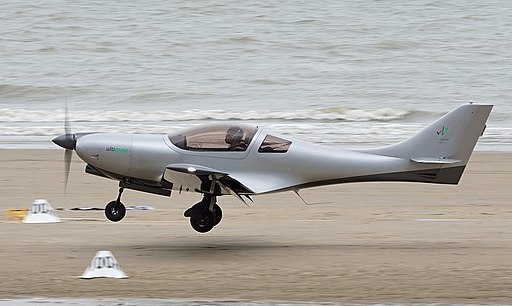
The JMB VL-3 Sprint is a modern, high-performance light sport aircraft (LSA) designed and manufactured by JMB Aircraft, a company based in the Czech Republic. Renowned for its sleek design, aerodynamic efficiency, and impressive performance, the VL-3 Sprint caters to private pilots, flight schools, and sport aviation enthusiasts. Its combination of speed, fuel efficiency, and advanced construction techniques places it among the leading aircraft in the light sport and ultralight categories.
Development and Design
The VL-3 Sprint was developed to meet the growing demand for fast, efficient, and easy-to-handle light aircraft that could provide high performance while remaining accessible for sport pilots. The aircraft features a low-wing monoplane configuration with a T-tail design, which enhances stability and control at high speeds. Its airframe utilizes composite materials, including carbon fiber and fiberglass, to reduce weight and increase strength.
The cockpit is designed for two occupants in a side-by-side seating arrangement, providing comfort and full visibility for both pilot and passenger. Large, aerodynamically shaped canopy windows ensure excellent forward and lateral visibility. The VL-3 Sprint’s interior is ergonomically designed, with well-positioned controls and instruments to reduce pilot workload during long flights or cross-country operations.
Powerplant and Performance
The VL-3 Sprint is typically powered by a Rotax 912 or Rotax 914 engine, with the 912 producing 100 horsepower and the 914 turbocharged variant producing up to 115 horsepower. These four-cylinder, horizontally opposed, liquid-cooled and air-cooled engines offer excellent reliability, smooth operation, and fuel efficiency. A three-blade or two-blade constant-speed propeller translates engine power into efficient thrust, optimizing both takeoff performance and cruise speed.
The aircraft achieves a maximum speed of approximately 280 kilometers per hour, with a cruise speed around 260 kilometers per hour. Its stall speed is relatively low, around 65 kilometers per hour, allowing for safe takeoffs and landings on shorter airstrips. The VL-3 Sprint has an operational range of up to 1,200 kilometers depending on fuel load and flight conditions, and a service ceiling of approximately 5,000 meters, making it suitable for both local recreational flights and long cross-country journeys.
Airframe and Aerodynamics
The VL-3 Sprint features a highly aerodynamic low-wing design, with a wingspan of 8.57 meters and an aspect ratio optimized for high-speed efficiency and smooth handling. The composite wing integrates full-span ailerons and manually adjustable flaps to improve lift during takeoff and landing. The T-tail configuration reduces turbulence interference from the wing, enhancing pitch stability and control at high angles of attack.
The fuselage construction utilizes a monocoque composite structure, providing excellent strength-to-weight ratio and contributing to the aircraft’s high-speed performance. The retractable tricycle landing gear reduces drag during cruise, while offering stable ground handling and improved aerodynamic efficiency.
Avionics and Instrumentation
The VL-3 Sprint is equipped with modern avionics suitable for sport, recreational, and cross-country flying. Standard instrumentation typically includes airspeed indicator, altimeter, variometer, turn coordinator, engine monitoring gauges, and GPS navigation. Advanced versions may include glass cockpit displays, integrated flight computers, and communication radios for enhanced situational awareness. The panel is designed for ergonomic efficiency, allowing pilots to access essential information quickly and maintain control during high-speed flight.
Landing Gear and Ground Handling
The retractable tricycle landing gear enhances aerodynamic efficiency during flight while maintaining stability during taxiing, takeoff, and landing. The main gear is equipped with shock-absorbing struts, allowing operations from paved and well-maintained grass airstrips. The nosewheel provides precise steering control, minimizing the risk of ground loops during taxi operations. The retractable mechanism is hydraulically or electrically actuated, depending on the variant, and integrates safety locks to prevent accidental deployment or retraction in flight.
Operational Roles and Uses
The JMB VL-3 Sprint is primarily used for sport flying, pilot training, and personal cross-country flights. Its high cruise speed, long range, and fuel efficiency make it an ideal aircraft for recreational pilots seeking performance comparable to light general aviation aircraft without the higher operating costs. Some flight schools employ the VL-3 Sprint for advanced LSA training, focusing on high-speed handling, retractable gear operation, and cross-country navigation. Its compact size and responsive controls also make it suitable for aerobatic maneuvering within safe operational limits.
Dimensions and Technical Parameters
-
Length: 6.5 meters
-
Wingspan: 8.57 meters
-
Height: 2.2 meters
-
Wing area: 9.3 square meters
-
Empty weight: 340 kilograms
-
Maximum takeoff weight: 600 kilograms
-
Engine: Rotax 912 UL/ULS or Rotax 914 turbo, 100–115 hp
-
Propeller: Two-blade or three-blade constant-speed
-
Maximum speed: 280 km/h
-
Cruise speed: 260 km/h
-
Stall speed: 65 km/h
-
Range: 1,200 kilometers
-
Service ceiling: 5,000 meters
-
Rate of climb: 6.5 meters per second
-
Landing gear: Retractable tricycle
-
Crew: 1–2
Safety and Maintenance
The VL-3 Sprint’s composite construction reduces susceptibility to corrosion and fatigue compared to traditional metal airframes, simplifying long-term maintenance. Routine checks include engine inspection, propeller monitoring, control surface checks, and landing gear functionality. Its low stall speed, stable handling characteristics, and reliable engine performance contribute to pilot safety during both training and recreational flights. The aircraft is also designed with redundancy systems for critical controls, further enhancing operational reliability.
Legacy and Conclusion
The JMB VL-3 Sprint is a benchmark in modern light sport aircraft design, combining high-speed performance, aerodynamic efficiency, and advanced composite construction. Its versatility, long range, and retractable landing gear make it ideal for sport pilots seeking both recreational flying and cross-country capabilities. With its sleek appearance, exceptional handling, and operational efficiency, the VL-3 Sprint continues to represent the forefront of European light aircraft engineering, appealing to enthusiasts and private pilots worldwide.
_copie-border_(41983282845).jpg)