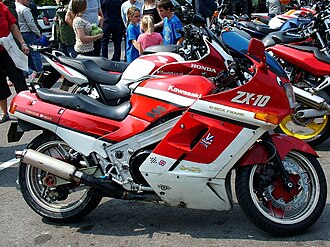
Kawasaki Tomcat ZX-10: The Forgotten Superbike That Defined an Era
The Kawasaki Tomcat ZX-10 Story
The Kawasaki Tomcat ZX-10 occupies a fascinating place in the history of Japanese superbikes. Introduced during the golden age of high-performance motorcycles in the 1980s, the ZX-10 was created at a time when manufacturers were competing to produce faster, more advanced, and more exciting machines. Before electronic rider aids, advanced traction control systems, and computer-controlled engine management became common, motorcycles relied heavily on mechanical engineering, careful chassis design, and raw engine performance. The Kawasaki Tomcat ZX-10 represented the cutting edge of that philosophy.
Known in many markets as the Kawasaki ZX-10 or Tomcat, this motorcycle was designed as a flagship sport-tourer that combined exceptional speed with long-distance usability. It was not simply a race-inspired machine built for short bursts of performance; instead, Kawasaki engineered it to provide superbike acceleration while maintaining comfort and stability for everyday riding. At the time of its launch, the ZX-10 was one of the fastest production motorcycles in the world, earning a reputation for impressive performance and advanced engineering.
Although later Kawasaki models such as the Ninja ZX-11 and modern ZX-series superbikes became more famous, the Tomcat ZX-10 played an important role in the evolution of Kawasaki’s performance motorcycles. It represented a bridge between the raw power of earlier superbikes and the highly refined machines that would follow in later decades.
The Birth of the Kawasaki Tomcat ZX-10
A Motorcycle Designed for Speed and Refinement
The Kawasaki Tomcat ZX-10 was introduced in the mid-1980s, arriving during a period when Japanese manufacturers were engaged in intense competition for performance leadership. Kawasaki had already established a reputation for producing powerful motorcycles, but the company wanted a machine that could combine extreme performance with improved handling and rider comfort.
The ZX-10 was powered by a 997cc liquid-cooled inline-four engine, a configuration that had become a hallmark of Kawasaki’s sport motorcycles. The engine was designed to deliver strong acceleration and impressive top-speed capability while maintaining smooth operation. Its performance placed it among the fastest motorcycles available at the time, making it a highly desirable machine for riders who wanted cutting-edge speed.
Unlike some aggressive racing-focused motorcycles, the Tomcat ZX-10 was designed with versatility in mind. It featured full fairing bodywork, a comfortable riding position, and engineering features aimed at making high-speed riding more manageable. This combination of performance and practicality helped define the sport-touring category during the era.
The Meaning Behind the Tomcat Name
The Tomcat name reflected the motorcycle’s aggressive personality. Inspired by the powerful image of the F-14 Tomcat fighter aircraft, the name suggested speed, precision, and technological superiority. Kawasaki used the name to communicate that this was not an ordinary motorcycle but a machine built for performance enthusiasts who wanted something exceptional.
The association with aviation was fitting because the ZX-10 represented a period when motorcycle manufacturers were exploring new levels of engineering. Aerodynamics, lightweight materials, and powerful multi-cylinder engines were transforming the riding experience, and the Tomcat became one of the symbols of this technological race.
Engine Performance and Mechanical Engineering
The Powerful 997cc Inline-Four Engine
At the heart of the Kawasaki Tomcat ZX-10 was its 997cc inline-four engine, which delivered the kind of performance that made superbikes of the era legendary. The liquid-cooled, double overhead camshaft design provided efficient power delivery and allowed the engine to operate smoothly at high speeds.
The engine produced approximately 135 horsepower, an impressive figure for the 1980s. While modern motorcycles produce significantly more power, the ZX-10’s performance was remarkable for its time. The motorcycle offered rapid acceleration and a very high top speed, making it one of the quickest production bikes available when it was released.
The inline-four engine layout also contributed to the motorcycle’s character. It provided a smooth power curve, a distinctive exhaust note, and strong performance throughout the rev range. Riders appreciated the combination of refinement and aggression, which made the ZX-10 exciting during spirited riding while remaining comfortable during longer journeys.
Performance Without Modern Electronics
One of the most interesting aspects of the Tomcat ZX-10 is how it delivered performance without the assistance of modern electronic systems. Today’s superbikes rely on traction control, ride modes, cornering ABS, and advanced engine management to help riders control enormous amounts of power. The ZX-10 existed in a different era, where mechanical design and rider skill were the primary factors influencing performance.
This mechanical simplicity gave the motorcycle a unique personality. Riders experienced a direct connection between the throttle, engine, and rear wheel. While this required greater attention and skill, many enthusiasts consider motorcycles from this period to have a special character because of their raw and engaging nature.
Chassis, Handling, and Riding Experience
A Balance Between Sport and Touring
The Kawasaki Tomcat ZX-10 was not designed solely as a track machine. Kawasaki aimed to create a motorcycle that could provide superbike performance while remaining comfortable enough for longer rides. The full fairing design offered wind protection, while the ergonomics were more relaxed compared with dedicated racing motorcycles.
The chassis was engineered to provide stability at high speeds, which was essential for a motorcycle capable of reaching extreme performance levels. The combination of a strong frame, quality suspension components, and aerodynamic bodywork helped the ZX-10 remain composed during fast riding.
Although heavier than some pure sport motorcycles, the ZX-10’s weight contributed to its stability. Many riders appreciated its confidence-inspiring nature, particularly during highway riding and high-speed touring.
Suspension and Braking Technology
The ZX-10 featured suspension technology that reflected the engineering standards of its time. Adjustable components allowed riders to modify the motorcycle’s behavior according to riding conditions and personal preferences. While modern suspension systems are significantly more advanced, the ZX-10’s setup provided capable handling for the era.
Braking performance was another important part of the motorcycle’s design. Dual front disc brakes provided strong stopping power, allowing riders to manage the motorcycle’s high speed effectively. The braking system demonstrated Kawasaki’s understanding that performance was not only about acceleration but also about control and safety.
Design and Styling of the Kawasaki Tomcat ZX-10
The Iconic 1980s Sportbike Appearance
The Kawasaki Tomcat ZX-10 carried the distinctive styling of 1980s superbikes. Its full fairing, sharp lines, and aerodynamic shape created a futuristic appearance when it was introduced. The design communicated speed and technology, matching the motorcycle’s performance capabilities.
The large fairing served both practical and aesthetic purposes. It improved rider comfort by reducing wind pressure and contributed to aerodynamic efficiency at higher speeds. The motorcycle’s appearance reflected the era’s fascination with aviation-inspired design, where manufacturers used aggressive shapes to suggest advanced performance.
A Classic Motorcycle Design
Today, the ZX-10 has gained appreciation among collectors and motorcycle enthusiasts because of its classic styling. While modern motorcycles often emphasize aggressive minimalism and electronic sophistication, the Tomcat represents a time when mechanical engineering was the primary focus.
Its design has become a reminder of an important period in motorcycle history. The 1980s and early 1990s produced some of the most memorable Japanese performance machines, and the ZX-10 remains an important example of that generation.
The Legacy of the Kawasaki Tomcat ZX-10
Influence on Future Kawasaki Superbikes
The Kawasaki Tomcat ZX-10 helped establish the foundation for future high-performance Kawasaki motorcycles. Its combination of powerful engine performance, aerodynamic design, and sport-touring capability influenced later models, including the legendary Ninja ZX-11.
The motorcycle demonstrated that Kawasaki could create machines capable of competing at the highest levels of speed while maintaining everyday usability. This philosophy continued through many future Kawasaki sport motorcycles.
A Collector’s Motorcycle Today
Although the ZX-10 is not as widely recognized as some other Kawasaki models, it has developed a loyal following among enthusiasts. Collectors value the motorcycle because it represents a significant moment in superbike development.
Well-maintained examples are increasingly appreciated by riders who enjoy classic Japanese motorcycles. The Tomcat offers a unique ownership experience because it combines historical importance, mechanical simplicity, and impressive performance for its age.
Conclusion: Remembering the Kawasaki Tomcat ZX-10
The Kawasaki Tomcat ZX-10 was a motorcycle built during an era of rapid innovation and intense competition. It represented Kawasaki’s ambition to create a machine that combined speed, technology, and long-distance capability in a single package.
While newer motorcycles have surpassed it in horsepower, electronics, and outright performance, the ZX-10 remains significant because of what it achieved during its time. It was one of the fastest motorcycles of its generation and helped shape Kawasaki’s reputation as a manufacturer of powerful, exciting machines.
For motorcycle enthusiasts, the Tomcat ZX-10 is more than an old superbike. It is a symbol of an era when engineering creativity, mechanical performance, and the pursuit of speed defined motorcycle development.
Kawasaki Tomcat ZX-10 Technical Specifications
| Specification | Details |
|---|---|
| Model Name | Kawasaki Tomcat ZX-10 |
| Production Period | 1988–1990 |
| Motorcycle Type | Sport-touring superbike |
| Engine Type | Liquid-cooled, four-stroke, DOHC inline-four |
| Engine Displacement | 997cc |
| Cooling System | Liquid cooling |
| Fuel System | Carburetors |
| Transmission | 6-speed manual |
| Final Drive | Chain |
| Maximum Power | Approximately 135 hp |
| Maximum Torque | Approximately 100 Nm |
| Top Speed | Approximately 260 km/h (160 mph) |
| Frame Type | Aluminum perimeter frame |
| Front Suspension | Telescopic fork |
| Rear Suspension | Uni-Trak single shock system |
| Front Brakes | Dual hydraulic disc brakes |
| Rear Brake | Single hydraulic disc brake |
| Wheelbase | Approximately 1,505 mm |
| Seat Height | Approximately 790 mm |
| Fuel Capacity | Approximately 19 liters |
| Dry Weight | Approximately 245 kg |
| Notable Features | Full fairing, high-speed stability, sport-touring capability, advanced 1980s engineering |
