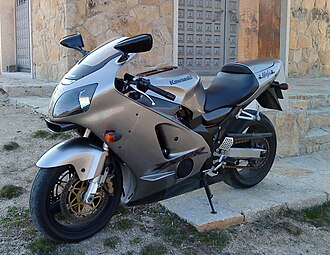
Kawasaki Ninja ZX-12R: The Hyperbike That Challenged the Limits of Speed
The Kawasaki Ninja ZX-12R Legacy
The Kawasaki Ninja ZX-12R remains one of the most fascinating motorcycles in the history of high-performance machines. Introduced at the beginning of the 21st century, the ZX-12R was created during an era when Japanese manufacturers were engaged in a technological battle to produce the fastest production motorcycle in the world. It represented Kawasaki’s determination to push engineering boundaries and create a machine that could deliver extraordinary speed, advanced technology, and a unique riding experience.
At the time of its release in 2000, the Ninja ZX-12R entered a market dominated by discussions about top speed. Manufacturers were producing increasingly powerful motorcycles, and enthusiasts were fascinated by machines capable of reaching performance levels previously associated only with racing prototypes. Kawasaki developed the ZX-12R as a direct response to this demand, combining a massive 1,199cc engine with innovative chassis technology and aerodynamic design.
Although the ZX-12R was eventually overshadowed by the legendary Kawasaki Ninja ZX-14R, it remains an important motorcycle because of the technology and ambition behind its creation. It was one of the first production motorcycles to use an aluminum monocoque frame, a design choice that demonstrated Kawasaki’s willingness to experiment with new engineering solutions. The ZX-12R was not simply built to be fast; it was built to represent the future of superbike development.
The Development of the Kawasaki Ninja ZX-12R
Kawasaki’s Pursuit of the Ultimate Performance Motorcycle
During the late 1990s, Kawasaki had already established a strong reputation for producing powerful motorcycles. Models such as the Ninja ZX-11 had gained worldwide recognition for their speed and reliability, but the company wanted to create something even more advanced. The goal was to develop a motorcycle that would set new standards for performance and technology.
The ZX-12R project focused on creating a machine that combined extreme acceleration with high-speed stability. Kawasaki engineers designed an entirely new platform rather than simply increasing the size of an existing engine. This approach allowed them to develop a motorcycle with a unique character and advanced construction.
The result was a motorcycle that featured a large-displacement inline-four engine, sophisticated aerodynamics, and an innovative chassis design. The ZX-12R quickly became one of the most technically advanced motorcycles of its generation.
The Top-Speed Competition Era
The launch of the Ninja ZX-12R occurred during a period when motorcycle manufacturers were competing intensely for the title of the world’s fastest production bike. Speed records and top-speed figures were major selling points, and manufacturers were constantly improving engine performance and aerodynamic efficiency.
However, concerns about extremely high-speed motorcycles eventually led manufacturers to adopt voluntary speed limitations. The ZX-12R was affected by this industry agreement, which limited its ultimate top-speed potential compared with what the motorcycle’s engineering might have allowed.
Despite this limitation, the ZX-12R remained an incredibly fast motorcycle. Its acceleration, engine strength, and high-speed stability ensured that it was still considered one of the most exciting performance machines available.
The Heart of the ZX-12R: A Powerful 1,199cc Engine
Advanced Inline-Four Performance
The defining feature of the Kawasaki Ninja ZX-12R is its powerful 1,199cc liquid-cooled inline-four engine. This engine was designed to deliver exceptional horsepower while maintaining smooth operation and reliability. With a four-cylinder layout, double overhead camshafts, and advanced internal components, the ZX-12R offered the type of performance expected from a flagship Kawasaki model.
The engine produced approximately 178 horsepower in unrestricted form, providing enormous acceleration and effortless high-speed performance. The power delivery was strong throughout the rev range, allowing the motorcycle to perform equally well during aggressive riding and long-distance touring.
Unlike some high-performance motorcycles that focus entirely on peak power, Kawasaki designed the ZX-12R engine to provide usable performance. The motorcycle offered impressive torque, smooth throttle response, and the durability needed for everyday riding.
A Motorcycle Built for Real-World Speed
One of the ZX-12R’s greatest strengths was its ability to combine extreme performance with practicality. While many riders associated superbikes with uncomfortable riding positions and aggressive handling, the ZX-12R provided a more balanced experience.
The engine’s smooth power delivery made it suitable for highway riding and touring, while its enormous performance reserves allowed experienced riders to enjoy thrilling acceleration. This combination helped the ZX-12R appeal to riders who wanted a motorcycle capable of both long-distance comfort and serious speed.
Innovative Engineering and Chassis Design
The Aluminum Monocoque Frame
One of the most unique features of the Kawasaki Ninja ZX-12R was its aluminum monocoque frame. Unlike traditional motorcycle frames that use visible twin beams or tubular structures, the ZX-12R used a design where the frame structure also incorporated the area above the engine.
This approach provided several advantages. It created a very rigid platform while keeping the motorcycle relatively compact. The design also helped centralize mass, improving handling and stability.
The monocoque frame became one of the ZX-12R’s most recognizable engineering features. It demonstrated Kawasaki’s willingness to move away from conventional designs and experiment with new approaches to motorcycle construction.
Handling and High-Speed Stability
A motorcycle capable of extreme speeds requires excellent stability and precise handling. Kawasaki equipped the ZX-12R with high-quality suspension components and carefully developed geometry to ensure confidence during fast riding.
The motorcycle’s larger size and weight contributed to stability, especially during high-speed cruising. While it was not as lightweight or agile as some smaller sportbikes, the ZX-12R provided a planted and secure riding experience.
Many owners appreciated the motorcycle’s ability to cover long distances quickly while maintaining comfort and composure. This made it a popular choice among riders who wanted superbike performance without sacrificing practicality.
Design and Aerodynamics
A Futuristic Appearance
The Kawasaki Ninja ZX-12R featured styling that reflected its advanced engineering. Its aerodynamic bodywork, sharp front fairing, and distinctive shape gave it a futuristic appearance when it was introduced.
The motorcycle’s design was created to improve airflow management and reduce aerodynamic resistance. At very high speeds, even small improvements in airflow can have a significant impact, so Kawasaki engineers carefully developed the bodywork to support performance.
The ZX-12R’s appearance also helped establish its identity. It looked unlike many other motorcycles on the market, making it instantly recognizable among enthusiasts.
Comfort and Sport-Touring Capability
Although the ZX-12R was built around performance, Kawasaki also considered rider comfort. The seating position was more relaxed than many pure racing motorcycles, allowing riders to spend longer periods in the saddle.
The full fairing provided excellent wind protection, making the motorcycle suitable for high-speed touring. This combination of comfort and performance became one of the ZX-12R’s defining characteristics.
Technology and Features of the Ninja ZX-12R
Mechanical Simplicity With Advanced Engineering
Unlike modern superbikes equipped with sophisticated electronic systems, the ZX-12R relied primarily on mechanical engineering. There were no advanced traction-control systems, riding modes, or electronic suspension settings. Instead, the motorcycle focused on engine performance, chassis design, and rider skill.
This simplicity is part of what makes the ZX-12R appealing to many enthusiasts today. The connection between rider and machine feels direct, with throttle input and mechanical feedback playing a major role in the riding experience.
Reliability and Everyday Usability
Despite its extreme performance, the ZX-12R developed a reputation for reliability. Kawasaki designed the motorcycle to withstand demanding conditions while maintaining the durability expected from a production machine.
Many examples have accumulated significant mileage, proving that the ZX-12R was not just a high-performance showcase but also a practical motorcycle capable of real-world use.
The Legacy of the Kawasaki Ninja ZX-12R
A Milestone in Kawasaki History
The Ninja ZX-12R holds an important place in Kawasaki’s history because it represented a period of experimentation and technological ambition. It pushed the boundaries of motorcycle design and demonstrated Kawasaki’s ability to create machines with exceptional performance.
Although later models replaced it, the ZX-12R helped influence the development of future Kawasaki superbikes. Its engineering concepts, especially the monocoque frame design, showed the company’s commitment to innovation.
Why Enthusiasts Still Appreciate the ZX-12R
Today, the ZX-12R has developed a dedicated following among motorcycle collectors and performance enthusiasts. Many riders appreciate its combination of power, individuality, and mechanical character.
In a world where modern motorcycles rely heavily on electronic systems, the ZX-12R represents a different approach. It offers a raw and engaging experience while still providing impressive performance by modern standards.
Conclusion: The Kawasaki Ninja ZX-12R as a Modern Classic
The Kawasaki Ninja ZX-12R was a motorcycle created during a unique period in performance motorcycle history. It represented Kawasaki’s ambition to build one of the fastest and most advanced production motorcycles in the world.
With its powerful 1,199cc engine, innovative monocoque frame, aerodynamic design, and impressive road performance, the ZX-12R remains a memorable machine. While newer motorcycles have surpassed it in electronic technology and outright performance, the ZX-12R continues to attract enthusiasts because of its personality and engineering significance.
The Ninja ZX-12R is more than just a fast motorcycle. It is a symbol of an era when manufacturers competed through innovation, mechanical excellence, and the pursuit of speed.
Kawasaki Ninja ZX-12R Technical Specifications
| Specification | Details |
|---|---|
| Model Name | Kawasaki Ninja ZX-12R |
| Production Years | 2000–2006 |
| Motorcycle Type | Hyperbike / Sport motorcycle |
| Engine Type | Liquid-cooled, four-stroke, DOHC inline-four |
| Engine Displacement | 1,199cc |
| Bore x Stroke | 83 mm x 55.4 mm |
| Compression Ratio | Approximately 12.2:1 |
| Fuel System | Electronic fuel injection |
| Transmission | 6-speed manual |
| Final Drive | Chain |
| Maximum Power | Approximately 178 hp (unrestricted versions) |
| Maximum Torque | Approximately 134 Nm |
| Top Speed | Electronically limited in later versions; capable of extremely high speeds |
| Frame Type | Aluminum monocoque frame |
| Front Suspension | 43 mm inverted telescopic fork |
| Rear Suspension | Uni-Trak single shock system |
| Front Brakes | Dual hydraulic discs |
| Rear Brake | Single hydraulic disc |
| Wheelbase | Approximately 1,440 mm |
| Seat Height | Approximately 790 mm |
| Fuel Capacity | Approximately 19 liters |
| Dry Weight | Approximately 210 kg |
| Wet Weight | Approximately 250 kg |
| Notable Features | Monocoque frame, high-performance inline-four engine, aerodynamic design, long-distance capability |
