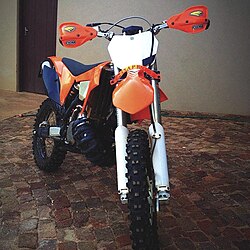
The KTM 300 EXC is widely regarded as one of the most iconic and capable enduro motorcycles ever built. In a world where four-stroke engines dominate modern off-road racing and recreational riding, the 300 EXC continues to stand tall as a reminder of what a well-engineered two-stroke machine can achieve. It is not just a motorcycle; for many riders, it is the benchmark by which all technical enduro bikes are judged.
What makes the KTM 300 EXC so special is not a single attribute but a carefully balanced combination of lightweight construction, massive low-end torque (for a two-stroke), explosive midrange power, and incredible tractability in extreme terrain. It is a machine that can crawl over rock gardens at walking speed, climb near-vertical hills with the right rider input, and then instantly transform into a high-revving, aggressive enduro weapon when the terrain opens up.
Unlike smaller two-strokes that demand constant revs or heavier four-strokes that rely on inertia and engine braking, the 300 EXC occupies a unique middle ground. It delivers raw, mechanical simplicity combined with modern refinement, making it one of the most versatile off-road motorcycles ever produced.
This article explores the KTM 300 EXC in depth—its origins, engineering philosophy, engine characteristics, chassis design, suspension behavior, riding experience, maintenance demands, and long-standing reputation in the global enduro community.
The Origins of the KTM 300 EXC
The KTM 300 EXC did not emerge by accident. It was the result of decades of development in European enduro racing, where terrain is often tight, technical, and unforgiving. KTM recognized early that riders needed a machine that could combine low weight with strong, usable torque in extreme conditions.
While 125 cc and 250 cc two-strokes were already popular in enduro competition, they each had limitations. The 125 cc bikes were extremely light and agile but lacked torque for steep climbs and deep mud. The 250 cc models offered a better balance but still required aggressive riding to stay in the powerband.
The 300 cc class was KTM’s answer to these limitations. By increasing displacement, engineers were able to create a two-stroke engine with significantly improved low-end torque while retaining the signature lightweight and responsive nature of the platform.
Over time, the 300 EXC became the flagship of KTM’s enduro lineup, especially in extreme enduro disciplines such as hard enduro, where traction, control, and torque delivery matter more than outright speed.
It quickly gained legendary status among professional riders and amateurs alike, becoming the machine of choice in events like Red Bull Erzbergrodeo and Romaniacs-style extreme competitions.
Design Philosophy: Maximum Capability with Minimum Weight
The KTM 300 EXC is built around a simple philosophy: maximum off-road capability with the lowest possible weight.
Every component of the motorcycle reflects this principle. The frame is lightweight yet strong enough to withstand extreme impacts. The plastics are narrow and minimal, allowing unrestricted rider movement. The seat is slim to facilitate constant transitions between sitting and standing.
The overall geometry is designed to prioritize agility and control over straight-line stability. This is essential in technical enduro riding, where the ability to quickly change direction is more important than high-speed composure.
Even the ergonomics are optimized for active riding. Riders are expected to shift their body weight constantly, using the bike as an extension of their movements rather than a passive machine.
Despite its simplicity, the 300 EXC does not feel outdated. Modern iterations include advanced suspension components, improved fuel delivery systems (including TPI and TBI fuel injection in newer models), and refined chassis engineering that keeps it competitive with the latest four-stroke machines.
The Heart of the Machine: 300cc Two-Stroke Engine
At the core of the KTM 300 EXC lies its most defining feature: a 293–300 cc liquid-cooled, single-cylinder, two-stroke engine.
This engine is legendary in the off-road world for its extraordinary torque delivery and versatility. Unlike smaller two-strokes that rely heavily on high RPM powerbands, the 300 EXC produces usable torque almost from idle, making it one of the most forgiving high-performance off-road engines ever created.
Torque and Power Delivery
One of the most remarkable aspects of the 300 EXC is its torque curve. For a two-stroke engine, it delivers an unusually strong low-end pull, allowing riders to navigate technical terrain without constantly slipping the clutch.
As the RPM increases, the engine transitions into a powerful midrange surge that provides strong acceleration without feeling abrupt or uncontrollable. At higher RPMs, it continues to pull aggressively, making it suitable for open terrain as well.
This wide powerband is one of the key reasons the 300 EXC is considered so versatile. It can be ridden gently in technical sections or aggressively in faster terrain without requiring significant changes in riding style.
Fuel Delivery Evolution
Earlier versions of the 300 EXC used traditional carburetors, which required careful jetting adjustments depending on altitude and temperature.
More recent models introduced KTM’s Transfer Port Injection (TPI) and later Throttle Body Injection (TBI) systems. These technologies significantly improved fuel efficiency, reduced emissions, and eliminated the need for premix fuel in many configurations.
Fuel injection also made the power delivery smoother and more predictable, especially in low-traction environments.
Chassis and Frame Engineering
The KTM 300 EXC uses a chromoly steel frame designed to offer a balance between rigidity and controlled flex.
This is extremely important in enduro riding because too much rigidity can reduce traction feedback, while too much flex can compromise stability.
The frame geometry is optimized for tight technical riding. It allows quick directional changes and precise control in narrow trails, rock gardens, and forest environments.
One of the key strengths of the chassis is its feedback. Riders can clearly feel what the rear wheel is doing at all times, which is essential when riding on slippery or uneven surfaces.
The subframe is typically made from lightweight composite materials in newer models, reducing weight further without sacrificing durability.
Overall, the chassis is designed not for speed records but for control in extreme terrain.
Suspension System: Built for Extreme Terrain
Suspension is one of the most critical elements of any enduro motorcycle, and the KTM 300 EXC is equipped with WP suspension systems designed specifically for demanding off-road conditions.
Front Suspension
The front fork is typically a WP XPLOR inverted fork system. It is designed to absorb sharp impacts from rocks, roots, and uneven terrain while maintaining stability during braking.
The fork allows independent adjustment of compression and rebound damping, enabling riders to fine-tune performance based on terrain type and riding style.
Rear Suspension
The rear WP XPLOR shock is fully adjustable and works in harmony with the front suspension to maintain traction and stability.
It is designed to keep the rear wheel planted as much as possible, even in extremely rough terrain.
Suspension Behavior
The suspension on the 300 EXC is known for its progressive and forgiving behavior. It absorbs impacts without becoming overly soft, allowing riders to maintain momentum in technical sections.
This balance is one of the reasons the bike is so effective in extreme enduro conditions.
Braking System and Control
The KTM 300 EXC is equipped with hydraulic disc brakes on both the front and rear wheels.
The braking system is designed for precision rather than raw stopping power. Because the motorcycle is extremely lightweight, even moderate braking force is highly effective.
The front brake provides strong but controllable deceleration, which is essential for steep downhill sections and technical corner entries.
The rear brake plays a crucial role in stability control, especially in low-speed technical riding where throttle and brake are used together to balance the bike.
One of the key advantages of the lightweight chassis is that braking feels intuitive and requires minimal effort, allowing riders to focus more on terrain selection and body positioning.
Riding Experience: Pure Enduro Freedom
Riding the KTM 300 EXC is often described as one of the purest off-road experiences available.
The bike feels incredibly light and responsive, allowing riders to maneuver through tight terrain with minimal effort. In technical sections such as rock gardens, root networks, and steep climbs, the 300 EXC excels due to its torque and controllability.
Unlike four-stroke bikes that rely on engine braking, the 300 EXC requires active clutch and throttle management. This makes riding more engaging and skill-dependent.
At low speeds, the engine can be “lugged” effectively thanks to its torque, allowing riders to maintain traction in difficult conditions.
In mid-range riding, the bike feels lively and responsive, encouraging aggressive but controlled acceleration.
At high RPM, it transforms into a fast and energetic machine capable of handling open terrain with ease.
The overall riding experience is highly interactive, rewarding skilled riders who understand momentum, traction, and balance.
Maintenance and Mechanical Simplicity
One of the major advantages of the KTM 300 EXC is its mechanical simplicity compared to four-stroke engines.
Two-stroke engines have fewer moving parts, making them easier and less expensive to maintain.
Common Maintenance Tasks
- Air filter cleaning (frequent in off-road use)
- Gearbox oil changes
- Spark plug inspection
- Carburetor or fuel injection system checks
- Suspension servicing
- Top-end rebuilds (piston and rings)
Top-end rebuilds are relatively straightforward and significantly less complex than four-stroke valve and camshaft maintenance.
This simplicity makes the 300 EXC a popular choice among riders who prefer hands-on maintenance and lower long-term service costs.
Versatility Across Terrain
The KTM 300 EXC performs exceptionally well across a wide variety of off-road environments.
Technical Trails
In tight forest trails, the bike’s lightweight nature and torque-rich engine make it extremely easy to maneuver.
Rock Gardens
Suspension compliance and low-end torque allow precise control over difficult rock sections.
Hill Climbs
The engine’s torque ensures strong climbing ability, even on loose or steep terrain.
Mud and Sand
The bike’s power delivery and lightweight chassis help maintain traction in slippery conditions.
Open Terrain
While not its primary focus, the 300 EXC can handle faster sections confidently due to its strong midrange power.
Competition and Market Position
The KTM 300 EXC competes in the premium enduro segment alongside models from Husqvarna and GasGas, which share similar engineering platforms due to corporate relationships.
It is often considered the benchmark for 300 cc two-stroke enduro bikes.
Compared to four-stroke competitors, it stands out due to its lower weight, simpler maintenance, and more engaging riding experience.
While four-strokes may offer smoother engine braking and broader market appeal, the 300 EXC remains the preferred choice for riders who prioritize agility and technical performance.
Legacy and Influence
The KTM 300 EXC has achieved legendary status in the off-road community.
It is widely regarded as one of the most capable and influential enduro motorcycles ever built.
Its combination of torque, light weight, and simplicity has made it a dominant force in extreme enduro competitions and recreational riding alike.
Even as emissions regulations push manufacturers toward four-stroke engines and fuel injection systems, the 300 EXC continues to represent the pure essence of two-stroke enduro performance.
It has shaped the way modern enduro bikes are designed and continues to influence the segment today.
Conclusion
The KTM 300 EXC is more than just a motorcycle—it is an icon of off-road engineering. It represents the perfect balance between power, weight, and control, offering a riding experience that is both demanding and deeply rewarding.
Its legendary two-stroke engine delivers unmatched torque for its class, while its lightweight chassis and advanced suspension system make it one of the most capable machines in extreme terrain.
For riders who value precision, agility, and mechanical simplicity, the 300 EXC remains one of the most compelling choices in the entire off-road world. It is not just a tool for riding—it is a machine that teaches, challenges, and rewards its rider at every turn.
Even in a modern era dominated by complex four-stroke motorcycles, the KTM 300 EXC continues to prove that simplicity, when executed perfectly, can outperform complexity in the environments that matter most.
KTM 300 EXC Technical Specifications
| Parameter | Specification |
|---|---|
| Manufacturer | KTM |
| Model | 300 EXC |
| Motorcycle Category | Enduro / Off-Road |
| Engine Type | 2-Stroke Single-Cylinder |
| Displacement | 293–300 cc |
| Cooling System | Liquid-cooled |
| Fuel System | Carburetor (older models) / TPI or TBI Fuel Injection (newer models) |
| Power Output | Approx. 40–55 hp (depending on model/year/tuning) |
| Torque | Strong low-end torque (approx. 35–45 Nm estimated range) |
| Transmission | 6-speed manual |
| Clutch | Wet multi-plate, hydraulic |
| Frame | Chromoly Steel Frame |
| Subframe | Lightweight composite/aluminum (varies by year) |
| Front Suspension | WP XPLOR Inverted Fork |
| Rear Suspension | WP XPLOR Monoshock, fully adjustable |
| Front Brake | Hydraulic disc brake |
| Rear Brake | Hydraulic disc brake |
| Front Tire | 90/90-21 |
| Rear Tire | 120/90-18 |
| Wheelbase | ~1,480 mm |
| Seat Height | ~960 mm |
| Fuel Tank Capacity | ~9–10 liters |
| Wet Weight | ~104–106 kg |
| Starter System | Electric start |
| Final Drive | Chain |
| Cooling System | Liquid-cooled |
| Riding Use | Enduro, Hard Enduro, Trail Riding |
| Top Speed | ~120–140 km/h (terrain dependent) |
