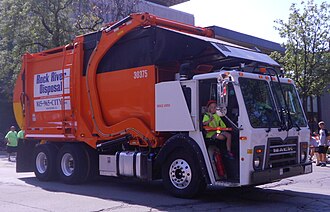
Mack LR – The Truck That Redefined Modern Refuse Collection
The world of heavy-duty trucks is filled with legendary names, but only a handful of vehicles genuinely redefine the industries they serve. The Mack LR is one of those rare machines. Built specifically for refuse collection and urban sanitation work, the LR represents a major evolution in the way municipal fleets, private waste companies, and recycling operators approach efficiency, driver comfort, safety, visibility, durability, and environmental responsibility. While many heavy-duty trucks are adapted for garbage collection through modifications and aftermarket body integrations, the Mack LR was engineered from the ground up for this demanding purpose. That distinction matters far more than it might seem at first glance.
Refuse collection is one of the harshest applications in the transportation sector. Garbage trucks stop constantly, operate in crowded neighborhoods, endure punishing weight cycles, navigate narrow streets, and work long shifts in all weather conditions. Drivers repeatedly enter and exit the cab hundreds of times per day. Hydraulic systems operate continuously. Visibility is critical because the truck works around pedestrians, parked cars, cyclists, and residential infrastructure. Traditional truck platforms were never perfectly suited to these conditions, and for decades manufacturers attempted to adapt conventional designs to a job that demanded something entirely different.
The Mack LR emerged as a response to that reality. Introduced as the successor to Mack’s earlier low-entry refuse platforms, the LR was designed to create a purpose-built solution that would prioritize operational efficiency and driver ergonomics while maintaining the rugged durability that the Mack brand has represented for generations. Today, the LR is one of the most recognizable refuse trucks in North America, operating in cities, suburbs, industrial zones, and municipal fleets across the continent.
What makes the Mack LR particularly fascinating is the way it blends old-school heavy-duty engineering philosophy with modern technological innovation. On one hand, it remains unmistakably a Mack truck: powerful, overbuilt, durable, and engineered for long-term service. On the other hand, it incorporates advanced visibility systems, ergonomic low-entry architecture, telematics, electronic controls, integrated safety technologies, and even fully electric propulsion in newer configurations. Few trucks demonstrate the transition of the heavy-vehicle industry toward modernization as clearly as the LR.
In this article, we will take an extensive look at the Mack LR from every important angle. We will explore its origins, design philosophy, engineering principles, cab layout, powertrain options, refuse applications, safety systems, electric variant, operational advantages, fleet economics, driver experience, and long-term significance in the refuse industry. We will also examine why the LR became such an influential vehicle and why many waste management companies consider it one of the best refuse chassis ever produced.
The Origins of the Mack LR
Mack Trucks and the Refuse Industry
To understand the LR, it is necessary to understand Mack Trucks itself. Mack has long been associated with vocational and severe-duty applications. Founded in the early twentieth century, the company built its reputation on durability, reliability, and rugged engineering. Construction, military, heavy hauling, logging, and municipal services became core segments for Mack over many decades.
Refuse collection was a particularly important market because it demanded characteristics that aligned perfectly with Mack’s engineering strengths. Garbage trucks endure brutal operating conditions. Unlike highway tractors that cruise at relatively constant speeds, refuse trucks experience relentless stop-and-go operation. Engines spend extensive time idling. Suspensions absorb repeated weight shifts. Steering systems endure endless tight turns. Frames are subjected to twisting and loading stresses throughout the workday.
Mack recognized early that refuse operators needed trucks specifically optimized for this environment. Over time, the company developed low-entry cab configurations that made it easier for drivers to enter and exit the vehicle repeatedly. These platforms evolved through several generations, eventually leading to the LE and TerraPro low-entry trucks. The LR emerged as the modern evolution of these earlier concepts.
The Introduction of the LR
The Mack LR was officially introduced in 2015. The name “LR” stands for “Low Ride,” reflecting its defining characteristic: a low-entry cab configuration designed specifically for refuse work. Although the truck inherited many ideas from previous Mack refuse platforms, the LR was more than just an update. It represented a major redesign intended to improve driver visibility, operational efficiency, and fleet productivity.
The truck was engineered to support multiple refuse body types, including front loaders, side loaders, and rear loaders. This flexibility allowed waste management companies to standardize around one chassis platform while adapting trucks for different collection strategies.
One of the defining goals of the LR program was driver-centric design. Refuse collection drivers often work extremely demanding shifts involving hundreds of stops per day. Mack engineers focused intensely on reducing driver fatigue and increasing operational convenience. This philosophy influenced virtually every aspect of the truck’s architecture.
The result was a truck that quickly gained popularity across municipal fleets and private refuse companies alike. Operators appreciated its maneuverability and reliability, while drivers praised its visibility and ease of entry.
Design Philosophy Behind the Mack LR
A Truck Designed Around the Driver
The most revolutionary aspect of the Mack LR is arguably not its engine or its chassis, but its human-centered design philosophy. Traditional heavy-duty trucks often prioritize engine placement, frame geometry, or manufacturing convenience over operator ergonomics. The LR reverses this equation.
Everything about the truck is built around making refuse collection easier and safer for the driver. The low step height is one of the most obvious examples. Drivers in refuse operations may enter and exit the truck hundreds of times during a single shift. Repeated climbing into conventional cabs creates fatigue, joint strain, and long-term injury risk. The LR dramatically reduces this burden with an ultra-low entry design.
Large grab handles, oversized doors, optimized step positioning, and spacious entry pathways further improve accessibility. The truck’s cab layout is intentionally uncluttered, enabling fast movement in and out of the vehicle.
Visibility is another major focus. The LR features an expansive windshield and large side windows designed to minimize blind spots. Urban refuse operations involve constant interaction with pedestrians, cyclists, parked vehicles, and tight residential spaces. Improved visibility directly contributes to safer operation.
Low-Entry Architecture
The low-entry cab is the defining architectural feature of the LR. Unlike traditional conventional trucks with high hoods and elevated cabs, the LR uses a cab-over-engine design with an extremely low floor height.
This architecture offers several advantages:
- Faster driver entry and exit
- Improved visibility
- Better maneuverability in urban environments
- Reduced driver fatigue
- Safer operation around pedestrians
- Easier communication with ground crews
The low-entry concept also allows drivers to move across the cab more easily. Depending on the configuration, the truck can be equipped with right-hand drive, left-hand drive, or dual-drive systems.
In automated side-loader applications, right-hand driving is particularly valuable because it allows the operator to align directly with residential garbage bins. This improves collection speed and reduces positioning errors.
Cab Ergonomics
Inside the LR, the driver environment reflects careful ergonomic planning. Controls are positioned for intuitive operation. Instrumentation is easy to read. Steering wheel adjustment options accommodate different drivers.
The cab is designed to support both seated and stand-up driving positions. In some refuse applications, stand-up operation improves efficiency because drivers can transition in and out of the vehicle more quickly.
Storage areas, bottle holders, radio integration, climate controls, and practical interior layouts all contribute to a more usable workspace. These details may seem minor individually, but in refuse operations, where drivers spend entire shifts performing repetitive tasks, they make a substantial difference.
Powertrain Options and Mechanical Engineering
Diesel Power
The Mack LR is primarily powered by the Mack MP7 diesel engine in many configurations. This engine is an 11-liter powerplant developed for severe-duty vocational applications. Depending on specification, horsepower ranges from approximately 335 to 375 horsepower, with torque outputs reaching up to 1,360 lb-ft.
In refuse applications, torque matters more than outright horsepower. Garbage trucks spend much of their time accelerating from low speeds while carrying heavy loads. Strong low-end torque allows the LR to move efficiently through stop-and-go routes.
The MP7 engine is known for durability and strong performance under demanding vocational conditions. Mack engineered the engine to integrate closely with transmission and axle systems, creating a coordinated drivetrain optimized for refuse work.
Natural Gas Configurations
As environmental concerns and emissions regulations increased, many refuse fleets began transitioning toward compressed natural gas (CNG) solutions. Refuse operations are particularly well-suited to alternative fuels because trucks often return to centralized depots each day, simplifying fueling logistics.
The Mack LR supports natural gas powertrains using the Cummins L9 CNG engine. This configuration offers lower emissions and quieter operation compared to traditional diesel models.
Natural gas refuse trucks became especially popular in urban regions where noise reduction and air quality improvements were important priorities. The quieter operation of CNG trucks can significantly reduce neighborhood disturbance during early morning collection routes.
Transmission Systems
The LR commonly uses Allison automatic transmissions, including the Allison 3000 and 4500 series six-speed units. These transmissions are widely respected in vocational trucking due to their durability and smooth operation.
Automatic transmissions are particularly advantageous in refuse applications because drivers perform constant stopping and starting throughout the day. Eliminating manual shifting reduces fatigue and improves operational consistency.
The Allison units also integrate effectively with hydraulic refuse body systems, helping optimize vehicle performance during loading operations.
Axles and Suspension
The Mack LR is available in multiple axle configurations, including 4×2, 6×2, 6×4, and 8×4 arrangements. These options allow fleets to configure trucks according to payload requirements and local regulations.
Suspension systems are designed specifically for severe-duty operation. Available setups include Mack mRIDE, Camelback suspensions, Hendrickson Haulmaax EX systems, and Ridewell Dynalastic configurations.
Refuse trucks endure repeated weight shifts as garbage accumulates throughout the route. Suspension durability is therefore absolutely critical. Mack’s vocational engineering experience gives the LR a strong reputation for handling these conditions.
Visibility and Urban Safety
The Importance of Visibility in Refuse Collection
Visibility is one of the most important factors in refuse truck safety. Garbage collection occurs in dense residential environments where children, pets, cyclists, pedestrians, and parked vehicles are constantly present.
Traditional truck designs often suffer from significant blind spots. The Mack LR was designed specifically to minimize these hazards.
The truck features:
- Large panoramic windshield
- Oversized side windows
- Rear visibility enhancements
- Optional camera systems
- Heated mirrors
- Optimized seating position
- Low cab height
These features combine to create one of the best visibility profiles in the refuse industry.
Heated LED Headlights
Modern LR models incorporate heated LED headlights that improve illumination while reducing maintenance requirements. Mack states that these systems improve forward and side visibility significantly compared to earlier lighting technologies.
LED lighting also consumes less power and offers longer service life, which benefits fleet operators seeking reduced maintenance costs.
Urban Maneuverability
The LR’s cab-over layout dramatically improves maneuverability in urban environments. Refuse routes frequently involve narrow alleys, crowded residential streets, and tight turns.
Because the driver sits farther forward compared to conventional trucks, the LR allows more precise positioning. This improves operational efficiency and reduces the risk of property damage.
The shorter front overhang also contributes to tighter turning capability.
Refuse Collection Applications
Front Loader Operations
Front loader garbage trucks are commonly used for commercial waste collection. These trucks use hydraulic forks to lift dumpsters over the cab and empty them into the refuse body.
The Mack LR is well-suited to this application because of its strong front axle configurations and durable chassis structure.
Commercial refuse routes often involve extremely heavy loads, repeated hydraulic operations, and frequent maneuvering in confined service areas behind shopping centers, restaurants, and industrial buildings.
The LR’s visibility and low-entry design improve driver productivity in these demanding conditions.
Automated Side Loader Systems
Automated side loaders are increasingly common in residential waste collection. These systems use robotic hydraulic arms to grab and empty residential bins.
The LR’s right-hand-drive configurations make it ideal for side-loader applications because the operator has direct visibility of the collection process.
Automated systems improve efficiency by allowing a single operator to complete collection routes without additional crew members.
This operational efficiency has become a major reason many municipalities invest in advanced refuse trucks like the LR.
Rear Loader Applications
Rear loaders remain widely used for manual collection routes and areas where automated systems are impractical.
The LR’s low-entry cab is particularly beneficial in rear-loader operations because drivers and sanitation workers repeatedly enter and exit the truck during the route.
The ergonomic advantages become extremely important over long shifts.
Driver Experience and Human Factors
Reducing Fatigue
One of the strongest arguments in favor of the Mack LR is its impact on driver fatigue.
Refuse collection is physically demanding work. Drivers operate in traffic, perform repetitive tasks, endure constant vibration, and frequently enter and exit the cab.
The LR addresses fatigue through:
- Low step height
- Ergonomic seating
- Reduced cab intrusion
- Excellent visibility
- Automatic transmissions
- Intuitive controls
- Climate-controlled interiors
- Adjustable steering systems
These features collectively improve operator endurance and comfort.
Driver Retention and Recruitment
Many refuse companies face serious driver shortages. Modern trucks like the LR can help improve recruitment and retention because operators prefer equipment that is easier and safer to use.
A more comfortable truck reduces job stress and increases long-term satisfaction.
This is particularly important in industries facing aging workforces and rising labor competition.
Noise Reduction
Noise fatigue is another challenge in refuse operations. Diesel engines, hydraulic systems, and compactor bodies create extremely loud working environments.
The LR’s improved insulation and optional natural gas or electric powertrains help reduce cabin noise.
Lower noise levels improve communication and reduce operator stress during long shifts.
The Mack LR Electric
The Transition Toward Electrification
Perhaps the most significant development in the LR platform’s history was the introduction of the Mack LR Electric.
Electric refuse trucks are uniquely practical compared to some other heavy-duty electric vehicle applications. Garbage trucks typically:
- Operate on predictable routes
- Return to a central depot daily
- Travel relatively short distances
- Benefit from regenerative braking
- Require strong low-speed torque
- Spend substantial time in stop-and-go conditions
These characteristics make refuse collection an ideal candidate for electrification.
Mack’s Electric Refuse Platform
Mack introduced the LR Electric as a fully battery-electric refuse truck designed to maintain the performance characteristics operators expected from diesel models while dramatically reducing emissions and noise.
The electric variant uses dual electric motors capable of producing enormous torque instantly from zero RPM. Early versions generated approximately 496 peak horsepower and more than 4,000 lb-ft of torque.
This immense torque delivery is particularly valuable in heavy stop-and-go refuse operations.
Operational Advantages of Electric Refuse Trucks
Electric refuse trucks offer several compelling operational advantages:
Reduced Noise
Electric powertrains are dramatically quieter than diesel engines. This is highly beneficial in residential neighborhoods where garbage collection often occurs early in the morning.
Lower Emissions
Cities seeking improved air quality increasingly support electric refuse fleets because they eliminate tailpipe emissions.
Regenerative Braking
Refuse trucks stop constantly, making regenerative braking highly effective. Energy normally lost during braking can be recaptured and stored in the batteries.
Lower Maintenance
Electric drivetrains contain fewer moving parts compared to diesel engines, potentially reducing long-term maintenance requirements.
Challenges of Electrification
Despite these advantages, electric refuse trucks also face challenges:
- High purchase costs
- Charging infrastructure requirements
- Battery weight
- Range considerations
- Long-term battery replacement costs
However, many fleets view the LR Electric as an important long-term investment in sustainable operations.
Fleet Economics and Operational Efficiency
Total Cost of Ownership
Fleet managers evaluate refuse trucks primarily through total cost of ownership rather than simple purchase price.
The Mack LR is designed to minimize lifecycle costs through:
- Durable components
- Long service intervals
- Reduced driver fatigue
- Improved route efficiency
- Lower accident risk
- Simplified maintenance access
While the upfront cost of a specialized refuse chassis can be substantial, operational savings often justify the investment.
Uptime and Reliability
Uptime is critical in refuse operations. A garbage truck that fails during a route creates major logistical disruptions.
Mack emphasizes uptime support through integrated telematics and diagnostic systems such as GuardDog Connect.
These technologies monitor vehicle performance and can alert fleet managers to potential issues before catastrophic failures occur.
Predictive maintenance strategies help operators reduce downtime and extend vehicle lifespan.
Fuel Economy
Fuel consumption is a major operational expense in refuse collection.
The LR’s powertrain optimization, aerodynamic improvements, and integrated drivetrain engineering help improve fuel efficiency despite the inherently demanding nature of garbage collection.
Natural gas and electric variants offer additional opportunities for reducing operational fuel costs.
Technology and Connected Systems
Telematics Integration
Modern refuse fleets rely heavily on data-driven management systems.
The Mack LR incorporates telematics platforms that allow operators to monitor:
- Vehicle location
- Fuel consumption
- Maintenance status
- Driver behavior
- Idle time
- Fault codes
- Route performance
This information enables fleet managers to optimize operations more effectively.
Over-the-Air Updates
One of the more modern capabilities integrated into newer Mack trucks is over-the-air software updating.
This allows certain vehicle parameters and software systems to be updated remotely via wireless connectivity.
Remote updating reduces service interruptions and helps fleets maintain consistent software configurations.
Safety Monitoring Systems
Advanced driver assistance systems are increasingly common in heavy-duty vocational trucks.
The LR can integrate features such as:
- Collision mitigation
- Blind spot monitoring
- Camera systems
- Stability control
- Electronic braking assistance
- Lane monitoring technologies
These systems are especially valuable in urban refuse operations where environmental complexity is extremely high.
Mack LR Versus Traditional Refuse Trucks
Purpose-Built Engineering
One of the biggest advantages of the LR compared to traditional adapted truck platforms is that it was purpose-built for refuse work.
Conventional trucks often involve compromises because they were originally designed for highway hauling or general vocational use.
The LR eliminates many of these compromises through dedicated engineering.
Cab Design Differences
Compared to traditional conventional trucks, the LR offers:
- Lower entry height
- Better visibility
- Faster ingress and egress
- Improved urban maneuverability
- Enhanced driver ergonomics
These differences translate directly into operational efficiency.
Operational Productivity
Over the course of a workday, small ergonomic improvements can produce major productivity gains.
If a driver saves even a few seconds per stop through easier entry and exit, the cumulative time savings across hundreds of stops become significant.
This operational efficiency is one reason the LR became highly successful in refuse applications.
Environmental Impact and Sustainability
Urban Air Quality
Garbage trucks operate directly within residential communities, meaning their environmental impact is highly visible.
Diesel emissions from older refuse fleets contributed significantly to urban pollution.
Modern Mack LR diesel engines use advanced emissions controls that dramatically reduce particulate matter and nitrogen oxide emissions compared to older trucks.
Natural gas and electric variants further improve environmental performance.
Noise Pollution
Noise pollution is often overlooked but extremely important in urban operations.
Refuse collection frequently occurs early in the morning. Quieter trucks improve quality of life for residents.
The LR Electric is particularly impressive in this regard because electric drivetrains produce far less noise than diesel engines.
Sustainability Goals
Many municipalities now incorporate sustainability targets into fleet purchasing decisions.
The LR platform allows fleets to transition gradually from diesel to natural gas and eventually to electric configurations.
This flexibility supports long-term environmental planning.
Real-World Fleet Adoption
Municipal Fleets
Cities across North America have adopted the Mack LR for sanitation departments and municipal refuse operations.
Municipal operators value the truck’s durability, visibility, and ergonomic design.
Government fleets also appreciate the availability of alternative-fuel configurations that align with emissions reduction initiatives.
Private Waste Management Companies
Large waste management firms also operate substantial LR fleets.
Private operators prioritize:
- Reliability
- Route efficiency
- Driver productivity
- Maintenance simplicity
- Long service life
The LR performs strongly in these areas.
Long-Term Durability
Mack’s reputation for durability remains one of the LR’s greatest strengths.
Refuse trucks experience extraordinary wear and tear compared to highway tractors. The LR’s chassis, frame, and suspension systems are engineered specifically to survive these conditions over many years of service.
The Future of the Mack LR
Continued Electrification
The future of the LR platform will likely involve continued expansion of electric technology.
Battery technology is improving steadily, enabling greater range and operational flexibility.
As charging infrastructure expands and battery costs decline, electric refuse fleets may become increasingly common.
Autonomous Assistance Technologies
While fully autonomous garbage trucks remain unlikely in the near future, advanced driver assistance technologies will continue evolving.
Future LR models may incorporate:
- Enhanced collision avoidance
- AI-based pedestrian detection
- Automated route optimization
- Smarter telematics integration
- Semi-autonomous maneuvering assistance
These systems could further improve safety and efficiency.
Smarter Municipal Operations
The refuse industry is becoming increasingly data-driven.
Smart city infrastructure, route optimization software, and connected fleet systems will likely integrate more deeply with vehicles like the LR.
This evolution could transform refuse collection into a more efficient and environmentally sustainable operation.
Why the Mack LR Matters
The Mack LR is more than simply a garbage truck. It represents a philosophy of specialized engineering where the vehicle is built around the realities of the job rather than forcing operators to adapt to a generic platform.
This distinction explains why the LR became so influential.
By focusing on driver ergonomics, visibility, safety, maneuverability, durability, and operational efficiency, Mack created a refuse truck that addressed the practical challenges sanitation workers face every day.
The truck also demonstrates how vocational transportation is evolving. Modern heavy-duty vehicles are no longer judged solely by horsepower and payload capacity. Fleets increasingly value:
- Driver comfort
- Safety technology
- Sustainability
- Connected systems
- Lifecycle economics
- Environmental performance
The LR successfully integrates all of these priorities.
Perhaps most importantly, the LR highlights the often-overlooked sophistication of refuse collection itself. Garbage collection is one of the essential services that keeps cities functioning. The trucks performing this work must operate reliably under extremely demanding conditions.
The Mack LR was designed specifically to meet those demands.
Conclusion
The Mack LR stands as one of the most important refuse trucks of the modern era. Through its low-entry architecture, driver-focused ergonomics, advanced visibility systems, durable vocational engineering, and expanding electric capabilities, it transformed expectations for what a refuse vehicle could be.
Its success comes from understanding the realities of sanitation work. Drivers need easy access. Fleets need durability. Cities need safety. Communities need quieter and cleaner operations. The LR addresses all of these requirements in a single integrated platform.
As urban populations continue growing and environmental regulations become stricter, refuse collection vehicles will play an increasingly important role in sustainable city operations. The Mack LR is already positioned at the center of that transition.
Whether powered by diesel, natural gas, or electricity, the LR demonstrates that purpose-built engineering remains one of the most effective ways to improve operational efficiency and driver experience in demanding vocational industries.
For many operators, it is not simply another garbage truck. It is the benchmark against which modern refuse vehicles are measured.
Technical Parameters Table – Mack LR
| Parameter | Specification |
|---|---|
| Manufacturer | Mack Trucks |
| Model | Mack LR |
| Vehicle Class | Class 8 Heavy Duty |
| Primary Application | Refuse Collection |
| Cab Type | Low-entry cab-over-engine |
| Introduction Year | 2015 |
| Diesel Engine | Mack MP7 |
| Diesel Engine Displacement | 11 liters |
| Diesel Horsepower | 335–375 hp |
| Diesel Torque | 1,260–1,360 lb-ft |
| Natural Gas Engine | Cummins L9 CNG |
| Natural Gas Displacement | 12 liters |
| Natural Gas Horsepower | 320 hp |
| Natural Gas Torque | 1,000 lb-ft |
| Transmission Options | Allison 3000 / 4500 automatic |
| Transmission Type | 6-speed automatic |
| Axle Configurations | 4×2, 6×2, 6×4, 8×4 |
| GVW Range | 43,000–72,000 lbs |
| Entry Step Height | Approximately 17 inches |
| Steering Configurations | Left-hand, right-hand, dual-drive |
| Drive Position Options | Seated or stand-up |
| Suspension Options | mRIDE, Camelback, Haulmaax EX, Dynalastic |
| Headlights | Heated LED |
| Electric Version Available | Yes |
| Electric Horsepower | Up to 496 peak hp |
| Electric Torque | Up to 4,051 lb-ft |
| Battery Capacity (LR Electric) | Approximately 376 kWh |
| Main Refuse Applications | Front loader, side loader, rear loader |
| Safety Features | Enhanced visibility, telematics, driver assistance systems |
| Connectivity | GuardDog Connect, over-the-air updates |
| Primary Market | North America |
Sources
Official Mack specifications and product information were referenced for technical accuracy. (macktrucks.com)
